Located on the picturesque banks of the São Francisco River, Juazeiro is a dynamic economic hub in the state of Bahia. Founded in the early 19th century, this city in Brazil grew from a small settlement into a vital logistical node for the Northeast region. The city was named after the juá tree, which thrives in the arid local climate and serves as a symbol of nature's vitality.
With a population of around 220,000, Juazeiro attracts travelers not so much with classic resort entertainment as with its authentic atmosphere of a working Brazilian city. Here, you can feel the true rhythm of the region, where trading traditions, industrial power, and the majesty of the "river of national unity" intertwine. By exploring the rich historical heritage of this place, one can trace its transformation from a river wharf to a modern metropolis.
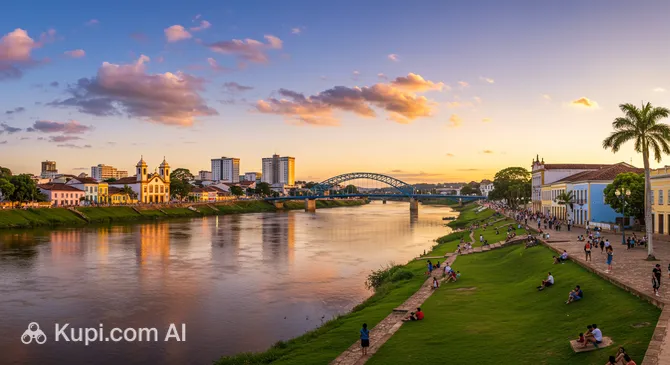
Juazeiro. Illustration.
Source: Kupi.com AI
The city's main feature is its inseparable connection with the river. The waterfront serves as the center of social life, offering guests opportunities for boat trips and encounters with local fauna. Although the city is oriented towards trade and agriculture, its hospitality and the unique flair of Bahia leave visitors with lasting impressions. We invite you to discover this important crossroads of Brazilian roads and destinies.
Weather Overview
Juazeiro is located in a semi-arid climate zone, characteristic of the Brazilian Sertão region. The weather here remains hot throughout the year, with average temperatures ranging from 24°C to 29°C. The highest readings are usually recorded in October and November, when the air can heat up to 35°C and above, creating an atmosphere of true tropical heat.
Precipitation in the region occurs irregularly and in small amounts. The main rainy season falls between December and April, but even during this time, showers are short-lived. For the rest of the year, dry weather prevails, making the city's climate fairly predictable for trip planning. Expect stable warmth with bright sun and low humidity during the dry season.
Average monthly temperature
Average monthly precipitation
Interesting Facts
The name of the city Juazeiro is directly related to the local flora: it comes from the juá tree (Ziziphus joazeiro), whose fruit and bark were traditionally used by the inhabitants of this arid region.
The city is part of a unique "twin" urban agglomeration—it is closely linked to the city of Petrolina, located on the opposite bank of the river, making them a single economic and social organism.
The territory of the municipality is impressive in its scale—it covers more than 6,300 square kilometers, which exceeds the area of many world capitals.
The city's economy is incredibly large for the region: back in 2005, its GDP exceeded one billion reals, largely due to developed irrigated agriculture and logistics.
Juazeiro received official city status on July 15, 1878, although the first settlers chose these shores as early as the beginning of the 19th century.
How to Get There
Juazeiro occupies a strategically important position in the northeast of the country, serving as a major transport and logistical hub. The main way to reach the city is by car. Important federal highways pass through the municipality, connecting the state of Bahia with the neighboring state of Pernambuco and other regions. If you are planning a trip, research the routes and options for how to get to this river port in advance.
For air travelers, the nearest gateway is in the neighboring city of Petrolina, which can be quickly reached by taxi or bus across the bridge. Although the city itself does not have a large passenger airport, its proximity to aviation hubs makes the journey quite comfortable.
Since Juazeiro is a commercial hub, intercity bus service is excellently developed. Buses from Salvador, Recife, and other major cities arrive at the local bus station regularly, though the journey from the state capital can take between 8 to 12 hours. Rail service in the region is currently used primarily for freight, so tourists should rely on highways and river transport.
The main and most large-scale attraction around which life in Juazeiro revolves is the majestic São Francisco River. It not only provides the city with water but also serves as a beautiful backdrop for walks. Along the bank, you can find cozy spots for watching the sunset or head out on a boat tour to see the city from the water and appreciate the scale of this natural giant.
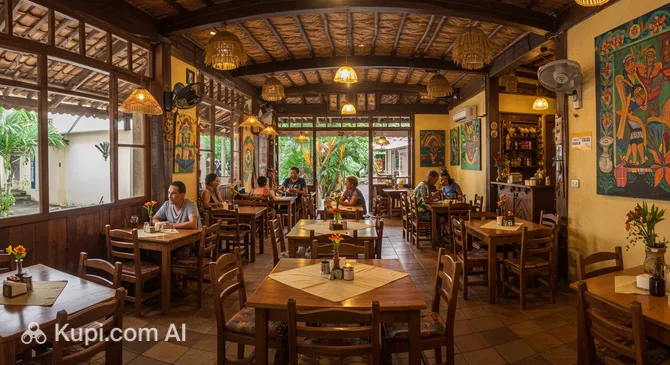
For those who want to experience the local flavor through gastronomy and a relaxing atmosphere, it's worth stopping by The Garage Petiscaria. This spot is popular with locals for its informal setting and excellent snacks. Also noteworthy is Restaurante Capivara, where you can sample regional cuisine while enjoying views of the river landscape.
Capivara Restaurant. Illustration.
Source: Kupi.com AI
Traveler photos:
The historical part of the city has preserved the charm of the colonial and republican eras. Walking through the central districts, you will see old buildings standing alongside bustling markets. While Juazeiro is not an open-air museum, its architectural details and lively commercial zones allow you to touch the everyday history of Northeast Brazil.
Local Cuisine
Juazeiro's culinary traditions are inextricably linked to the Sertão region and the riches of the São Francisco River. The basis of local cuisine consists of hearty meat dishes and fresh river fish. One of the main delicacies here is goat meat (bode), prepared according to traditional recipes—it can be found in almost every local establishment. It is also worth trying fish caught in the São Francisco, which is often served with a side of rice or cassava.
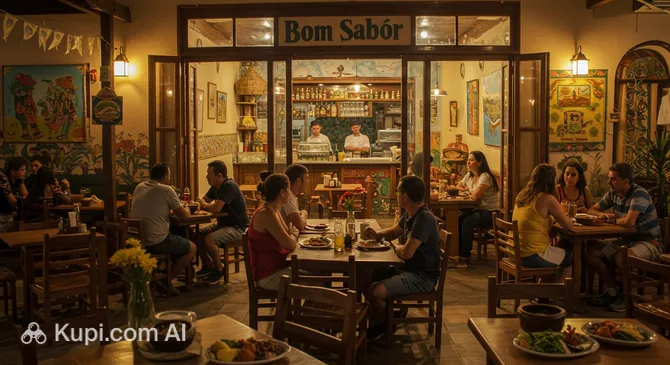
If you want to enjoy a meal in a pleasant setting, visit Restaurante Capivara. This establishment is famous for its regional dishes and hospitality. For fans of more familiar international food with a local twist, Pizzaria e Lanchonete Bom Sabor is a great choice, where classic recipes are complemented by Brazilian ingredients.
Bom Sabor Pizzeria and Snack Bar. Illustration.
Source: Kupi.com AI
Traveler photos:
Drinks in the city also reflect its agricultural status. Be sure to try juices made from local tropical fruits: mango, guava, and cashew are particularly fragrant here. The food culture in Juazeiro is very democratic—locals love street food at markets and lively gatherings in "petiscarias" (snack bars), where small portions of various dishes are served with cold local beer.
Travel Tips
A visit to Juazeiro will give you a unique experience of discovering the "real" Brazil, far from the polished tourist postcards. To ensure your trip goes smoothly and leaves only pleasant memories, use our practical tips.
Clothing and Protection:The climate here is hot and arid, so choose light clothing made from natural fabrics. Be sure to bring sunscreen, sunglasses, and a hat, as the sun in the state of Bahia is very strong year-round.
Transport: To get around the city, it is best to use official taxis or apps. If you plan to travel to neighboring cities, choose intercity buses—they are reliable and inexpensive.
Finances: The official currency is the Brazilian real. While cards are accepted in many places, always keep cash on hand for purchases at markets and small snack bars.
Safety: Observe standard precautions: do not display valuables in the street and avoid walking in deserted or industrial areas after dark.
Language and Communication: The primary language is Portuguese. Few people here know English, so learn a few basic phrases or use a translator on your smartphone.
Etiquette: Residents of Bahia are very friendly. Greet people with a smile, use standard "Bom dia" (good morning) or "Boa tarde" (good afternoon)—it always sets a positive tone for communication.
What to Avoid: Do not attempt to explore remote parts of the São Francisco River on your own without a guide, and do not take photos of people without their consent in residential neighborhoods.
Extra Tip: The best time to visit is from May to October, when the heat is not so exhausting and the sky often stays clear.
We hope these tips help you feel the hospitality of Juazeiro and fully enjoy the atmosphere of this river city!
Entertainment & Nightlife
Nightlife in Juazeiro is predominantly local in character and concentrated in cozy bars and snack bars where residents gather after a hot day. The main activity buzzes in the waterfront area and central blocks. It is customary to spend evenings in leisurely conversation, tasting local drinks and listening to popular Brazilian music.
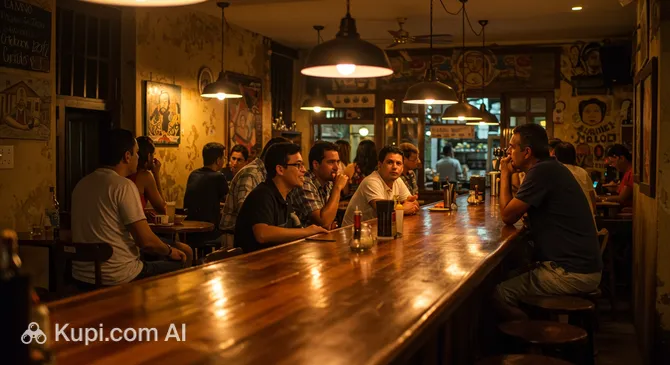
One of the notable spots for evening relaxation is Bar e Petiscaria O Rancho, which boasts a truly homey and friendly atmosphere. If you are looking for a more modern establishment with interesting design, take a look at The Garage Petiscaria. These bars usually stay open until late at night, especially on weekends when musicians often join the crowd.
The Garage Petiscaria. Illustration.
Source: Kupi.com AI
Traveler photos:
For fans of larger-scale entertainment or nightclubs, locals often recommend crossing the bridge to neighboring Petrolina, where the selection of venues is wider. However, Juazeiro itself regularly hosts city festivals and cultural events tied to the agricultural calendar, which turn the streets into vibrant venues for public celebrations.
Parks & Museums
In the semi-arid climate, the São Francisco River waterfront remains the primary natural oasis for Juazeiro. The main walking areas are concentrated here, where locals rest in the shade of trees and enjoy the cool breeze from the water. Although there are few classic parks with extensive forested areas in the city, the shoreline fully compensates for this, offering picturesque views and spots for recreation.
The city's cultural life is represented by small galleries and exhibition spaces in the historical center, where you can get acquainted with the work of local artists and craftsmen. The museum infrastructure of Juazeiro is modest, but the city itself, with its old warehouses and colonial facades, serves as a living reminder of the era of active river steamships.
For those looking for more modern entertainment spaces, it's worth paying attention to the well-equipped areas near popular establishments such as The Garage Petiscaria. Small cultural events and live performances often take place here, allowing city guests to feel the pulse of modern life in the state of Bahia surrounded by locals.
Getting Around
Public transport in Juazeiro is represented by an extensive network of bus routes. Buses are the primary means of transport for most locals, connecting residential outskirts with central shopping districts and industrial zones. It is worth noting that during morning and evening hours, transport can be very crowded, and traffic in the city center slows down due to the large number of trucks.
For tourists, the most convenient and fastest way to get around remains taxis or using mobile ride-hailing apps. This is especially relevant during the hot season, as cars are usually equipped with air conditioning. If you plan a trip to neighboring Petrolina, there are special routes between the cities that allow you to quickly cross the bridge over the São Francisco River.
Cycling infrastructure in the city is poorly developed, and due to heavy traffic and high temperatures, cycling may not be the most comfortable option. Walking is pleasant mainly along the waterfront, where sidewalks are provided. In the rest of the city, pedestrians should exercise caution due to chaotic traffic and sometimes uneven street surfaces.
Accommodation
Accommodation options in Juazeiro are primarily geared towards business people, trade representatives, and those traveling through the state of Bahia for work. Most hotels are concentrated in the central part of the city and in areas adjacent to the main commercial zones. Practical mid-range options and budget hotels predominate, offering a basic set of amenities for a comfortable night's stay.
For travelers seeking more scenic views, it is worth considering accommodation options closer to the São Francisco River waterfront. In these areas, you can find hotels with swimming pools and terraces offering panoramas of the river and the neighboring city. During peak periods, such as during large agricultural fairs, hotel availability can disappear quickly, so it is recommended to book accommodation in advance.
In addition to traditional hotels, apartments and guesthouses are available in the city, often rented out by locals. This is an excellent option for those planning to stay in the region for a longer period. Prices for accommodation in Juazeiro remain quite affordable compared to Brazil's major tourist centers, making the city attractive for budget travelers.
Nearby Cities
Juazeiro is an excellent starting point for exploring the unique region on the border of the states of Bahia and Pernambuco. The proximity to the river and a developed road network make it easy to plan short trips to neighboring cities, each of which has its own character and attractions.
The most obvious destination is the city of Petrolina, located just a few kilometers away on the other side of the river. It is a larger center with developed tourist infrastructure, parks, and museums. Also of interest is Lagoa Grande, known for its vineyards and wineries, which is unusual for such an arid climate. If you have time, it's worth checking out the city of Casa Nova, famous for its river beaches and the Sobradinho Dam.
Exploring the surroundings will give you plenty of impressions: from the industrial landscapes of huge dams to the green oases of irrigation fields in the middle of the semi-desert. Each such trip will help you better understand how people have managed to transform this challenging land into a thriving agricultural region.
Shopping & Souvenirs
Shopping in Juazeiro is primarily about experiencing regional trade and local crafts. The city serves as an important market for the entire surrounding area, so the central blocks are always bustling. You won't find a huge number of global brand boutiques here, but you can immerse yourself in the atmosphere of real Brazilian shopping streets, where everything from modern electronics to traditional textiles is sold.
Special attention should be paid to the local markets. These are the best places to buy fresh tropical fruits, spices, and handmade goods. Souvenirs from Juazeiro are often connected to the culture of the Northeast (Nordeste): these might be leather goods, ceramics, or bright fabrics with traditional patterns. Local sweets made from mango and guava, which this agricultural region is famous for, also make excellent gifts.
Shops in the city center typically operate on a standard schedule, closing for a lunch break during the hottest hours. Card payments are accepted in large retail outlets and supermarkets, but at markets and in small shops, it is always useful to have cash reals on hand. Shopping here is not just about buying things, but an opportunity to chat with local vendors and feel the rhythm of Bahia's business heart.