Support

Santos Dumont Airport

About the Airport

Santos Dumont Airport (SDU), named after the Brazilian aviation pioneer Alberto Santos-Dumont, is not merely a transport hub but a true gateway to the heart of Rio de Janeiro. Its uniqueness lies in its location right on the shores of Guanabara Bay, making landing and taking off a breathtaking spectacle with views of Sugarloaf Mountain and other famous city landscapes. Built in the 1930s, this airport became the second most important in Rio and continues to play a key role in Brazil's domestic air travel system.
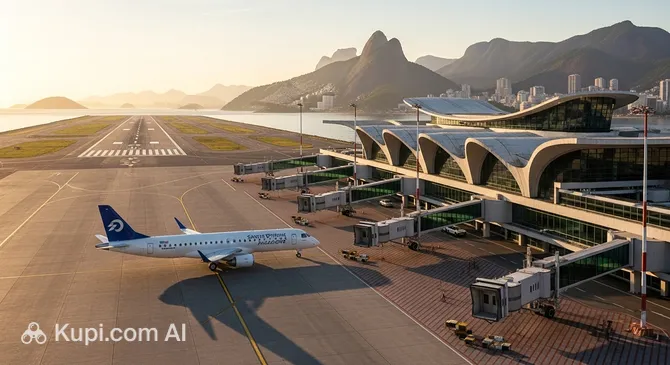
Santos Dumont Airport. Source: Kupi.com Binoculars

For the convenience of travellers, essential information about the airport is provided below.

IATA Code SDU
ICAO Code SBRJ
City Rio de Janeiro
Distance to Centre About 2-4 km
Status Predominantly domestic
Passengers per Year About 9 million
Popular Airlines Azul, LATAM Airlines, Gol Linhas Aereas Inteligentes
Schedule Online Board "Santos Dumont Airport"

The main advantage of Santos Dumont Airport is its incredibly convenient location — just a few kilometres from the central business and tourist district of Rio de Janeiro. This allows passengers to save significant travel time. The airport is known for its short runways, which require special skill from pilots and make the takeoff and landing process particularly impressive. Despite its compact size, the air terminal offers a modern facility and all necessary infrastructure for comfortable travel across Brazil.

Contact Information

  • Official Website: Up-to-date information on flights, services, and airport regulations, managed by Aena Brasil, can be found at aenabrasil.com.br.
  • Information Desk Phone: You can call the airport at +55 (21) 3814-7070. This line is available for general enquiries.
  • Airport Address: Praça Senador Salgado Filho, s/nº, Centro, Rio de Janeiro - RJ, CEP: 20021-340, Brasil.
  • Email: For communication, it is recommended to use the feedback form on the operator's official website or the telephone. A direct email for general queries is usually not provided.
  • Social Media: News and important airport updates can be followed via the official accounts of its operator, Aena Brasil, on popular social networks.
  • Lost and Found: If you have lost personal items within the terminal building, please contact the "Achados e Perdidos" (Lost and Found) service. For issues regarding lost or damaged checked luggage, you must contact your airline's representative directly.
  • Passenger Support Contacts: Prompt assistance is always available at the information desks in the terminal or by calling the general airport information number.

Getting to the Airport

Santos Dumont Airport (SDU) has one major advantage — it is located in the very centre of Rio de Janeiro, on the banks of Guanabara Bay. Thanks to this, you can reach it quickly via several convenient methods, depending on your budget and preferences.

Public Transport: VLT and Metro
The most modern and efficient way to get to the airport is the VLT Carioca light rail. Line 1 (Blue) has a stop called "Santos Dumont" right at the terminal exit. On the VLT, you can easily reach the Cinelândia metro station, which opens access to the entire Rio metro system. This allows you to travel quickly and without traffic from popular districts such as Copacabana or Ipanema. The trip from the airport to the metro takes only about 5-10 minutes. For payment, you will need a Riocard transport card, which can be purchased and topped up at machines at the stations.

Buses
A more budget-friendly option is city buses. Several routes pass near the airport, connecting it to different parts of the city. There are both standard city buses and more comfortable air-conditioned shuttles (known as "frescão"). Although this is a cheap method, be prepared that the journey may take significantly longer due to heavy city traffic.

Taxis and Ride-Hailing Services
For maximum comfort and speed, especially if you have a lot of luggage, a taxi is the best choice. Official radio taxi counters operate at the airport, where you can pay for the trip in advance at a fixed rate. Ride-hailing apps such as Uber and 99 are also very popular in Brazil and often offer more competitive prices. A trip from Copacabana to the airport without traffic will take 20-30 minutes. This is the fastest, but also the most expensive option.

Car Rental and Parking
If you plan to travel actively around the surrounding areas, representatives of all major rental companies are present at Santos Dumont Airport. It is recommended to book a car in advance. There is also a car park on the airport territory; however, it is quite expensive and more suitable for short-term parking than for leaving a car for the duration of an entire holiday.

Inter-Airport Transfer
If you need to get to the city's main international hub, Galeão International Airport (GIG), special shuttle buses run between the airports. They depart regularly and provide a convenient connection for transit passengers.

Terminals and Map

Santos Dumont Airport (SDU) is distinguished by a modern and extremely passenger-friendly structure. In fact, all operations are concentrated in one integrated terminal, which exclusively serves domestic flights within Brazil. Historically, the building consists of several connected parts, but for the traveller, it is a single space, so you do not have to worry about transferring between different buildings.

The airport layout is very logical and organised by floors, making navigation intuitively clear. The Ground Floor (Térreo) houses the arrivals area. This is where you will end up after landing; the baggage claim belts and exits to taxis, buses, and car-hailing services are also located here. The First Floor (1º Andar) is entirely dedicated to airline check-in counters. The Second Floor (2º Andar) is the departures zone, where security checkpoints are located, as well as the majority of shops, cafes, and restaurants.

The main feature of the terminal is a separate boarding pavilion, which passengers reach via a long covered walkway with panoramic glazing. From here, truly magnificent views open up over Guanabara Bay, Sugarloaf Mountain, and, in clear weather, even the Christ the Redeemer statue. Waiting for a flight here turns into a mini-excursion and a wonderful opportunity to take final photos.

Thanks to its compactness and efficiency, passing through procedures at Santos Dumont usually happens quickly. Check-in and security screening rarely take more than 45 minutes in total, but to avoid rushing, we recommend arriving at the airport 1.5-2 hours before your flight's departure. Clear signage in Portuguese and English will help you easily orient yourself at every stage of the journey.

Airport History

The history of Santos Dumont Airport is inextricably linked with the development of aviation in Brazil and the city of Rio de Janeiro itself. Named after aviation pioneer Alberto Santos-Dumont, the airport was officially opened in 1936. Its construction was an ambitious engineering project for its time: the runway was created on an artificial peninsula reclaimed from the waters of Guanabara Bay. Initially, it served seaplanes but quickly became the city's main air hub.

In the 1940s, the main passenger terminal building was constructed, which to this day is considered a masterpiece of Brazilian modernist architecture. For decades, Santos Dumont was Rio's main international gateway until 1977, when the new Galeão Airport took over this role. After that, SDU refocused on domestic flights, becoming the heart of the famous "Ponte Aérea" (Air Bridge) — one of the busiest air routes in the world, connecting Rio de Janeiro and São Paulo.

The airport has undergone several significant renovations. One of the most massive modernisations followed a major fire in 1999, which almost completely destroyed the historic terminal. Restored and updated, it retained its architectural appearance but received modern equipment. In preparation for the 2014 FIFA World Cup and the 2016 Olympic Games, another series of improvements was carried out to increase comfort and capacity.

One of the most interesting facts about Santos Dumont Airport is its runway, one of the shortest in the world for commercial aircraft of this class. This makes landing and takeoff a real attraction for passengers and requires the highest skill from pilots. Furthermore, thanks to its location in the city centre, the windows offer perhaps the most breathtaking views of Sugarloaf Mountain and Guanabara Bay imaginable during air travel.

Services and Amenities

Santos Dumont Airport offers passengers a wide range of services to make waiting for a flight as comfortable as possible. The terminal houses numerous cafes and restaurants where you can have a quick snack or a full meal, enjoying dishes of local and international cuisine. For shopping enthusiasts, there are stores offering souvenirs, books, clothing, and travel goods.

For those who need to stay connected or work, free Wi-Fi is provided throughout the airport. Numerous charging stations for electronic devices allow you not to worry about your smartphone or laptop battery. Additionally, the airport operates business lounges and conference rooms, where you can hold a business meeting in a calm atmosphere or work in silence.

Passengers preferring enhanced comfort can utilise the services of VIP lounges. They offer a cosy atmosphere, complimentary snacks and beverages, fresh press, and other privileges. To handle financial matters, ATMs of various banks are installed in the terminal, and currency exchange points are available.

The airport cares for all categories of travellers. Special mother and child rooms are equipped for passengers with children, where you can take care of your baby in a quiet environment. In case of necessity, you can contact the medical centre, which operates around the clock. A barrier-free environment has been created for passengers with reduced mobility: there are ramps, lifts, specially equipped restrooms, and an escort service is provided.

Although hotels are not located directly within the terminal building, several hotels of varying comfort levels are situated in the immediate vicinity of Santos Dumont Airport. Many of them offer free transfers for their guests, making them a convenient option for those with an early departure or a long layover.

Dining

Santos Dumont Airport offers passengers diverse dining opportunities, from a quick snack to a full lunch. Most establishments are concentrated in the main terminal and are available both in the public area before security control (landside) and in the secure departure zone (airside).

For those in a hurry, numerous coffee shops and fast-food outlets are an excellent choice. Here you can grab a sandwich, pastries, or famous Brazilian coffee to go. This is a wonderful opportunity to try local specialities before departure, such as cheese buns `pão de queijo` or a refreshing açaí berry dessert. These cafes can be found both before and after passport control.

If you have more time, restaurants with à la carte service are at your disposal. They offer dishes of Brazilian and international cuisine. This is a good option for a relaxed breakfast, lunch, or dinner while waiting for a flight. The majority of full-service restaurants are located in the public area, which is convenient for those seeing off or meeting passengers.

Regarding special dietary needs, vegetarian or gluten-free dishes can be found on the menus of some establishments, although the selection may be limited. It is recommended to clarify the ingredients of dishes directly with the staff, especially regarding Halal requirements. The price range varies from budget options in food courts to average prices in restaurants, which is standard for major airports. The opening hours of most establishments are adapted to the flight schedule, but some may close at night.

Travel Tips

To ensure your journey through Santos Dumont Airport goes smoothly and leaves only pleasant impressions, use these tips. This airport, located in the very heart of Rio de Janeiro, has its own peculiarities, knowing which will help you save time and nerves.

Arrival Time: Santos Dumont Airport mainly serves domestic flights. It is recommended to arrive 1.5-2 hours before departure. However, considering the unpredictable traffic in Rio de Janeiro, it is better to allow extra time for the journey, especially during peak hours.

Check-in and Security: To avoid queues, complete online check-in for your flight in advance and save the boarding pass on your phone. Security checkpoints here are standard, but they can be busy in the morning and evening hours. Keep documents and electronics handy to speed up the process.

Seat Selection: This is perhaps the most important tip for Santos Dumont! The airport is famous for breathtaking views during takeoff and landing. Try to book a window seat. When landing, the right side often offers a magnificent view of Sugarloaf Mountain, and during takeoff — of Guanabara Bay and the Rio-Niterói Bridge. These shots will remain in your memory for a long time.

Hand Luggage: The rules are standard: liquids are allowed in containers up to 100 ml, packed in a transparent bag. Sharp objects, weapons, and flammable substances are prohibited. Always check the hand luggage and baggage allowance on your airline's website to avoid unpleasant surprises.

Passengers with Connections: Santos Dumont is not a major hub for transfers. If you have a connection, especially from an international flight to a domestic one (or vice versa), carefully check the departure airport. Most international flights are served by Galeão Airport (GIG). Transferring between airports can take more than an hour, so allow sufficient time for this.

Customs Control: Since the airport is focused on domestic transport, most passengers do not encounter customs control. It is only provided for rare international charters or flights from certain countries.

Saving Time and Money: Use ride-hailing apps or public transport (VLT Light Rail) to get to the airport — this is often cheaper than taking a taxi on the spot. Prices for food and drinks at the airport are quite high, so you can have a snack beforehand or bring permitted snacks with you.

In Case of Flight Delay: If your flight is delayed, contact the airline representative for information about your rights (provision of drinks, meals, or accommodation depending on the duration of the delay). The airport has cafes, shops, and free Wi-Fi to help pass the waiting time.

Reached the end of the page?

That means the route is fully explored