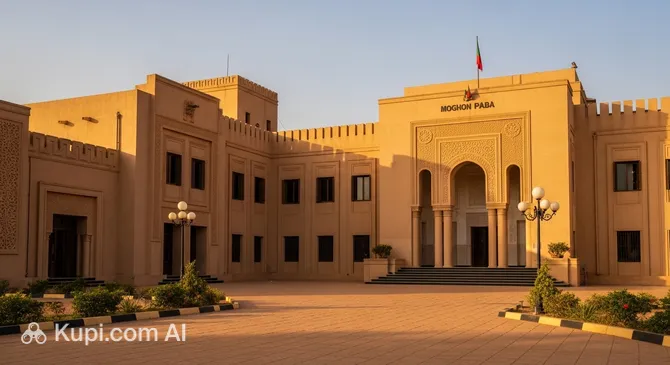
In the heart of bustling Ouagadougou lies a place where time seems to slow down—the Moro Naba Palace. This historic residence of the supreme rulers of the Mossi people is one of the most important landmarks in Burkina Faso, embodying centuries of political continuity and the region's spiritual traditions.
Mogho Naba Palace. Illustration.
Source: Kupi.com AI
Traveler photos:
Built in 1896, the palace complex is a unique example of African architecture made from adobe bricks. Today, it functions as an ethnographic museum where visitors can experience the rich cultural heritage of the Mossi ethnic group. It harmoniously combines the solemnity of a political center with the authenticity of a traditional way of life.
Located in the Bilbalogho district, the palace is surrounded by a large earthen square that serves as a stage for ancient rituals. It is not just a museum site, but the living heart of the city, serving as a reminder that ancient customs continue to thrive in the modern world.
Contacts
For those planning a visit to this historic site, it is helpful to have the exact coordinates at hand. The palace is a major landmark in the city, and finding it is easy, whether you go on your own or ask local residents for directions.
Below is the basic contact information for navigation:
The main reason to visit the palace is the chance to see the ethnographic museum. Its halls house unique collections: traditional masks, ritual vessels, and ancient household items that tell the story and beliefs of the Mossi people. You can admire the craftsmanship of local artisans in detail and learn the meaning behind the mysterious symbols on the artifacts.
If you find yourself here on a Friday morning, you will have the rare chance to witness the ceremony of "The Emperor's False Departure." This vivid theatrical performance is accompanied by drumming and the participation of chiefs in colorful attire. The ritual allows you to feel the energy of an ancient tradition that has been performed consistently for four centuries.
After touring the palace, it is worth walking around the adjacent territory to take photos of traditional buildings and watch local craftsmen at work. The majestic city cathedral is located very close by, making it an excellent addition to your cultural itinerary in the capital.
Getting There
The Moro Naba Palace is conveniently located in the central part of the city in the Bilbalogho district. If you are arriving at Ouagadougou International Airport, the distance to the attraction is about 10 kilometers. A trip by taxi or public transport usually takes between 20 and 30 minutes, depending on traffic conditions.
To get around the city, tourists often use local taxis or the colorful motorcycle taxis known as "woro-woro." This is one of the fastest ways to reach the palace square, using the Grand Market or the central cathedral—which are within walking distance—as landmarks.
If you prefer walking, the palace is easy to find by following the signs. For precise navigation, you can use GPS coordinates to lead you directly to the main gates of this architectural complex. Parking spaces are available near the site.
Nearest city: Ouagadougou
History & Facts
The history of this place is inextricably linked with the powerful Mossi people and the establishment of their statehood. As early as the 15th century, Ouagadougou was proclaimed the capital of the kingdom, and from the end of the 17th century, the palace became the permanent residence of the Moro Naba—the supreme rulers who combined the roles of political leaders and spiritual guardians of tradition.
The current palace building was erected in 1896. It became more than just a home for the imperial family; it served as a living symbol of cultural identity and continuity. Even during periods of colonial change, the palace maintained its status as the inviolable center of Mossi authority.
One of the most remarkable historical traditions is the ceremony of "The Emperor's False Departure." This ritual has been performed for over 400 years. According to legend, it symbolizes the ruler's readiness to defend his land and people, recalling ancient events when the emperor prepared to reclaim his beloved or set off on a military expedition.
Time Needed
To leisurely explore the palace grounds and see the ethnographic museum's exhibits, 1–2 hours is usually sufficient. This is enough time to appreciate the traditional architecture and see the collection's main artifacts.
However, if your visit falls on a Friday, we recommend setting aside at least 3 hours. The traditional ceremony, which is the highlight of the cultural program, requires time for waiting and thoughtful observation of the performance, which lasts about an hour.
Working Hours
According to available information, the complex is open for exterior viewing daily and around the clock. This allows tourists to see the palace architecture in different lighting, although the main internal museum exhibits may have their own specific schedules.
Nevertheless, before planning your visit, we strongly recommend verifying the information via official tourism resources or local guides, as access to the grounds may be restricted during official or religious ceremonies.
Open 24 hours
Nearby
Visiting the Moro Naba Palace is an excellent opportunity to get a closer look at the city center. The surrounding area is rich in interesting locations that will help you dive deeper into the atmosphere of the capital and observe the daily life of the locals.
A stroll through the nearby streets will reveal modern art spaces, cozy parks, and commemorative sites dedicated to the country's history. Below is a list of attractions located within a few kilometers of the palace: