Support

Banff Gondola

About

The Banff Gondola is a modern and thrilling aerial lift located in the charming town of Banff, in the heart of Banff National Park in Alberta, Canada. This attraction offers a unique opportunity to ascend to the summit of Sulphur Mountain and enjoy truly breathtaking panoramic views of the majestic Rocky Mountains, the picturesque Bow Valley, and the town of Banff itself, nestled below.
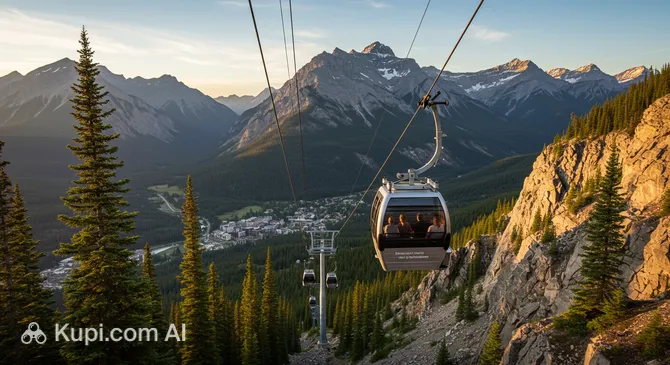
Banff Gondola. Illustration.
Source: Kupi.com AI

Traveler photos:

The lift itself consists of a system of comfortable, enclosed gondolas, each seating up to four passengers. This design ensures not only safety but also comfort during the ascent, allowing you to admire the surrounding landscapes in any weather. The journey to the top takes only a few minutes, but the impressions last a long time.

It's no surprise that the Banff Gondola is one of the region's most popular tourist attractions. It allows visitors of all ages and fitness levels to effortlessly reach a significant height—2,281 meters above sea level—covering an elevation gain of 698 meters. It's a wonderful way to experience the grandeur of the Canadian mountains and take unforgettable photos without having to undertake a long and tiring hike.

Contacts

If you are planning to visit the Banff Gondola and have any questions, you can contact the attraction's representatives using the contact details below. You can also always find up-to-date information on the official website.

How to contactContact
Address100 Mountain Ave, Banff, AB T1L 1B2, Canada
Phone number+1 866-756-1904
Websitewww.banffjaspercollection.com

What to Do

The main activity at the Banff Gondola is, of course, the spectacular ascent to the summit of Sulphur Mountain. During this short but impressive journey in a comfortable cabin, you can enjoy the views unfolding before you. Upon reaching the top, you will be greeted by specially equipped observation decks, including those with panoramic glazing, offering truly stunning views of six mountain ranges, the emerald Bow Valley, and the picturesque town of Banff itself, nestled at the foot of the mountains.

Well-maintained walking trails are laid out for visitors at the mountaintop. One of the most popular is the trail to Sanson Peak. A stroll along it not only allows you to enjoy the fresh mountain air and magnificent scenery but also leads you to the historic meteorological station that operated here for many years. It is a great place to take unforgettable photos and feel like you are on top of the world.

In addition to admiring nature, you can visit interesting exhibition displays at the upper gondola station that tell the story of the flora, fauna, and history of this unique region of Canada. For families with children, there are interactive zones where you can learn more about the world around you in an engaging way. If you get hungry, there is a restaurant and a cafe where you can have a snack or a cup of coffee while continuing to admire the breathtaking mountain panoramas. Photography enthusiasts will find countless angles to create impressive shots as memories of their adventure.

Getting There

Getting to the Banff Gondola is quite simple, especially if you are in the town of Banff. The cable car is located at 100 Mountain Ave. A drive from downtown Banff will take only about 5–10 minutes. For visitors' convenience, there is on-site parking, so you don't have to worry about where to leave your car.

If you prefer public transport, there are also convenient options. During the peak tourist season, special tour buses and shuttles run regularly from downtown Banff to the Banff Gondola. They stop right at the entrance to the cable car. Additionally, many hotels in Banff organize group transfers for their guests, making the trip even more comfortable and worry-free.

Nearest city: Banff

History & Facts

The history of the Banff Gondola began in 1959 when a Swiss-made lift was first launched on Sulphur Mountain. This event was a significant milestone in the development of Banff's tourism infrastructure. Nearly four decades later, in 1998, the system was completely modernized: the old lift was replaced with a modern gondola line featuring larger cabin capacity and enhanced safety standards. Since then, the updated gondola has firmly established itself among the region's main attractions, becoming an integral part of the tourist experience in Banff.

The figure of Norman Bethune Sanson is inextricably linked with the history of the gondola and Sulphur Mountain itself. This prominent resident of Banff was a true pioneer and enthusiast. In the early 20th century, it was he who built a meteorological observatory on the mountaintop, dedicating himself to studying weather phenomena in this rugged yet beautiful corner of Canada. His work laid the foundation for understanding the unique climate of the Rocky Mountains.

Starting in 1903, Norman Sanson made weekly climbs to the summit to collect meteorological data, regardless of the weather. His dedication to the cause was truly astonishing: in 1931, he celebrated his thousandth ascent of Sulphur Mountain! Today, after taking the gondola up, visitors can walk along the trail to Sanson Peak, where his observatory was once located, and experience this remarkable story of self-sacrifice and love for the mountains.

Time Needed

To fully enjoy all the opportunities offered by the Banff Gondola, it is recommended to set aside 2 to 3 hours for your visit. This amount of time is generally enough for a leisurely ascent and descent, walking around the observation decks, viewing the exhibits, and perhaps a short break in a cafe with a stunning view.

The bulk of the time is spent on the gondola ride itself, which takes about 8 minutes each way. At the top, you'll find numerous observation decks, walking trails—including the popular route to Sanson Peak—and an interactive center with exhibits. If you plan to walk all the available trails, take many photos, and visit the displays, aim for the upper end of the recommended time. Visiting a restaurant or cafe will also add time to your visit.

Of course, the length of your stay may vary depending on your interests and pace. Some may prefer to quickly take in the main views and descend, while others will want to spend more time enjoying the fresh mountain air and panoramas. However, to get the most out of the experience without rushing, plan for 2-3 hours.

Working Hours

Operating hours for the Banff Gondola can change depending on the season. As a rule, the lift operates daily. During the summer period, the gondola usually welcomes visitors from 8:00 AM to 10:00 PM. In the winter months, hours are typically reduced, and the lift operates from 10:00 AM to 6:00 PM. However, these are approximate times.

Since the schedule can be adjusted, it is highly recommended to check the current operating hours and find out if advance ticket booking is required on the official Banff Gondola website or by calling their contact numbers before your visit. This will help you avoid possible inconvenience and plan your trip in the best possible way. Overall, the attraction is open for visitors year-round, offering different experiences depending on the season.

9:00 – 22:00

Nearby

A visit to the Banff Gondola undoubtedly leaves an unforgettable impression, but the charm of Banff and its surroundings is not limited to this summit alone. Exploring nearby attractions will allow you to dive deeper into the atmosphere of the Canadian Rockies, discover new scenic spots, and make your trip even richer and more diverse.

There are several interesting places near the Banff Gondola that deserve your attention. They offer various activities and experiences, from luxury hotels with rich histories to natural beauty and other unique viewpoints. Getting to know them will help create a more complete picture of this amazing region of Canada.

NameDistance
Rimrock Resort Hotel0.5 km
Sulphur Mountain Cosmic Ray Station1.7 km
Rundle Bar1.9 km
Banff Springs Hotel1.9 km
Bow Falls Viewpoint2 km
Surprise Corner Viewpoint2.2 km
Cascade of Time Garden2.8 km

Have you reached the end of the page?

So the route has been studied inside and out