Support

Sulphur Mountain Cosmic Ray Station

About

The Sulphur Mountain Cosmic Ray Station is a unique historical scientific facility located at the summit of Sulphur Mountain in Banff, Canada. Originally, this station was a small laboratory built on Sanson Peak with the key goal of studying cosmic rays, making it an important center for scientific research of its time. It is located within the famous Banff National Park.
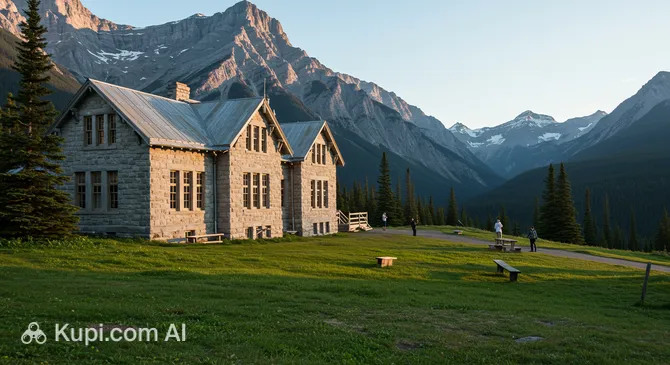
Sulphur Mountain Cosmic Ray Station. Illustration.
Source: Kupi.com AI

Traveler photos:

This site holds the official status of a National Historic Site of Canada and is a significant monument to scientific achievement. The station not only possesses scientific value but is also surrounded by the incredible natural beauty of the Canadian Rockies. The research conducted here played a pivotal role in the global study of cosmic rays, making a substantial contribution to the understanding of solar activity, cosmic radiation, and Earth's magnetic field.

The observation station itself was dismantled in 1981; however, its historical significance remains. The site where cutting-edge scientific exploration once took place is marked by a commemorative plaque. Visitors climbing Sulphur Mountain can not only enjoy breathtaking panoramic views but also connect with the history of Canadian and global science by visiting this landmark site.

Contacts

To get the latest information about visiting the Sulphur Mountain Cosmic Ray Station, its history, and its significance, it is recommended to consult official sources. Detailed information is typically available on the Banff National Park website, as this historical landmark is located within its territory.

How to contactContact
AddressSulfur Mountain Trail, Improvement District No. 9, AB T0L 0C0, Canada
Phone number+1 403-762-1550

What to Do

A visit to the site where the Sulphur Mountain Cosmic Ray Station was once located offers a unique educational experience combining science and nature. This location will be of interest to both history and science buffs, as well as those who simply appreciate beautiful landscapes. Here, you can learn about the significant scientific research conducted in the past and connect with the history of space exploration.

On Sanson Peak, where the station was situated, the meteorological observatory building built in 1903 still stands. Visitors can look through the window and see the interior furnished with vintage pieces, which adds a historical atmosphere to the site. It is a wonderful opportunity to imagine how scientists worked over a hundred years ago.

In addition to historical sites, Sulphur Mountain is famous for its breathtaking views of the surrounding landscapes of Banff National Park. From here, magnificent panoramas open up, providing a perfect backdrop for photos. You can take a walk along the Sulphur Mountain Boardwalk, enjoying the fresh mountain air and the beauty of nature.

To reach the top of Sulphur Mountain, you can use the famous Banff Gondola, which is an exciting attraction in its own right, or choose the hiking trail if you prefer active recreation. Regardless of the method of ascent, a visit to this site promises to be both educational and inspiring, leaving you with vivid impressions of Canada's history and nature.

Getting There

To visit the former Sulphur Mountain Cosmic Ray Station, your journey begins with an arrival in the town of Banff, located in the province of Alberta, Canada. Banff is a renowned tourist hub that attracts many visitors, so it can be reached in various ways, including by car or bus routes from major regional cities such as Calgary.

After arriving in Banff, the primary way to reach the summit of Sulphur Mountain, where the station was once located, is by taking the Banff Gondola. This is the most popular and convenient option, which not only delivers you to your destination but also allows you to enjoy breathtaking views of the surrounding mountains and valleys of Banff National Park during the ascent.

For outdoor enthusiasts and hikers, there is an alternative route — a hike up one of the Sulphur Mountain trails. This option requires more time and physical effort but rewards you with the opportunity to get closer to the national park's nature and enjoy scenic landscapes on the way to the station's historical site.

Nearest city: Banff

History & Facts

The Sulphur Mountain Cosmic Ray Station in Banff, Canada, represents a fascinating chapter in the history of scientific research. This station was built in 1956 by the National Research Council of Canada. Its creation was timed to coincide with a major international event — the International Geophysical Year, which took place in 1957–1958. Notably, Canada built nine such facilities to study cosmic phenomena, and the Sulphur Mountain station became one of the key points in this scientific network.

The construction of the laboratory on Sanson Peak of Sulphur Mountain was completed during the winter of 1956–1957, which was a challenging task in itself given the high-altitude conditions. The station was actively operational for over two decades, from 1957 to 1978, contributing significantly to global science. Following the completion of its mission, the station's structures were dismantled in 1981. Today, a commemorative plaque stands at the site, serving as a reminder of its significant scientific past.

The research conducted at the Sulphur Mountain Cosmic Ray Station was of great importance for understanding the nature of cosmic rays, studying solar activity and its impact on Earth, as well as investigating our planet's magnetic field. The data collected here helped scientists deepen their knowledge in these fields of physics and geophysics. The site attracts not only tourists but also those interested in the history of science.

Interestingly, Sulphur Mountain has an even longer scientific history. As far back as 1903, a meteorological observatory was built here. Thus, for most of the 20th century, this summit served as an important center for various scientific observations, making it not just a scenic viewpoint but a place with a rich scientific heritage.

Time Needed

When planning a visit to the Sulphur Mountain Cosmic Ray Station in Banff, it is worth setting aside at least half a day. This will allow you to enjoy all aspects of this unique location without rushing, starting with the ascent of Sulphur Mountain itself.

The time required for the visit will depend on your chosen method of ascent. The Banff Gondola ride takes about 8 minutes each way, but you should add time for waiting and boarding, especially during the peak season. If you choose to hike up the trail, it will take significantly longer — from 1.5 to 3 hours one way, depending on your physical fitness. At the summit, you will need time to explore the historical sites, including the commemorative plaque at the former station site and the meteorological observatory building. Many visitors also spend time on the observation decks, enjoying the panoramic views.

Considering the time for the ascent and descent, sightseeing at the top, and potential gondola queues, allocating half a day or even a bit more will allow you to fully appreciate the historical significance of the Sulphur Mountain Cosmic Ray Station and the surrounding natural beauty of Canada without any rush.

Working Hours

It is important to note that the Sulphur Mountain Cosmic Ray Station was dismantled in 1981, and a commemorative plaque now stands in its place. Therefore, the station itself does not have "working hours" as such. Access to the site where it was located typically coincides with the operating hours of the Banff Gondola and general access to Sulphur Mountain.

Since there are no specific visiting hours for the memorial site, it is recommended to check the current operating hours of the Banff Gondola and any potential access restrictions on the official Banff National Park website before your trip. This will help you plan your visit and ensure you can reach the summit of Sulphur Mountain, where the station was once located.

Open 24 hours

Nearby

A visit to the Sulphur Mountain Cosmic Ray Station in Banff will undoubtedly be a highlight of your trip. However, to make your journey even more fulfilling and complete, it is worth exploring the attractions located nearby. Discovering the surrounding areas will allow you to dive deeper into the atmosphere of this unique region of Canada and discover new interesting places.

There are several notable sites near the Sulphur Mountain Cosmic Ray Station that can complement your itinerary. From picturesque natural spots to historical buildings, every traveler will find something to their taste, broadening their impressions of their stay in Banff.

NameDistance
Rimrock Resort Hotel1.5 km
Banff Gondola1.7 km
Rundle Bar2.3 km
Banff Springs Hotel2.3 km
Bow Falls Viewpoint2.5 km
Cave and Basin National Historic Site2.6 km
Surprise Corner Viewpoint2.7 km

Have you reached the end of the page?

So the route has been studied inside and out