Support

Royal Alberta Museum

About

The Royal Alberta Museum (RAM) is not just a museum, but a true treasure house of history and culture located in the heart of Edmonton. As the largest museum in the province of Alberta, it is rightfully considered one of Canada's most important cultural centers. Its modern building was specifically designed to house vast and diverse collections telling the story of the region's rich heritage.
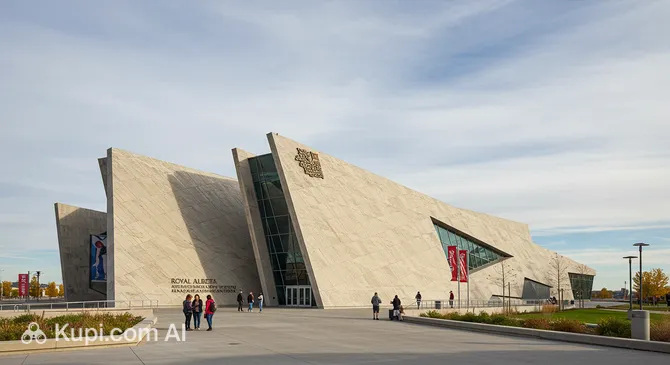
Royal Alberta Museum. Illustration.
Source: Kupi.com AI

Traveler photos:

Visitors to the museum can look forward to a fascinating journey through time and space. The exhibitions are dedicated to Alberta's natural and cultural heritage, ranging from the era of prehistoric animals, whose remains are awe-inspiring, to the stories of Indigenous peoples, their traditions, and their way of life. Here, you can learn much about the province's diverse flora and fauna, as well as trace the stages of exploration and development of this amazing part of Canada.

Thanks to the scale of its collections and the active use of modern interactive technologies, the Royal Alberta Museum offers an exciting experience for visitors of all ages. This is a place where history comes to life and knowledge is presented in an engaging way. It is no surprise that the museum is immensely popular with both locals and tourists seeking to understand Alberta's uniqueness more deeply.

Contacts

If you have any questions or would like to clarify details about visiting the Royal Alberta Museum, you can contact the museum representatives. It is also recommended to check the official website for the latest information.

How to contactContact
Address9810 103a Ave NW, Edmonton, AB T5J 0G2, Canada
Phone number+1 825-468-6000
Websiteroyalalbertamuseum.ca

What to Do

At the Royal Alberta Museum, visitors can immerse themselves in extensive collections through permanent and temporary exhibitions. Here, you can trace the history of the region starting from the era of dinosaurs and ancient animals, whose skeletons and fossils are impressive in scale. Specific galleries are dedicated to ethnography and the lives of Indigenous peoples, providing a deeper understanding of their culture and traditions, as well as the history of European settlement in Alberta. Special attention is given to the province's natural wealth: unique minerals and exhibits showcasing the region's flora and fauna are on display.

For young explorers and their parents, the museum provides special interactive zones. Here, children can do more than just look at exhibits—they can interact with them, participate in fascinating science experiments, and learn about nature through play. In addition, the Royal Alberta Museum regularly hosts themed workshops, informative lectures, guided tours, and educational programs designed for various audiences, from school children to adults.

Getting There

The Royal Alberta Museum is conveniently located in the heart of Edmonton, making it easily accessible for visitors. Due to its central location, reaching the museum is straightforward for both tourists and city residents. This popular site is in close proximity to Edmonton's business and cultural center, as well as other well-known attractions.

One of the most convenient ways to get to the museum is by public transport. Major bus routes pass near the Royal Alberta Museum, and there is a Light Rail Transit (LRT) station nearby, allowing for quick and direct travel from various parts of the city. For those who prefer to travel by private car, parking spaces are available. Bicycle parking is also provided.

If you are staying at one of the central hotels in Edmonton or decide to combine your museum visit with a walk around the city, the Royal Alberta Museum is easily reachable on foot. A walk from most downtown hotels and restaurants will take only 10–20 minutes. Additionally, you can always use a taxi service to be quickly dropped off at the museum entrance from anywhere in the city.

Nearest city: Edmonton

History & Facts

The history of the Royal Alberta Museum dates back to December 6, 1967, when it first opened its doors to the public as the Provincial Museum of Alberta. This moment was a significant milestone in the cultural life of Edmonton and the entire province. Nearly four decades later, in 2005, the museum was granted a high honor: by decree of Queen Elizabeth II, it was bestowed "Royal" status. This event not only highlighted its outstanding contribution to heritage preservation but also cemented its special significance for the region and all of Canada.

Over the decades of its existence, the Royal Alberta Museum has undergone significant development. It has expanded several times and updated its exhibitions to keep pace with the times and offer visitors the most relevant and engaging content. A major milestone was its move to a new, more modern building, which allowed for increased exhibition space and improved conditions for the storage and study of its priceless collections. This move symbolized a new chapter in the museum's life, opening up even more opportunities to showcase Alberta's rich heritage.

The primary mission of the Royal Alberta Museum has always been to preserve, study in depth, and promote the unique natural and cultural heritage of the province of Alberta. Thanks to this dedicated work, the museum has evolved from a popular Edmonton tourist attraction into a respected research and educational center. Important research is conducted here in fields such as archaeology, paleontology, and ethnography, allowing for a continuous expansion of knowledge about the past and present of this remarkable corner of Canada.

Time Needed

When planning a visit to the Royal Alberta Museum, you should expect to spend at least 2–3 hours to fully explore its main exhibitions. This is usually enough time to get a general overview of the museum's rich collections, which cover the natural and cultural history of the province.

However, if you are a major enthusiast of history, paleontology, or natural sciences, or if you are traveling with children who will likely want to linger at the interactive exhibits and in the children's areas, feel free to allocate more time. In this case, to study all the exhibits in detail, stroll leisurely through the halls, and perhaps participate in interactive programs or events, you might need from half a day to a full day. The museum offers so much of interest that time flies by here.

Working Hours

The Royal Alberta Museum is typically open to visitors daily, except for certain holidays. Standard opening hours are usually from 10:00 AM to 5:00 PM. However, hours may vary depending on the season or special events.

It is highly recommended to check the current schedule on the official museum website or by contacting them directly before your visit. You can also find out if advance ticket booking is required, especially during peak seasons or for participating in special programs. Although the museum strives to be accessible year-round, checking for up-to-date information will help you plan your visit in the best possible way.

DayOpening hours
MondayClosed
Tuesday10:00 – 16:00
Wednesday10:00 – 16:00
Thursday10:00 – 20:00
Friday10:00 – 16:00
Saturday10:00 – 16:00
Sunday10:00 – 16:00

Nearby

A visit to the Royal Alberta Museum is undoubtedly a highlight, but exploring Edmonton should not be limited to the museum alone. Exploring the surrounding area will allow you to dive deeper into the city's atmosphere, discover other interesting spots, and get a more complete impression of the cultural and entertainment diversity of Alberta's capital.

Numerous other attractions are located near the museum, each unique and worth your attention. A short walk can lead you to iconic landmarks, cozy cafes, or picturesque spots that will complement your trip. Below is a list of some interesting places located in the immediate vicinity of the Royal Alberta Museum.

NameDistance
Art Gallery of Alberta0.2 km
ICE District0.5 km
Rogers Place0.6 km
Sabor Restaurant0.7 km
Muttart Conservatory1.5 km
Kingsway Mall2.1 km
Añejo Restaurant2.6 km

Have you reached the end of the page?

So the route has been studied inside and out