Support

Coal Harbour Seaplane Base

About the Airport

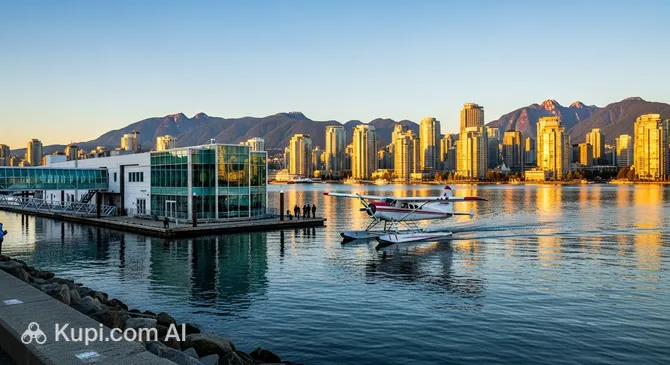
Coal Harbour Seaplane Base. Source: Kupi.com Binoculars

Forget endless terminals and boring waiting halls — in Vancouver, your air journey begins with a true adventure. Coal Harbour Seaplane Base is located right on the water in the heart of the business centre, where the roar of propellers blends harmoniously with the rhythm of the metropolis. This is a unique gateway where, instead of a grey runway, you are greeted by the salty spray of the inlet and a breathtaking panorama of skyscrapers set against the backdrop of majestic mountains.

A flight from here resembles an exciting excursion more than a standard transfer. Passengers board small seaplanes literally just a few steps from the famous Fairmont Pacific Rim hotel and the Olympic Cauldron, enjoying bird's-eye views of Stanley Park and the Lions Gate Bridge immediately after takeoff.

IATA Code CXH
ICAO Code CYHC
City Vancouver
Distance to Centre 0 km (located in the city centre)
Status International
Passengers per Year Approximately 300,000
Schedule Available on carrier websites

Airport Features and Advantages:

Ideal Location. You do not need to waste time travelling out of town or sitting in traffic — the terminal is within walking distance of key hotels, the Vancouver Convention Centre, and the Canada Place cruise terminal.

Speed and Comfort. Check-in here is lightning-fast compared to major international hubs. You can arrive just 20–30 minutes before departure, quickly drop off your luggage, and enjoy a coffee with a view of Burrard Inlet.

Unique Control Tower. Flight control is managed from the world's highest air traffic control tower for seaplane airports, located on the roof of the neighbouring Granville Square skyscraper, ensuring flight safety in the city's busy airspace.

Contact Information

Below is the essential contact information for the Vancouver Harbour Flight Centre, which serves seaplane flights from Coal Harbour.

  • Official Website: Current information about the terminal can be found on the website vhfc.ca. For flight details and bookings, please visit the airline websites, such as Harbour Air or Seair Seaplanes.
  • Help Desk Phone: The general terminal phone number is +1-604-684-1900. For questions related to a specific flight, it is recommended to contact your air carrier directly.
  • Airport Address: Unit #1 Burrard Landing, 1055 Canada Place, Vancouver, BC, V6C 0C3, Canada.
  • Email: For general inquiries regarding terminal operations, you can use the address info@vhfc.ca.
  • Social Media: The most active social media profiles are maintained by the main airlines operating from this seaplane base. We recommend searching for the pages of Harbour Air or Seair Seaplanes.
  • Lost Luggage Information: If you have lost something within the terminal building, please contact the administration via email. If an item was lost on board the aircraft, you must contact your airline's baggage tracing service.
  • Passenger Support Service: Issues related to tickets, check-in, schedules, and special needs are resolved directly through the support service of the airline you are flying with.

How to Get to the Airport

The main advantage of Coal Harbour Seaplane Base (CXH) is its unique location right in the city centre of Vancouver, on the picturesque waterfront. This makes it one of the most accessible airports in Canada. There are several ways to get there, and the choice depends on your location, budget, and amount of luggage.

On Foot. If you are staying at a hotel in downtown, the best way to reach the seaplane base is a walk. The route from most central hotels and landmarks, such as Canada Place, will take between 5 to 20 minutes. This is not only free but also allows you to enjoy views of the bay and mountains.

Public Transport. Vancouver boasts a developed public transport system called TransLink. The nearest station to the seaplane base is Waterfront Station, which is a major transport hub. Here, the SkyTrain metro lines (Expo Line, Millennium Line, and Canada Line) intersect, and the SeaBus marine bus stops. You can walk from the station to the seaplane terminal in about 10-15 minutes. Additionally, many bus routes pass through the city centre, stopping within a few minutes' walk. This is the most economical option after walking.

Taxi and Ridesharing. A trip by taxi or via services like Uber and Lyft from anywhere in downtown will be quick and reasonably priced. Travel time rarely exceeds 10-15 minutes, depending on traffic conditions. This is a convenient option if you have a lot of luggage or are in a hurry. The cost of a trip within the city centre is usually low.

Car and Parking. Arriving at the seaplane base in a private or rented car is not always practical due to heavy traffic in the centre and the high cost of parking. There are several public paid parking lots in the immediate vicinity (for example, at Canada Place and along the streets), but be prepared for high rates. This option may be convenient if you are driving to the airport from the suburbs and departing immediately.

Features and Recommendations. Unlike Vancouver International Airport (YVR), located outside the centre, Coal Harbour offers unmatched accessibility. It is recommended to use public transport or arrive on foot. This ease of transport distinguishes it favourably from other regional airports, such as Abbotsford Airport or Nanaimo Airport, where the journey takes significantly longer. When planning your trip, keep in mind that this is a terminal for seaplanes, which is a unique experience in itself.

Terminals and Map

It is important to understand that Coal Harbour Seaplane Base (CXH) is not a classic airport with huge buildings, but a modern and bustling hydro-aviation hub located right in the centre of Vancouver. Its structure is significantly simpler and more convenient for passengers, which is one of its main advantages.

Instead of a single giant terminal, the airport consists of several separate passenger pavilions (terminals) belonging to the main airlines operating from here, primarily Harbour Air Seaplanes and Seair Seaplanes. Each such pavilion functions as an independent mini-terminal, servicing exclusively the flights of its company. This means you need to arrive at the building of the airline whose tickets you have purchased.

The airport layout is extremely simple. All terminal buildings and floating docks (pontoons) for boarding seaplanes are located linearly along the Coal Harbour seawall. They are in close proximity to each other, so moving between them is just a short walk along the scenic waterfront. No buses or complex transfers are required. Departure and arrival zones are effectively combined: boarding and disembarking of passengers take place on the same floating docks.

Each terminal represents a modern and comfortable lounge. Inside, you will find check-in counters, cosy seating areas, restrooms, and most importantly, panoramic windows with stunning views of seaplanes taking off and landing against the backdrop of mountains and city skyscrapers. Check-in and screening procedures here are incredibly fast. Most airlines recommend arriving just 20-30 minutes before the scheduled departure. Security checks are simplified and do not take much time.

The main recommendation for navigation: check in advance which airline operates your flight and head straight to its building on the waterfront. Thanks to the compactness and logical organization, navigating Coal Harbour Seaplane Base is very easy, allowing you to avoid stress and enjoy the unique atmosphere of seaplane flights from the very first minutes.

Airport History

The history of Coal Harbour Seaplane Base is, in essence, the history of aviation on the west coast of Canada. Although the modern terminal is relatively new, Coal Harbour itself has served as a runway for seaplanes for over a hundred years. This place has witnessed the birth and development of regional air travel, transforming from a simple stretch of water into one of the busiest seaplane airports in the world.

A key moment in the history of this location was 1919, when William Boeing, the founder of the eponymous aircraft manufacturing company, completed the first-ever international airmail flight. He delivered mail from Seattle to Vancouver, landing precisely in Coal Harbour. This event laid the foundation for the future development of hydro-aviation in the region. For decades, seaplanes were the primary means of communication between the mainland and the numerous islands and coastal settlements of British Columbia, transporting passengers, mail, and cargo.

With the growing demand for fast and convenient flights, especially to Vancouver Island, the airport infrastructure was gradually modernized. Modern terminals appeared, such as the Vancouver Harbour Flight Centre, opened in 2011. This ultra-modern building replaced old, scattered facilities and united major operators, such as Harbour Air Seaplanes and Seair Seaplanes, under one roof. The terminal project was designed with environmental standards in mind and harmoniously integrated into the urban landscape of the waterfront.

Among recent achievements associated with the airport, the commitment to sustainability stands out. In December 2019, Harbour Air made history by completing the world's first successful test flight of a fully electric commercial aircraft. This flight took place right here, in the skies over Vancouver, once again confirming Coal Harbour's status as a centre of aviation innovation. Today, the airport not only performs an important transport function but is also a landmark in itself, offering tourists breathtaking panoramic flights over the city and its surroundings.

Services and Amenities

Coal Harbour Seaplane Base (CXH) is a unique and modern terminal located in the very heart of Vancouver. Although smaller in size than major international airports, it offers all the necessary amenities for a comfortable wait before departure, and its location provides access to the entire infrastructure of the city centre.

Passengers have access to a cosy lounge with a panoramic view of the harbour, where one can watch seaplanes taking off and landing. The terminal provides free Wi-Fi, and there are stations for charging electronic devices. While the choice of dining establishments inside the terminal itself is limited to a small cafe or snack machines, literally a few steps from the exit, numerous restaurants, cafes, and shops of the Coal Harbour district and central Vancouver await you.

The terminal is fully equipped to serve passengers with reduced mobility; however, it is recommended to notify the airline in advance if special assistance is required. For travellers with children, basic amenities such as changing tables in the restrooms are provided. Specialized services, such as bank branches or currency exchange points, are absent within the seaplane base itself, but they are plentiful within walking distance.

Thanks to its central location, the seaplane base is situated next to the city's leading hotels, such as the Pan Pacific and Fairmont Waterfront, making it an ideal choice for tourists and business travellers. For meetings and events, one can utilize the facilities of the neighbouring Vancouver Convention Centre, which is one of the largest in Canada.

Where to Eat

Coal Harbour Seaplane Base (CXH) offers a unique dining experience thanks to its location in the very heart of Vancouver. Unlike large international airports, there is no traditional division into many terminals and zones here, and the best gastronomic opportunities are found both within the building and just a few steps away.

For those with little time, a coffee shop operates directly in the Harbour Air terminal. It is the perfect place to quickly have a coffee, tea, or grab a light snack, such as pastries or a sandwich, right before boarding a flight. Opening hours are usually synchronized with the flight schedule, allowing passengers to refresh themselves from early morning until the last departure.

If time allows for a full lunch or dinner with a water view, the best choice is to step out of the terminal. Literally next door is the famous Cactus Club Cafe, offering stunning views of the seaplanes and mountains. They serve modern Canadian cuisine, and it is an excellent place to try fresh local produce, including seafood. The menu always includes vegetarian and gluten-free options.

The Coal Harbour area around the airport abounds with restaurants to suit every taste and budget. Within walking distance, you will find:

  • Fine dining restaurants focusing on British Columbia seafood.
  • Cozy bistros and casual eateries with more affordable prices.
  • Establishments with international cuisine — from Italian to Japanese.
  • Many cafes and bakeries for a light snack.

Thanks to such variety, finding options for vegans, vegetarians, or people with other dietary preferences, including Halal options, will not be difficult. The price range varies from $15-20 for a quick lunch in a cafe to $50-100 and above for dinner in a prestigious restaurant with a view of the bay.

Travel Tips

Travelling from Coal Harbour Seaplane Base is a unique experience that allows you to enjoy breathtaking views of Vancouver from a bird's-eye view. To ensure your trip goes smoothly, use our tips. Unlike large international airports, everything happens much faster here. We recommend arriving approximately 30-45 minutes before departure. This time is sufficient to check in and drop off luggage without rushing.

Check-in and security procedures at the seaplane base are significantly simpler and faster. You can expect minimal queues and friendly staff. Nevertheless, security rules apply, so be prepared for standard checks. The main advantage is the absence of long walks through huge terminals. Everything is within walking distance.

Seaplanes typically have open seating. To get the best seat with a panoramic view, try to be one of the first to board. Window seats are the most valuable. Regarding hand luggage, be especially careful: strict weight and size restrictions apply on small aircraft. Be sure to check baggage allowances with your airline in advance to avoid extra charges. Standard bans on carrying liquids over 100 ml and sharp objects also apply.

Coal Harbour Seaplane Base mainly serves domestic flights, so it is not a typical transit hub. If you have a connecting flight at Vancouver International Airport (YVR), allow at least 3-4 hours for travel and re-check-in. For international connections (e.g., to the USA), customs and border control is surprisingly quick, but all necessary documents, including passports and visas, must be at hand.

To save money, book tickets online and in advance — this increases the chances of finding favourable fares. Travel light to avoid paying for excess weight. The airport's location in the very centre of the city already saves on taxi fares to a remote terminal. In case of a flight delay, which most often happens due to weather conditions (fog or strong wind), do not worry. Nearby the terminal are Stanley Park, the seawall, and numerous cafes where you can comfortably spend time waiting for departure.

Reached the end of the page?

That means the route is fully explored