Support

Boundary Bay Airport

About the Airport

Boundary Bay Airport
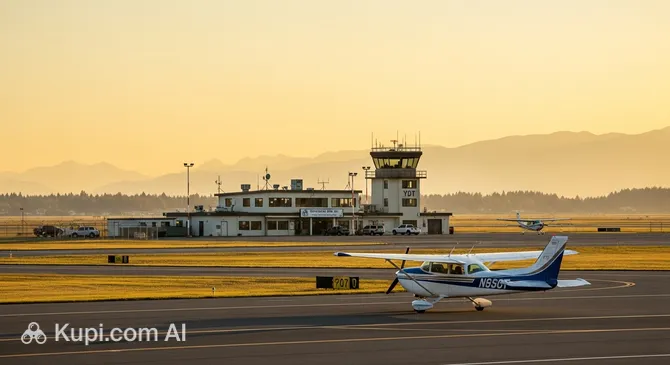
Boundary Bay Airport. Source: Kupi.com AI

Boundary Bay Airport is not just a transport hub, but the true heart of general aviation in Canada. Located in a picturesque setting just minutes from the US border, it serves as the main base for private pilots, flight schools, and corporate charters in the region. A special atmosphere reigns here: instead of the hustle and bustle of huge international terminals, you will be greeted by the coziness of a historic airfield, which nevertheless boasts modern infrastructure and a rich heritage.

IATA CodeYDT
ICAO Code CZBB
City Delta (30 km from downtown Vancouver)
Distance to Center ~28 km
Status Regional / Private Aviation
Passengers per Year Over 200,000 take-offs/landings (predominantly private flights)
ScheduleOnline board

Features and Advantages of the Airport:

Boundary Bay Airport is unique in its role within British Columbia's aviation life. Firstly, it is a historic site: during World War II, it housed an important Royal Air Force training base, and this spirit of history is preserved to this day, especially thanks to the local museum and hangars with retro aircraft.

Secondly, it is a key training center. The airport often holds leading positions in Canada for the number of take-offs and landings precisely due to the numerous flight schools. For tourists, this means an opportunity to see a variety of small aircraft — from training Cessnas to private business jets.

Finally, excellent service for private owners and guests (FBO) is based here, as well as a popular restaurant overlooking the runway, where you can have breakfast while watching the flights. The proximity to the US border and the absence of traffic jams typical of Vancouver's main airport (YVR) make Boundary Bay a convenient alternative for corporate travel.

Contact Information

  • Official Airport Website: www.czbb.com
  • Support Service Phone (FBO): +1 604-952-2532 (passenger and pilot services)
  • Airport Address: 7800 Alpha Way, Delta, British Columbia, V4K 0A7, Canada (approximately 25–30 minutes drive from Vancouver)
  • Email: info@alpha-aviation.ca (for general inquiries and administration)
  • Social Media: Current news and photos can be found on the official airport pages on Facebook and Instagram (search for Alpha Aviation or Boundary Bay Airport).
  • Lost & Found Information: Lost items are stored in the Main Terminal. Retrieval is available daily from 08:00 to 17:30. For clarification, call the support number +1 604-952-2532.
  • Administration: +1 604-946-5361 (Alpha Aviation management office)

How to Get to the Airport

Boundary Bay Airport is located in the municipality of Delta, approximately 28–30 kilometers south of downtown Vancouver. Since this is a general and private aviation airport, public transport connections here are not as intensive as in major international hubs. Nevertheless, you can get here in several ways, the most convenient of which remains by car.

By Car and Car Rental

A personal or rented car is the most popular way to get to Boundary Bay. The drive from downtown Vancouver usually takes 30–45 minutes in the absence of traffic. The route runs south along Highway 99. You will need to drive through the George Massey Tunnel, where congestion is possible during peak hours, so we recommend allowing extra time.

If you plan to rent a car, it is better to do so in advance in the city or at other major transport hubs, for example, if you arrived at Vancouver International Airport. At Boundary Bay itself, rental counters may operate with limitations or by prior reservation through the FBO.

Taxi and Ride-hailing

Taxi services and ride-hailing apps (such as Uber or Lyft) work excellently in the Metro Vancouver region.

  • Pickup Time: Usually 5–10 minutes.
  • Cost: A trip from downtown Vancouver will cost approximately 50–80 CAD depending on demand and time of day.
  • Tip: When ordering a taxi from the airport back to the city, it is better to ask the staff at the administration desk to call a car in advance, as free drivers do not always wait at the general aviation terminal.

Public Transport (TransLink)

Getting to Boundary Bay by public transport is possible, but it will take significantly more time (about 1.5 hours) and will require transfers. There is no direct train or express bus to the terminal.

  1. First, use the Canada Line metro (SkyTrain) and travel to Bridgeport Station.
  2. Transfer to a bus (for example, route No. 601 South Delta) going to Ladner Exchange.
  3. From Ladner Exchange, you can take a local bus (for example, No. 310), which stops on the perimeter of the airfield, but you will have to walk about 15–20 minutes from the stop to the main building.

Due to the complexity of the route, tourists with luggage more often choose the combination "Metro to Richmond + Taxi to the airport".

Parking

One of the pleasant bonuses for visitors is parking. Unlike major hubs, parking spaces at Boundary Bay Airport are usually located in immediate proximity to the terminal. For short-term visits and restaurant guests, parking is often free or costs a nominal amount, making a trip here by car even more attractive.

Transport Alternatives and Neighboring Airports

When planning logistics, it is important not to confuse Boundary Bay with other airports in the region, as distances between them can be significant:

Terminals and Map

The structure of Boundary Bay Airport (YDT) differs radically from what tourists are used to seeing in large international hubs. There are no confusing labyrinths of corridors, trains between terminals, or endless queues for security checks. The entire complex is designed for maximum convenience, speed, and comfort of private aviation.

Number of Terminals and Layout

The airport features one Main Terminal. This is a historic building that has been modernized to meet contemporary standards while retaining the charm of mid-20th-century aviation. Navigation here is intuitive: all main services are concentrated in one place.

The airport territory is divided into several functional zones:

  • Main Terminal: The heart of the airport. Located here are the administration desks, the private flight service area (FBO — Fixed Base Operator), lounges for pilots and passengers, as well as conference rooms.
  • Flight School Zone: Around the main building and along the apron are hangars and offices of numerous flight schools (for example, Pacific Flying Club and International Flight Centre). If you have arrived for training or a sightseeing flight, you will likely need to head to the specific hangar indicated in your booking.
  • Maintenance Hangars: Located along the perimeter and closed to casual visitors.

Departure, Arrival, and Transit Zones

Since Boundary Bay primarily serves private charters and training flights, there is no strict separation into "sterile" departure and arrival zones as in commercial airports.

  • Check-in and Departure: The procedure is simplified to the maximum. Charter passengers arrive in the Main Terminal lobby, where they are met by FBO staff. From entering the building to boarding the plane, it often takes just a few minutes.
  • Arrival: Arriving passengers exit through the same main building or head directly to the parking lot if a transfer is organized directly to the aircraft stairs (by prior arrangement).
  • Transfers: Transfers between "terminals" do not exist as they are unnecessary. Everything is within walking distance. Movement between the Main Terminal and distant hangars is usually done by car or on foot along designated paths.

Terminal Features and Services

Despite its compact size, the Main Terminal offers a high level of service oriented towards VIP clients and aviation enthusiasts.

The main gem for tourists is the SkyHaven restaurant, located inside the terminal. This is not just a food outlet, but a local attraction. Huge panoramic windows overlook the airfield directly, allowing you to watch the take-offs and landings of small aircraft over a cup of coffee or lunch. This makes the terminal an attractive place even for those who are not flying anywhere.

Procedure Times

At Boundary Bay, the concept of "arriving 3 hours before departure" does not apply. Time flows differently here:

  • Check-in: Takes 5–10 minutes. You simply need to check in at the reception desk or meet your pilot.
  • Security Screening: Classical metal detector frames and liquid scanners, familiar on scheduled lines, are usually absent here (depending on the type of flight and destination). Security checks are conducted individually and quickly.
  • Recommendation: For a comfortable departure on a private charter, it is sufficient to arrive 15–20 minutes before the scheduled time. For training flights, it is better to clarify the meeting time with the instructor.

Navigation Tips

When arriving at the airport by car, follow the signs for "Main Terminal" or "Alpha Aviation". Parking is located right in front of the entrance. If your goal is a specific flight school, check their building number (Unit number) on the map in advance, as there are many similar structures on Alpha Way.

Airport History

The history of Boundary Bay Airport (Boundary Bay Airport) is a fascinating journey from a World War II military base to one of the busiest centers of civil aviation in Canada. Its past is inextricably linked with the development of aviation in British Columbia and the preservation of the region's historical heritage.

Birth of a Legend and the War Years

The airport was officially opened on April 10, 1941. Initially, it was created not for commercial flights, but as a key element of the "British Commonwealth Air Training Plan". Based here was the No. 18 Elementary Flying Training School. In those years, the sky over Delta buzzed with the sounds of de Havilland Tiger Moth training biplane engines. Thousands of young pilots preparing for service in the Royal Air Force made their first solo flights here.

Period of Quiet and Change of Profile

After the war ended, the need for mass pilot training disappeared, and in 1946 the base was closed for flights. However, the territory did not become empty: it was transferred to the Royal Canadian Corps of Signals. For several decades, the former airfield was used as a radio interception station and signal processing center, remaining a closed military facility. The runways were used extremely rarely during this period, and the infrastructure gradually deteriorated or was repurposed for the needs of military signalers.

Revival of Aviation

The airport experienced a second birth in the early 1980s. by that time, Vancouver International Airport (YVR) began to choke from overload, and a decision was made to move training and general aviation to a separate site. On July 11, 1983, Boundary Bay was reopened for flights, becoming the main auxiliary airfield of the region. This decision allowed for the unloading of airspace over Vancouver and provided a new home for private pilots.

Era of Modernization

The newest success story began in 2004, when airport management was taken over by Alpha Aviation. From this moment, large-scale reconstruction began:

  • Runways were repaired and extended, allowing for the reception of larger corporate aircraft (for example, Bombardier Challenger and Global Express).
  • In 2010, a new, modern terminal opened, combining passenger service functions, FBO, and an administrative center.
  • Navigation and lighting systems were improved, increasing flight safety in any weather.

Interesting Facts and Achievements

Today, Boundary Bay prides itself not only on its efficiency but also on its unique historical appearance. Here are a few facts that make it special:

  • Architectural Heritage: A massive wooden hangar from World War II has been preserved on the territory. This building is recognized as a cultural heritage site: its unique construction without internal supports was an engineering marvel of the 1940s and is still used for its intended purpose.
  • Impressive Traffic: Despite its status as a regional airport, Boundary Bay regularly ranks in the top 5 airports in Canada by the number of take-offs and landings, often outpacing major international hubs in Ottawa or Montreal due to the intensity of training flights.
  • Cinematic Career: Thanks to colorful views, open spaces, and historical hangars, the airport territory is often used for filming movies and TV series popular in Hollywood (which frequently films in Vancouver).

Services and Amenities

The infrastructure of Boundary Bay Airport (YDT) differs noticeably from familiar international hubs. There are no endless Duty-Free shopping galleries or noisy food court zones. The service is organized on the "boutique airport" principle: everything is compact, exclusive, and fuss-free. The main focus is on the comfort of private aviation pilots and their guests, but regular visitors will also find necessary amenities and a cozy atmosphere.

Restaurants and Shops

The main point of attraction in the terminal is the Skyhawk Restaurant (also known as L'Aromas Skycafe). This establishment is popular not only with travelers but also with local residents of Delta. The main feature of the restaurant is panoramic glazing with a magnificent view of the runway and, in clear weather, the majestic Mount Baker. The menu offers classic North American cuisine: from hearty breakfasts to burgers and home baking. This is the best place to wait for a flight in comfort, watching aircraft maneuvers.

Shopping at the airport has a narrow specialization. There are no usual clothing boutiques here. However, aviation enthusiasts can visit the specialized shop at the flight school (for example, Pacific Flying Club), where one can purchase aviation charts, headsets, clothing with flight symbols, and specialized literature.

VIP Services and Business Lounges

Since Boundary Bay is oriented towards business aviation, the level of comfort here meets the high expectations of corporate clients. The FBO operator (Alpha Aviation) offers access to an exclusive lounge zone in the Main Terminal. Available to guests are:

  • Comfortable leather armchairs in a quiet relaxation area.
  • Complimentary cold and hot beverages, as well as light snacks.
  • Fresh press and satellite television.
  • Concierge services for organizing transfers, hotel bookings, or onboard catering.

Communication and Business Services

For those working on the go, the terminal is equipped with free high-speed Wi-Fi, which operates in the waiting area and restaurant. Finding a place to charge gadgets is not difficult — there are sufficient power outlets in the lobby and lounge zone.

If it is necessary to hold a business meeting immediately after landing, the airport offers modern conference rooms for rent. This allows business travelers to save time by eliminating the need to travel to downtown Vancouver for negotiations.

Financial and Medical Services

It is important to remember that there are no currency exchange points or full-fledged bank branches at the airport. International tourists are advised to stock up on Canadian dollars (CAD) in advance or rely on bank cards, which are accepted in the restaurant and FBO service. An ATM is usually located in the main entrance area, but its availability should be confirmed in advance.

There is no specialized pharmacy or medical center in the building. Terminal staff are trained in first aid, and city services are called in emergencies. The nearest major hospital, Delta Hospital, is located 10–15 minutes away by car.

Facilities for Passengers with Disabilities

Thanks to the single-story layout and modern reconstruction in 2010, the airport is exceptionally convenient for citizens with limited mobility. There is no need to use elevators or overcome long crossings.

  • Entrances are equipped with automatic sliding doors and ramps.
  • Restrooms are fully adapted for people in wheelchairs.
  • Dedicated parking spaces are located in immediate proximity to the terminal entrance.
  • FBO staff provide personal assistance during boarding and disembarking from the aircraft.

Passengers with Children

Despite the absence of playrooms, the airport is family-friendly. The compactness of the terminal means that children will not get tired from long walks to the gate. The main entertainment for little guests is watching the take-offs and landings of small aircraft from the large terminal windows or from the open area near the restaurant. Changing tables are provided in the restrooms.

Hotels Nearby

There are no hotels on the airport territory itself, as most clients prefer to head straight to the city. However, within a 15-minute drive in the municipality of Delta, there are several worthy options for an overnight stay:

  • Coast Tsawwassen Inn: A cozy hotel offering spacious suites. Convenient for those planning to continue their journey by ferry to Victoria.
  • Delta Hotels by Marriott Vancouver Delta: A modern high-level hotel with a restaurant and casino, located near Highway 99. An excellent choice for business travelers.
  • Beach Grove Motel: A more budget-friendly option located closer to the coast and the beaches of Boundary Bay.
Where to Eat

The gastronomic scene of Boundary Bay Airport (YDT) fully reflects its intimate and exclusive character. Here you will not find chain fast food or huge food courts typical of international hubs. Instead, the airport offers a unique experience — a cozy restaurant with a home-like atmosphere, where both tourists and professional pilots dine.

Main Restaurant: Skyhawk Restaurant

There is one main establishment operating at the airport, which is a center of attraction for all visitors to the Main Terminal. Skyhawk Restaurant (often simply called "Skycafe") is a classic North American bistro located in the public zone (landside). This means that anyone can visit it, even without a plane ticket.

  • Location: Main Terminal, immediately after the entrance. The hall offers a panoramic view of the apron, runway, and the picturesque Mount Baker in the distance.
  • Cuisine: Traditional Canadian and American. The emphasis is on "comfort food" — hearty, simple, and tasty.
  • Average Bill: 15–25 CAD per person for a full lunch with a drink.
  • Opening Hours: The establishment is oriented towards day flights. Usually open from early morning (around 08:00) until mid-afternoon (15:00–16:00). The kitchen closes in the evening.

What to Try

The restaurant menu is small but time-tested. Local regulars recommend:

  • Aviator's Breakfast: Served until noon. These are large portions of scrambled eggs with beef bacon, sausages, and crispy hash browns. The perfect start before a flight.
  • Signature Burgers: Considered some of the best in the Delta area. Beef patties are served with French fries or salad.
  • Homemade Soups: An excellent choice on a cool rainy day, typical for the Vancouver climate.

Dietary Options (Vegetarian, Halal, Gluten-Free)

Since the kitchen is small, there are no specialized menus here, but the staff usually accommodates guests:

  • Vegetarians: The menu always includes egg sandwiches, vegetable salads, toast, and pastries.
  • Gluten-Free: Salads are available, but for people with celiac disease, the choice is limited (traces of gluten are possible in the kitchen). You can ask for a burger without a bun ("leaf style" — in lettuce leaves).
  • Halal and Kosher: There are no certified Halal dishes on the menu. Tourists strictly observing this diet are recommended to stick to vegetarian options or beverages.

Quick Snacks and Coffee

If you do not have time to wait for hot dishes, a coffee shop zone operates in the restaurant. Here you can quickly grab:

  • Freshly brewed coffee or tea.
  • Muffins, cookies, and other baking goods, which are often baked right on the spot.
  • Ready-made sandwiches in the display case (availability depends on the time of day).

Alternatives: Vending and Catering

For those arriving or departing outside restaurant hours, vending machines with drinks, chips, and chocolate bars are installed in the terminal building.

Passengers of private charter flights can count on a different level of service. The FBO operator (Alpha Aviation) provides onboard catering services. By pre-order, delivery of dishes from the best Vancouver restaurants directly to the aircraft can be organized for you, including premium beverages and special dietary sets.

Tips for Tourists

If you plan a full lunch, try to arrive between 11:00 and 14:00. At this time, the kitchen operates at full capacity. Tables by the window with a view of the planes are in high demand, so if you want to take beautiful photos of taking-off small aircraft over a cup of coffee, you may have to wait a little or arrive slightly earlier than the peak lunch time.

Travel Tips

Traveling through Boundary Bay Airport (YDT) differs radically from the experience of flying through large commercial hubs. There are no crowds, long queues, or stress, but the specifics of general and private aviation dictate their own rules. To ensure your flight goes flawlessly, use the following recommendations.

Optimal Arrival Time

Forget the rule of "arriving 3 hours early." At Boundary Bay, everything happens much faster. If you are flying on a private charter or training flight, arriving 20–30 minutes before departure is usually more than enough. This time is sufficient to meet the pilot, have a coffee in the lounge, and calmly proceed to the aircraft. Arriving too early can be tiring, as there is not much entertainment in the terminal.

Registration and Security Specifics

The check-in procedure here resembles checking into a boutique hotel rather than crossing a border. Instead of check-in counters, you will be met at the FBO reception (in the main terminal). Security screening is often formal, however, the pilot is obliged to conduct a safety briefing before boarding. Listen carefully to instructions on how doors open and where emergency equipment is located — in small aircraft, this is critically important.

Seat Selection: Why the Pilot Decides

Unlike large liners, in small aviation, you cannot always choose a window seat at your wish. The main factor here is aircraft balancing (Weight and Balance). The pilot distributes passengers in the cabin depending on their weight to ensure flight safety.

  • Be ready to state your exact weight (including luggage) before the flight.
  • If you are flying as a couple or a group, you may be seated separately.
  • Do not be offended by a request to change seats — this is a matter of safety, not service.

Hand Luggage and Baggage: Softness Matters

Luggage compartments in private aircraft (Cessna, Piper, King Air) often have non-standard shapes and limited volume.

  • Main Tip: Use soft sports bags or backpacks instead of hard suitcases on wheels. A soft bag is easier to place in a small compartment.
  • Restrictions: Strictly clarify the allowable weight with your operator. An excess of even 5 kg can be a reason for refusal to load luggage.
  • Liquids: The "100 ml" rule often does not apply here (depending on the flight), but transporting dangerous substances (gas cylinders, flammable liquids) is strictly prohibited.

Recommendations for Transit Passengers

Boundary Bay does not have direct air connections with major airports under a single ticket. If you have a transfer to an international flight at Vancouver Airport (YVR), remember:

  • You must collect your luggage yourself and get to YVR by ground transport.
  • Allow at least 1.5–2 hours for the transfer between airports (taking into account taxi time and traffic in the tunnel).
  • There is no direct shuttle, so book a taxi or transfer in advance through the FBO administrator.

Customs Control

If you are arriving from the USA (for example, from Seattle), customs procedures at Boundary Bay are very comfortable but require preparation. Border services officers (CBSA) are not on duty here around the clock. Your pilot or charter company must call them in advance (at least 2 hours before arrival). Ensure all documents are in order, as verification is often conducted right on board or in a special room of the terminal without unnecessary witnesses.

Saving Time and Money

To avoid unnecessary expenses, take advantage of free parking if you are traveling by car. Meals on board small aircraft are usually not provided or limited to snacks. To avoid overpaying for catering, we recommend having a hearty lunch at the Skyhawk restaurant in the terminal before departure or taking a light snack (sandwiches) with you, if permitted by the flight operator.

Actions in Case of Flight Delay

General aviation depends much more on weather conditions than large liners. Fog or strong wind can delay departure for several hours.

  • Have a Plan B: If the weather is unflyable, check the schedule of ferries (BC Ferries) to Victoria or Nanaimo, as they run more stably.
  • Waiting: If the flight is postponed, do not sit in the plane. Return to the terminal lounge — there is Wi-Fi, comfortable chairs, and coffee. FBO staff will advise on the current forecast.

Reached the end of the page?

That means the route is fully explored