Support

Municipal de Linares Airport

About the Airport

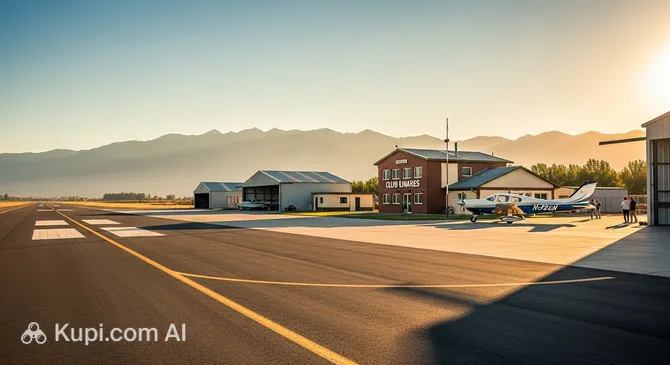
Municipal de Linares Airport. Source: Kupi.com Binoculars

Municipal de Linares Airport (ZLR) is a compact and cosy air hub located just a few minutes' drive from the heart of the Chilean city of the same name. Although you will not find massive terminals or the usual bustle of major international hubs here, this airfield plays a key role in the life of the Maule region, serving light aviation and private flights. For travellers choosing bespoke itineraries, it becomes a convenient gateway to the picturesque Andean foothills and the rich agricultural heritage of central Chile.

AirportMunicipal de Linares Airport
IATAZLR
ICAOSCLN
CityLinares
TimezoneAmerica/Santiago
ScheduleOnline board

Features and Advantages of the Airport:

The main advantage of the Linares air hub is its exceptional proximity to the city. Located just 3 kilometres east of the centre, the airport allows guests to be within the city limits almost immediately after landing, bypassing long transfers and traffic jams. This makes it an ideal choice for business visits and those who value their time.

The airfield serves as an important starting point for exploring the natural beauty of the region. It is convenient to start your journey here towards the Achibueno River Nature Reserve and the Andean foothills (Precordillera), often called the "Patagonia of Central Chile" for their stunning landscapes. The absence of heavy commercial airline traffic guarantees a calm atmosphere and quick service for private pilots and charter flight passengers.

Contact Information

  • Official Website: None (the airport is managed by the Directorate General of Civil Aviation of Chile — DGAC; technical information can be found on their resources).
  • Address: Aeródromo Linares, Camino San Antonio, Linares, Región del Maule, Chile (approximately 3–4 km east of the city centre).
  • Information Desk Phone: There is no single number for passengers, as the airport does not serve scheduled commercial flights.
  • Email: There is no public e-mail for tourists.
  • Social Media: There are no official administration accounts. Current information about light aviation flights is often published by the local flying club "Club Aéreo de Linares" on Facebook.
  • Lost Luggage and Support: There is no centralised "Lost & Found" service on the premises. All questions regarding luggage and service must be resolved directly with the pilot of your charter flight or the receiving party.

How to Get to the Airport

Getting to Municipal de Linares Airport (ZLR) is quite simple, as it is located in immediate proximity to the city limits. Since this airfield does not serve scheduled commercial flights by major airlines, there is no complex transport interchange system typical of international hubs here. The journey from the city centre will take you very little time.

Taxi and Transfer

The most convenient and reliable way to get to the airfield is to use a taxi service. In Linares, the so-called "Radio Taxis" are popular. You can order a car by phone or find a rank in the city centre (for example, near the Plaza de Armas). Ride-hailing apps may also work, but classic taxis are more common here.

  • Travel Time: The trip from the central square to the runway usually takes about 10–15 minutes.
  • Cost: Due to the short distance (about 3–4 km), the price of the trip will be affordable. The estimated cost is from 3,000 to 5,000 Chilean pesos (CLP), however, it is recommended to check the price with the driver before boarding, as meters are not always used.

Car Rental and Private Transport

If you are travelling by rental car, getting to the airport will be effortless. You need to head east from the city. The main landmark is the Camino San Antonio road or the exit towards the foothills (Precordillera). The road surface in this area is generally good and paved.

Please note that there are no car rental offices directly at the airfield itself. It is better to rent a car in advance in the centre of Linares or at the major transport hubs through which you arrived in the region.

Parking

The airport infrastructure is oriented towards private pilots and flying club members. There is a small open car park next to the administrative building or hangars. As a rule, parking is free for visitors and those meeting passengers, but the number of spaces is limited. Security may be basic, so it is not recommended to leave valuables in the car cabin.

Public Transport

There are no specialised shuttle buses or metro lines leading to the airport in Linares. However, since the airfield is located near residential areas and the road to San Antonio, local shared taxis — "colectivos" — may pass by. You can ask the driver to stop as close as possible to the entrance of the airfield, but be prepared to walk a few hundred metres to the terminal itself. This option is suitable only for travellers without heavy luggage.

Alternative Airports for Tourists

It is important to remember that Municipal de Linares accepts only light aviation. If you plan to fly to this region on a scheduled flight, you will likely have to use one of the major airports nearby, and then get to Linares by train or bus:

  • Carriel Sur Airport (Concepción) — the nearest major airport, located approximately 170 km away. It receives many domestic flights and is convenient for those travelling through the south of central Chile.
  • Arturo Merino Benítez Airport (Santiago) — the country's main international gateway. Located 280–300 km from Linares. From here you can get to the city by comfortable train (EFE service) or intercity bus in 3–4 hours.

Also within a radius of 350–450 km are regional hubs such as Temuco Airport (ZCO) to the south, or Argentine airports (for example, El Plumerillo Airport in Mendoza), however, ground connections with them may be difficult due to the need to cross the Andes.
Terminals and Map

Since Municipal de Linares Airport (ZLR) is a light aviation facility, its structure differs radically from familiar international hubs. Here you will not find multi-level terminals, long travelators, or confusing gate maps. The airfield infrastructure is extremely concise and functional, making navigation intuitively clear even for those using private aviation services for the first time.

Number and Purpose of Terminals

In fact, the airport is a single complex combining administrative functions and a passenger service zone. The territory is conditionally divided into:

  • Main Administrative Building: This houses the flight operations office and the headquarters of the local flying club (Club Aéreo de Linares). This is effectively the main "terminal" for passengers, where meeting with the pilot and waiting for departure takes place.
  • Hangar Zone: Located in immediate proximity to the main building. Aircraft are serviced and stored here. Passengers access the aircraft directly across the apron, bypassing jet bridges and buses.

Navigation Scheme and Service Zones

It is impossible to get lost at Municipal de Linares. The entire journey from the car park to the aircraft steps takes literally a couple of minutes. Inside the main building, there is no rigid separation into arrival and departure zones typical of commercial airports.

Departure and Arrival Zone: This is a unified space. Upon arrival at the airfield, you immediately enter the guest area or go directly to the airfield accompanied by staff. Arriving passengers also head straight to the exit or to the transport waiting for them.

Infrastructure Features:

  • Waiting Lounge: Represents a cosy rest room in the flying club building. There are no Duty Free shops or branded boutiques here, but basic amenities such as restrooms and seating areas are usually available.
  • Dining: There are no full-service cafes or restaurants on the premises. It is recommended to arrange snacks in advance, although charter pilots often offer drinks and light refreshments on board.

Check-in and Security Procedures

The main advantage of flying from Linares is the absence of bureaucratic delays.

  • Arrival Time: You do not need to arrive 2–3 hours early. Usually, it is enough to arrive at the airfield 15–20 minutes before the scheduled departure time.
  • Check-in: Takes place in express mode. Most often, this is simply a document check by the pilot or a representative of the receiving party.
  • Security Check: Standard queues for luggage scanning and personal searches are absent. Security checks are carried out according to simplified protocols for light aviation, which significantly saves time.

Navigation Recommendations

Given the compactness of the facility, you will not need special maps. The main advice is to contact your pilot or charter broker in advance to clarify the exact meeting place (usually the car park in front of the main building). If you are arriving in Linares, the taxi or transfer driver will be able to drive up almost to the exit from the airfield, making logistics as comfortable as possible.

History of the Airport

The history of Municipal de Linares Airport (ZLR) is a chronicle of the development of private aviation in the Maule region, written by enthusiasts and patriots of their land. Unlike many air hubs created by government decree, this airfield was born thanks to the dream of local residents to conquer the sky and connect their agricultural district with the rest of the world.

Birth of the Airfield: The 1940s

The foundation for the airport's emergence was laid back during the Second World War. The key date is considered to be 1944, when a group of enthusiastic pilots founded the local flying club — Club Aéreo de Linares. It was this community that became the driving force behind the project. Two years later, in 1946, land was officially purchased for the arrangement of the airfield. In those times, it was a simple dirt strip serving as a base for light aircraft delivering mail and urgent cargo.

A New Era: Reconstruction of 2019–2020

For a long time, the airfield remained a modest facility with a dirt runway dependent on weather conditions. A turning point in its modern history was the large-scale modernisation programme carried out in 2019–2020. This period became a second birth for the air hub:

  • Runway Paving: The main achievement was the replacement of the dirt surface with modern asphalt. This allowed the airport to receive aircraft year-round, eliminating downtime due to rain and muddy conditions.
  • Naming: After the opening of the updated complex, the airfield received the official name "Aeródromo Carlos del Campo Rivera" — in honour of a prominent figure who contributed to the development of local aviation.
  • Infrastructure: Perimeter fencing and the windsock area were updated, which significantly increased the safety of take-offs and landings.

Role in Regional History and Emergencies

Linares Airport has repeatedly proven its strategic importance at critical moments. It played a special role after the devastating earthquake of 2010. When land highways were damaged, it was the region's small airfields, including Linares, that became "air bridges". Flights took off from here to assess the scale of destruction, and first aid arrived here when truck access was difficult.

Interesting Facts

The life of the airport is full of events that shape its unique character:

  • Pilot Forge: Since its foundation in 1944, the local flying club has trained hundreds of pilots. Many of them started their journey on this strip and now fly liners for major commercial airlines.
  • Guardian of Forests: In the summer season, the airfield turns into an operational base for aircraft fighting forest fires. The modernisation of the runway allowed the use of heavier equipment to protect the unique nature of the Andean foothills.
  • Social Wings: The airport regularly hosts the "Aguiluchos del Aire" (Little Eagles of the Air) campaign, during which pilots gift free flights to children and the elderly, allowing them to see their hometown from above for the first time.

Today, the updated Municipal de Linares Airport continues to develop, preserving the spirit of aviation brotherhood and remaining a reliable transport hub for the entire region.

Services and Facilities

Given the status of Municipal de Linares Airport (ZLR) as a light aviation airfield without scheduled commercial flights, the range of services here differs significantly from what tourists are used to seeing in major international hubs. There are no huge shopping galleries or food courts, however, the compactness and privacy create a special level of comfort. The infrastructure is focused on the basic needs of pilots and private flight passengers who primarily value speed and the absence of queues.

Restaurants, Cafes and Shops

There are no Duty Free shops, souvenir stalls, or chain coffee shops on the airfield territory. Passengers are advised to consider the following points:

  • Dining: There are no full-service food outlets in the terminal. If you have a flight ahead, catering issues (drinks, sandwiches, light snacks) are usually resolved in advance through your charter operator or pilot.
  • Shopping: Since the airfield is located just 3–4 km from the city centre, it is better to make all necessary purchases in Linares before departure.

Lounges and VIP Service

At Municipal de Linares, there is no separation into "economy" and "business" classes in the usual sense. The entire experience here can be described as VIP service by default:

  • Club House: The flying club building (Club Aéreo de Linares) acts as a general waiting lounge. It is a quiet and calm place where you can rest before departure in an atmosphere of aviation camaraderie.
  • Privacy: The absence of tourist crowds guarantees silence and personal attention from the staff or the receiving party.

Connectivity and Electricity

  • Wi-Fi: Wireless internet is usually available in the administrative building for official use and the needs of flying club members. You can check the password with staff on site.
  • Charging Stations: There are no specialised stands with USB ports here, but you can always find free standard Chilean sockets (types C and L) in the waiting area to recharge your phone or laptop.

Financial and Medical Services

Infrastructure for resolving everyday issues at the airfield is minimal:

  • Banks and Currency Exchange: ATMs and currency exchange points are absent on the premises. It is recommended to carry cash Chilean pesos (CLP) for paying for taxis or small expenses. The nearest banks are located in the centre of Linares, in the Plaza de Armas area.
  • Medical: There is no first aid station with a permanent doctor. There is a first aid kit in the building for emergencies. In case of serious health problems, the Linares city hospital is just a 10-minute drive away.

Services for Passengers with Children and Reduced Mobility

Thanks to the single-storey architecture, the airfield is convenient for all categories of passengers:

  • Accessibility: The absence of stairs, escalators, and long walkways makes boarding the aircraft extremely simple for people with disabilities and parents with strollers. The path from the car to the steps is only a few dozen metres.
  • Personal Assistance: There are no specialised escort services here, but pilots and flying club staff always personally help passengers with boarding and disembarking.
  • For Children: Playrooms are not provided, but the atmosphere of the airfield itself, where you can see planes up close, usually arouses great interest in young travellers.

Hotels and Accommodation

There are no hotels on the airfield territory itself. However, proximity to the city allows travellers to choose from a variety of accommodation options in Linares:

  • Hotels in the Centre: Located 10–15 minutes away by car are comfortable city hotels, such as Hotel Parada Linares (a popular option with good service) or cosy colonial-style guest houses.
  • Countryside Rest: For those wishing to enjoy nature, lodges and cabañas are available closer to the Andean foothills, which are also easy to reach from the airport.

Business Services

There is no specialised business centre with conference halls here. However, the quiet environment in the flying club building allows for short negotiations or working with documents while waiting for departure if necessary. If you require full conference service, it is better to use the services of hotels in the city.

Where to Eat

Due to the fact that Municipal de Linares Airport (ZLR) is a small airfield for private and light aviation, and not a major passenger hub, it is important for travellers to know in advance about limitations in the catering sector. The infrastructure familiar to tourists with food courts, restaurants, and coffee shops is absent here.

Restaurants and Cafes on the Premises

Inside the single administrative building and hangar zone, there are no operating cafes or restaurants. The flying club building (Club Aéreo) has only a basic rest area. At best, you can count on a water cooler or a coffee machine for staff, which guests might be offered, but the availability of snacks or hot meals cannot be guaranteed.

Food Arrangements for Passengers

Since the airfield serves charter flights, the issue of food is resolved differently than in commercial airports:

  • In-flight Catering: If you are flying on a private aircraft, ordering food and drinks is usually agreed with your broker or pilot in advance. Sandwiches, fruit, soft drinks, or a full lunch from city restaurants can be delivered on board.
  • Self-preparation: It is strongly recommended to purchase food and water in the city of Linares before leaving for the airport, especially if you have a long flight ahead.

Where to Eat Near the Airport?

Thanks to the airport being just 3–4 km from the centre of Linares (about 10–15 minutes by taxi), passengers can enjoy excellent cuisine in the city before departure or immediately after arrival. Linares and the Maule region are famous for their agricultural traditions, so it is worth looking for fresh local produce here.

What to Try in the Region (Gastronomic Recommendations):

  • Maule Valley Vineyards: This region is the heart of Chilean agriculture. Although there are no beverage facilities at the airport, the surrounding area is famous for its historic vineyards and grape production.
  • Traditional Empanadas: Chilean patties filled with chopped beef, onions, olives, and egg (empanadas de pino) are prepared magnificently here. This is an ideal option for a quick snack ("para llevar") that is convenient to take with you on the plane. Note: Please check with the vendor regarding Halal suitability as traditional recipes use beef but may vary.
  • Mote con Huesillo: A traditional non-alcoholic dessert drink made from peaches and wheat. On a hot day, it can be bought at street kiosks on the way to the airport.

Dietary Food (Vegetarian, Vegan, Gluten-Free)

There are no specialised options at the airfield itself. If you follow a special diet:

  • For Vegans and Vegetarians: In summer, the region abounds with fresh fruits (cherries, berries, watermelons) and vegetables, which can be bought at local markets. In Linares restaurants, you can always order "Porotos Granados" (a stew of beans, corn, and pumpkin) — this is often a vegan dish, but it is better to clarify the composition of the broth.
  • Gluten-Free Food: There are few specialised shops, so it is better to stock up on gluten-free products in large supermarkets in Santiago or central Linares.

Time Recommendations

Since the departure procedure takes minimal time, you do not need to arrive early to have lunch at the airport. The best strategy for a full lunch is to eat leisurely at a restaurant in the city centre (average bill 10,000 – 20,000 CLP per person), and then reach the runway in 15 minutes.

Travel Tips

Since Municipal de Linares Airport serves exclusively light aviation and private flights, the travel experience through it differs radically from standard flights on scheduled airlines. There is no usual hustle here, but there are special rules of etiquette and safety. Here are some useful tips to help make your flight as comfortable as possible.

Arrival Time Recommendations

Forget the rule of "arriving 3 hours early". In Linares, everything happens much faster.

  • Optimal Time: Arrive at the airfield 20–30 minutes before the agreed departure time. This is quite enough to meet the pilot, load luggage, and undergo a brief briefing.
  • Do Not Be Late: Charter flights have their own "slots" and flight plans. A passenger's lateness can lead to losing the departure slot or a change in the route due to deteriorating weather.

Check-in and Security

There are no check-in counters or endless security queues here, but safety remains a priority.

  • Documents: Always keep your identification document (passport or ID card) with you. The pilot is obliged to check the details of all passengers before boarding the aircraft.
  • Personal Check: The procedure is informal but strict. The pilot may ask you to show the contents of bags. The main rule is complete trust in the crew.

Tips on Choosing a Seat on the Plane

In small aircraft (like Cessna or Piper), there are no numbered seats, and seating depends on the aircraft's centre of gravity.

  • Weight Balance: The pilot will assign you a seat based on your weight and cargo distribution. This is a safety issue, so you cannot argue or change seats without permission.
  • Best Views: The good news is that in small planes, an excellent view opens up from any seat. If you want to sit next to the pilot (in the co-pilot's seat), discuss this possibility in advance — often this is allowed and offers an unforgettable experience.

Hand Luggage and Baggage

Luggage compartments of light aircraft are very limited in volume and load capacity.

  • Type of Bags: Use soft travel bags or backpacks instead of rigid suitcases on wheels. They are much easier to place in a compact luggage compartment.
  • Weight: Strictly observe the agreed weight limit. Overloading is unacceptable in light aviation.
  • Prohibited Items: The rules are standard for all aviation — no explosives, flammable liquids, or compressed gases. Sharp objects (knives, scissors) must be securely packed and checked in.

For Passengers with Connections

Linares Airport operates autonomously and has no code-sharing agreements with major airlines.

  • Planning Connections: If after a private flight from Linares you need to transfer to a large liner in Santiago or Concepción, allow a large margin of time (minimum 3–4 hours).
  • Luggage Transfer: Your luggage will not be transferred automatically. You will need to collect it from the plane in Linares and deliver it yourself to the next departure point.

Customs Control

The airfield serves predominantly domestic flights, so customs are generally absent here.

  • Agricultural Control (SAG): Chile has strict phytosanitary rules. Even on domestic flights, it is not recommended to transport unpacked fruits or animal products without factory labelling, especially if you are flying from agricultural zones.

How to Save Time and Money

  • Dining: Do not expect to buy food at the airport. Have lunch in the city of Linares (prices there are significantly lower than in tourist zones) or buy a snack at a supermarket in advance.
  • Transfer: Use a regular city taxi or ride-hailing apps instead of ordering an "elite transfer". The distance is short, and there is no point in overpaying for the car class.
  • Group Flights: If you are chartering a plane, the cost is usually fixed per flight hour, not per seat. Full occupancy of the aircraft (3–4 people) will make the flight cheaper per passenger.

What to Do in Case of Flight Delay

Light aviation is highly dependent on weather conditions. Fog, strong wind, or rain can delay departure.

  • Have a Plan "B": Always keep an alternative option in mind. From Linares to Santiago, you can get by train or bus in 3–4 hours. If the weather is unflyable, ground transport will be your salvation.
  • Waiting: In case of a delay, take advantage of the flying club's hospitality. This is an excellent place to chat with local pilots and learn more about aviation in the Maule region.

Reached the end of the page?

That means the route is fully explored