Support

San Rafael Airport

About the Airport

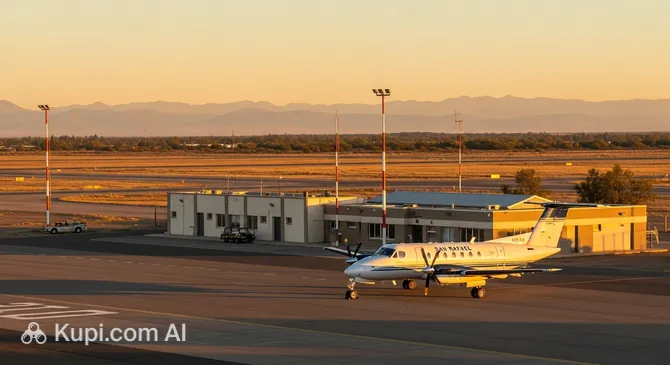
San Rafael Airport. Source: Kupi.com Binoculars

San Rafael Airport, also known as Santiago Germano Airport (Aeropuerto Santiago Germano), is the air gateway to the city of the same name and the southern part of the Mendoza province. Located in the heart of Argentina's vineyard region, this compact airport serves as a starting point for travelers wishing to explore picturesque landscapes, canyons, and famous vineyards. Opened in 1997, it provides a key link between the region and the country's capital, making travel to this corner of Argentina fast and convenient.

IATA Code AFA
ICAO Code SAMR
City San Rafael
Distance to center 6 km.
Status Domestic.
Annual Passengers approx. 22,000 (2021).
Popular Airlines Aerolineas Argentinas.
Schedule online board "San Rafael Airport"

The main advantage of the airport is its convenient location just a few minutes' drive from the city center of San Rafael, allowing you to quickly reach your hotel and begin exploring the surroundings. Despite its modest size, the airport effectively handles domestic flights, primarily connecting the region with Buenos Aires. This makes it an ideal choice for tourists who value saving time and prefer direct routes to natural wonders such as the Atuel Canyon and numerous reservoirs. The airport is managed by Aeropuertos Argentina 2000, ensuring compliance with national service standards.

Contact Information

Below you will find contact information for San Rafael Airport (AFA), which will help you plan your trip and resolve any potential issues.

  • Official Website: Up-to-date information on flights, services, and regulations can be found on the official airport page on the Aeropuertos Argentina 2000 operator's website: www.aa2000.com.ar/sanrafael.
  • Information Desk Phone: For general inquiries, you can contact the airport phone: (+54 260) 442-2331 or the unified Aeropuertos Argentina 2000 support service at (+54 11) 5480 6111.
  • Airport Address: Ruta Nacional 143, (5600) San Rafael, Mendoza Province, Argentina.
  • Email: For written inquiries, use the central customer support email: atencionalcliente@aa2000.com.ar.
  • Social Media: Follow news and updates from the airport operator Aeropuertos Argentina 2000 on their official pages on Facebook, X (formerly Twitter), and Instagram under the handle @aa2000oficial.
  • Lost Luggage Information: In case of lost luggage during a flight, first contact your airline's representative at the airport. For items left in the terminal building, contact the information desk or the Airport Security Police (PSA).
  • Passenger Support Contacts: For assistance and consultations, you can use the airport information phone or the operator's general email.

How to Get to the Airport

San Rafael Airport (AFA), officially known as Aeropuerto Suboficial Ayudante Santiago Germano, is located just a few kilometers from the center of San Rafael. Thanks to this convenient location, getting to the terminal is effortless. A trip by car usually takes about 15-20 minutes depending on traffic conditions.

Taxis and Transfers are the most popular and convenient way to get to the airport. You can easily hail a taxi in the city or book a "remis" (a private car with a driver at a fixed price) through your hotel or a specialized service. This is particularly convenient if you are traveling with luggage. The cost of the trip is moderate, but it is recommended to clarify the price before departure to avoid misunderstandings.

Public transport options going directly to the airport may be limited. Some city bus routes pass relatively close by, but you will likely need to walk part of the way. This option is suitable for budget travelers with light luggage who are willing to spend extra time.

For those planning to actively explore the vineyard region of Argentina, renting a car is an excellent solution. Several rental agencies operate in the city of San Rafael. With a rented car, you can not only reach the airport comfortably but also move freely around the surroundings. The airport has parking where you can leave your vehicle for both short and long terms.

If you are planning a route with transfers, consider other airports in the region. The largest nearby one is El Plumerillo Airport (MDZ) in Mendoza, located approximately 200 km away. Also, a few hours' drive away are the airports in San Luis and San Juan. From these cities, you can reach San Rafael by intercity bus or rental car.

Terminals and Map

San Rafael Airport (AFA), officially known as Aeropuerto Suboficial Ayudante Santiago Germano, is a small regional air hub serving the city of the same name in the Mendoza province. Its structure is extremely simple and focused on the convenience of passengers traveling on domestic flights.

The airport operates with only one passenger terminal. It is a compact single-story building that handles both arriving and departing flights. Thanks to this, navigation through the airport is intuitive, and you do not have to worry about transfers between terminals—there simply aren't any here. All zones are within walking distance of each other.

The terminal layout is very logical. Upon entering, you immediately find yourself in the general area where airline check-in counters are located. To the left or right of them, depending on the current space organization, is the entrance to security screening, followed by a small waiting room (departure zone) with a boarding gate. The arrival zone is a separate wing or part of the hall where passengers enter after disembarking from the plane. Here you will find the baggage claim belt and the exit to the city, where taxis and car rental representatives usually wait.

Completing all procedures at San Rafael Airport usually takes little time. Due to the low passenger traffic, queues for check-in and security are usually minimal. Nevertheless, the standard recommendation is to arrive at the airport approximately 1.5-2 hours before departure. This time will be more than enough to check in luggage without haste, obtain a boarding pass, and proceed to the waiting area.

Airport History

The history of the airport in San Rafael, officially known as Suboficial Ayudante Santiago Germano Airport, is inextricably linked with the development of the entire region. The air harbor received its name in honor of a local native, a pilot of the Argentine Air Force, who tragically died in a plane crash in 1953. This fact highlights the airport's deep roots in the local community and its historical significance.

Over the decades, the airport has gone through several stages of development, transforming from a modest airfield into an important transport hub. A key moment in its modern history was a large-scale reconstruction completed in the early 2020s. During the modernization, the runway was completely renovated, a new, more spacious and comfortable passenger terminal was built, and modern navigation equipment was installed. These improvements allowed the airport to accommodate more flights and improve the quality of passenger service.

Although exact data on the founding year of the airfield is difficult to find, its history is an example of consistent growth in response to the region's needs. The airport's main achievement can be considered its transformation into a key air gateway for tourists heading to famous vineyards, the picturesque Atuel Canyon, and other natural beauties. Today, it plays a crucial role in the economy and tourism appeal of San Rafael, ensuring reliable connections with the capital and other cities in the country.

Services and Facilities

San Rafael Airport (AFA) is a small regional airport offering a basic set of services for a comfortable wait before your flight. Since the terminal is compact, all amenities are within walking distance.

For passengers, there is a café where you can have a snack, drink coffee, or buy soft drinks before departure. There is also a small shop selling souvenirs, local products, and travel essentials. The selection of establishments and goods is limited, which is typical for airports of this size.

Free Wi-Fi is available throughout the terminal, allowing you to stay connected. Special stations are provided for charging electronic devices. The airport has ATMs for cash withdrawal, but currency exchange offices may be absent, so it is recommended to arrange currency exchange in the city in advance.

Specialized VIP halls or business lounges are generally not provided at San Rafael Airport. Waiting areas are common for all passengers. For travelers with children and passengers with reduced mobility, basic conditions have been created: accessible toilets and ramps are available, and staff assistance for moving around the terminal and boarding is provided if necessary. The airport has a first aid station.

There are no hotels directly on the airport grounds, but many accommodation options can be found in the city of San Rafael itself, which is a few kilometers away. Conference rooms and business centers are absent at the airport.

Where to Eat

When planning a departure from San Rafael Airport (AFA), it is important to consider that this is a small regional airport, and the choice of dining establishments here reflects that. The options are primarily intended for a quick snack before a flight, rather than a full gastronomic experience.

The main and typically the only food outlet in the airport is a small café-confectionery (confitería) located in the main hall of the terminal, in the public zone (before security control). Both departing and arriving passengers can refresh themselves here. Since there is only one terminal and it is very compact, finding this establishment will not be difficult.

The menu usually features:

  • For a quick snack: coffee, tea, soft drinks, as well as fresh pastries, such as the traditional Argentine croissants known as "medialunas".
  • For a more substantial lunch: classic Argentine sandwiches called "sandwiches de miga" with various fillings (cheese, ham) and other ready-made sandwiches. Packaged snacks, chips, and sweets are also available for purchase.

Regarding special dietary needs, the selection is extremely limited. Vegetarians will likely be able to find a cheese sandwich or pastries. However, specialized vegan, gluten-free, or Halal dishes are generally not available here. If you have strict dietary restrictions, it is recommended to bring food with you.

Prices in the café correspond to average airport rates—slightly higher than in the city. The opening hours are usually tied to the flight schedule: it opens a few hours before the first departure and closes after the last one leaves. For a full lunch or dinner with a wide selection of dishes, it is highly recommended to eat at one of the restaurants in San Rafael before traveling to the airport.

Travel Tips

To ensure your journey through San Rafael airport goes smoothly, follow these tips. For domestic flights within Argentina, it is recommended to arrive at the airport 1.5–2 hours before departure. This time will be sufficient to check in luggage and pass through security without haste. During the high tourist season or if you are traveling with children, it is better to allow an extra 30 minutes.

To save time, use online check-in for your flight if your airline provides this option. This allows you to go straight to baggage drop-off or, if you are traveling light, directly to the security checkpoint. The screening procedure is standard; be prepared to present your boarding pass and documents, as well as remove electronics and liquids from your carry-on luggage.

When choosing a seat on the plane, consider your preferences: a window seat will offer you beautiful views of the Andes during takeoff or landing, while an aisle seat provides more freedom to move around the cabin. Seats near emergency exits usually offer more legroom but may have restrictions regarding carry-on stowage.

In carry-on luggage, liquids are allowed in containers up to 100 ml, packed in a transparent bag. Laptops, tablets, and other large electronics must be removed from your bag during screening. Sharp objects, weapons, and flammable substances are prohibited. Always check your airline's current rules before flying.

San Rafael Airport is rarely used for direct transfers. If you have a connecting flight at another, larger airport (for example, in Buenos Aires), ensure you have enough time between flights—at least 2–3 hours for domestic transfers. You will pass customs and border control at the first airport of arrival in the country if flying internationally.

To save money, consider booking a transfer from the airport to the city or vice versa in advance. Taxi prices directly at the airport may be higher. You can also bring an empty water bottle and fill it after passing security to avoid spending on drinks.

In case of a flight delay or cancellation, first contact your airline representative for information on the flight status and further actions. The airline is obliged to provide you with information, and during long delays, drinks or meals. Keep valuable items, documents, and necessary medications in your carry-on luggage in case of unforeseen situations.

Reached the end of the page?

That means the route is fully explored