Support

Vina del Mar

About the Airport

Vina del Mar. Source: Kupi.com Binoculars

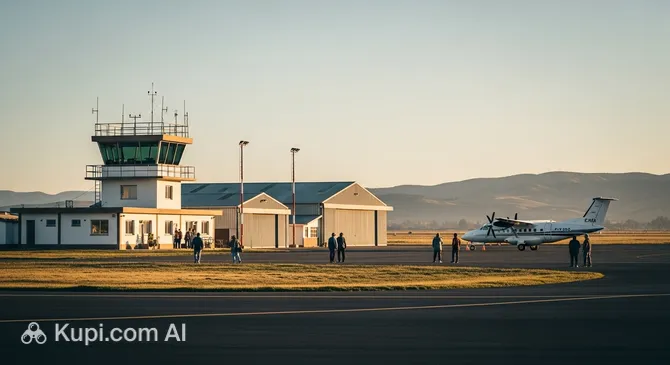
Viña del Mar Airport, also known as Torquemada Airfield, is not merely a runway but a strategically important point on the map of Chile, standing on the threshold of a grand transformation. Located atop a hill in the Concón district, it opens the air gates to the famous "Garden City" and the historic quarters of Valparaíso, offering an alternative to the long journey via Santiago. Although this facility served as a base for Chilean Naval Aviation for a long time, today it is preparing to embrace a new era of commercial transport, promising tourists instant access to Pacific beaches and famous dunes immediately upon landing.

IATA Code KNA
ICAO Code SCVM
City Concón (serves Viña del Mar and Valparaíso)
Distance to Centre ~15 km (about 20 minutes drive)
Status Naval Base / Domestic (undergoing modernisation to receive commercial flights)
Passengers per Year Approximately 10,000 operations per year (predominantly military and private aviation)
Schedule Online board

Features and Development Prospects:

The main feature of Viña del Mar Airport is its unique location and status as a "sleeping giant". For a long time, tourists had to fly into Santiago and spend about an hour and a half travelling to the coast, but the current large-scale reconstruction project aims to change this logistics. The airport is located just a few minutes' drive from the famous sand dunes of Concón and the gastronomic centre of the region, renowned for its seafood restaurants.

Active work is currently underway to construct a new passenger terminal covering more than 4,000 square metres, extend the runway, and create modern infrastructure. It is expected that after fully opening for commercial aviation, the airport will be able to receive flights from other Chilean cities and even neighbouring Argentina, becoming a key tourism hub for the Valparaíso region. For travellers, this will mean the opportunity to start their holiday on the shores of the Pacific Ocean almost immediately after stepping off the plane.

Contact Information

  • Official Airport Website: A dedicated web resource for passengers is under development due to the terminal modernisation; technical information is available on the DGAC Chile website.
  • Phone (Administration): +56 32 252 6688. Please note that this number is intended for operational and administrative matters (ARO), as the tourist information service has not yet been launched.
  • Airport Address: Ruta 64 (Camino Internacional), Concón, Región de Valparaíso, Chile.
  • Email: aro.vina@dgac.gob.cl (for official enquiries).
  • Airport Social Media: Official accounts are not yet functioning.
  • Lost and Found Information: Due to reconstruction, there is no centralised lost and found office; for lost items, please contact your airline representatives directly.
  • Passenger Support Contacts: A full-fledged customer service department is in the process of being formed; for urgent administrative matters, you may use the phone number or email provided above.

How to Get to the Airport

Since Viña del Mar Airport (Torquemada) is undergoing an active transformation from a military facility into a commercial civil hub, access logistics have their own specificities. The airport is located in the Concón district, and it can be reached via one of the region's main transport arteries — the Camino Internacional highway (Ruta 64).

Below are the main ways to reach the air harbour, taking into account the current infrastructure of the Valparaíso region.

Public Transport

There is no direct rail link to the terminal, but the public transport system in the region is developed well enough to provide access to the location with transfers.

  • Buses (Micros): This is the most budget-friendly way to get to the airport area. You will need buses heading towards Concón along the Camino Internacional route. Look for local line routes (for example, Sol del Pacífico minibuses or local city routes of the 600 series, such as 605 or 608; check for the "Camino Internacional" sign). The stop is located on the highway, from where you need to walk to the entrance of the territory.
  • Metro (Tren Limache-Puerto): The regional surface metro does not reach the airport. The nearest major stations are in the centre of Viña del Mar or Quilpué (El Belloto). From the metro station, you will have to transfer to a taxi or bus to cover the remaining 15–20 km.

Taxi and Transfer

This is the most comfortable and recommended way to get to the airport, especially if you are travelling with luggage. Both official black and yellow taxis ("techo amarillo") and popular mobile driver-hailing applications operate actively in the region.

  • Apps (Uber / Cabify): Operate stably in Viña del Mar, Valparaíso, and Concón. The trip will be transparent in terms of cost and route.
  • Radio Taxi: Can be ordered through your hotel reception. This is a reliable option if you need a guaranteed transfer at a specific time.

Car Rental and Private Transport

Travelling by car is the fastest option. The drive from the centre of Viña del Mar usually takes about 20–25 minutes (about 15–20 km) depending on traffic. You need to take the Ruta 64 (Camino Internacional) highway eastbound towards Concón. The road has a good surface.

Parking: Since the airport has historically functioned as a Navy base, large public car parks typical of international hubs are currently only being designed as part of the modernisation. If you plan to leave a car, it is recommended to check the current access rules for private transport to the territory in advance.

Summary of Time and Cost (Estimated):

Transport Type Travel Time (from centre) Cost (CLP)
Taxi / Apps 20–30 min 8,000 – 12,000 CLP
Bus (Micro) 45–60 min 600 – 1,000 CLP
Private Car 20–25 min Fuel costs

Alternative Airports Nearby

As Viña del Mar Airport is in the process of launching regular commercial flights, most tourists arrive in the region through the country's main air gateway in Santiago, from where excellent transfers are established (Turbus and Pullman Bus depart directly from Santiago Airport to Viña del Mar). Flight options via neighbouring Argentina are also available for connecting routes.

Terminals and Map

The structure of Viña del Mar Airport (Torquemada) differs strikingly from the confusing layouts of large international hubs. Currently, the air harbour is in the final stages of transformation from a military facility to a civil airport, so its main characteristic is compactness and functionality. There is no need to use shuttle trains or travelators here: all infrastructure is concentrated within a single location, making navigation intuitively clear even for inexperienced travellers.

Number of Terminals and Their Purpose

The airport operates (and will operate after the full launch of commercial flights) in the format of a single passenger terminal. As part of the large-scale modernisation, a modern building covering more than 4,000 square metres is being erected, designed specifically to serve domestic flights (low-cost carriers) and flights from neighbouring Argentina.

The terminal unites all necessary services under one roof:

  • Departure Zone: Located on the ground floor. Airline check-in counters and baggage drop-off points are located here. Due to the small size of the building, the walk from the entrance to the counters takes less than a minute.
  • Arrival Zone: An isolated area with a baggage claim belt. The exit from the arrival zone leads directly to the forecourt, where you can find a taxi or transfer.
  • Waiting Halls: After passing security, passengers enter the general departure lounge. Since the airport is focused on quick flight turnaround, basic infrastructure is provided here: a cafeteria, sanitary zones, and seating areas.

Airport Map and Transfers

Due to the absence of multiple terminals, transfers are not required. Logistics inside the building are linear and simple: entrance — check-in — security control — waiting lounge — boarding gate. Most likely, boarding the aircraft will be carried out on foot across the apron (without using jet bridges), which is typical for small regional airports in Chile and allows for faster servicing of aircraft.

Navigation Features and Recommendations

The main feature of Viña del Mar Airport is the absence of crowds and queues typical of the capital's Santiago Airport. This creates a more relaxed, "resort-like" atmosphere right at the start of the journey.

However, passengers should consider a few important points:

  • Procedure Time: Thanks to compactness, all formalities (check-in and security screening) take minimum time. For domestic flights, it is usually sufficient to arrive at the airport 1.5 hours before departure, and the process of passing control (to the "secure area") rarely takes more than 15–20 minutes.
  • Service Availability: As the terminal is small, the selection of shops and restaurants will be limited. If you need to have lunch or buy specific items, it is better to do so in the city (in Concón or Viña del Mar) before arriving at the airport.
  • Wi-Fi and Charging: The updated terminal features modern waiting areas with access to charging devices, although the stability of public Wi-Fi during the launch phase may vary.

Airport History

The history of Viña del Mar Airport (also known as Torquemada Airfield) is inextricably linked to the development of Chilean naval aviation and the strategic importance of the Valparaíso region. Unlike many civil airport terminals built immediately for passenger transport, this facility remained a closed territory for many years, accessible only to military pilots and rare private aircraft.

Foundation and Military Roots

Although the history of Chilean naval aviation dates back to the 1920s, the modern airfield in the Concón district became its key centre much later. The official birthday of the base is considered to be March 16, 1951, when the Viña del Mar Naval Air Base (Base Aeronaval Viña del Mar) was inaugurated. The transfer of operations from neighbouring Quintero to Concón was driven by the need to create more modern infrastructure capable of hosting heavy aircraft and helicopters ensuring coastline security.

Throughout the second half of the 20th century, the airfield developed primarily as a military facility. Squadrons responsible for patrolling the Pacific Ocean, rescue operations, and logistical support for the fleet were based here. It was from here that aircraft took off to monitor Chile's vast maritime economic zone.

Stages of Development and Commercial Attempts

Despite its military status, the idea of using Torquemada for civil needs arose repeatedly. Its proximity to the popular resorts of Viña del Mar and Valparaíso made this airfield a desirable asset for tour operators.

  • 1980s and 1990s: During this period, the first serious attempts were made to establish regular connections. Airlines such as Ladeco (later merged into LAN) operated seasonal flights linking the coast with other Chilean cities and even Argentina.
  • Summer Seasons: In peak tourist months (January-February), the airfield periodically received charters from Mendoza and San Juan (Argentina), delivering tourists directly to the beaches, bypassing the tedious bus journey across the Andes.
  • 2000s: Commercial activity quieted down due to stricter safety and infrastructure requirements for civil airports, which the military base no longer fully met.

Modern Reconstruction and a New Era

A turning point in the recent history of the airport was 2024, when the Chilean government officially announced the start of a massive modernisation project worth over 76 billion pesos. The goal of the project is to turn the naval base into a full-fledged mixed-use airport capable of receiving commercial low-cost flights and international routes from Argentina.

The reconstruction plan includes:

  • Extension and strengthening of the runway to accommodate Airbus A320 type aircraft.
  • Construction of a new passenger terminal covering over 4,000 square metres.
  • Creation of civil car parks and access roads.
  • Installation of modern navigation equipment for all-weather flights.

Interesting Facts

Over decades of existence, the airfield has accumulated quite a few interesting features that go beyond dry historical facts:

  • The Name "Torquemada": Among locals and pilots, the airport is more often called "Torquemada". This name comes from the historical name of the Bajo Torquemada sector in the Concón district, where the runways are located.
  • Guardian of the Forests: Besides military tasks, the airfield plays a critical role in fighting forest fires, which often occur in the Valparaíso region. In the summer season, specialised tanker aircraft and helicopters of the civil forest guard (CONAF) are based here, thanks to which the base has saved thousands of hectares of forest and residential areas from fire.
  • Unique Geography: The runway is located on a plateau above sea level, in close proximity to the famous Concón sand dunes. Pilots note that upon approach, one of the most picturesque views of the Chilean coast opens up, where the ocean meets desert landscapes.
  • "Airport Without Bridges": Historically, even during periods of receiving passenger flights, jet bridges were never used here. Passengers always descended via stairs directly onto the apron, immediately feeling the fresh sea breeze — a tradition that will likely be preserved after modernisation to maintain the resort airport atmosphere.

Services and Amenities

Since Viña del Mar Airport (KNA) is currently undergoing active transformation from a strictly military facility into a civil transport hub, the range of services here is limited to basic needs. Passengers should not expect the luxury of large international hubs with duty-free shops or spa centres. The terminal is designed on the principle of maximum functionality: arrive quickly — leave quickly. However, as modernisation is completed, the list of available amenities will expand.

Restaurants, Cafés, and Shops

At the moment, the gastronomic zone of the terminal is minimalist. Inside the building, there is a small cafeteria offering coffee, soft drinks, and light snacks (sandwiches, pastries). There are no full-fledged restaurants in the "secure area".

Travellers are advised to keep this in mind and plan lunch before arriving at the airport or immediately after leaving it. Given that the airport is located in the Concón district, which holds the unofficial title of the "Gastronomic Capital of Chile", this is rather a plus: just a 10–15 minute drive from the terminal, dozens of magnificent restaurants overlooking the ocean and serving the best seafood dishes await you.

Shops are represented by small kiosks selling press, souvenirs, and essential goods. There is currently no Duty Free zone, as the airport is focused primarily on domestic and short regional flights.

Waiting Lounges and VIP Services

The airport features one general departure lounge. Thanks to the terminal's compactness and the absence of heavy passenger traffic, there are usually plenty of free seats, and it is quiet and calm. Specialised VIP lounges (Business Lounges) of international networks or airlines are absent at this stage of reconstruction.

Connectivity and Finance

  • Wi-Fi and Charging Stations: The updated terminal provides free Wi-Fi access for passengers. The waiting area is equipped with seats featuring USB ports and sockets for charging gadgets, which is especially relevant for modern travellers.
  • Banks and Currency Exchange: There are no full-fledged bank branches or currency exchange points (Casas de Cambio) directly in the airport building. Passengers arriving from abroad (for example, from Argentina) are strongly advised to have a small supply of Chilean pesos in cash for taxi payments or minor expenses. An ATM (Redbanc) for cash withdrawals is available in the general area.

Medical and Special Needs

Despite its modest size, the airport complies with Chilean passenger service standards:

  • Medical Services: A first aid post staffed with basic medical personnel for emergencies operates in the terminal.
  • Passengers with Reduced Mobility: The terminal building is single-storey, which significantly facilitates movement. Entrances are equipped with ramps, and specially equipped restrooms are available. When booking a ticket, it is recommended to notify the airline in advance of the need for assistance so that staff can prepare a wheelchair (the airport does not use jet bridges; boarding is carried out from the apron).
  • Services for Children: Fold-down changing tables are provided in the restrooms. There is no separate playroom in the current terminal configuration.

Hotels and Accommodation

There are no hotels on the airport territory itself, and there is no acute need for them, as the air harbour is located within the city limits. The nearest accommodation options are located in the area of the Concón beaches and dunes, just a 10–15 minute taxi ride away.

Tourists can choose one of the options in the immediate vicinity:

  • Radisson Blu Acqua Hotel & Spa Concón: A large high-class hotel with ocean views, located approximately 5 km from the runway.
  • Hippocampus Resort: A popular resort complex with developed infrastructure, also located in Concón.
  • Boutique Hotels and Apartments: Many accommodation rental options are available in the Bosques de Montemar area and along the coastline.

Business Services

Specialised conference rooms or business centres are not provided in the terminal building. For business meetings and negotiations, it is recommended to use the infrastructure of hotels in Concón or Viña del Mar, which can be reached in 20 minutes.
Where to Eat

The gastronomic scene inside Viña del Mar Airport (KNA) currently fully reflects its status as a developing regional hub: minimalism and functionality reign here. Passengers accustomed to the huge food courts of international hubs should adjust their expectations. Since the terminal is compact and designed for a quick turnover of domestic flights, the choice of food on the premises is limited but has its own specifics.

Restaurants and Cafés in the Terminal

At the moment, one main food outlet operates in the departure zone (after passing security) — a small "Grab & Go" format cafeteria. This is a versatile establishment combining the functions of a coffee shop and a kiosk.

  • Assortment: The main focus is on hot and cold drinks (coffee, tea, bottled water, juices), as well as pastries and light snacks. You can find fresh sandwiches (famous Chilean sándwich de miga), croissants (medialunas), and packaged snacks (crisps, chocolate, biscuits).
  • Hot Meals: There is no full kitchen preparing hot meals to order (soups, steaks, pasta) inside the terminal.
  • Opening Hours: The cafeteria's schedule is strictly tied to the flight schedule. The outlet opens 2 hours before the first departure and closes after the last flight departs. 24-hour service is not provided.
  • Location: Departure Zone (Airside), general waiting hall. Accessible only to passengers with boarding passes.

Local Cuisine and Specialities

Although the airport itself cannot boast haute cuisine, it is the gateway to the Concón district, which officially holds the title of the "Gastronomic Capital of Chile". If you have time before your flight or immediately upon arrival, it is strongly recommended not to limit yourself to an airport snack, but to visit restaurants a 10–15 minute drive from the terminal.

What is worth trying in the region (and what is sometimes found in the form of simplified snacks at the airport):

  • Empanadas: Chilean turnovers. At the airport cafeteria, you can often buy empanadas with cheese (queso) or beef (pino), which will be heated for you on the spot.
  • Alfajores: Traditional biscuits with dulce de leche (manjar), often available at the checkout as a dessert with coffee.

Dietary Catering (Vegetarian, Vegan, Gluten-Free)

Due to the limited assortment, passengers with strict dietary preferences are advised to arrange meals in advance.

  • Vegetarians: Cheese sandwiches or vegetable empanadas are usually available.
  • Vegans: The choice is extremely scarce and often limited to fruit (if available), nuts, or crisps. There are generally no specialised vegan dishes on the cafeteria menu.
  • Gluten-Free: Guaranteeing the absence of cross-contamination in a small cafeteria is difficult. Packaged gluten-free snacks may be in stock, but the selection is inconsistent.
  • Halal and Kosher: Specialised certified products are not available.

Price Range

Prices at Viña del Mar Airport correspond to the average level of Chilean airports — they are higher than in the city but do not reach the exorbitant heights of international Duty Free zones.

  • Coffee + Pastry: ~4,000 – 6,000 CLP.
  • Sandwich + Drink: ~6,000 – 9,000 CLP.
  • Water (0.5 l): ~1,500 – 2,000 CLP.

Recommendations for Passengers

For a quick snack before departure, the terminal's capabilities are quite sufficient: coffee and a sandwich will help pass the wait for boarding. Queues are usually small, and service is quick.

For a full lunch, the strategy should be different. Given that the airport is in Concón, the best decision would be to eat before arriving at the airport (on departure) or immediately after leaving the terminal (on arrival). The waterfront area (Borde Costero) abounds with restaurants serving the freshest seafood, where lunch will be a true gastronomic event, unlike a modest snack in the waiting lounge.

Travel Tips

Travelling through Viña del Mar Airport (Torquemada) has its own specifics related to its transition from military status to civil use and its compact dimensions. To ensure your flight proceeds as comfortably as possible, we have prepared a number of practical tips taking into account the current features of the terminal.

Arrival Time Recommendations

Despite the fact that the airport is small and there are no endless queues here like in major hubs, one should not arrive at the last minute.

  • Optimal Time: It is recommended to arrive at the airport 1.5–2 hours before departure. This time is quite sufficient to calmly check in luggage and pass security control without rushing.
  • Gate Closing: Remember that on low-cost carrier flights, boarding ends strictly according to schedule (usually 20–30 minutes before departure). The small size of the terminal does not mean the plane will wait for latecomers.

Check-in and Security Control

Procedures in Viña del Mar are faster than in Santiago but require attention.

  • Online Check-in: We strongly recommend checking in for your flight in advance via the airline's website or app and saving the boarding pass on your phone. In a small terminal, a limited number of counters may be operating, and an electronic boarding pass will save you time.
  • Screening: The procedure is standard for Chile (DGAC standards). Laptops and tablets must be removed from bags. You will also be asked to remove outerwear and belts with metal buckles.

Seat Selection on the Plane

Since boarding and disembarking are carried out on foot across the apron, and the airport is located in a picturesque area, seat selection matters.

  • For Best Views: Try to book a Window seat. During takeoff and landing, breathtaking panoramas of the Concón sand dunes, the rocky coast, and the Pacific Ocean open up.
  • Side of the Aircraft: When flying south (towards Santiago or Argentina), seats on the left side often offer views of the Andes, and on the right side — the ocean.

Hand Luggage: What is Allowed and Prohibited

Carry-on rules are standard for international aviation but subject to strict Chilean regulations.

  • Prohibited: Any sharp or cutting objects (scissors, corkscrews), work tools, flammable substances.
  • Liquids: On domestic flights, rules may be more lenient, but it is better to stick to the standard: containers no larger than 100 ml, packed in a transparent 1-litre bag.
  • Food: Carrying sandwiches or fruit on departure domestically is allowed, but if you are flying internationally, be prepared to consume them before landing in another country.

Customs Control (SAG) — Important!

If you arrive in Viña del Mar on an international flight (for example, from Argentina), you will encounter one of the strictest phytosanitary services in the world — SAG.

  • Declaration: You are required to fill out a declaration (digital or paper).
  • Import Ban: In Chile, it is strictly forbidden to import fresh fruit, vegetables, seeds, honey, meat and dairy products, and wooden souvenirs without treatment.
  • Fines: Even a single forgotten apple in a backpack will lead to a huge fine (starting from several hundred dollars). If in doubt — declare it ("Sí") or dispose of products in special bins before control.

Passengers with Connections

Viña del Mar Airport operates as a "point-to-point" facility and is not designed for complex transits.

  • Self-Transfer: If you have two different tickets, you will have to collect your luggage and check in again. Allow at least 3 hours for this, as there is no automatic baggage transfer here.
  • Risks: Given the low traffic, in case of flight cancellation, an alternative departure might only be available the next day.

Saving Time and Money

  • Transport: Do not take taxis "from the kerb" without a meter. Use Uber or Cabify apps — this is cheaper and safer, as the price is fixed. If you have little luggage and want to save as much as possible, walk to the highway (about 10–15 minutes on foot) and take a local bus (micro) towards Viña or Valparaíso.
  • Food: Food at the airport costs more, and the choice is modest. Have a substantial lunch at a restaurant in Concón before leaving for the airport — it will be tastier and cheaper.
  • Water: Take an empty bottle with you. After passing security, it can be filled at drinking fountains (if functioning in the new terminal) or you can ask for water at the café.

What to Do in Case of Flight Delay

Infrastructure for long waits in the terminal is currently limited.

  • Gadgets: Download films or books to your devices in advance. Wi-Fi may be overloaded, and there is little entertainment inside. Be sure to carry a power bank.
  • Actions During Long Delays: If the flight is delayed for 4 hours or more, there is no point sitting in the small waiting hall. The airport is just a 15-minute drive from the resort zone. It is better to take a taxi and spend this time in a café overlooking the ocean in Concón than in a cramped terminal.

Reached the end of the page?

That means the route is fully explored