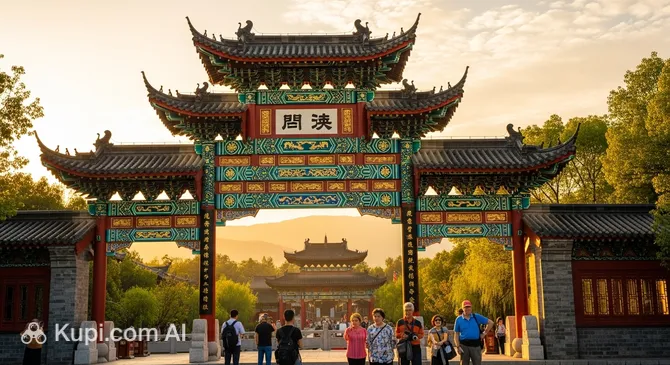
Imagine a mirror-like surface of water perfectly reflecting the snow-capped peaks of a majestic mountain—this is the view that awaits visitors at the Black Dragon Pool (Northwest Gate). This picturesque park, located in the city of Lijiang, is considered one of the most photogenic spots China has to offer tourists.
Black Dragon Pool (Northwest Gate). Illustration.
Source: Kupi.com AI
Traveler photos:
The pond is a natural treasure at the foot of Elephant Hill. It serves as the source for an entire network of canals that weave through the old town, creating the unique atmosphere of the "Venice of the East." The name of the place is linked to an ancient legend of a dragon, and the crystal-clear water, where schools of goldfish swim, emphasizes the mystical status of this reservoir.
Here, natural landscapes and traditional Chinese architecture blend harmoniously: elegant bridges and pavilions with curved roofs complement the panorama of Jade Dragon Snow Mountain. It is an ideal place for those seeking tranquility and wanting to see the classic landscape of Yunnan province in all its beauty.
Contacts
For your convenience in route planning, you can use the exact address of this location. Please note that additional contact methods, such as phone or email, are not listed in open sources.
Every guest's main ritual here is finding the perfect angle to photograph Jade Dragon Snow Mountain reflecting in the water. The best place for this is by the central pond, where the calm surface acts like a giant mirror. A stroll along the winding paths will lead you to traditional temple courtyards and huge wooden wheels that turn gently under the river's current.
Be sure to bring some food for the goldfish that gather in schools along the canal banks. If you have enough energy, climb the steps to the gazebos on the hill—the view from there is breathtaking. It's a wonderful place for meditation or a quiet picnic with local tea away from the noisy tour groups.
Towards evening, the atmosphere of the park changes: sunset rays paint the mountains in golden tones, and the architectural details of the pavilions become more contrasted. At this time, it's pleasant to just sit by the water, watching the play of light and shadow on the slopes of Yulong Snow Mountain, enjoying the silence and fresh mountain air.
Getting There
Reaching the northern edge where the park is located is quite simple. From the central part of Dayan Old Town, you can get here on foot in about 30 minutes. It will be a pleasant walk during which you will see how traditional pedestrian streets gradually give way to modern urban blocks.
For those who prefer comfort or are limited on time, a taxi is always available. The trip from the city center will take only a few minutes. If you use navigation apps, look for the address: V6PM+V9F, Jiao Yu Lu, Gu Cheng Qu, Li Jiang Shi, Yun Nan Sheng.
Public transport in the city is also well-developed, and many bus routes pass near the park entrance. However, a walk is considered the best way to feel the transition from the city bustle to the serenity of the lake landscapes.
Nearest city: Lijiang
History & Facts
The history of this picturesque spot dates back to the Qing Dynasty—the park was founded in 1737. Its poetic name is shrouded in ancient legends: according to one legend, a powerful Great Black Dragon once lived on the shores of this reservoir, giving the park its name.
The pond has played a key role in the region's life for centuries. It is the starting point for a complex system of canals and streams that flow through the Dayan Old Town, which emerged more than 800 years ago. Thanks to this water, Lijiang is often compared to an "archipelago," where clear streams flow right beneath the walls of residential houses.
For centuries, residents used the pond's clear water for domestic needs and trade, as the city was an important point on the famous Ancient Tea Horse Road. Today, the park's historical buildings, including pavilions and bridges, are carefully preserved as monuments of traditional Chinese architecture.
Time Needed
To leisurely walk around the entire area, examine the architectural details of the pavilions, and take those "postcard-perfect" shots of the snowy peak, it usually takes from 2 to 3 hours. This is enough time to enjoy the quiet and feed the fish in the canals.
If you plan to wait for the sunset or climb to the gazebos on the hillside for a more panoramic view, it's better to set aside about 4 hours for the visit. The evening light gives the landscape a special magic, so many tourists prefer to spend the afternoon here until dusk.
Working Hours
The park usually welcomes visitors during daylight hours, offering ideal conditions for morning walks or afternoon relaxation. It is important to note that the trails leading to the viewing gazebos on the hill often close after 5:00 PM for safety reasons.
Since the exact schedule may change depending on the season or cultural events, tourists are advised to check the current opening hours on the official website or with the park administration before traveling. The best time to visit is early morning when there are fewer ripples on the water and the mountain reflection looks clearest.
Nearby
Exploring the surroundings of the park will allow you to dive deeper into the atmosphere of the region and find entertainment for every taste. Both historical settlements and modern amusement parks neighbor the natural beauty.
Just a couple of kilometers away is the famous old town, and for fans of active recreation and family walks, several themed areas are open nearby.