Support

塔尔寺

About

At the foot of Lianhuashan Mountain, not far from the city of Xining, lies the majestic Kumbum Monastery — one of the six great monasteries of the Gelug school of Tibetan Buddhism. This sacred site, which China protects as a top-tier cultural monument, attracts pilgrims and tourists with its unique energy and grand architecture. Its Tibetan name means “ten thousand Buddhas,” highlighting the spiritual richness of this ancient cloister.
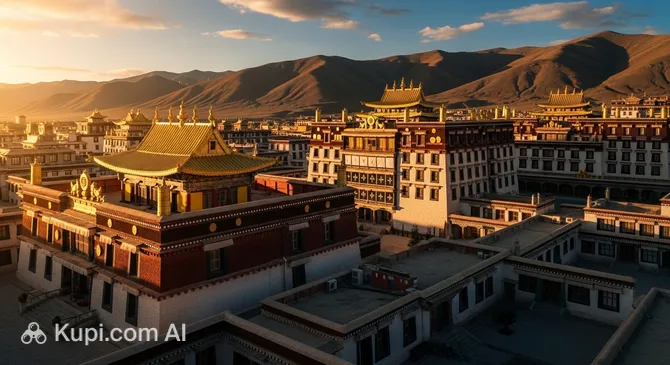
Kumbum Monastery
Kumbum Monastery. Иллюстрация. Источник: Kupi.com AI

The complex covers a vast area of 45 hectares and includes more than 9,300 rooms. Here, multi-tiered Han Chinese roofs with golden tiles sit alongside massive Tibetan walls decorated with mantras. The center of attraction is the Great Golden Temple with its famous silver pagoda dedicated to Tsongkhapa, the founder of the “Yellow Hat” school of Buddhism.

Kumbum (also known as Ta'er Temple) is famous for its “three treasures of art”: incredibly detailed yak butter sculptures, skillful murals, and elaborate silk appliqués. It is not just an open-air museum, but a living spiritual center where important religious debates and solemn ceremonies are still held today.

Contacts

To confirm up-to-date information before your visit, you can use the following contact details for the monastery.

How to contactContact
AddressКитай, Qing Hai Sheng, Xi Ning Shi, Huang Zhong Qu, 金堂巷2号 邮政编码: 811600
Phone+86 971 223 2357

What to Do

A visit to Kumbum is an immersion into a world of contemplation and ancient traditions. Begin your introduction to the monastery by exploring the Great Golden Temple, which houses a silver pagoda encrusted with precious stones. Be sure to look into the Great Sutra Hall: if you are lucky, you may see hundreds of monks in crimson robes during a communal prayer, filling the space with the low hum of chanting mantras.

Don't miss the monastery's famous “three treasures.” The butter flowers — complex compositions sculpted from yak butter and natural pigments — are particularly breathtaking. Take time to examine the vibrant murals covering the hall walls and the unique three-dimensional silk appliqués, which take monk-craftsmen years to create. These works of art are considered the gold standard of Tibetan craftsmanship.

Nature lovers and those seeking quiet should take a stroll along the paths leading up the slope of Lianhuashan Mountain. From there, a panoramic view opens up over the entire architectural ensemble with its golden roofs. You can purchase authentic souvenirs in the monastery shops and try traditional dishes prepared for monks and pilgrims in the local canteen. If your visit falls during religious festivals (in the 4th or 6th lunar month), you will witness colorful masked dances and the unveiling of giant thangkas.

Getting There

The sanctuary is located approximately 25 kilometers southwest of Xining, in the town of Lushar, Huangzhong County. Getting here is quite simple: public buses (such as route No. 1) and special tourist shuttles run regularly from the city, departing from the East Railway Station or Qinghai University. The bus ride takes about an hour and is very affordable.

If you prefer comfort and speed, you can use a taxi or the Didi service. The drive takes between 30 to 45 minutes, and a one-way trip costs approximately 100–150 yuan. The route passes through the scenic Huangshui Valley, so you won't be bored along the way. For independent navigation, you can use the coordinates: 101.568206, 36.490808. It is recommended to leave early in the morning to arrive before the large tour groups.

Ближайший город: Xining

History & Facts

The history of Kumbum is inextricably linked with the name of Tsongkhapa, the great reformer and founder of the Gelug school. According to legend, at his birthplace, a sacred Bodhi tree (white sandalwood) grew from drops of blood, and images of the Buddha miraculously appeared on its leaves. In 1379, the first Lotus Pagoda was erected in honor of this event, becoming the heart of the future monastery.

Official construction of the massive monastic complex began later, in 1560, during the Ming Dynasty. Over the centuries, the cloister expanded continuously, with the addition of sutra halls, palaces for the Panchen Lamas, and magnificent golden temples. By the Qing Dynasty, Kumbum had evolved into one of the largest religious and educational centers on the Tibetan Plateau, housing up to 3,600 monks during its peak years.

Today, the monastery is revered as the “second Lumbini” and is a key holy site for millions of believers. The architectural ensemble of Kumbum is unique for its harmonious blend of Tibetan building traditions and exquisite Han Chinese style, creating the distinctive look of this “yellow holy place.”

Time Needed

To explore the main halls at a leisurely pace, admire the famous butter sculptures, and soak in the atmosphere of monastic life, the average tourist will need 4 to 6 hours. The complex grounds are quite extensive and located on hillsides, so it is worth setting aside time for calm walks between the temples.

If your trip coincides with major Buddhist festivals, such as the “Sunning of the Great Buddha,” your stay at the monastery might last the entire day. During these times, Kumbum fills with thousands of pilgrims, and viewing the exhibits takes longer due to the crowds, but in return, you will gain unique impressions from the grand rituals and ceremonies.

Working Hours

Typically, the monastery is open to visitors daily from 9:00 AM to 5:00 PM or 6:00 PM. Keep in mind that during the winter period (from November to March), opening hours may be reduced until 4:30 PM. There is an entrance fee, with ticket prices ranging from 70 to 100 yuan; visiting some museums within the complex may require an additional fee.

As the exact schedule can change depending on religious holidays or restoration work, it is recommended to check the current opening hours on official tourism portals before your trip.

Nearby

Qinghai Province is full of amazing places, and a visit to Kumbum Monastery can be perfectly combined with exploring other interesting locations nearby. Exploring these areas will allow you to dive deeper into the culture and history of the region.

Attraction Name Distance (km)
Xiayuan Cemetery 10.3
Xincun Paradise (Southeast Gate) 21.9
Nanshan Park Children's Amusement Park 22.1
Xiaduhui Performing Arts Bar 23.2
Ximen Paradise 23.3
Xingqiu Zhuti Music Pub 23.5
Nantan Ancient City 24.1
Qinghai Lake Club 24.3
Sensen New Retail Experience Center 44.6
Haoxiongdi Paradise 47.9

What to see in nearby cities

Reached the end of the page?

That means the route is fully explored