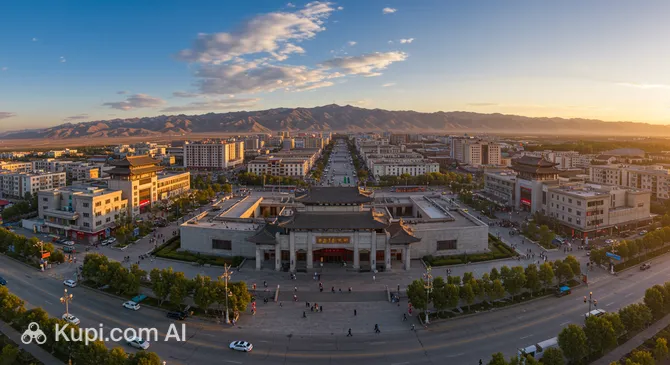
Located in the heart of Hebei Province, Xinji is a unique blend of industrial prowess and China's ancient artisanal traditions. This county-level city, part of Shijiazhuang prefecture, is rightfully considered one of the region's most vital industrial hubs. Its atmosphere is permeated with the rhythm of a working city, where modern infrastructure harmoniously coexists with residential quarters, creating the image of a dynamically developing East Chinese center.
Xinji. Illustration.
Source: Kupi.com AI
Geographically, Xinji occupies a favorable position east of the administrative center of the prefecture. With a population of approximately 616,000 people, the city functions as an important logistics and production hub. Thanks to its proximity to major transport arteries, including the ports of Tianjin and Qingdao, it plays a significant role in the provincial economy while remaining a cozy place to live with a well-developed network of social facilities.
The city's main pride and historical heritage are inextricably linked to the leather trade. The fame of local leather and fur craftsmen resounded as far back as the Ming and Qing dynasties. Today, Xinji maintains its status as the "Leather Capital," where centuries-old traditions are interwoven with modern production technologies. A visit to the city is a rare opportunity to see the inner life of the true industrial heart of China.
Weather Overview
The climate in Xinji is characterized by distinct seasonality, typical of Northern China. Here, you will experience hot, humid summers and cold, dry winters. Transitional periods—spring and autumn—are the most comfortable for visiting, although they can be quite short. The average temperature in July reaches +28°C, often rising to +33°C, while January brings frosts down to -6°C.
Precipitation in the region is distributed unevenly: most of it falls in July and August in the form of intense rain. Winters remain virtually snowless and sunny, but quite windy. When planning a trip, it's worth considering that in an industrial center, air quality can vary depending on the season. You can check the current city climate and the forecast for the coming days on the specialized pages of our guide.
It is especially important to prepare for the winter months, when the heating season and topographical features can affect visibility and atmospheric conditions. Nevertheless, every season in Xinji has its own charm—from the blooming spring in city parks to the stark industrial landscapes of winter Hebei under a bright blue sky.
Average monthly temperature
Average monthly precipitation
Interesting Facts
Leather Capital: Xinji has earned a reputation as China's primary center for leather and fur processing, maintaining this specialization since the Ming and Qing dynasties.
Transport Crossroads: The city is uniquely close to the country's largest maritime gateways—the ports of Tianjin, Qingdao, and Huanghua—making it a key link in international logistics.
Strict Order: In 2020, the city became known nationwide for its uncompromising approach to safety, implementing rigorous control measures to protect its residents.
Industrial Giant: In addition to leather goods, Xinji is an important manufacturer of complex metallurgical equipment, serving the needs of the region's heavy industry.
Special Status: Administratively, Xinji is a county-level city, emphasizing its importance as an independent economic unit within the Shijiazhuang prefecture.
How to Get There
Thanks to its location in the developed Hebei Province, Xinji enjoys excellent transport accessibility. The city is located just 79 kilometers from Shijiazhuang and approximately 200 kilometers from Beijing. The primary way for tourists to get here is by intercity buses and cars. A trip from the prefecture's administrative center takes about an hour, while a trip from China's capital takes about 2.5–3 hours, not accounting for potential traffic during peak hours.
For those traveling by air, the nearest major gateways are the airports in Beijing and Shijiazhuang. From there, it is convenient to book a transfer or use taxi services. Foreign tourists are recommended to install the DiDi app beforehand for comfortable travel between cities and within Xinji itself. You can find more information about routes and current schedules in the section dedicated to how to get to the city.
The region's rail connection is primarily focused on freight transport, supporting the city's powerful industrial potential. Passenger trains most often arrive at the major stations in neighboring Shijiazhuang, from where Xinji is easily accessible by regular buses or taxis. This makes the city a convenient destination for business trips and industrial tourism.
Since Xinji is primarily a major industrial and residential center, there are few classic tourist attractions here. However, the city is interesting for its atmosphere of modern industrial China. The main points of interest for guests are its large-scale production complexes and modern business districts, which demonstrate the economic power of the region.
For those seeking cultural enrichment, the city offers walks through the central districts, where the daily life of the townspeople is concentrated. Here, you can find modern shopping centers and bustling markets that serve as the main points of social activity. Xinji's business energy is particularly felt in the areas specializing in leather production, where trade and industry merge into one.
If your goal is to see ancient temples or historical monuments, it is recommended to use Xinji as a convenient base for trips to neighboring Shijiazhuang or other cultural centers in Hebei Province. The city itself remains a perfect example of how efficiently organized infrastructure and industrial specialization shape the image of a modern Chinese county-level city.
Local Cuisine
The gastronomic face of Xinji is a classic embodiment of Northern Chinese cuisine with traits characteristic of Hebei Province. The local menu is based on hearty and aromatic dishes perfectly suited for an energetic working city. You should definitely try the traditional baozi (steamed dumplings with various fillings) and local wheat noodles, which are prepared here in dozens of variations—from rich soups to stir-fried dishes with vegetables and meat.
The food culture in the city is democratic and open: by day, the streets are filled with the aromas of street food, and in the evening, locals gather in cozy restaurants. Xinji's gastro scene does not strive for haute cuisine, offering honest portions and rich flavors instead. Meat dishes prepared in the traditional northern style using soy sauce, garlic, and ginger are the signature of many establishments.
Among drinks, classic Chinese tea is popular and accompanies any meal. In the hot season, look out for refreshing drinks based on fruit and beans. Despite its industrial nature, the city offers guests affordable and high-quality food, where prices will pleasantly surprise travelers accustomed to the rates in Beijing or Shanghai.
Travel Tips
Preparing for a trip to a unique city like Xinji requires attention to detail. We have prepared several tips to help you feel confident in this industrial center of Hebei Province.
Clothing and Equipment: Consider the seasonality—summers are hot, while winters are dry and cold. Be sure to bring comfortable shoes for walking around shopping areas. During the winter, due to climate features and industrial operations, it is recommended to carry a protective mask (N95) for comfortable breathing.
Digital Payments: Cash is becoming a thing of the past in China. Link an international card to WeChat Pay or Alipay in advance—this is the primary payment method everywhere, from markets to taxis.
Communication: English is not widely spoken in Xinji. Download an offline translator and save the hotel address in Chinese characters to show to a driver.
In-city Transport: Use the DiDi app to call a taxi. This eliminates the need to explain the route and guarantees a fair metered price.
Local Etiquette: Chinese people highly value politeness. A small bow or a nod when greeting will be received with favor. Avoid loud arguments in public places.
Connectivity: Buy a local SIM card at your arrival airport (Beijing or Shijiazhuang), as it can be more difficult to find a sales point for foreigners in Xinji itself.
Health: Always drink only bottled water. Pharmacies are common in the city, but medication names are in Chinese, so carry a basic first-aid kit with you.
What to Avoid: Do not plan visits to industrial zones late in the evening. While the city is safe, these areas are not designed for walking and may be poorly lit.
By following these simple recommendations, you can fully focus on exploring the business and industrial life of Xinji, making your journey as comfortable and productive as possible.
Entertainment & Nightlife
Entertainment in Xinji is mainly oriented toward the needs of local residents and business travelers, which gives leisure activities a special, authentic flavor. The city's nightlife is concentrated in the central districts, where numerous restaurants, karaoke bars (KTV), and modern cinemas open after the workday. These are excellent places to feel the rhythm of life in a modern industrial center and socialize with locals in a relaxed atmosphere.
For shopping enthusiasts and evening strolls, large shopping centers are the main attractions. In these complexes, you can not only shop but also spend time in food courts or game zones. Although there are no loud nightclubs typical of megacities, the evening atmosphere of Xinji is filled with the tranquility and comfort of a working city preparing for a new day.
If you are looking for large-scale entertainment, concert venues, or exclusive bars, it is worth taking a short trip to neighboring Shijiazhuang. Nevertheless, Xinji offers a decent level of comfort for those who appreciate a high-quality dinner in a traditional restaurant or a quiet evening watching the latest movie releases surrounded by modern urban landscapes.
Parks & Museums
Despite its industrial focus, Xinji offers residents and guests green oases for relaxation. The city's parks are designed in a classic style, with neat walking paths, areas for qigong exercises, and small artificial ponds. These are ideal places to temporarily escape the city noise and observe the unhurried daily life of the locals.
Regarding museum infrastructure, Xinji is focused on preserving its primary craft. While specialized tourist museums are rare here, their role is often played by showrooms at large leather production facilities. There, you can learn about the evolution of leather processing—from ancient methods to modern automated lines—serving as a kind of "open-air museum" for this industrial center.
For those craving classic art galleries or historical exhibitions, the best solution would be a trip to Shijiazhuang. Nevertheless, Xinji remains an interesting destination for those who want to see how an industrial city creates space for rest and how carefully it treats its labor history.
Getting Around
The public transport system in Xinji is organized efficiently and simply, which is typical for actively developing Chinese cities. The basis of urban communication consists of bus routes that connect industrial zones with residential quarters and shopping centers. Bus fares are inexpensive; however, tourists should keep in mind that route information is most often presented only in Chinese.
The most convenient and common way for guests to get around the city is by taxi. You can use traditional taxi services or the popular DiDi app, which allows you to see the trip cost and route in advance. During peak hours, traffic jams can occur on the city's main streets, especially in areas with large-scale production, so plan your trips with a little extra time.
The local population also actively uses e-bikes and scooters, which gives urban traffic a special flair. For short trips in the city center, this is an excellent alternative, allowing you to quickly bypass congestion. Despite the lack of a metro system, Xinji's transport network fully meets the city's needs, making travel between key sites accessible and clear.
Accommodation
Xinji's hotel infrastructure is primarily oriented toward the business segment and specialists visiting local industrial enterprises. Here, you will find a wide selection of mid-range hotels that offer a decent level of service, modern interiors, and all the necessary amenities for a comfortable stay. Most of these properties are located in the central part of the city, providing quick access to administrative buildings and shopping zones.
For those who prefer more budget-friendly options, cozy guesthouses and hostels are available in the city. You can often find apartment rental offers in Xinji, which is convenient for longer stays. It is worth noting that price levels here are significantly lower than in major tourist megacities, making a stay in the city quite economical.
When planning a trip, especially during industrial exhibitions or business forums, it is recommended to book accommodation in advance through popular Chinese services or international platforms. If you are looking for five-star hotels from global brands, the optimal choice would be to stay in Shijiazhuang, which is only an hour's drive away, and visit Xinji for day trips.
Nearby Cities
Thanks to Hebei Province's developed transport network, Xinji is an excellent starting point for exploring the surrounding areas. Just a few kilometers from the city are small settlements, each with its own unique character and pace of life.
One of the nearest destinations is Xinleitou, located only 4 kilometers away, which is easily accessible even for a short walk. If you travel a bit further, it is worth visiting Zhangguzhuang or Zongshizhuang—these towns allow you to see true Chinese provincial life outside the major industrial zones. For more large-scale impressions, tourists often choose a trip to Shijiazhuang, where the region's main museums and parks are concentrated.
City
Population
Distance
Xinleitou
40 761
4 km
Zhangguzhuang
29 079
14 km
Zongshizhuang
49 014
16 km
Nanzhiqiu
35 165
22 km
Gaoguzhuang
22 208
28 km
Exploring nearby cities is a great way to diversify your trip and better understand the culture of Northern China. Convenient connections and short distances allow you to plan interesting day trips, returning in the evening to the cozy atmosphere of Xinji.
Shopping & Souvenirs
Shopping in Xinji is, first and foremost, an introduction to its centuries-old specialization. The city is a true paradise for those looking for high-quality leather and fur products. Local markets and specialized shopping centers offer a huge selection—from classic outerwear to stylish accessories. Most of these retail spaces are geared toward wholesale buyers, but retail tourists will also find plenty of interesting offers at manufacturer prices.
The main shopping areas are concentrated in the city center, where modern malls sit alongside traditional markets. Here, you can purchase not only leather goods but also electronics, popular clothing brands, and household items. Xinji's markets are also famous for fresh produce and local delicacies, making them a must-visit for those who want to bring home a piece of authentic China.
Shops in the city usually operate from early morning until late evening, and mobile applications such as Alipay and WeChat Pay are used everywhere for payment. If you are planning serious purchases, Xinji offers a unique shopping experience in the "Leather Capital," where quality traditions are passed down from generation to generation.