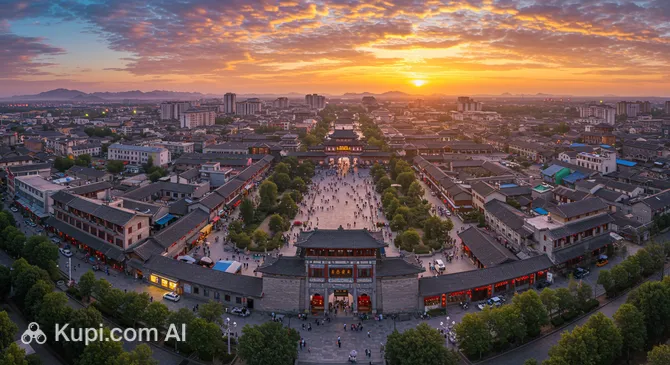
The county-level city of Anguo, located in Hebei Province, is a typical industrial and administrative center of Northern China. Although the city is not a major tourist hub, it possesses its own unique atmosphere of a quiet provincial county, where life flows at the measured pace of trade markets and industrial zones.
Anguo. Illustration.
Source: Kupi.com AI
Geographically, Anguo is situated on the North China Plain and is part of the Baoding prefecture-level city. With a population of approximately 370,300 people, the city is considered large by local standards, ranking 15th in population within its province. The history of this region is closely linked to the development of trade and manufacturing within the Baoding agglomeration.
For a traveler, Anguo can be interesting as an authentic example of everyday life in modern China. There are no polished tourist facades here; instead, you can see the real daily lives of local residents, visit bustling markets, and feel the spirit of the country's industrial heart. We invite you to take a look at this city to see the Middle Kingdom from its less formal but highly intriguing side.
Weather Overview
The climate in Anguo is classified as continental monsoon, which is typical for the entire Hebei Province. Travelers should expect hot and humid summers with heavy rainfall in July and August, as well as rather cold and dry winters. The weather in the city changes significantly depending on the season: while the average temperature in January drops to -1.6°C, in the height of summer, it often exceeds +30°C.
Spring and autumn here are quite short and are often accompanied by winds bringing dust from the Gobi Desert. The wettest months are July and August, when the bulk of the annual precipitation falls. In winter, due to heating features and the industrial nature of the region, air quality can decrease, so it is better to choose a warmer and windier time of year for your visit.
Average monthly temperature
Average monthly precipitation
Interesting Facts
Anguo is a city with a rich administrative heritage and interesting features that make it stand out on the regional map.
The name Anguo translates from Chinese as "Land of Peace", referring to the historical entity that existed on these lands in ancient times.
By population, Anguo ranks 236th in all of China, being home to over 370,000 people.
The county-level city is officially part of the large Baoding agglomeration, which largely determines its economic and transport development.
The city center is located near the fertile North China Plain, at the strategically important coordinates of 38° North latitude and 115° East longitude.
How to Get There
Anguo is an important transit hub, although it does not have its own airport. The main flow of travelers arrives here via neighboring large centers, using an extensive network of railways and expressways. To learn more details about the routes, you can explore information on how to get to the city in the most convenient way.
The nearest air harbors are located in Baoding and Shijiazhuang (approximately 1–1.5 hours away). These airports receive flights from most of China's major hubs. From there, the most convenient way to reach Anguo is by taxi or intercity bus. A route from Beijing is also popular: first, 2–3 hours by high-speed train to Baoding station, and then about 40 minutes by ground transport.
Railway communication plays a key role in the life of the region. Main passenger flows pass through the station in Baoding, from where regular bus service to Anguo is established. When traveling by car from the capital, the journey will take about 2.5 hours via the G4 or G107 expressways, though potential traffic congestion from heavy goods vehicles should be considered.
In Anguo, you won't find world-famous architectural monuments, as the city is oriented towards industry and daily life. However, for those seeking authentic Chinese flavor, the central markets and squares will be of interest. These are lively, constantly buzzing areas where you can see the full variety of local goods and immerse yourself in the atmosphere of a typical Hebei Province county.
The main points of interest in the city are the modern shopping districts and administrative zones. For tourists, they serve as excellent places to observe the urban rhythm. Many travelers use Anguo as a base for trips to neighboring Baoding, where ancient city walls and picturesque parks have been preserved.
Since Anguo is primarily an industrial center, its "attractions" are its streets, full of small workshops and family-run shops. A walk through the city center will allow you to see China's modern urbanization without any tourist filters, which is a unique experience in itself.
Local Cuisine
The culinary scene in Anguo is closely linked to the traditions of Hebei Province, where wheat-based dishes dominate. Be sure to try the local lamian noodles and fragrant zhebing flatbreads. The influence of neighboring Baoding is evident in the popularity of roasted duck and rich meat soups, which are prepared here with great care.
The food culture in the city centers around busy markets and small family-run establishments known as fandian. In the evening, the streets fill with street food stalls offering fresh jiaozi (dumplings) and steamed baozi buns. Prices in such places are very affordable, and portions are traditionally large.
As for drinks, locals prefer green tea or regionally produced beer. For those who want to get acquainted with stronger spirits, baijiu—a traditional Chinese sorghum vodka—is always available. The cuisine in Anguo is simple and hearty, oriented primarily towards local workers and traders, which guarantees an honest taste without unnecessary refinements.
Travel Tips
A trip to Anguo requires some preparation to ensure your stay in this industrial heart of Hebei Province is comfortable and productive.
Clothing and Essentials: Choose your wardrobe according to the season. Warm clothing that protects against the wind is essential in winter, while light clothes and dust protection are needed in summer, as winds from the Gobi Desert are not uncommon here.
Transport: The best way to get around the city is by taxi or the Didi app. A trip across the center will cost only 10–20 yuan. Public buses run frequently but can be crowded.
Finances: The main currency is the yuan. International cards are rarely accepted, so set up WeChat Pay or Alipay, and always carry some cash with you.
Health and Safety: The city is safe with low crime rates. However, you should avoid walking in poorly lit industrial zones on the outskirts at night.
Communication: English is practically not spoken in Anguo. Download an offline translator in advance and carry a card with your hotel's address in Chinese.
Local Etiquette: Chinese people in the provinces are friendly but reserved. Greet people with a slight nod, and use both hands when handing over money or business cards.
What to Avoid: You should not photograph industrial facilities or restricted zones without permission—this may cause unnecessary questions from security.
Additional Tip: Visit Anguo as a supplement to a trip to Baoding, as this will allow you to compare the rhythm of a large city and a county center.
May your walks through the streets of Anguo become an interesting discovery and provide you with many new experiences!
Entertainment & Nightlife
Nightlife in Anguo reflects its status as a quiet industrial county. You won't find noisy nightclubs or concept bars here. The main evening entertainment for locals and visitors alike is the night markets. Here, you can not only grab a snack but also observe the city's life, which becomes more leisurely after sunset.
For those looking for more active recreation, theaters, or modern cinemas, the best option is a trip to neighboring Baoding. The journey takes only about 30 minutes, and the choice of venues there is significantly wider—from popular karaoke clubs (KTV) to chain restaurants open late into the night.
During the day, entertainment is limited to walking along shopping streets or relaxing in small city squares. Anguo is a place for those who appreciate peace and the absence of tourist bustle, preferring online leisure or cozy gatherings in local open-air cafes.
Parks & Museums
The park infrastructure of Anguo is currently in the development stage. Due to dense industrial development, green zones occupy less than 10% of the territory, making every square especially valuable to local residents. In the city center, you can find small squares near the markets, which serve as meeting places and spots for brief relaxation.
There are no classic museums in the traditional sense in the county; however, the urban environment itself can be viewed as a kind of open-air museum, showcasing the stages of China's industrialization. For those who want to enjoy large-scale garden and park ensembles, it is recommended to head to Baoding, where historical gardens and cultural galleries are found in abundance.
For walks in the fresh air, residents of Anguo sometimes choose the surrounding fields, though it should be noted that the region's ecology depends heavily on the operation of local enterprises. Nevertheless, the provincial government plans to gradually improve the city's greenery, which over time will make its streets shadier and more pleasant for walking.
Getting Around
The public transport system in Anguo is highly functional and straightforward. The backbone of transportation consists of buses and minibuses that connect the central districts with the outskirts and neighboring Baoding. The fare is a symbolic 1–2 yuan, and the service interval usually does not exceed 10–20 minutes.
In the very center of the city, it is very convenient to get around on foot or by bicycle, as the roads here are mostly flat. Many locals prefer electric scooters, which allow for quick maneuvering through traffic. There are no metro or tram lines in the city, which is typical for settlements of this size.
Tourists should keep in mind that during peak hours (morning and evening), traffic jams often occur on the main roads leading to Baoding due to the abundance of heavy trucks. In such cases, a taxi is a more comfortable, albeit slightly more expensive, alternative to buses. Ride-hailing apps work reliably, which significantly simplifies navigation around the city.
Accommodation
Accommodation options in Anguo are primarily aimed at business travelers and transit passengers. Budget hotels and motels located along major transport arteries predominate here. The cost of a room in such establishments usually ranges from 100 to 300 yuan per night, offering a basic level of comfort without frills.
If you plan to stay in the city for a longer period, you might consider renting apartments, which are often chosen by specialists working in the local industrial sector. For booking accommodation, it is best to use services popular in China, such as Ctrip, as international platforms may offer a limited selection of properties in this region.
The most convenient option is to stay in the city center or in the immediate vicinity of the bus station. This will provide you with quick access to markets, cafes, and transport. Given the lack of a large tourist flow, finding a vacant room is usually not difficult, but during periods of major fairs, it is better to book housing in advance.
Nearby Cities
Anguo serves as an excellent starting point for exploring the surroundings of Hebei Province, which is home to many interesting cities with rich histories. Just a 30-minute drive away is the major city of Baoding, which attracts travelers with its parks and developed infrastructure.
If you decide to venture a bit further, it is worth visiting Dingzhou, known for its architectural monuments. Also of interest for a day trip is Anping, located just 26 kilometers away. Fans of urban shopping and museums should set aside time for a trip to the provincial center—Shijiazhuang, which can be reached in about an hour.
Exploring these neighboring destinations will allow you to form a more complete picture of life in Northern China. The proximity of expressways and regular bus services makes such outings simple and convenient even for those traveling independently.
Shopping & Souvenirs
Shopping in Anguo primarily involves visiting the colorful central bazaars. Here, you can find everything from locally made clothing and footwear to fresh farm produce. The city is not famous for luxury boutiques, but it is ideal for those looking for quality goods at local prices.
As souvenirs from Anguo, people often bring back local varieties of green tea and authentic Hebei Province spices, which are famous for their aroma. You can also find interesting handicrafts and textiles at the markets. Shopping malls in the city are small and mainly cater to the daily needs of residents.
Most shops operate from morning until late evening, and payment is most often made via mobile apps. If you need more extensive shopping in large malls with global brands, it is best to go to neighboring Baoding, where the retail infrastructure is developed at a much higher level.