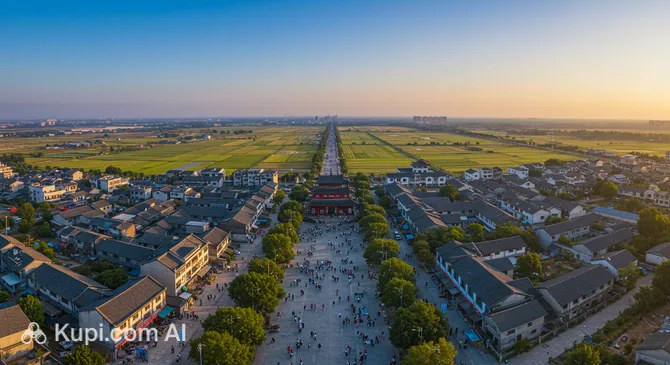
Located in the heart of the North China Plain, Hejian is a striking example of a city where ancient traditions blend harmoniously with a modern agricultural way of life. Its name literally translates to "between rivers," highlighting its unique geographical position in China between the region's waterways. With a population of over 810,000, this county-level city maintains an authentic provincial atmosphere, offering travelers a respite from the bustle of mega-metropolises.
Hejian. Illustration.
Source: Kupi.com AI
The city boasts an impressive historical heritage dating back over two millennia. Hejian played a vital role during the great Han, Song, and Ming dynasties as a significant administrative and cultural center. Today, the area is famous for its vast fruit orchards, exquisite ceramics production, and a slow pace of life that allows visitors to fully experience the authentic spirit of Hebei Province.
Among the main architectural treasures are the restored Government Office complex and the oldest mosque in the province, which showcases a unique synthesis of Islamic and traditional Chinese architecture. A visit to Hejian is an excellent choice for those seeking genuine, unembellished experiences and a look at the everyday life of the Middle Kingdom from the inside.
Weather Overview
Hejian is characterized by a temperate continental climate, typical for the North China Plain. Travelers should expect a hot and fairly humid summer: in July and August, the thermometer often rises to +32–35°C. Most of the precipitation falls during the summer months, so heavy but short-lived rains are common during this period.
In contrast, winter in the city is cold and very dry. In January, the average temperature ranges from -6°C at night to +3°C during the day. Snow falls rarely, but cool winds often blow, and because of the flat terrain, dust storms are possible in the spring. The shoulder seasons—spring and autumn—are considered the most comfortable times to visit, when mild and sunny weather sets in.
If you want more accurate data for specific dates, check the detailed weather in the city. When planning your trip, keep in mind that air quality can change during the heating season and peak agricultural periods, so having a protective mask in your luggage would be a good idea.
Average monthly temperature
Average monthly precipitation
Interesting Facts
Ancient Kingdom: In 178 BC, the Kingdom of Hejian was established on the territory of the modern city, making it a major political hub during the Western Han Dynasty.
Cradle of Poetry: Hejian played a key role in preserving the "Shi Jing" (Book of Songs), the oldest collection of Chinese poetry; for centuries, scholars here protected and studied these sacred texts.
Pear Capital: Local juicy and extraordinarily sweet "Hejian Pears" are famous far beyond the province and are a major part of the region's culinary exports.
Administrative Longevity: The city received the status of the center of Hejian Prefecture back in 1108 during the Northern Song Dynasty and maintained it throughout the Ming and Qing rules.
Architectural Synthesis: The local ancient mosque is considered one of the most beautiful in the region due to its unique combination of Islamic layout and traditional Chinese decorative elements.
How to Get There
Despite the lack of its own airport, Hejian is integrated into Hebei Province's well-developed transport network, making it quite accessible for travelers. The city is located approximately 120–150 kilometers southeast of Beijing. The most convenient and fastest way to get here is by using modern high-speed trains departing from the Chinese capital or Shijiazhuang. The journey to Hejian takes between one and two hours, and the railway allows you to avoid potential traffic jams on major highways.
The nearest major aviation hubs are Beijing Capital International Airport (PEK) and Tianjin Binhai International Airport (TSN). From these airports, Hejian can be reached by intercity buses or taxis, though you should allow about 3–4 hours for the trip depending on traffic. The city itself also has a well-developed bus service connecting it with other counties in the Cangzhou prefecture-level city.
Hejian Railway Station handles both regional and long-distance trains. For those who prefer to travel by car, important expressways such as the Jinghu and Shihuang pass through the county. When planning a trip by car, it is recommended to use navigation apps to track road congestion, especially during peak hours and holiday periods.
Although Hejian is not a destination overloaded with tourists, the city hides several unique monuments that will surprise history buffs. The crown jewel is the restored Hejian Fushu (Government Office) complex. This monumental structure, founded during the Northern Song Dynasty, is the only facility of its kind outside Beijing to have preserved its main hall. A walk through its courtyards allows you to imagine how the region was governed for centuries.
Another important stop on the tourist route is the Oldest Mosque in Hebei Province. Its architectural appearance is captivating: here, the strict canons of Islamic architecture meet classic Chinese curved roofs and decorative elements. This site is not only a monument of faith but also a symbol of the city's multicultural and open history, where different cultures have coexisted peacefully for centuries.
For those who prefer atmospheric strolls, it is worth exploring the city's old quarters. Here, you can still find traditional buildings and small workshops where famous local ceramics and silk products are created. During the blossoming or harvest seasons, the surrounding fruit orchards take on a special charm, where the famous Hejian pears—the region's signature product—are grown.
Local Cuisine
The gastronomic scene in Hejian is a celebration of fresh local products and traditional Hebei recipes. The main symbol of the city is the famous Hejian Pears. They are so juicy and sweet that they are often served not only as dessert but are also used in various dishes and light snacks. Be sure to try pear infusion or refreshing pear soup, which locals value for its healthy properties.
Among the main dishes, local noodles (Hejian noodles) hold a leading position. They are hand-made and served with a rich broth, seasonal vegetables, and meat. The region is also famous for simple but delicious Hebei specialties: crispy fried flatbreads and hearty dumplings. Due to the proximity of rivers, restaurants often feature fresh fish dishes, typically steamed with soy sauce and ginger.
The dining culture in Hejian is very democratic. The most interesting flavor discoveries await you in small family-run establishments and street markets in the historical part of the city. Here you can see the food being prepared with your own eyes and enjoy the authentic atmosphere. Meals are usually accompanied by green tea or light fruit drinks, which emphasize the taste of the simple yet honest local cuisine.
Travel Tips
A trip to Hejian will give you an unforgettable experience of immersion into the real Chinese province. To ensure your trip is smooth and comfortable, use our practical tips.
Clothing and Essentials: Choose your wardrobe according to the season. Summers in Hebei are hot and humid, so bring light clothing made of natural fabrics. Winters are windy and dry—a warm jacket will be useful. Don't forget comfortable shoes for walking around historical sites and a power adapter (types A, C, and I are often used in China).
Transport: The best way to get around the city is by taxi, called via the Didi app. If you plan to use buses, be prepared for them to be crowded during peak hours.
Finance: In China, Alipay and WeChat Pay are accepted almost everywhere. International cards do not work everywhere, so be sure to have a reserve of cash in RMB. Tipping in local restaurants is not customary.
Health and Safety: The city is generally safe, but in dry, windy weather, a protective mask may be useful due to dust from the plains. Pharmacies are easy to find in the center, but medicine names will be in Chinese, so carry a basic first-aid kit with you.
Communication: English is rarely spoken in Hejian. Be sure to download an offline translator and save your hotel address in Chinese characters.
Local Etiquette: Greet people with a slight nod of the head. In communication, Chinese people value politeness and restraint. If you are invited for tea, don't forget to thank your hosts.
What to Avoid: Try not to plan important trips during peak hours due to traffic on the main roads. It is also worth avoiding walks in remote industrial zones on the outskirts, as there is no tourist infrastructure there.
Additional Tip: Try to visit the city during the pear harvest season—this is the best time to see Hejian in all its glory and try its main specialty.
By following these simple rules, you can focus on the main thing—exploring the amazing history and culture of this hospitable land.
Entertainment & Nightlife
Entertainment in Hejian is quiet and traditional, befitting its status as a provincial cultural center. You won't find world-famous noisy nightclubs here, but you can immerse yourself in the atmosphere of classic Chinese leisure. The center of the city's evening life revolves around numerous KTV (karaoke) bars, where locals love to spend time with friends, as well as cozy tea houses, where the tea ceremony is a true ritual.
In the evening, life concentrates around the central squares and night markets. This is the best time for leisurely walks as the daytime heat fades and the streets fill with the aromas of street food. Safety in Hejian is very high, making evening strolls through the well-lit central districts comfortable and pleasant. If you are looking for larger-scale entertainment, such as modern cinemas or large shopping malls, a trip to neighboring Cangzhou takes only about an hour.
Daytime leisure often involves visiting city parks or participating in seasonal festivals. The city is particularly vibrant during festivals dedicated to the pear harvest, which feature folk festivities and fairs. For fans of more active recreation, modern sports grounds and recreation areas are available in the center, where you can watch locals practicing Tai Chi or playing traditional board games.
Parks & Museums
The cultural map of Hejian is closely linked to its rich historical past. The role of the main open-air museum is played by the Government Office complex, where the architecture itself tells the story of ancient China's administrative structure. While the city lacks huge modern exhibition halls, its historical legacy—such as the traditions of preserving the "Book of Songs"—is carefully integrated into the local cultural centers and small exhibitions.
Green spaces in Hejian are represented by cozy city squares and parks that serve as a favorite resting place for locals. The city's central parks, while not massive in scale, offer pleasant shade and quiet, which is especially valuable during the hot summer months. Here you can find traditional Chinese pavilions and small ponds, creating an atmosphere of tranquility amidst residential blocks.
For those seeking larger natural landscapes, the outskirts of the city, which transition smoothly into agricultural land, are of interest. The famous pear orchards turn into a vast blossoming park during the flowering period, attracting photographers and nature lovers. Although the region suffers from dust due to its flat terrain, these orchards remain the city's main "lungs" and its primary aesthetic attraction.
Getting Around
Public transport in Hejian is primarily represented by an extensive network of bus routes and taxis. Buses cover the main streets of the city and connect the center with the outskirts; however, keep in mind that they can be crowded during peak hours (7:00–9:00 AM and 5:00–7:00 PM). For tourists, the most comfortable way to get around the city remains the taxi. You can call a car through the popular Didi app, and an average trip across the city rarely takes more than 20–40 minutes.
In the central part of Hejian, bicycles and electric scooters are very popular. The city's flat terrain makes two-wheeled transport an ideal option for leisurely exploration of the old quarters. There are no metro stations in the city, which is typical for county centers of this scale, so the main flow of passengers relies on surface transport.
To pay for bus fares, transport cards or payment system QR codes are most commonly used, which requires local mobile internet. The railway station is a key transport hub, providing Hejian's connection to Cangzhou and other regions of Hebei. Despite the basic comfort level of the intracity system, it is constantly being improved as part of the overall urbanization of the region.
Accommodation
Accommodation options in Hejian are primarily geared toward business travelers and tourists transiting through the region. The bulk of the hotel stock consists of mid-range and budget hotels offering a decent level of comfort for a reasonable price. The cost of a standard room usually ranges from 200 to 500 RMB per night, making the city very attractive for budget-conscious travelers.
The most convenient area for choosing accommodation is the city center, especially the blocks located in the immediate vicinity of the Government Office. Staying here puts you within walking distance of the main historical sites and colorful local markets. Hotels near the railway station are also popular, which is convenient for those planning early departures to neighboring cities.
Hejian has a wide range of apartments and long-stay options that can often be booked through international services. There are few luxury five-star hotels in the county itself, so those seeking premium service should consider staying in neighboring Cangzhou. During peak seasons, especially during agricultural fairs, it is recommended to book accommodation in advance.
Nearby Cities
Hejian serves as an excellent starting point for exploring the central part of Hebei Province, offering travelers convenient access to neighboring cultural and economic centers. Just 24 kilometers away is the small town of Wofotang, which can be visited to experience the region's rural life. A bit further away is Renqiu, known for its industrial success and developing urban infrastructure.
For larger-scale experiences, head to Cangzhou, which can be reached in about an hour. This major administrative center offers a wide range of shopping malls, museums, and restaurants. If your goal is to see the capital of China, a high-speed train will take you to Beijing in just an hour and a half to two hours, making even a day trip to the great monuments of the imperial past possible.
Exploring the surroundings of Hejian allows you to see different sides of China: from cozy farms and pear orchards to dynamically developing cities of millions. Convenient transport links and short distances between settlements make traveling around this region easy and full of new discoveries.
Shopping & Souvenirs
Shopping in Hejian is primarily a hunt for unique local goods and the freshest products. The city does not claim to be a high-fashion capital; you won't find world-famous boutiques here, but you can purchase items with real character. The main point of interest for tourists is the local markets, where the famous Hejian pears are presented in abundance. In winter, you can find dried fruits, and in season, baskets of juicy fresh fruit that make an excellent gift.
In addition to delicacies, it is worth paying attention to ceramics and textiles. The central shopping districts house stores offering products from local craftsmen, including traditional silk. These goods often feature high quality and affordable prices compared to major metropolises. Basic-level shopping centers in the center are suitable for buying household necessities and inexpensive clothing from local brands.
Most shops and markets are open from early morning until evening, usually until 8:00 PM or 9:00 PM. As souvenirs from Hejian, people often bring back calligraphy or replicas of historical artifacts related to the city's dynastic past. At large outlets, cards and popular mobile apps (WeChat Pay, Alipay) are accepted, but at markets, it's always useful to have some cash in RMB for small purchases.