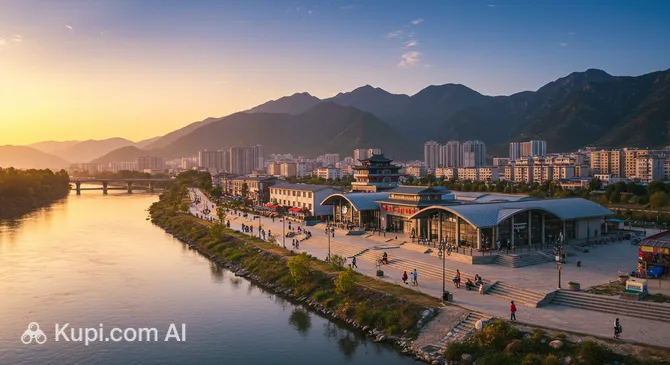
Yakeshi is a dynamic industrial and logistics hub located in the northeastern part of the Inner Mongolia Autonomous Region in China. The city is nestled in the picturesque foothills of the Greater Khingan Range, which defines its unique landscape and an economic profile closely tied to forest resources. With a population of approximately 352,000, Yakeshi serves as an important regional node, preserving features of its industrial heritage and the rugged beauty of the country's northern frontiers.
The settlement's development received a powerful boost in 1901 when a station of the Chinese Eastern Railway (CER) was established here. This historical moment became the starting point that transformed a small fortification into a significant transport hub. If you are interested in a detailed history of the city, it is worth noting how its name, derived from the Manchu word for "fortress," has fully lived up to its reputation as a reliable outpost in Manchuria.
Yakeshi. Illustration.
Source: Kupi.com AI
Although Yakeshi is primarily a working-class city, it attracts travelers with its authentic "resource economy" atmosphere and its proximity to the untouched nature of the Khingan mountains. This is a place for those who want to see the real, non-touristy China, get acquainted with the lives of railway workers, and feel the scale of the northern forest expanses. A visit to Yakeshi will be an interesting experience for researchers of industrial geography and enthusiasts of rugged northern routes.
Weather Overview
The climate of Yakeshi is distinctly continental, due to its location in the foothills of the Greater Khingan Range. Visitors to the city can expect harsh, frosty, and dry winters that last quite a long time. For example, in January, the average temperature is about -23.1°C, and at night, the thermometer can drop to -28.7°C or lower.
The summer period in the region is relatively short but pleasant and warm. The hottest month is July, when the average daytime temperature reaches +25.2°C. Most of the annual precipitation falls during the summer months, so expect a warm summer with periodic rain. If you are planning a trip, it is worth studying the detailed city's climate in advance to choose the right wardrobe.
The transition seasons—spring and autumn—in Yakeshi are brief and characterized by sharp temperature fluctuations. Spring warming begins in April, and the first signs of winter can appear as early as October. Thanks to the influence of the mountain relief, the air here often remains clear, but during the winter period, one should be prepared for severe frosts with almost a complete absence of humidity.
Average monthly temperature
Average monthly precipitation
Interesting Facts
Railway Heritage: A turning point in the city's history was the construction of the station in 1901 as part of the development of the Chinese Eastern Railway (CER).
Manchu Roots: The name "Yakeshi" existed long before industrialization and translates from the Manchu language as "fortress" or "fortification."
Forestry Capital: The city is considered an important center of the timber industry in China due to its location in the foothills of the timber-rich Greater Khingan Range.
Administrative Scale: Yakeshi has the status of a county-level city and is administratively divided into 7 towns and 9 subdistricts, serving the needs of over 350,000 residents.
Geographical Uniqueness: The city is located in the historical region of Manchuria in northeastern Inner Mongolia, which determines its harsh climate and cultural distinctiveness.
How to Get There
Due to its status as an important logistics hub, Yakeshi enjoys good transport accessibility, primarily by rail. Historically, the railway connection, which has been developing here since the early 20th century, is the main artery linking the city with the rest of China. You can find information on how best to plan your route and choose a convenient mode of transport on the page describing the ways to get to the city.
Although the city itself does not have a large civil airport, travelers often use the nearby air hubs of the Hulunbuir region and then transfer to ground transport. In the future, trip planning may become even easier, but for now, it is best to rely on regular flights to the administrative centers of Inner Mongolia.
The railway remains the most reliable and popular way to travel to Yakeshi. The main station serves many freight and passenger trains, providing connections to key cities in the country's northeast. For long-distance travel, it is recommended to book tickets in advance, especially during national holidays.
Station
Passenger traffic
Distance
Zhalantun Station
2
206 km
Krasnokamensk Railway Station
—
214 km
Yiershi Railway Station
2
231 km
Manzhouli railway station
6
239 km
Zabaykalsk Railway Station
250 000
248 km
Main Attractions
The city of Yakeshi is not a classic tourist destination with an abundance of museums or ancient temples, yet it possesses a special charm for fans of industrial aesthetics. The main historical and architectural landmark remains the Yakeshi Railway Station, founded in 1901. It serves as a living monument to the era of the CER construction and symbolizes the city's transformation into a key logistics hub for the region.
For those who appreciate the atmosphere of industrial heritage, the city's central districts are of interest, where the layout remains focused on the needs of the timber industry and transport. Walking through these streets allows you to feel the rhythm of life in a typical Chinese "resource" city, where the economy and daily life are inextricably linked to the railway and timber processing.
The main potential for tourism in the city's surroundings is concentrated in the natural riches of the Greater Khingan. While specialized cultural complexes are rare in the very center of Yakeshi, the foothills of the range offer opportunities to explore the ecosystems of northeastern Manchuria. The city serves as a convenient transit point for those heading deeper into the forest massifs of the autonomous region.
Local Cuisine
The gastronomic identity of Yakeshi was formed at the crossroads of Inner Mongolian traditions and the classic Chinese cuisine of the northeastern provinces. The local diet is based on hearty meat dishes, which are ideal for the region's cold climate. Be sure to try traditional Mongolian mutton prepared in various ways—from stewed with vegetables to grilled over charcoal.
Dairy products and traditional Mongolian milk tea with salt, which warms you up perfectly, are an important part of the local food culture. Dumplings (jiaozi) and potato dishes, characteristic of northern China, are also widely popular in the city. Street food is represented by small stalls serving skewers (chuan) and steamed buns (baozi), which are consistently popular with locals.
The city's restaurant scene is focused on the daily needs of residents, so authentic establishments with simple interiors but very tasty and fresh food predominate. In Yakeshi, you are unlikely to find fine dining restaurants, but you can enjoy generous portions and traditional recipes passed down through generations. This is an excellent opportunity for a tourist to experience the true taste of Manchuria.
Travel Tips
A trip to Yakeshi will give you a unique experience of getting to know the industrial heart of Inner Mongolia, and these practical tips will help make your journey as comfortable as possible.
Clothing and Essentials: Given the harsh continental climate, be sure to bring very warm clothes if you are traveling in winter (temperatures can drop to -30°C). In summer, light clothing is useful, but bring a windbreaker for cool evenings. Comfortable shoes are your best ally when walking around the city.
Transport: The best way to get around is by taxi. Install Chinese transport apps, but remember the interface may be in Chinese only. Public buses are cheap but require knowledge of the routes.
Finance: Cashless payments (AliPay/WeChat) dominate in China. International cards are rarely accepted, so be sure to have a reserve of cash yuan. ATMs for withdrawing cash are available in the city center.
Health and Safety: The city is very safe, but due to its industrial profile, it is worth keeping an eye on air quality forecasts. Pharmacies are common, but it's better to have a basic first-aid kit with you.
Communication: English is practically not spoken here. Be sure to download an offline translator and carry a card with your hotel's address in Chinese.
Local Etiquette: Be polite and patient. In small cities, foreigners may arouse curiosity—take it in stride.
What to Avoid: Do not attempt to photograph sensitive industrial sites without permission. Also, avoid discussing political topics—it's better to focus on the beauty of nature and local hospitality.
Extra Tip: Try the local brick tea—it's an important part of the regional culture that will keep you warm in any weather.
May your introduction to northern China be filled with interesting discoveries and pleasant encounters!
Entertainment & Nightlife
The entertainment industry in Yakeshi is primarily geared toward local residents and business travelers, creating a quiet and relaxed atmosphere after sunset. You won't find bustling nightlife districts with clubs typical of megacities here, but you can get acquainted with the local leisure culture. Traditional karaoke bars (KTV) and small, cozy cafes where locals spend evenings with friends are popular.
One interesting feature of the city is its developed sports and coffee culture. Local coffee shops often become social hubs where you can not only enjoy a cup of coffee but also meet members of the local sports community. Daytime entertainment includes visiting small squares and walking along central shopping streets, which are illuminated in the evening by the bright neon signs of local shops and restaurants.
To ensure safety during evening walks, it is recommended to stick to the central well-lit streets. For nighttime travel, it is best to use taxis, which can be easily called via popular Chinese apps. Although Yakeshi is a safe city, the lack of extensive tourist infrastructure requires guests to be somewhat independent when planning their leisure time.
Parks & Museums
The cultural and natural landscape of Yakeshi is closely linked to its geographical position in the foothills of the Greater Khingan Range. Despite the absence of large museum complexes, the city itself and its surroundings represent a kind of open-air museum dedicated to the history of developing the northern forest riches. The natural zones around the city offer magnificent views of mountain massifs and taiga, which are especially beautiful during the changing of seasons.
For outdoor recreation, residents use local squares and green spaces that maintain the ecological balance in this industrial center. Although specialized arboretums or amusement parks are not mentioned in available sources, a walk along the city's central alleys allows you to appreciate the efforts of local authorities in beautifying the working-class county.
Tourists interested in history and culture are recommended to pay attention to the architecture of railway facilities, which are themselves exhibits reflecting the era of the early 20th century. For a deeper immersion into the natural environment, consider excursions into the forest tracts of the Khingan, where you can witness firsthand the majesty of the northern nature that became the basis for the life and development of Yakeshi.
Getting Around
The transport system of Yakeshi is organized to meet its industrial status and the needs of its 350,000 residents. The main role in the city's life continues to be played by the railway, which serves not only to connect with other regions but also shapes the structure of urban transport. Within the city, the main form of public transport is the bus, with routes covering residential neighborhoods and industrial zones.
The payment system on city buses is simple and accessible, usually involving a fixed fare that can be paid in cash upon entry or via mobile apps. For tourists, buses may seem complicated due to the lack of information in foreign languages, so it is recommended to prepare a route map in advance or seek help from locals.
Taxis are the most convenient and fastest way to get around Yakeshi. Cars are easy to find on the streets, especially near the railway station and shopping areas. For a more comfortable experience, it is better to use specialized apps to call a car. Bicycle rentals and car-sharing are less developed here than in megacities, so taxis remain the primary alternative to public transport for visitors.
Accommodation
The hotel infrastructure in Yakeshi is primarily oriented toward business travelers and specialists arriving in the region for the timber industry and logistics. The main stock of accommodation consists of mid-range and budget hotels that provide the necessary comfort without excessive luxury. Most of these properties are located in the central part of the city, which is convenient for access to transport hubs.
The most popular accommodation options are in the immediate vicinity of the railway station and along the main city thoroughfares. Here you can find both modern hotels with a basic set of services and more modest guesthouses. Travelers should keep in mind that there are practically no specialized tourist hostels or boutique hotels in the city, so the choice usually falls on classic city hotels.
When planning a trip to Yakeshi, it is recommended to book accommodation in advance through trusted international or major Chinese platforms. Room rates remain quite affordable compared to megacities. Before booking, it is advisable to check if the hotel accepts foreign citizens, as in smaller Chinese cities, a special license may be required for this.
Nearby Cities
The city of Yakeshi serves as a convenient starting point for exploring the northern regions of Inner Mongolia, offering travelers access to unique natural and cultural locations. The city's surroundings are rich in the rugged landscapes of the Greater Khingan, and the transport network allows for planning trips to interesting neighboring settlements.
One of the most memorable destinations is the city of Genhe, known as the "Pole of Cold" of China. A trip there will allow you to experience the extreme climate and see how people live in permafrost conditions. It is also worth visiting the picturesque Erguna, where the nature of Manchuria reveals itself in all its glory, and the cozy Zalantun, which attracts visitors with its landscapes.
Exploring neighboring cities will help you better understand the diversity of this vast region. Each direction—be it the border town of Krasnokamensk or the resort of Arshan—possesses its own unique character and history. A journey through the surrounding areas will be an excellent addition to a visit to Yakeshi, opening up new facets of life in the north of the Celestial Empire.
Shopping & Souvenirs
Shopping in Yakeshi reflects the daily life of a typical industrial city in northeastern China. Here you won't find massive shopping malls with global brands, but you can immerse yourself in the atmosphere of bustling local markets and department stores. The main shopping points are concentrated along the central streets, where small shops offer a wide range of goods—from everyday clothing to electronics.
Local food markets may be of particular interest to guests. Given the proximity to the Greater Khingan forests, you can often find unique gifts of nature here: dried mushrooms, wild berries, nuts, and medicinal herbs. These products are an excellent souvenir option reflecting the region's natural wealth. You can also find fur products and warm clothing in the markets, which are essential for the harsh local climate.
Most shops in Yakeshi are open from early morning until evening seven days a week. Mobile payment systems popular in China (AliPay and WeChat Pay) are accepted everywhere; however, when visiting small stalls or markets, it is advisable to have cash yuan with you. For tourists, shopping in this city is primarily an opportunity to purchase authentic regional products at very affordable prices.