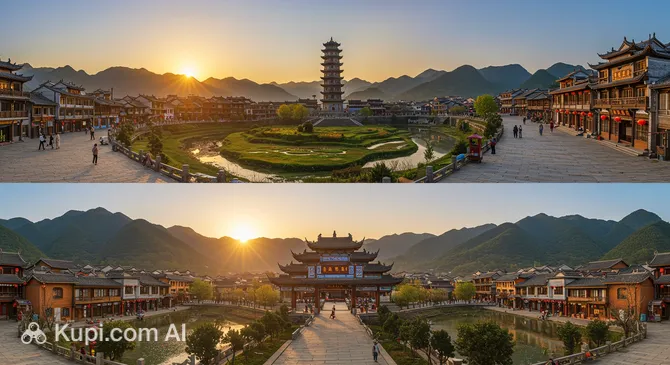
Located in the east of Shanxi Province, Yuxian (Yu County) is a colorful corner of China, where the industrial rhythm of life is closely intertwined with ancient agrarian traditions. This county center, sprawling on the western slopes of the majestic Taihang Mountains, attracts travelers with its authentic atmosphere of "real" Northern China, unspoiled by mass tourism.
The city's geographical position, just 100 kilometers from the provincial capital, makes it an important economic hub for the region. With a population of about 326,000 people, Yuxian lives on coal mining and agriculture while preserving a rich cultural heritage. It is worth delving into the centuries-old history of this region to see how one of the province's key industrial centers developed.
Yu County. Illustration.
Source: Kupi.com AI
The city's hallmark is its natural beauty and historical villages, such as Daping. Here, you can feel the spirit of old China while walking among traditional buildings against a backdrop of rugged mountain landscapes. Despite its industrial status, Yuxian surprises guests with its hospitality and the opportunity to see provincial life from the inside.
A visit to Yuxian is an excellent choice for those seeking solitude and wanting to turn off the beaten tourist paths. This place is ideal for a day trip or a short stop on the way through the Taihang Mountains, offering a unique perspective on the combination of natural majesty and human labor.
Weather Overview
The climate of Yuxian has a pronounced continental character typical of northern China. Four seasons are clearly distinguished here, each affecting the county's appearance in its own way. Winters in the region are cold and mostly dry: in January, the average temperature drops to -5.7°C, and night frosts can reach -11°C and below. Snow falls rarely, making the winter landscape harsh but clear.
Summer in Yuxian is warm and humid, with peak temperatures in July when the air warms up to +26°C — +28°C. Most of the annual precipitation occurs during the summer months, especially in July and August. Travelers should expect a warm summer with occasional heavy rains and cold, mostly clear winters. Spring and autumn are transitional periods characterized by changeable but generally comfortable weather.
Before planning a trip, it is recommended to study the detailed climate of the city to choose the right wardrobe. Special attention should be paid to air quality: in the winter months, due to the relief of the Taihang Mountains and industrial activities, periods of smog are possible. However, the spring and autumn seasons please with clear skies and ideal conditions for nature walks.
Average monthly temperature
Average monthly precipitation
Interesting Facts
The city of Yuxian can surprise even an experienced traveler with its hidden features and importance to the region.
Center of "Black Gold": Yuxian plays an important role in the region's energy sector; in 2005, more than 10 million tons of coal were mined here, forming the foundation of the county's prosperity.
Pepper Capital: Despite its coal fame, the city is widely known for the production of high-quality black pepper, which is actively used in local cuisine and exported.
Cradle of Talent: Yuxian County is historically famous as the birthplace of many outstanding Chinese figures who contributed to the country's culture and science.
Proximity to the Capital: The city is located just 100 kilometers from Taiyuan, allowing locals and tourists to reach the province's main metropolis in less than an hour by car.
Natural Treasures: In the immediate vicinity of the county are the unique landscapes of the Taihang Mountains, including ancient Buddhist shrines and thermal springs.
How to Get There
The transport accessibility of Yuxian is due to its favorable location near the capital of Shanxi Province. The county is an important link in the regional road network connecting the industrial centers of the north. Most tourists prefer to start their route from Taiyuan, as the nearest major transport hubs are located there. You can find out more about how to get to the city in various ways at provincial information centers.
Yuxian does not have its own airport. Travelers are advised to use the services of Taiyuan Wusu International Airport (TYN). This modern terminal receives flights from major Chinese cities and some international destinations. The journey from the airport to Yuxian by car or taxi takes just over an hour, making this the most comfortable option for those arriving from afar.
Railway communication is another reliable way to get to Yuxian. The city is connected to the regional railway network, and a train trip from Taiyuan to the local station takes about 46 minutes. This is a fast and economical option that allows you to enjoy views of the Taihang foothills along the way. There is also a regular bus service between the cities, which is actively used by the local population.
Although Yuxian is not a major tourist hub, its surroundings hide real treasures for nature and history lovers. One of the most famous attractions is Cangshan Mountain, which attracts pilgrims and hiking enthusiasts with its picturesque slopes and peaceful atmosphere. The mountain landscapes are complemented by the Longtan Waterfalls, whose powerful flows create an impressive sight, especially during the rainy season.
For those interested in history and architecture, the Qianfo Temple (Thousand Buddha Temple) is a must-visit. This ancient structure preserves the spirit of many generations within its walls and is an important monument to the region's religious heritage. Another gem of the county is the old Daping Village. It is a true open-air museum where you can see the traditional layout and unique historical buildings characteristic of the northern part of Shanxi Province.
Lovers of relaxed recreation should pay attention to the Siping'an Hot Springs. These healing waters have long been popular with locals and provide a pleasant end to a busy day of mountain walking. Although the infrastructure in Yuxian is local in nature, it gives tourists a rare opportunity to touch the untouched heritage of Shanxi Province without unnecessary fuss.
Local Cuisine
The gastronomic profile of Yuxian is inextricably linked to the culinary traditions of northern Shanxi Province. The main feature of the local cuisine is the use of black pepper—a product for which this county is famous. This spice gives dishes a characteristic warming aroma and depth of flavor, which is especially appreciated in the cold winter months. The basis of the diet here consists of flour products: various noodles prepared in dozens of ways and fragrant flatbreads.
Travelers should definitely try traditional dumplings and baozi (steamed buns with filling), which are prepared in Yuxian with the addition of local herbs and meat. The city's gastronomic scene is mainly represented by cozy family restaurants and small canteens where prices remain very democratic. Street food is also popular: in the evening markets, you can find stalls with fried snacks and spicy soups.
As for drinks, various types of strong tea are popular in Yuxian, helping digestion after a heavy meal. Although there are no sophisticated wine bars in the city, traditional Chinese drinks can be found in local shops. The food culture here is simple and honest: food should be filling, hot, and highlight the richness of the local land's gifts.
Travel Tips
Planning a trip to an authentic county like Yuxian requires some preparation. These practical tips will help you feel more confident and get the most out of your journey.
Language Barrier: Be prepared for the fact that English is practically not spoken in the city. Be sure to install an offline translator and download a city map where names are indicated in characters.
Clothing by Season: Yuxian has a continental climate with cold winters and hot summers. For spring and autumn walks in the Taihang Mountains, choose layered clothing and comfortable shoes with good grip.
Payments: International Visa and Mastercard cards are not accepted everywhere. The most reliable way to pay is to link a card to Alipay or carry a sufficient supply of cash in yuan.
Transport within the City: To call a car, use the DiDi app—this will save time and eliminate misunderstandings with the driver regarding the price.
Communication: Wi-Fi in hotels may be limited. It is recommended to purchase a local SIM card or set up roaming in advance, and install a VPN to access your usual services.
Etiquette: Residents of the province are very friendly but value restraint. When entering temples or private homes, try to behave quietly, and a greeting is best accompanied by a slight bow or a nod of the head.
What to Avoid: Do not plan trips to industrial zones during peak hours and try not to visit remote mountain areas alone without a guide, especially at dusk.
Best Time: The ideal months to visit are May, September, and October, when the weather is most stable and the mountain air is clear.
May your acquaintance with Yuxian be filled with bright discoveries and pleasant encounters in the heart of Shanxi Province!
Entertainment & Nightlife
The entertainment sector in Yuxian is primarily focused on the local community, allowing visitors to fully immerse themselves in the daily life of provincial China. The main center of activity in the evening is the streets in the county center, where small restaurants and karaoke clubs (KTV) operate. KTV is a favorite leisure spot for citizens, offering the loud and cheerful atmosphere typical of the country's northern regions.
Those who prefer quiet leisure will enjoy walks in the city squares or through the stalls of local markets, which remain lively until dusk. Western-style nightclubs are practically non-existent here; however, cozy family establishments and street food stalls create a unique flavor. For those craving large-scale shows and modern concert venues, a trip to neighboring Taiyuan is recommended, where the entertainment industry is much more developed.
Daytime leisure in the city is centered around visiting natural sites and historical monuments in the vicinity. Excursions to mountain ranges or relaxing at hot springs replace the usual amusement parks for residents and guests of Yuxian. This place is ideal for those who appreciate silence, nature contemplation, and the opportunity to see China as it is, far from the megacities.
Parks & Museums
The park zones of Yuxian provide an excellent opportunity to take a break from the city bustle and enjoy the quiet rhythm of life in a provincial county. City parks here are functional and cozy: they serve as a place for morning exercises for local residents and evening walks for families. While they do not claim to be landscape masterpieces, the cleanliness and abundance of greenery create a pleasant environment for short-term relaxation.
The museum life of the region is mainly concentrated in the open air. The main "exhibit" is the ancient village of Daping, a visit to which replaces a classic history museum. Walking through its streets, you can study the architectural styles of the past and the life of peasant communities. For a deeper immersion into the history of Shanxi Province and to see archaeological finds, tourists are recommended to visit the large museums in nearby Taiyuan.
Natural attractions, such as the Taihang foothills and the areas around the Longtan Waterfalls, essentially function as large-scale landscape parks. These zones are protected and maintained in their natural state, offering city guests not only fresh mountain air but also the opportunity to see unique geological formations for which this part of China is so famous.
Getting Around
The public transport system in Yuxian is represented by a network of municipal buses that connect the central areas of the county with the outskirts and nearby villages. Buses are the most budget-friendly way to get around, but it is worth considering that routes and schedules are most often indicated only in Chinese. For tourists, this can become a small quest requiring the use of online translators.
Taxis are the most convenient and fastest alternative for getting around the city. Cars can be hailed on the street, but it is much more reliable to use the DiDi mobile app. This guarantees a fixed price and eliminates difficulties in translating the address to the driver. The cost of trips around the city is low, making taxis the primary choice for foreign guests.
For short-distance trips, many locals use bicycles and electric scooters. The public bike-sharing system in Yuxian is not as developed as in megacities, but this type of transport remains popular. Overall, due to the compactness of the central part of the city, many interesting locations and markets are accessible for walking, allowing you to better feel the atmosphere of the county.
Accommodation
The hotel infrastructure in Yuxian is primarily oriented towards business travelers and transit tourists. Classic middle-class city hotels and guesthouses offering a basic set of services predominate here. Most accommodation options are concentrated in the central part of the county, providing easy access to shops, local restaurants, and transport interchanges.
For those looking for a more authentic experience, traditional farmhouses converted to receive guests can be found in rural areas closer to mountain attractions. However, keep in mind that the level of comfort in such places can be modest, and the staff's knowledge of English is minimal. There are practically no luxury five-star complexes in the county itself.
If you plan to visit Yuxian during national Chinese holidays, it is highly recommended to book accommodation in advance through popular platforms such as Ctrip or Booking.com. Travelers accustomed to international hotel chains should consider staying in Taiyuan and making day trips to Yuxian to see the local sights.
Nearby Cities
Yuxian serves as a convenient starting point for exploring the eastern part of Shanxi Province, offering travelers access to cities with a rich history and industrial past. Proximity to major transport arteries makes it easy to plan day trips to neighboring counties and city districts, each with its own unique character.
Just 29 kilometers away is Yangquan—an important industrial center where modern urban development coexists with industrial landscapes. Those looking for a more intimate atmosphere should go to Zhongguyue or visit Nanzhangcheng. History buffs will also be interested in the city of Xinzhou, known for its cultural monuments and Buddhist heritage.
Exploring the surroundings of Yuxian allows for a better understanding of the structure and daily life of the Chinese province. Whether you choose the busy streets of large cities or the silence of small settlements like Ceyu, each such trip will complement your understanding of the many-faced Shanxi Province.
Shopping & Souvenirs
Shopping in Yuxian is primarily about getting to know local products and everyday goods. There are no giant shopping galleries with global brands in the city, but there is an abundance of local shops and markets. The main shopping areas are concentrated in the center of the county, where you can find everything you need: from clothing and electronics to the products of local artisans.
The main souvenir to bring back from this trip is undoubtedly the famous local black pepper. It can be purchased both in gift packaging and by weight at the central market. It is also worth paying attention to the region's agricultural products: dried herbs, spices, and local tea varieties, which are characterized by high quality and affordable prices.
Retail outlets usually operate from early morning until 8–9 PM. When making payments in Yuxian, as in all of China, the mobile payment systems WeChat Pay and Alipay dominate. Cash is still accepted in markets, but international bank cards may not work in small shops. A walk through the local market will be not only a way to make purchases for a tourist but also a great chance to see the lively trade and daily life of Shanxi provincial residents.