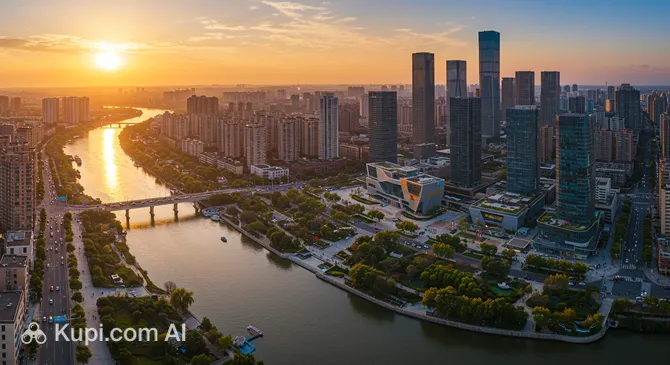
Zhoukou is a large and dynamic city located in Henan Province, in the eastern part of China. Serving as the administrative center of a prefecture-level city with a population of over 9 million people, it represents a fascinating blend of a relaxed provincial rhythm and the energy of a developing metropolis. The city stretches across a fertile valley, which has left a distinct mark on its appearance and way of life.
Zhoukou. Illustration.
Source: Kupi.com AI
Thanks to its rich historical heritage, which dates back to ancient times, Zhoukou maintains an atmosphere of authenticity. Here, ancient traditions of farming and crafts harmoniously coexist with modern infrastructure projects. The city is widely known as an important agricultural hub where wheat, rice, and various vegetables are grown, making it a significant center for the region's food industry.
Tourists are drawn here by the opportunity to see the "real" China, unburdened by mass tourism. Walking along the banks of the Ru River, visiting local markets, and experiencing the hospitality of the locals allow you to feel the unique character of this region. We invite you to discover Zhoukou — a city where history meets modernity amidst the endless plains of Henan.
Weather Overview
Zhoukou is dominated by a warm and temperate climate typical of the region, characterized by distinct seasonal changes. Summers here are hot and humid — in July and August, daytime temperatures often rise to +30...33°C. This is the period when most of the annual precipitation falls, which should be considered when planning outdoor activities.
In contrast, winters are cold and dry. The coldest month is January, when temperatures can drop to -2°C at night and rarely exceed +7...9°C during the day. The transitional seasons — spring and autumn — are considered the most favorable for visiting the city, as they offer moderate warmth and comfortable humidity.
When planning your trip, you can check more details about the climate of Zhoukou in advance to choose the right wardrobe. Overall, the city is open to tourists year-round, but for maximum comfort, it is best to choose April, May, or September.
Average monthly temperature
Average monthly precipitation
Interesting Facts
China's Breadbasket: Due to its location in the fertile Huaihe Plain, Zhoukou is one of the country's leading grain producers, playing a key role in the region's food security.
Noodle Capital: The city is informally called the "capital of Chinese noodles," as unique varieties of traditional noodles are produced here, valued throughout China for their taste and quality.
Ancient Roots: The history of settlements on the site of the modern city dates back to deep antiquity, and archaeologists still find traces of various dynastic eras here.
Metropolis Scale: Despite its "provincial" status, the population of Zhoukou exceeds 9 million people, making it comparable in size to some of the world's largest capitals.
Ecotourism: In recent years, the city has been actively developing rural ecotourism, offering travelers a chance to relax among authentic farming landscapes and gardens.
How to Get There
Transport accessibility to Zhoukou has significantly improved in recent years, turning it into a convenient destination for travelers exploring Henan Province. The city is integrated into China's modern transport network, making it easy to reach by both air and rail. Detailed information on routes and tickets can be found in the section on how to get there.
The main air gateway for the region is Zhoukou Minggang Airport. It serves domestic flights, connecting the city with major hubs such as Beijing and Guangzhou. The airport is conveniently located, and you can reach the city center from the terminal by taxi or regular buses.
Railway communication is the most popular way to reach the city. Zhoukou Railway Station welcomes modern high-speed trains from Beijing, Shanghai, and Wuhan. Traveling by train in China is known for its high level of comfort and punctuality, and upon arrival at the station, you will immediately find yourself in the heart of urban life.
Although Zhoukou is primarily known as an agricultural center, the inquisitive traveler will find many interesting locations here. Most tourist activity is concentrated along the banks of the Ru River, which features picturesque parks perfect for leisurely strolls and observing the daily lives of the city's residents.
Local historical temples that preserve the spirit of old China are of particular value. Although information about specific sites in international guidebooks may be limited, it is in such places that you can find authentic architecture and a quiet, contemplative atmosphere, free from the hustle and bustle of major tourist centers.
For a deeper immersion into the local culture, it is recommended to visit rural festivals and fairs in the outskirts of Zhoukou. This is an excellent chance to see traditional folk performances, craft exhibitions, and to get acquainted with the lifestyle of the inhabitants of the fertile Huaihe Plain. The city's local color is best revealed at the local markets, where life begins bustling from early morning.
Local Cuisine
A gastronomic journey in Zhoukou is an introduction to the hearty and aromatic traditions of Henan Province. The cornerstone of the local cuisine is noodles, which are prepared here in dozens of variations. Be sure to try Hutiao (Hutiao) — tender noodles in a rich broth, which is considered a true culinary symbol of the city.
Street food in Zhoukou deserves special attention. At local markets and in small side streets, you can find Jianbing (Jianbing) everywhere — fried dumplings or pancakes with various fillings. Sesame and aromatic spices, which local chefs use with great skill, add a special character to the dishes. Most residents prefer to have breakfast and lunch at small eateries where the food is always fresh and authentic.
The city's restaurants serve dishes made from fresh vegetables grown in local fields, as well as rice-based meals. As for drinks, green tea holds a place of honor in Zhoukou, as it does throughout China. For those who want to try something stronger, locals may offer traditional rice wine, which often accompanies festive meals.
Travel Tips
Planning a trip to Zhoukou? These practical tips will help make your journey as comfortable as possible and help you avoid any unpleasant surprises.
Clothing and Season: The best time to visit is spring and autumn, when the weather is most pleasant. Summers can be hot and humid, so bring light clothing and an umbrella. Winters are quite cold and dry, and a warm jacket will be necessary.
Communication: English is not widely spoken in Zhoukou. Be sure to install a translation app and download offline maps. It is helpful to have a hotel business card with the address in Chinese.
Finance: Mobile payments (Alipay, WeChat Pay) dominate in China. Foreign cards are only accepted in major hotels. Be sure to have a reserve of cash Yuan for paying in taxis and at markets.
Transport: Taxis are the most convenient way to travel around the city. If you plan to use buses, study the route in advance using Baidu Maps or Amap.
Connectivity: Buy a local SIM card at the airport or an official operator's office. Note that a VPN may be required to access familiar Western services.
Local Etiquette: Show respect to elders — this is an important part of the culture. It is not customary to leave tips in restaurants or taxis in China.
What to Avoid: Do not engage in discussions about political topics and try not to photograph military or government sites without permission.
Health: Drink only bottled or boiled water. You can find both modern medicines and traditional Chinese medicine remedies in the city's pharmacies.
Enjoy your trip to Zhoukou! This city is sure to provide you with vivid impressions and new discoveries.
Entertainment & Nightlife
The entertainment scene in Zhoukou is geared toward relaxed family vacations and traditional Chinese leisure. In the evening, the city transforms: the main streets fill with the soft light of lanterns, inviting residents and guests for a pleasant promenade. This is the perfect time to enjoy the cool air and watch street performers or dance groups that often gather in the city squares.
The nightlife here does not have the frantic pace of megacities like Shanghai. The primary spots for evening entertainment are karaoke bars (KTV), which are incredibly popular among locals. This is a great opportunity to get acquainted with modern Chinese pop culture in an informal setting. It is also worth visiting the small bars and restaurants in the center, where you can sample local snacks and drinks.
Daytime entertainment includes visiting city parks and theaters, where traditional Henan opera performances are occasionally held. Safety in the city is high, making evening walks through the central districts and along the embankments perfectly comfortable. For moving around the city late at night, it is most convenient to use taxi apps.
Parks & Museums
For those seeking outdoor relaxation, Zhoukou offers several cozy city parks. These green zones are favorite spots for locals, where you can see groups of people practicing Tai Chi or families having picnics by the water. The embankments along the Ru River also serve as a kind of linear park, ideal for long walks in the shade of trees.
The city's museum scene is closely tied to its historical and economic significance. The local history museum (although its exhibits are most often presented in Chinese) houses artifacts found in the region and tells the story of the development of agriculture, which has been the foundation of the region's prosperity for centuries. It is an excellent place to understand how the character of Henan was formed.
Small themed galleries dedicated to folk crafts and calligraphy may also be of interest to tourists. Visiting such places provides an opportunity to see the work of local masters and perhaps even participate in a masterclass. To find the most interesting current exhibitions, it is recommended to consult your hotel or local guides.
Getting Around
The public transport system in Zhoukou is relatively simple and effective for getting around the city and its surroundings. The backbone of urban transport consists of buses, with a route network covering all key areas, including stations and shopping zones. A bus trip is the most budget-friendly option; however, keep in mind that signs and announcements are most often only in Chinese.
Taxis are the most comfortable way for foreign tourists to travel. Taxis are easy to find on the streets or call via mobile apps. Fares are quite affordable, but it is recommended to have the name of your destination written in Chinese characters, as drivers rarely speak English. Electric scooters and bicycles are also popular and can be rented for short trips around the center.
For travel between cities in the province, high-speed trains are ideal. Railway connections link Zhoukou with neighboring regional centers, providing fast and comfortable transfers. Current schedules and routes can always be checked in specialized travel apps for China.
Accommodation
For guests of Zhoukou, a wide range of accommodation options is available to suit various budgets. The central areas of the city are dominated by mid-range hotels and modern four-star properties offering a familiar level of comfort and service. For budget-conscious travelers, there are affordable hostels and guesthouses where you can stay for a very reasonable price.
The most convenient area to stay is the city center, where the main infrastructure, restaurants, and shops are concentrated. It is also worth considering accommodation near the railway station, especially if you are just passing through or plan frequent trips to neighboring cities. This will save time on transfers.
When planning a trip during peak seasons (such as Chinese New Year or the "Golden Week" in October), it is recommended to book your accommodation in advance. Prices in Zhoukou remain affordable compared to first-tier megacities, and most bookings can be easily made through popular Chinese online platforms.
Nearby Cities
Thanks to a developed network of high-speed roads and railways, Zhoukou serves as an excellent starting point for exploring the surroundings of Henan Province. The region is rich in small, colorful towns that are perfect for day trips.
Just a few dozen kilometers away is Huaiyang, which attracts visitors with its historical atmosphere and tranquility. Also of interest is Xiangcheng, which can be reached quickly by transport to experience its local way of life. A larger center, the city of Luohe, will please tourists with its more developed urban infrastructure.
If you have a bit more time, you can take a short trip to other neighboring towns, such as Yaozhuangcun or Wangtan. Exploring the nearby areas will allow you to see the diversity of landscapes and cultural features that make this part of China so special.
Shopping & Souvenirs
Shopping in Zhoukou is, first and foremost, a fascinating exploration of local goods and authentic markets. The city is not a mecca for high fashion, but it offers an excellent selection of folk crafts and high-quality agricultural products. The shopping streets in the city center are always lively, where you can find everything from everyday clothing to modern electronics.
The main points of attraction for tourists are the local markets. Here, you should pay attention to the famous local noodles in gift packaging — this is one of the most popular souvenirs that travelers bring back from Zhoukou. You can also find ceramics and textiles with traditional embroidery characteristic of Henan Province at the markets.
Modern shopping centers in the city center offer a standard range of products from international and Chinese brands. Shops typically operate from 10:00 to 21:00 or 22:00. Major centers accept cards, but for purchases at markets and in small shops, it is better to have cash or set up mobile payment systems like WeChat Pay or Alipay, which dominate in China.
We use cookies and services to collect user information. This is essential for the functioning of the site and for marketing purposes. You can find out more in .