Support

Prince Said Ibrahim International Airport

About the Airport

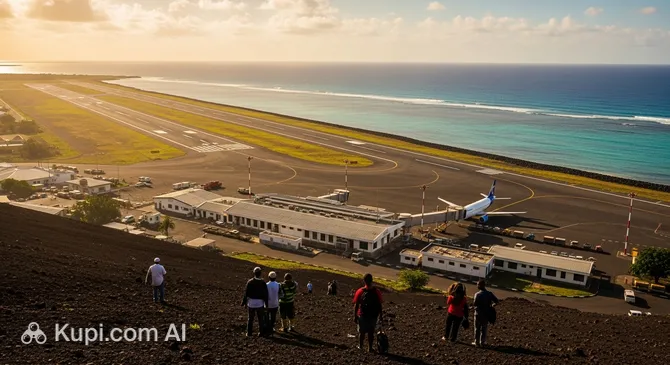
Prince Said Ibrahim International Airport. Source: Kupi.com Binoculars

Prince Said Ibrahim International Airport is not just a transport hub, but your first introduction to the unique atmosphere of the "Perfume Islands." Located at the foot of the majestic Mount Karthala volcano, this airport welcomes travellers with warm tropical air and breathtaking views of the turquoise waters of the Indian Ocean. Despite its modest size, the hub possesses a special island charm, setting guests into a relaxed holiday rhythm literally from the moment they step off the plane.

IATA Code HAH
ICAO Code FMCH
City Moroni
Distance to centre ~20 km
Status International
Annual Passengers About 250,000
Schedule Flight Schedule

This airport is a key point for those wishing to explore the Comoros archipelago. Among its main features and advantages are:

Scenic Location. Take-off and landing here turn into a real excursion: the window view offers a panorama of lush green forests, volcanic slopes, and the endless blue of the ocean. The airport is located in the village of Hahaya, allowing you to enjoy a drive along the coast on your way to the capital.

Compactness and Intuitive Navigation. Thanks to the small size of the terminal, it is practically impossible to get lost here. All necessary services — from passport control to baggage claim — are within walking distance, which significantly saves energy after a long flight.

Infrastructure Development. In recent years, the airport has been actively modernised to meet international standards of safety and comfort. The extension of the runway and equipment upgrades have allowed for the reception of larger airliners, connecting the islands with mainland Africa and other regions of the world.

Contact Information

Below you will find contact information for Prince Said Ibrahim International Airport (HAH), which serves Moroni and acts as the main air gateway to the Comoros.

  • Official Website: www.aeroports-des-comores.com
  • Information Desk Phone: +269 773 21 35
  • Address: BP 1003, Hahaya, Grande Comore, Union des Comores
  • Email: contact@adccomores.com
  • Social Media: You can follow airport news on its official page on Facebook.
  • Lost Luggage Information: In case of loss or damage to luggage, it is recommended to first contact the Lost & Found service or your airline representative directly at the airport.
  • Passenger Support Contacts: For general questions and passenger support, you can use the main information desk phone number or write to the airport's email address.

How to Get to the Airport

Prince Said Ibrahim International Airport (HAH) is the main air gateway to the Comoros, located approximately 20 km north of the capital, the city of Moroni. There are several ways to get from the city centre to the terminal, each with its own specific features.

Taxi and Transfer

The most convenient and fastest way to get to the airport is to take a taxi. The journey from the centre of Moroni usually takes from 30 to 45 minutes, depending on traffic conditions. An important point: most taxis are not equipped with meters, so be sure to agree on the fare with the driver in advance to avoid misunderstandings. Many hotels also offer transfer services, which is a reliable, albeit more expensive, option.

Public Transport

For those looking for the most budget-friendly option, there is local public transport — shared taxis, known as "taxi-brousse". These are minibuses or large cars that ply the main roads and depart as they fill up. Although this is very cheap, the trip may take longer due to stops along the way and may not be comfortable if you have a lot of luggage.

Car Rental and Parking

Car rental is an excellent choice for travellers wishing to explore the island of Grande Comore on their own. Several rental agencies operate in Moroni. By booking a car, you can drive to the airport at your own pace. There is parking on the airport territory where you can leave the vehicle during your absence. This is convenient if you are travelling by rented or private transport.

Terminals and Map

Prince Said Ibrahim International Airport (HAH) is distinguished by its compactness and simple structure, making it convenient for passengers. The airport operates one main terminal that serves both domestic and international flights. Such an organisation significantly simplifies navigation and eliminates the need to move between different buildings.

The terminal layout is intuitive. Immediately upon entering the building, you find yourself in the public area where airline check-in counters are located. After receiving a boarding pass and checking in luggage, passengers proceed to the security and passport control area. The departure and arrival zones are clearly separated but are located within the same building a short distance from each other. The arrival zone includes immigration control counters, a baggage claim belt, and a customs point.

Since there is only one terminal, the issue of transfers between them is irrelevant, which is a big plus for travellers with children or a large amount of luggage. All necessary procedures are carried out sequentially in one building. Despite its modest size, the terminal has basic amenities: a small waiting hall, several check-in counters, and control points. The choice of shops and cafes is limited, so do not count on shopping during a long wait.

Passing through all formalities usually does not take much time due to the low passenger flow. However, queues are possible on days when popular international flights depart. It is recommended to arrive at the airport well in advance: 2-3 hours before the departure of an international flight and 1.5-2 hours before a domestic one. This time will be sufficient to check in, drop off luggage, and complete all pre-flight formalities without rushing.

Airport History

The history of Prince Said Ibrahim International Airport is closely linked to the formation of the independent state of Comoros. The airport was officially opened in 1975, the same year the country gained sovereignty. Located on the main island of Grande Comore (Ngazidja), near the capital Moroni, it was created from the very beginning as the main air gateway connecting the archipelago with the African continent and the rest of the world. Initially known as Moroni-Hahaya Airport, it became a symbol of a new era for the island nation.

The airport received its current name in honour of Prince Said Ibrahim bin Ali, a prominent political figure and former Prime Minister of the Comoros, highlighting its national significance. In the first decades of its existence, the airport underwent phased development. The initially modest infrastructure was gradually expanded to cope with growing passenger traffic and to accommodate larger types of aircraft. This was vital for the development of both tourism and trade relations.

Key stages of modernisation occurred in recent decades. Significant work was carried out to reconstruct the runway and upgrade the passenger terminal. These improvements allowed the airport to meet modern international safety and service standards. As a result of modernisation, the airport was able to receive long-haul airliners, opening new opportunities for direct flights from Europe and Asia.

Among interesting facts, it is worth noting that despite its relatively small size, the airport plays a colossal role in the life of the country. For the isolated archipelago, it is not just a transport hub, but a real bridge connecting the Comoros with the outside world. Today, Prince Said Ibrahim International Airport (IATA code: HAH) continues to be the heart of the country's transport system, ensuring its economic and cultural integration into the global community.

Services and Amenities

Prince Said Ibrahim International Airport, the main air hub of the Comoros, offers passengers a basic set of services for a comfortable wait for their flight. Despite its compact dimensions, the terminal is designed to ensure convenience for both arriving and departing tourists. Here you will find several small cafes and snack bars where you can have a bite or drink coffee before your flight. In the shops, you can purchase souvenirs, local crafts, and essential items.

Waiting lounges are provided in the airport for comfortable waiting. Business class passengers and members of loyalty programmes of certain airlines may have access to the VIP lounge, where more comfortable conditions and additional services are offered. Wi-Fi connectivity may be limited, so it is recommended to have alternative internet access. There are zones for charging electronic devices within the terminal.

Currency exchange points and bank representatives operate in the airport building, where necessary financial transactions can be made. For emergency assistance, there is a medical station on the terminal premises, ready to receive passengers in case of illness.

The airport is equipped to serve passengers with reduced mobility; however, it is recommended to notify your airline in advance of special needs to receive assistance. Families with children can also count on standard amenities. There are no hotels directly inside the airport building, but the nearest accommodation options are located in the capital — the city of Moroni, which can be quickly reached by taxi.

There are no specialised business centres or conference halls at the airport. For business meetings or events, it is better to use the infrastructure of hotels and business centres in Moroni. Overall, Prince Said Ibrahim Airport provides everything most necessary so that your journey to the exotic Comoros begins and ends without unnecessary hassle.

Where to Eat

Prince Said Ibrahim International Airport (HAH) is a small and compact airport, so the choice of dining establishments here is limited. Do not expect a large food court with famous global chains. Instead, passengers have access to several simple cafes and snack bars located in the main and only terminal.

Mostly, you can find small cafes here offering a standard set for a quick snack: sandwiches, pastries, crisps, coffee, and soft drinks. This is a great option if you need to refresh yourself before departure. Sometimes the menu features notes of local flavour, for example, pastries with vanilla or coconut — the main products of the Comoros. We also recommend looking out for fresh tropical juices if they are available.

Most establishments are concentrated in the public area (landside), before passing passport control and security. In the secure area (airside), the choice is usually even more modest and may be limited to a small kiosk with drinks and packaged snacks. Cafe opening hours depend directly on the flight schedule — they open a few hours before departure and close after the last flight departs.

Passengers with strict dietary restrictions should take care of meals in advance. Finding specialised vegan or gluten-free dishes here is practically impossible. Vegetarians will be able to find simple meat-free pastries or fruits. At the same time, since the Comoros is a Muslim country, virtually all meat products offered are Halal by default. For a full lunch or dinner, we strongly recommend eating at one of the restaurants in the city of Moroni before arriving at the airport.

Traveller Tips

Travelling through Prince Said Ibrahim International Airport, the main air gateway to the Comoros, will be a pleasant start or end to your adventure if you take a few tips into account. This short guide will help you orient yourself and avoid unnecessary worry.

Arrival time at the airport. To avoid rushing, we recommend arriving at the airport at least 2-3 hours before international flights and 1.5-2 hours before domestic ones. Despite the modest size of the terminal, queues for check-in and security can form during peak hours.

Check-in and Security Control. Procedures at the airport of Moroni are standard. Have your passport, flight tickets, and other necessary documents ready. The security screening process may not seem as fast as in major international hubs, so allow extra time for it.

Seat Selection on the Plane. When flying from the Comoros or arriving there, a window seat will give you unforgettable views of the Indian Ocean, coral reefs, and volcanic landscapes. If comfort and the ability to stand up freely are more important to you, choose an aisle seat.

Hand Luggage. Remember generally accepted international rules: liquids can be carried in containers of no more than 100 ml, packed in a single transparent bag. Sharp, cutting, and other dangerous objects are prohibited. Before leaving for the airport, be sure to check the exact weight and size limits for hand luggage on your airline's website.

Passengers with Transfers. If you have a connecting flight, find out in advance if you need to collect your luggage and check in again. Check visa requirements if you plan to leave the transit zone of the airport during a long layover.

Customs Control. Be prepared that you may be asked to present your luggage for inspection. The import and export of local and foreign currency may be restricted, so large sums are best declared. There are also restrictions on the import of alcohol, tobacco products, and certain food items.

Saving Time and Money. To save time, complete online check-in if your airline provides such a service. To avoid surcharges for excess weight, travel light. Prices for food and drinks at the airport can be high, so you can take an empty water bottle with you (you will be allowed to take it through security and fill it later) and non-perishable snacks.

In Case of Flight Delay. If your flight is delayed, stay calm. First of all, contact your airline's representative counter to get up-to-date information. For long delays, the carrier is obliged to provide passengers with drinks, meals, and in some cases — hotel accommodation.

Airports in nearby cities

Reached the end of the page?

That means the route is fully explored