Support

Pemba Airport

About the Airport

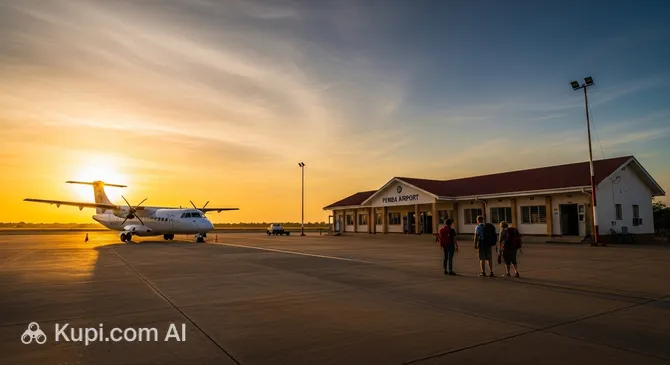
Pemba Airport. Source: Kupi.com Binoculars

Pemba Airport is not merely a runway on the Indian Ocean coast, but a true aerial gateway to the pristine nature of northern Mozambique. It is from here that the journey begins to the pearls of the Quirimbas Archipelago and the white sandy beaches of the Cabo Delgado province. Despite its modest size, the airport plays a key role in the region's development, serving both tourists seeking exotic adventures and business travellers.

IATA Code POL
ICAO Code FQPB
City Pemba
Distance to centre about 2-4 km
Status International
Annual Passengers Exact current passenger traffic data is not published.
Popular Airlines LAM Mozambique Airlines, Airlink
Schedule "Pemba Airport" online board

Features and Advantages

The main advantage of Pemba Airport lies in its strategic location and compactness. You will not have to wander through terminals for long — everything is within walking distance, making the arrival and departure process as quick and comfortable as possible. The airport connects Pemba with major transport hubs such as Johannesburg and Dar es Salaam, as well as the country's capital, Maputo. This makes it a crucial transit point for travellers heading to the luxury resorts and islands of the archipelago. Despite its modest infrastructure, the airport effectively fulfils its task, serving as the starting point for an unforgettable holiday in northern Mozambique.

Contact Information

Planning a departure or arrival at the airport in Pemba? Save this contact information, which may be useful during your trip. Please note that details may change, and we recommend verifying them through official resources.

  • Official Website: The airport does not have its own dedicated website. It is managed by Aeroportos de Moçambique (ADM); their official website is: www.adm.co.mz.
  • Information Desk Phone: +258 272 21454
  • Address: Aeroporto de Pemba, C.P. 165, Pemba, Mozambique
  • Email: You can use the general email of the management company for enquiries: geral@adm.co.mz.
  • Social Media: News and updates are published on the official social media pages of Aeroportos de Moçambique (e.g., Facebook).
  • Lost Luggage Information: In case of lost luggage, please contact your airline representative first. The information desk at the airport can also provide guidance.
  • Passenger Support Contacts: For all general questions related to airport operations, you can contact the information desk by phone.

How to Get to the Airport

Getting to Pemba Airport (POL) from the city centre of Pemba is quite simple, as it is located very close to the main districts. The journey usually takes no more than 10–20 minutes depending on traffic and the chosen mode of transport. In Mozambique, tourists have several convenient options to reach their flight.

Taxis and Private Transfers are the most popular and comfortable way to get to the airport. A car can be found in the city or ordered through your hotel. The cost of a trip from the city centre is usually 300–600 Mozambican meticals (approximately 5–10 USD). It is highly recommended to agree on the price in advance to avoid misunderstandings, as taximeters are not always used. A private transfer booked in advance guarantees a fixed price and timely vehicle arrival.

Public Transport in Pemba is mainly represented by minibuses, locally known as "chapas". This is the most economical option, but it may not be very convenient for tourists with luggage. The fare is nominal and rarely exceeds a few dozen meticals. However, routes are not always obvious, and the minibuses are often overcrowded. If you are travelling light and want to experience local life, this is an interesting option.

Car Rental is an excellent choice for those planning to explore the coast and surroundings of Pemba on their own. Several car rental companies have representatives both at the airport and in the city. Rental costs usually start from 40–50 USD per day for a budget vehicle. Having a rental car allows you to drive to the airport comfortably at any time. There is paid parking available on the terminal grounds where you can leave your car.

Terminals and Map

Pemba Airport (POL) is a small and compact aviation hub serving the northern part of Mozambique. Its structure is extremely simple: there is only one passenger terminal, which handles both domestic and international flights. Thanks to this, navigation through the airport is intuitive and presents no difficulties even for first-time visitors.

The terminal layout is very logical. The building is divided into several main zones located within walking distance of each other. Immediately upon entry, you find yourself in the general hall where the airline check-in counters are located. After check-in and baggage drop, passengers proceed to the security screening area, followed by a small departure lounge. The arrivals area is located in the same part of the building but has a separate exit and a baggage claim belt.

Completing all formalities typically does not take much time. Due to the low passenger volume, flight check-in and passport control usually proceed quite quickly. Nevertheless, it is recommended to arrive at the airport at least 1.5-2 hours before departure, especially if your flight is international, to complete all procedures without rushing.

Since there is only one terminal and it is not large, there are no complex transfers or needs for shuttles. All zones — from check-in to boarding — are within the same building. Signage will help you orient yourself, but getting lost here is practically impossible. Inside the terminal, there are basic amenities, including a small café and a few souvenir shops; however, do not expect a wide selection of shops or restaurants typical of large international airports.

Airport History

The history of Pemba Airport (POL) is closely tied to the development of the northern region of Mozambique. Its establishment dates back to the colonial period when the city was named Porto Amélia. Initially, it was a small airfield intended for administrative and military needs, as well as to ensure communication with remote parts of the Portuguese colony. In those times, air travel was the only fast way to cover vast distances across a country with an undeveloped road network.

After Mozambique gained independence in 1975, the airport received its modern name and began to play an important role in integrating the Cabo Delgado province into the young country's economy. For decades, it remained a modest regional hub. A significant impetus for development came in the late 20th and early 21st centuries with growing tourist interest in the Quirimbas Archipelago, famous for its paradise islands and coral reefs. Pemba Airport became the main gateway for travellers heading to these resorts.

A real breakthrough in the airport's history occurred in the 2010s. Due to the discovery of large natural gas deposits offshore Cabo Delgado, large-scale modernization of the entire infrastructure began. The runway was reconstructed and extended, and a new, more spacious, and modern passenger terminal was built. These improvements allowed the airport to accept larger aircraft, including medium-haul liners, and to serve an increased flow of passengers — both tourists and professionals working in the energy sector.

Today, Pemba Airport is a modern air hub holding key strategic importance for all of northern Mozambique. It successfully combines two important functions: on one hand, it is the starting point for journeys to some of the most beautiful beaches and diving spots in the Indian Ocean, and on the other, it serves as a vital logistics base for the developing gas industry. This dual role makes it one of the most dynamically developing airports in the country.

Services and Amenities

Pemba Airport (POL) is a significant transport hub in northern Mozambique, serving as the gateway to the city of Pemba and the picturesque beaches of the Quirimbas Archipelago. Being a regional airport, it offers passengers a basic set of services necessary for comfortable travel.

Restaurants and Shops. In the terminal, you will find several small cafés and snack bars where you can order light snacks, sandwiches, as well as hot and cold drinks. The range of shops mainly consists of souvenir stalls where you can buy items from local artisans, and kiosks with travel essentials.

Lounges. In addition to the general waiting area, a small VIP lounge may be available at the airport. It is recommended to check access conditions and the list of services in advance with your airline representative.

Internet and Charging. Access to Wi-Fi at the airport may be limited or provided for a fee. The number of power outlets for charging electronic devices is also small, so it is better to carry a portable charger (power bank) with you.

Financial Services. Typically, ATMs and at least one currency exchange point operate within the airport building. However, it is recommended to carry some amount in local currency (Meticals) in case the terminals are temporarily out of service.

Additional Services. A first aid point is available for passengers. Families with small children can use the mother and child room. Passengers with reduced mobility are advised to notify their airline in advance regarding the need for special assistance so that airport staff are ready to provide accompaniment and necessary equipment upon arrival or before departure.

Accommodation and Business Services. There are no hotels directly on the Pemba Airport grounds. The nearest hotels, lodges, and guesthouses are located in the city itself, a few minutes away by taxi. Specialised conference rooms or business centres are absent from the terminal. For business meetings, consider options at hotels in Pemba.

Where to Eat

Pemba Airport (POL) is a small regional airport, so dining options here are quite modest and designed primarily for passengers to have a quick snack and a drink before departure. Do not expect a wide selection of restaurants or a food court here, as one might find in major international hubs.

Typically, in the airport's single terminal, there are a few small cafés or snack bars. They are located both in the public area before security control and in the departure zone. The assortment mainly includes:

  • Hot and cold drinks: coffee, tea, bottled water, juices, and carbonated beverages.
  • Packaged snacks: chips, biscuits, chocolate.
  • Simple pastries and sandwiches.

Sometimes the menu may include elements of local cuisine, such as pastries or simple snacks typical of Mozambique, but this is not guaranteed. Options for passengers with strict dietary restrictions (vegan, gluten-free, or Halal dishes) are practically non-existent. If you have specific dietary needs, it is strongly recommended to bring food with you from the city.

The opening hours of catering establishments are directly linked to the flight schedule — they open a few hours before departure and close shortly after the last plane leaves. Prices, as in most airports around the world, are higher here than in the city. For a full lunch or dinner, it is better to choose one of the establishments in Pemba itself before travelling to the airport.

Travel Tips

Travelling through the airport of Pemba city can be a simple and pleasant start or end to your adventure in Mozambique if you are aware of a few key points. Here are some tips to help you orient yourself and avoid unnecessary hassle.

Arrival Time at the Airport. Pemba Airport is not very large, but it is better to be safe. For international flights, it is recommended to arrive 2.5-3 hours before departure, and for domestic flights — 1.5-2 hours. This will give you enough time to calmly complete all formalities, especially during peak tourist seasons.

Check-in and Security Control. Procedures are generally standard. If possible, complete online check-in to save time. Keep your passport, visa (if required), and ticket ready. During security control, be prepared to remove laptops and other large electronic devices, as well as liquid containers, from your hand luggage.

Hand Luggage. Remember standard international rules: liquids can be carried in containers of no more than 100 ml, packed in a single transparent bag. Sharp objects, weapons, and flammable substances are prohibited. It is always useful to have a change of clothes, essential medicines, a power bank, and important documents in your hand luggage — in case of luggage delay or loss.

Seat Selection and Connections. If you are flying out of Pemba, a window seat will offer you stunning views of the Indian Ocean coast. If you have a connecting flight, clarify when purchasing the ticket whether you will need to collect and re-check your luggage. For self-transfer connections, allow more time, as you will have to pass border control, collect luggage, and go through check-in again.

Customs Control. Upon arrival in Mozambique, you will need to fill out a migration card. Keep the address of your hotel or accommodation handy. If you are carrying anything subject to declaration, it is better to declare it honestly to avoid misunderstandings. Be patient, as there may sometimes be queues at control.

Saving Time and Money. To save money, book a taxi or transfer in advance. Prices for food and drinks at the airport may be higher than in the city, so it is better to have a snack before arriving. Carry some local currency (Metical) for small expenses, although bank cards are accepted in many places.

Flight Delays. In case of a flight delay or cancellation, contact your airline representative immediately for information on the new departure time, rebooking options, or provision of food and accommodation. Keep all receipts for expenses that may arise due to the delay — they will be useful for obtaining compensation from the airline or through travel insurance.
Reached the end of the page?

That means the route is fully explored