Support

Lubumbashi International Airport

About the Airport

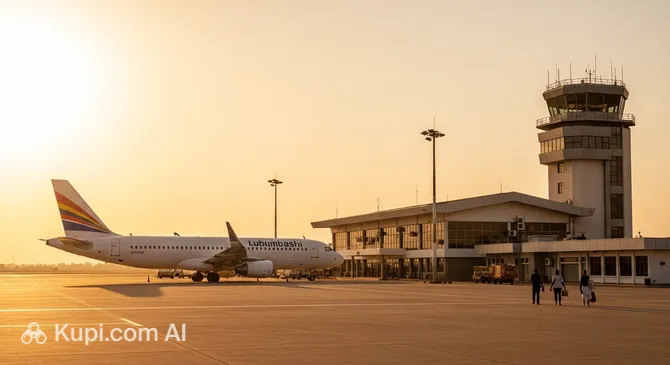
Lubumbashi International Airport. Source: Kupi.com Binoculars

Lubumbashi International Airport (FBM), historically known as Luano Airport, serves as the main aerial gateway to the resource-rich Katanga region. Established during the colonial era, today it stands as the second-largest airport in the Democratic Republic of the Congo. This aviation hub plays a pivotal role in the country's economic and tourism sectors, connecting Lubumbashi with major African capitals and important domestic destinations.

IATA Code FBM
ICAO Code FZQA
City Lubumbashi
Distance to Centre Approximately 10 km.
Status International
Annual Passengers About 333,000 (based on 2015 data).
Popular Airlines Ethiopian Airlines, Kenya Airways, Airlink
Schedule Online Flight Board "Lubumbashi International Airport"

Despite its long history, the airport is continuously evolving to meet modern standards. Passengers can utilize the business lounge for a comfortable wait before departure. The airport handles flights from major carriers such as Ethiopian Airlines, Kenya Airways, and Airlink, operating routes to Addis Ababa, Nairobi, Johannesburg, and the country's capital, Kinshasa. The most convenient way to get from the airport to the city centre is by taxi—the journey takes approximately 15 minutes, making the terminal easily accessible for travellers.

Contact Information

For the most accurate and up-to-date information regarding the operations of Lubumbashi International Airport (FBM), it is recommended to use the following contacts. Please note that for many inquiries, especially those related to flights and baggage, you should contact your airline directly.

  • Official Website: The airport is managed by the state company Régie des Voies Aériennes (RVA). Official information is available on their website: www.rva-drc.com.
  • Help Desk Phone: The single public number for the airport help desk is often unavailable. For questions regarding flights, tickets, and check-in, it is most reliable to call your airline directly.
  • Airport Address: Airport Road, Lubumbashi, Democratic Republic of the Congo.
  • Email: For general inquiries, you can write to the management company RVA at: info@rva-drc.com.
  • Social Media: News and updates regarding airports in Congo (DRC) can be found on RVA's official social media pages.
  • Lost Luggage Information: If your luggage has been lost or damaged, immediately contact the Lost & Found counter or your airline's representative at the airport. It is the carrier that handles these issues.
  • Passenger Support Service: Assistance with questions related to your flight is provided by airline representatives. Information desks in the terminal can also provide general information upon arrival in Lubumbashi.

How to Get to the Airport

Lubumbashi International Airport (FBM) is the main aerial gateway for the city of Lubumbashi and the entire southern region of Congo (DRC). The airport is located approximately 15 km northeast of the centre, and the drive usually takes from 20 to 40 minutes depending on traffic conditions.

Taxi and Transfer — the most convenient and safe way to get to the airport. A trip from the city centre via an official taxi will cost approximately 20–40 USD. It is extremely important to negotiate the price with the driver before the journey begins to avoid misunderstandings. A more reliable option is to book a transfer through your hotel. This may cost slightly more (about 40-60 USD) but guarantees a fixed price and a higher level of service.

Public Transport, represented mainly by shared taxis (minibuses), is the most budget-friendly option. The trip will cost just a few dollars. However, this method may be inconvenient for tourists due to the lack of clear routes, language barriers, and potential overcrowding. It is more suitable for experienced travellers familiar with local specifics.

Car Rental — an excellent choice for those who value independence. Several rental agencies operate in the city and at the airport. Rental costs start from 50–70 USD per day for a compact car, excluding fuel. It is recommended to book a car in advance, especially during the high season. To drive in Congo (DRC), you will likely need an International Driving Permit. Be prepared for the peculiarities of the local driving style.

If you are driving to the airport in a personal or rented vehicle, parking is at your service. There are zones for short-term and long-term parking on the premises. Rates are usually more affordable than at major international airports, but it is best to check the exact cost on-site upon entry.

Terminals and Map

Lubumbashi International Airport (FBM) features one main passenger terminal that serves both domestic and international flights. Thanks to its compactness, navigation through the airport is intuitive and does not cause difficulties for most travellers. All services and zones are located within a single building, eliminating the need for long walks.

The terminal is clearly divided into a Departure Zone and an Arrival Zone. The departure hall includes airline check-in counters, passport control, and security screening points. After completing formalities, passengers enter a small waiting area with boarding gates. The arrival zone is located separately and is equipped with border control counters and baggage claim belts. Signs are primarily in French, but they are complemented by international pictograms, which simplifies orientation.

Although the airport is not large, the time required for pre-flight procedures can vary. It is recommended to arrive at the airport at least 2-3 hours before an international flight and 1.5-2 hours before a domestic one. This time will be sufficient to check in, drop off luggage, and pass through passport and customs control without haste, especially during peak hours.

The main advice for navigation is to follow the signs and ask airport staff for assistance if you have any questions. Since all key points—from check-in counters to boarding gates—are in close proximity to each other, you will easily find your way. Check in advance which part of the terminal—international or domestic—your flight departs from, so you can head directly to the correct sector.

Airport History

The history of Lubumbashi International Airport (FBM), also known as Luano Airport, is closely tied to the development of the second-largest city in the Democratic Republic of the Congo and the entire mining region of Katanga. This air hub has come a long way from a colonial airfield to a key transport node of the country.

The airport was built during the Belgian colonial rule and officially opened in 1956. Initially, it bore the name Elizabethville Airport, just like the city itself. From the very beginning, it played an important role in the transport system, ensuring connections with remote areas and the capital, as well as supporting the logistics of the booming mining industry.

In the early 1960s, during the so-called "Congo Crisis," the airport acquired strategic importance, becoming an arena for key logistical operations. After the city was renamed Lubumbashi in 1966, the airport also received its modern name. Throughout its history, it has undergone several stages of modernization aimed at improving the runway, navigation equipment, and passenger terminal to meet international standards.

In recent years, the airport continues to develop. Renovation works have been carried out on the terminal to increase passenger comfort and throughput capacity. Today, Lubumbashi Airport is not just a gateway to a region rich in minerals, but also an important hub for humanitarian missions and business travel, serving both domestic and international flights.

Services and Facilities

Lubumbashi International Airport (FBM) offers passengers essential services for a comfortable wait for their flight. In the terminal, you will find several cafes and bars where you can have a snack, coffee, or soft drinks. For those looking for souvenirs or travel goods, there are duty-free shops with a classic assortment of perfumes and alcohol, as well as stalls featuring items by local artisans reflecting the culture of Congo (DRC).

For a more comfortable stay at the airport, VIP lounges are provided, where passengers can relax in quiet surroundings and enjoy complimentary snacks and beverages. Internet access via Wi-Fi may be available in lounges or specific zones of the terminal; however, its availability and terms should be checked on-site. Charging stations for mobile phones and other gadgets are available in the waiting halls.

To handle financial matters, currency exchange points and ATMs operate at the airport, where you can exchange foreign currency for Congolese Francs (CDF) or withdraw cash. In case of unforeseen health situations, there is a medical point in the terminal to provide first aid.

Families with children can use the mother and child rooms. Passengers with reduced mobility are provided with assistance and accompaniment throughout the airport territory. To arrange this, it is necessary to contact your airline representatives in advance. There are no hotels directly within the airport, but various accommodation options are located in the city of Lubumbashi, a short drive away.

Although specialized conference rooms are absent at the airport, basic conditions for work, such as quiet zones and internet access, can be found in the VIP lounges. For business meetings and events, business centres in the city's major hotels would be more suitable.

Where to Eat

When planning a departure from Lubumbashi International Airport (FBM), it is worth considering meal arrangements in advance. The airport does not feature a wide variety of restaurants and cafes, so choices will be limited. Nevertheless, you can find a few options here to grab a snack or have a coffee while waiting for your flight.

In the main area of the airport, accessible before security control (landside), there is usually a small cafe or bar-restaurant. Here, passengers are offered a standard selection of beverages: coffee, tea, juices, and water, as well as alcoholic beverages. As for food, you can find simple snacks such as sandwiches, pastries, and light bites. Sometimes the menu includes basic hot dishes, for example, rice with chicken or fish, providing an opportunity to try elements of local cuisine.

After passing passport control and security screening (airside), in the departure zone, the selection is even more modest. Typically, there is a small kiosk or bar where you can buy drinks and packaged snacks. This is a convenient option for those who want to take something on board or have a quick bite immediately before boarding.

Important information for passengers with special dietary needs:

  • Options for vegetarians, vegans, as well as gluten-free or Halal dishes are extremely difficult to find at Lubumbashi airport. If you have strict dietary restrictions, it is strongly recommended to bring food with you.
  • Prices at the airport are traditionally higher than in the city.
  • Opening hours of establishments are usually tied to the flight schedule and may not be 24/7.

Thus, if you are counting on a full lunch or dinner, it is better to do so at one of the restaurants in Lubumbashi before travelling to the airport. Local establishments offer a much wider selection of dishes, including authentic cuisine of Congo (DRC). Cafes at FBM are more suitable for a light snack or purchasing drinks.

Travel Tips

Travelling through Lubumbashi International Airport can be a simple and straightforward stage of your journey if you prepare in advance. We have gathered several useful tips that will help you navigate the airport in Lubumbashi and save time and peace of mind.

Arrival Time at the Airport. For international flights, it is recommended to arrive at the airport at least 3 hours before departure, and for domestic flights — 2 hours. Procedures may take longer than in major global hubs, so a time buffer will allow you to avoid unnecessary rushing.

Check-in and Security Control. Keep all documents at hand: passport, printed ticket, visa, and, crucially for entry into Congo (DRC)Yellow Fever Vaccination Certificate. Check-in and screening processes may not be fully automated, so please be patient and polite with staff. Online check-in, if available with your airline, can significantly speed up the process.

Seat Selection on the Plane. If you have the opportunity to choose a seat, consider your preferences. A window seat will offer beautiful views during takeoff and landing, while an aisle seat provides more freedom to move around the cabin during a long flight.

Hand Luggage. Be sure to pack all valuables in your hand luggage: documents, money, electronics, as well as necessary medications. Remember standard restrictions on carrying liquids (no more than 100 ml in one container) and sharp objects. Check baggage allowance rules with your airline to avoid extra charges at the airport.

Passengers with Connections. If you have a connecting flight, check with the airline in advance whether you need to collect your luggage and check it in again. Lubumbashi Airport is not a major transit hub, so transfer facilities may be basic.

Customs Control. When passing through customs, be prepared to answer questions about the purpose of your visit and the contents of your luggage. Honestly declare all valuables and large sums of money. Possession of a Yellow Fever Vaccination Certificate is often a mandatory requirement upon entry into the country.

Saving Time and Money. To save money, book a taxi or transfer from the airport in advance through your hotel or a verified service. Carry a small amount of local currency (Congolese Franc) or small USD bills for minor expenses. Prices for food and drinks at the airport can be high, so it is better to bring a light snack with you.

In Case of Flight Delay. In the event of a delay or cancellation, contact your airline representative for information and instructions. Inquire about your rights to food, drinks, or accommodation. To make the wait more pleasant, have a book, a charged power bank, and headphones with you.

Reached the end of the page?

That means the route is fully explored