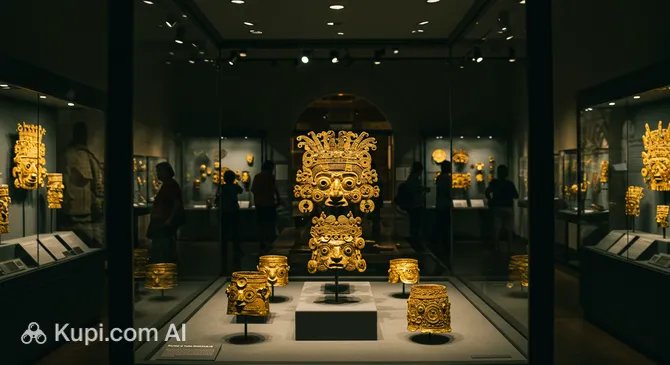
The Pre-Columbian Gold Museum, located in the heart of San José, is one of the jewels of Costa Rica's cultural heritage. This unique site invites visitors on a fascinating journey through time, showcasing a rich collection of gold artifacts created by the ancient civilizations that inhabited this land long before the arrival of Europeans. A visit to the museum is an opportunity to touch the mysteries of the past and appreciate the skill of ancient jewelers.
Traveler photos:
The museum's collection is truly impressive: it features about 3,567 exhibits, of which 1,586 items are made of pure gold, and 1,922 are made of ceramics. These priceless artifacts, dating from 500 to 1500 AD, include not only exquisite jewelry and ritual figurines but also everyday objects. Each piece tells its own story, reflecting the beliefs, social structure, and artistic traditions of Costa Rica's pre-Columbian societies.
The museum itself is situated in an unusual location — an underground building on the Plaza de la Cultura (Culture Square), specially designed to store and display the valuable collections of the Central Bank of Costa Rica. The architecture of the building is symbolic: it has three floors descending to a depth of twelve meters and is built in the shape of an inverted pyramid, creating a special atmosphere for immersing oneself in the world of ancient treasures.
The Pre-Columbian Gold Museum is not just a repository of artifacts, but an important center for studying and preserving the country's cultural heritage. The exhibition clearly demonstrates why Costa Rica earned its name — "Rich Coast" (Spanish: Costa Rica) — as gold played a significant role in the lives and beliefs of the indigenous peoples of this region. A visit to the museum leaves an unforgettable impression and deepens the understanding of the rich history of this amazing country.