Support

Cathedral of Our Lady of Grace in Cambrai

About

Towering over the historic center of Cambrai, Cathédrale Notre-Dame-de-Grâce is a magnificent example of Neoclassical architecture. Serving as the seat of the Archbishop, this cathedral was erected at the turn of the 17th and 18th centuries on the site of an ancient abbey. Today, it is recognized as a national treasure that France is rightfully proud of.
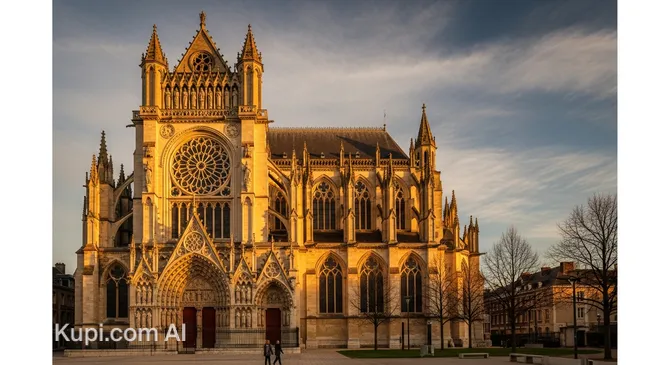
Cambrai Cathedral (Cathedral of Our Lady of Grace)
Cambrai Cathedral (Cathedral of Our Lady of Grace). Иллюстрация. Источник: Kupi.com AI

The main treasure of the church is the icon of Our Lady of Grace, also known as the "Cambrai Madonna." This rare piece of 14th-century Italo-Byzantine art belongs to the "Eleusa" (Tenderness) iconographic type. Believers and art lovers come here to see this touching image, where the Virgin Mary tenderly presses her cheek against the Infant Christ.

The cathedral's interior impresses with its austerity and harmony. In addition to the famous icon, it houses the majestic tomb of Archbishop François Fénelon, created by the outstanding sculptor David d'Angers. A special charm is added to the building by its layout, inspired by the Church of the Holy Sepulchre, combining a rectangular nave with circular structural elements.

Contacts

For more information about special services or ceremonial events, you can use the cathedral's contact details.

How to contactContact
AddressAv. de la Victoire, 59400 Cambrai, Франция
Phone+33 3 27 81 87 11
Websitewww.paroissesdecambrai.com

What to Do

A visit to the cathedral offers a rare opportunity to enjoy the peace and contemplation of the Neoclassical interior. The highlight of your route inside the church will be the side chapel where the Cambrai Madonna is kept. Surrounded by the flicker of candles, this icon creates a special atmosphere of reverence, inviting reflection and prayer.

Be sure to pay attention to the architectural details restored after the 19th-century fire under the guidance of the famous Eugène Viollet-le-Duc. Art lovers will appreciate the white marble statue of the Virgin and Child and the masterfully executed tomb of Fénelon. Along the walls, you can find inspiring quotes, including the famous words of St. Bernard regarding spiritual seeking.

For those interested in history, the cathedral offers a chance to examine memorial plaques and ancient inscriptions that tell the story of the city's centuries-old heritage. This place is ideal for a cultural break, allowing for expressive photographs (please remember to maintain silence) and soaking in the spirit of Europe's religious heritage.

Getting There

The majestic cathedral is located at Av. de la Victoire, in the heart of the historic city center. Thanks to its convenient location, it is easily accessible on foot from major city landmarks, such as the ancient belfry or the city gates.

If you are arriving by train, the walk from Gare de Cambrai takes only 10–15 minutes. You can also use the local buses that run through the center. For those traveling through the Nord-Pas-de-Calais region, it is convenient to reach Cambrai from Lille by bus or train (the journey takes about an hour).

Drivers will find several parking zones in the vicinity of the cathedral, although it is worth noting that streets in the city center can be narrow. For those on bicycles, the city is integrated into a network of cycling routes, allowing for a comfortable tour of the sights.

Ближайший город: Cambrai

History & Facts

The history of the Cathédrale Notre-Dame-de-Grâce is full of surprising turns. It was built between 1696 and 1703 as the church of the Abbey of Saint-Sépulcre, replacing an even older 11th-century structure. While the city's old Gothic cathedral was completely destroyed during the French Revolution, this church survived, temporarily serving as a "Temple of Reason."

In 1802, after the restoration of the bishopric, the building officially gained cathedral status, and in 1841, it became an archiepiscopal see. Since then, it has been the spiritual center of the region, housing the tomb of Archbishop François Fénelon, a prominent church figure and writer, beneath its vaults.

A devastating fire in 1859 was a serious trial for the church. However, the cathedral rose from the ashes: the famous architect Eugène Viollet-le-Duc participated in the reconstruction. In 1896, Pope Leo XIII granted the cathedral the honorary status of a minor basilica, confirming its high historical and religious significance for the entire country.

Time Needed

To leisurely explore the interiors, study the architectural details, and pay respects to the sacred relics, most visitors need 1 to 2 hours. This time is quite sufficient to feel the atmosphere of the church and take some memorable photos.

If you plan to attend mass or spend time in quiet prayer in one of the side chapels, it is worth setting aside a bit more time for your visit. The cathedral is not overly large, so its visit can be easily combined with a walk to other historical sites in the city center.

Working Hours

The cathedral is typically open to visitors daily. The standard operating hours are Monday through Friday from 10:00 AM to 12:00 PM and 2:00 PM to 7:00 PM. On Saturday, the church opens a bit earlier at 9:00 AM but closes at 5:00 PM. On Sundays, sightseeing is primarily possible in the afternoon, from 3:00 PM to 6:00 PM.

It is important to keep in mind that tourist access may be limited during church services, weddings, or funerals. Before visiting, it is recommended to check the official parish website to confirm the current schedule for a specific date.

DayWorking hours
понедельник10:00–12:00, 14:00–19:00
вторник10:00–12:00, 14:00–19:00
среда10:00–12:00, 14:00–19:00
четверг10:00–12:00, 14:00–19:00
пятница10:00–12:00, 14:00–19:00
суббота09:00–12:00, 14:00–17:00
воскресенье15:00–18:00

Nearby

A walk around the cathedral allows you to delve deeper into the atmosphere of the old city. Within walking distance are key monuments of medieval and classical architecture that help form a complete picture of this region's rich past.

Exploring the surrounding streets will lead you to ancient gates, defensive towers, and cozy squares. Below is a list of interesting places to visit immediately after your tour of the cathedral:

NameDistance
Cambrai Museum0.2 km
CupCoffee Burger Restaurant0.4 km
Kyoto0.5 km
Le Carré0.7 km
L'Eau à la Bouche1.3 km
Goudale Restaurant1.4 km
Shop'in Cambrai Shopping Centre2.8 km

Reached the end of the page?

That means the route is fully explored