Support

Porte de Paris

About

When visiting the beautiful Lille, it is impossible to pass by one of the city's most majestic monuments. The Porte de Paris is not just a historical gate, but a true triumphal arch built in the Baroque style. This grand structure showcases the architectural legacy left by the reign of Louis XIV in all its glory.

Serving as a French counterpart to the famous arches of Paris, the Porte de Paris was originally designed as a grand entrance to the city. Located on the edge of the historical center, this landmark replaced old medieval fortifications, demonstrating the transition to the more refined and monumental urban planning for which France is famous.
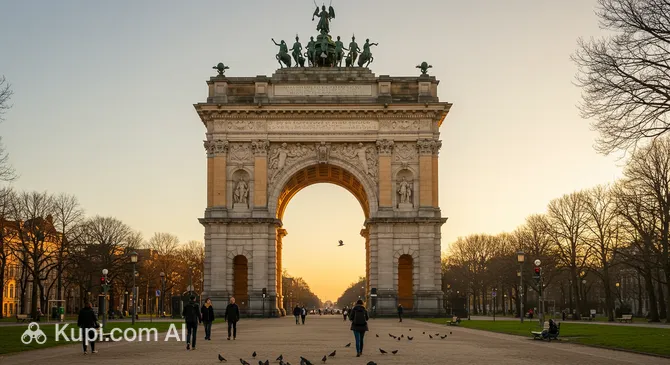
Porte de Paris
Porte de Paris. Иллюстрация. Источник: Kupi.com AI

Today, this site is a vital cultural asset. Its richly decorated facades and sculptural compositions attract thousands of tourists wishing to connect with the history of the "Sun King" and see a symbol of former military might transformed into an elegant ornament of the urban landscape.

Contacts

For information regarding cultural events and tours taking place near the monument, you can visit the official city website or the local tourist office.

How to contactContact
AddressPl. Simon Vollant, 59800 Lille, France
Websitelille.fr

What to Do

Once at the foot of this monumental arch, the first thing to focus on is its sculptural decoration. By examining the bas-reliefs designed by engineer Simon Vollant, you can literally read the history of the French crown's grandeur. Every detail here is intended to emphasize triumph and power, so architecture enthusiasts will find it fascinating to study the Baroque elements up close.

For many travelers, the Porte de Paris becomes a favorite location for photoshoots. Thanks to its scale and the open space around it, the arch looks great in photos at any time of day. This spot is rightfully considered one of the most "Instagrammable" in the city, allowing for spectacular shots against the backdrop of the majestic stone.

Furthermore, the arch serves as an excellent starting point for a walking tour. From here, it is convenient to begin exploring the Vieux-Lille (Old Lille) district. Right beyond the gate, picturesque cobbled streets begin, lined with characteristic Flemish houses where cozy antique shops, art galleries, and authentic cafes hide around every corner, inviting you to relax after your sightseeing.

Getting There

The monumental gate is located at Pl. Simon Vollant in the heart of the city. Thanks to its convenient location, it is very easy to reach on foot from most areas of the historical center. If you are staying in the old part of town, a walk to the landmark will be a pleasant addition to your itinerary.

For those who prefer public transport, metro stations and bus stops are within walking distance. The well-developed transport network allows you to quickly reach the square from anywhere in the city. You can also use taxi or car-sharing services, which is particularly convenient if you are heading to the center from the train station or more distant neighborhoods.

The city is a major transport hub served by high-speed TGV trains and international flights. From the station, the Porte de Paris can be reached in just a few minutes, making this architectural monument accessible even for tourists visiting the city for just one day.

Ближайший город: Lille

History & Facts

The history of this majestic structure dates back to the end of the 17th century. The gate was constructed between 1685 and 1692. The project was initiated by personal order of Louis XIV and carried deep symbolic meaning: the arch was intended to commemorate the triumphant capture of the city by French forces in 1667.

Before this Baroque masterpiece appeared, a more modest medieval gate known as the Porte des malades stood on this site. It was part of the old city walls, but the era of the "Sun King" demanded a different scale and aesthetic. The outstanding engineer Simon Vollant, who had already gained fame for his work on the city citadel, was appointed to lead the project.

Vollant filled the gate's decor with elements emphasizing the power of the French monarchy. Every bas-relief and sculptural group carried a message of the crown's strength and greatness. Interestingly, at the same time, the architect designed the surrounding houses to create a unified, harmonious architectural ensemble that met the new standards of urban design.

The city itself, which emerged in the Middle Ages on an island among the branches of the Deûle River, has weathered many trials throughout its history. The Porte de Paris became more than just a passage through the city walls; it became a symbol of the city's transition into a new era under French rule, while preserving the charm of its rich centuries-old history.

Time Needed

To simply admire the architectural details of the arch and take a few commemorative photos, 15–30 minutes is usually sufficient. The structure is impressive in scale, but exploring it does not take much time if you are on a tight schedule.

However, the Porte de Paris often serves as an ideal starting point for a deeper exploration of the city. If you plan to head into the Old Town after seeing the gate, browse local galleries, or visit the Palais des Beaux-Arts, you should set aside at least 2–3 hours for this route. This will allow you to enjoy the atmosphere of Flemish architecture and the charm of the cobbled streets at a leisurely pace.

Working Hours

As the Porte de Paris is an architectural monument located in an open city square, it is accessible 24/7. You can admire the arch at any time that suits you, whether in the early morning or late at night.

Operating schedule (daily):

  • Monday: Open 24 hours
  • Tuesday: Open 24 hours
  • Wednesday: Open 24 hours
  • Thursday: Open 24 hours
  • Friday: Open 24 hours
  • Saturday: Open 24 hours
  • Sunday: Open 24 hours

Nevertheless, for the best photographs and a detailed view of the sculptures, it is recommended to visit during daylight hours. In the evening, the city illumination is switched on, giving the monument a particularly solemn and grand appearance.

Круглосуточно

Nearby

The Porte de Paris is located in close proximity to many interesting locations, making a visit to this part of the city very rewarding. A walk from the triumphal arch in any direction will reveal new facets of local culture, history, and entertainment.

In the surrounding area, you will find both quiet historical squares and modern entertainment centers suitable for family holidays or active time with friends.

NameDistance
Palace of Fine Arts0.4 km
Natural History Museum of Lille0.4 km
Saint Sauveur Station0.4 km
La Canopée0.5 km
Just Escape Lille0.7 km
Le Spotlight Comedy Club0.8 km
Grand Place0.9 km

Reached the end of the page?

That means the route is fully explored