Support

Montlucon

About

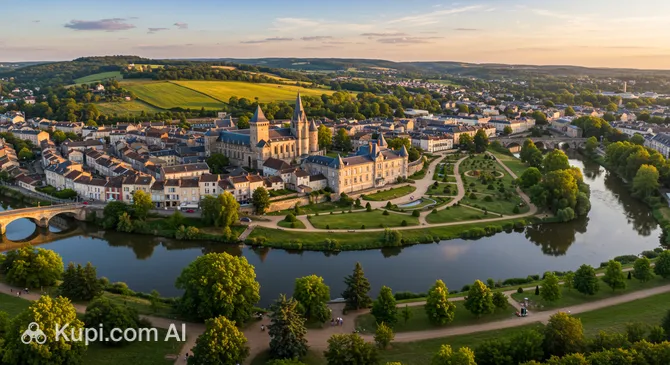
Montluçon is a true hidden gem in the heart of the historic Bourbonnais province. Nestled on the banks of the Cher River amidst the picturesque hills of the Auvergne region, this city wonderfully blends ancient charm with the rhythm of modern life. For those discovering France, Montluçon serves as an excellent starting point for exploring the central part of the country and its natural beauty.

Montluçon. Illustration.
Source: Kupi.com AI

With a population of about 35,000, the city maintains an atmosphere of intimacy and genuine hospitality while remaining an important cultural center of the district. Walking through its streets feels like stepping into another era: half-timbered houses, cobbled squares, and ancient facades create a unique ambiance. The rich history of Montluçon can be traced in every stone of the historic center, inviting travelers to immerse themselves in a medieval fairy tale.

There is no need to rush here: locals and visitors alike enjoy the moment in cozy cafes, valuing traditions and the harmony between the past and the present. If you are looking for authentic experiences and want to see a colorful, vibrant city without the bustle of major metropolises, Montluçon is definitely worth including in your itinerary.

Weather Overview

The climate in this region is characterized by mildness and a moderate character, making the city pleasant to visit at almost any time of year. There are no exhausting heatwaves or extreme frosts here; however, the weather in Montluçon can be quite changeable, so it's worth checking the forecast before your trip.

Summers here are usually warm and comfortable: in July and August, daytime temperatures rise on average to 25–26°C, while nights bring pleasant freshness (around 15°C). This is the best time for long walks and excursions. Winters are generally cool but not harsh. In January and December, the thermometer stays around 7–8°C during the day, while nighttime averages are around 2–3°C, although frosts are possible.

Precipitation is distributed fairly evenly throughout the year, although the number of rainy days increases noticeably during the winter period and in May, reaching 15–16 days per month. Expect a warm summer with periodic rain and a cool, rather damp winter, so having an umbrella or a light raincoat in your luggage is a wise decision for any season.

Average monthly temperature

Average monthly precipitation

Interesting Facts

Beyond its main attractions, Montluçon holds many fascinating secrets and unexpected contrasts that turn a walk through the city into a real adventure. Here are a few facts that will help you see this corner of the Auvergne-Rhône-Alpes region from a new perspective:
  • A Castle with a Musical Soul. The Castle of the Dukes of Bourbon is rightly considered the symbol of the city, but its ancient walls hide a very modern secret. Today, this medieval fortress houses MuPop—the Museum of Popular Music. It is a unique space where history meets interactivity: visitors can not only see rare instruments but also hear what music from different eras sounded like.

  • Riddles of the House of the Twelve Apostles. An amazing 15th-century architectural monument has been preserved in the historic center—a half-timbered house decorated with carved details and mysterious symbols. Local legend has it that representatives of local guilds once gathered in this building to secretly discuss important matters and decide the fate of the city.

  • Gardens on the Bastions. Montluçon is famous for its landscape design, and a prime example is the Wilson Garden. This green oasis with classic French-style flowerbeds is laid out right at the foot of the fortress walls. The nearby castle esplanade offers a breathtaking panoramic view of the old city's tiled roofs.

  • Birthplace of a Writer. The city is closely linked to the name of Charles-Louis Philippe, a famous writer born here. His work is deeply permeated with the spirit of provincial France, and many corners of Montluçon still preserve the very atmosphere he described in his books.

How to Get There

Logistics planning is a key stage of any trip. Montluçon is located in the heart of the country, and although it does not have its own airport, it can be reached via the transport hubs of neighboring major cities. You can learn more about how to get to Montluçon by exploring various route options.

The nearest air gateway is Clermont-Ferrand Auvergne Airport (IATA: CFE), located in Clermont-Ferrand, just 75.7 km from Montluçon. This is the most convenient option for arrival. A trip from the terminal to the city center by taxi or rental car takes about 1 hour and 10 minutes, depending on traffic. The airport handles both domestic and some international flights, serving as the main gateway to the Auvergne region.

An alternative option is Limoges Bellegarde Airport (IATA: LIG), located 122.2 km away. Travel time by car is approximately one and a half hours. This regional hub is convenient for those planning a trip through the western part of central France.

Below is a summary of the nearest airports:

AirportPassenger trafficDistance
Clermont-Ferrand Auvergne Airport231 34476 km
Bellegarde Airport290 000122 km
Aurillac Airport29 650162 km
Loudes Airport6 700167 km
Laroche Airport97 397169 km

Railway connections in France are very efficient; however, trips to Montluçon often involve transfers through major high-speed train (TGV) hubs. One of the key hubs is Lyon-Part-Dieu station in Lyon, located about 186.2 km away. A car transfer from this station takes about 2–2.5 hours. The station serves a huge flow of passengers and offers many connections.

Travelers can also use Tours Station. The distance to Montluçon is the same 186.2 km, and the drive by car takes about 2 hours and 15 minutes. Using these major stations allows you to combine a high-speed train trip with a car rental for the final leg of the journey along the scenic roads of the region.

List of major railway stations within accessible range:

StationPassenger trafficDistance
Poitiers Railway Station3.5 mln176 km
Gare de Lyon-Perrache7.6 mln184 km
Saint-Pierre-des-Corps Station4.3 mln184 km
Tours Railway Station6.5 mln186 km
Lyon Part-Dieu Station40.1 mln186 km

Main Attractions

Montluçon is a city where history comes alive at every turn. Its architectural heritage allows for a journey through time, from the rugged Middle Ages to the Industrial Revolution. Here is a list of the main sites that are definitely worth including in your walking route to feel the soul of this corner of France.

The Castle of the Dukes of Bourbon is the city's undisputed landmark. This imposing fortress, towering over the old quarters, was built during the Hundred Years' War. Upon climbing to the castle's esplanade, you will be rewarded with a magnificent view of Montluçon's tiled roofs and the Cher River valley. The architecture of the building itself, with its massive towers and keep, serves as a reminder of the power of the dukes who once ruled these lands.

Located within the castle walls and an adjacent modern building is MuPop (Museum of Popular Music). It is not just an exhibition of instruments, but a truly interactive space dedicated to the history of music from the 18th century to the present day. It houses a unique collection: from ancient bagpipes and electric guitars to stage costumes of rock stars. Tourists appreciate this place for the opportunity to not only look but also listen—modern audio guides immerse you in the atmosphere of different musical eras, making the visit interesting even for those far from musicology.

The heart of the old town's spiritual life is the Church of Notre-Dame. Built in the 15th century, it is a beautiful example of Gothic architecture. Inside, an atmosphere of peace prevails, while the stained glass windows and stone carvings catch the eye. Of particular note is the "Christ in Chains" statue—a rare monument of religious art that attracts pilgrims and history enthusiasts alike.

The Saint-Pierre Quarter is ideal for leisurely strolls. It is a labyrinth of narrow cobbled streets where many 15th–16th century half-timbered houses have been preserved. Walking here, you might stumble upon tiny squares, cozy craft shops, and hidden courtyards. This is where the flavor of medieval Montluçon, so carefully protected by the locals, is best felt.

Local Cuisine

Montluçon's cuisine is a true feast for foodies who want to get to know the authentic flavors of France. Gastronomic traditions here were formed at the crossroads of the historic Bourbonnais province and the Auvergne region, giving local dishes a special heartiness and homey comfort. In the city's restaurants, you will definitely be offered succulent meat prepared with fragrant herbs and, of course, the aromatic potato gratin—a dish prepared here with special love.

It is impossible to imagine a meal in Montluçon without a cheese plate. The king of the table here is the famous Saint-Nectaire—a semi-soft cheese with an earthy aroma produced in the surrounding area. It is served as a standalone snack or used in hot dishes. Pastry lovers should pay attention to traditional pies filled with pears or apples, while a crispy baguette, baked according to ancient recipes, will be the perfect complement to any lunch.

As for drinks, the local food culture is inextricably linked with wine. Although Montluçon is not a major wine capital, the proximity to the vineyards of the central part of the country allows local establishments to offer excellent regional wines. Wine evenings and tastings are often held, where drinks are paired with artisanal delicacies. For those who prefer non-alcoholic options, the morning here traditionally begins with a cup of hot coffee and a fresh croissant.

The city's gastronomic life is vibrant not only in restaurants but also on the streets. Montluçon's farmers' markets are a magnet for both locals and tourists. Here you can buy the freshest homemade cheeses, sausages, honey, and seasonal vegetables. During harvest festivals and culinary events, the city is filled with the aromas of spices and joyful excitement, embodying that very French joie de vivre—the joy of living, which they know how to appreciate here like nowhere else.

Travel Tips

Welcome to Montluçon! To ensure your journey to this charming corner of the Bourbonnais province is as comfortable as possible and leaves only pleasant memories, we have prepared some useful recommendations to help you feel confident in any situation.

  1. Clothing and Footwear. The weather in the Auvergne-Rhône-Alpes region can be changeable, so layering your clothing is the best solution for any season. Be sure to bring comfortable flat-soled shoes: the historic city center is paved with ancient cobblestones, and walking its picturesque slopes in heels will be extremely difficult.

  2. Getting Around the City. Montluçon's historic center is very compact and is best explored on foot while enjoying the architecture. For trips to more distant areas, it is convenient to use the local Maelis bus network. Note that public transport runs less frequently in the evenings and on Sundays, and taxis are best ordered in advance via apps or by phone, as "hailing" a car on the street can be difficult.

  3. Finances and Payment. While cards are accepted in most shops and restaurants, it is better to have some cash euros for visiting farmers' markets or buying souvenirs in small shops. Tips in France are generally already included in the bill, but leaving 1–2 euros on the table or rounding up the amount when paying is considered a sign of good manners and gratitude for the service.

  4. Health and Safety. Montluçon is a peaceful city, but standard precautions are always wise. Pharmacies are easily recognized by the flashing green cross on the facade; information about the duty pharmacy (operating at night or on weekends) is usually posted on the doors of all pharmaceutical points. In emergencies, use the single European number 112.

  5. Language Barrier. In tourist offices and major museums, staff often speak English, but in small cafes and shops, French remains the primary language. Locals really appreciate it when guests try to speak their language: learn a few basic phrases like "Bonjour" (Good day) and "Merci" (Thank you)—this will immediately put your interlocutor at ease.

  6. Local Etiquette. Politeness plays a key role here. When entering any shop, even the smallest one, it is customary to greet the salesperson. Also, in France, it is not customary to speak loudly in public places and transport—restraint and respect for the personal space of others are the norm.

  7. What to Avoid. Don't put off lunch until late. Unlike in big cities, many restaurants in Montluçon strictly observe kitchen hours: lunch is usually served from 12:00 PM to 1:30 PM or 2:00 PM. If you arrive later, there is a risk of going hungry until dinner, which starts around 7:00 PM, as establishments close for a daytime break.

  8. Market Day. If possible, plan your trip to include a Saturday morning. The traditional market in the city center is not just a place for shopping, but a real cultural event. Here you can buy the freshest cheese and local delicacies, as well as observe the lively interaction of the townspeople.

By following these simple tips, you can avoid minor inconveniences and fully focus on immersing yourself in the unique atmosphere of the medieval city. We wish you a smooth journey and unforgettable discoveries in Montluçon!

Entertainment & Nightlife

The nightlife in Montluçon can be a pleasant surprise for travelers. While the city doesn't claim to be the clubbing capital of France, it boasts a special, warm atmosphere where medieval surroundings meet modern fun. An evening in Montluçon is primarily about cozy bars in historic buildings, live music, and long conversations over a glass of wine or a pint of beer with friendly locals.

The epicenter of evening activity is the Old Town (Cité Médiévale). It is in the labyrinth of narrow cobbled streets around the Castle of the Dukes of Bourbon that the most colorful establishments are concentrated. The areas around Rue Grande and Rue des Serruriers come to life at sunset: laughter, music, and the clinking of glasses can be heard here. The crowd is diverse—from students of the local technological institute to respectable couples unwinding after the work week.

If you want to immerse yourself in an authentic atmosphere, be sure to visit the bar Le Perceval. Located in the heart of the medieval quarter, this establishment is famous for its knightly-themed interior and regular concerts. Local bands often perform here, and the selection of cocktails and beer will please even sophisticated guests. For those who prefer a more glamorous experience, La Notte lounge bar is a great choice. Situated at the foot of the castle, it is known for its stylish setting, excellent drink list, and late hours (usually until 3:00 AM), making it the perfect spot for an "after-party."

Those who love to dance should look into Le Pharaon nightclub. It is a classic disco located a short distance from the historic center, where you can party until morning to the rhythms of popular music. And for connoisseurs of high-quality live sound, Le 109 is a real find—the city's main music venue, uniting L'Embarcadère and Le Guingois. It regularly hosts concerts by contemporary French and international performers, ranging from rock and jazz to electronics.

Practical tips for night owls:

  • Opening hours: Most bars in the center are open until 1:00 AM, while clubs operate until 4:00–6:00 AM, but only on Fridays and Saturdays. On weekdays, the city falls asleep quite early.
  • Dress code: A casual style is accepted in Montluçon. You can safely go to bars in jeans and comfortable shoes (especially relevant on the cobblestones), while a slightly dressier but not flamboyant look is welcomed in clubs.
  • Safety and Transport: The historic center is safe for night walks, though it is poorly lit in some alleys, so stick to the main streets. The main challenge is taxis. It is almost impossible to hail a car on the street at night, so we strongly recommend saving local taxi service numbers in advance or asking a bartender to call a car for you.

Daytime entertainment in Montluçon is more relaxed but no less interesting. Cultural leisure is provided by the Gabrielle Robinne Theater (Théâtre Gabrielle Robinne), located on Place de la Comédie—a beautiful Italian-style building where classic and contemporary plays are staged. For family leisure or a quiet evening, the Le Palace cinema or a walk through the picturesque Wilson Park, which is lovely in the light of the setting sun, is ideal.

Parks & Museums

Montluçon's cultural landscape is not limited to its medieval walls; the city offers a harmonious blend of educational leisure and outdoor relaxation. Green oases coexist with unique museum collections, allowing tourists to alternate walks in the fresh air with immersion in the region's rich heritage.

Parc des Ilets is the city's true "green lungs" and a favorite holiday spot for locals. Located on an island between the Cher River and the Berry Canal, this extensive park is ideal for family picnics and morning jogs. Within its territory is an elegant 19th-century castle that now houses an art school, while shady alleys lead to modern sports grounds. An atmosphere of tranquility prevails here despite its proximity to the city center.

Another gem of landscape design is the Wilson Garden (Jardin Wilson). This park, laid out in the 1930s, is a classic example of a French formal garden with geometrically precise flower beds, topiary figures, and rose gardens. It serves as a link between the lower town and the medieval quarter. Tourists come here not only for the flora but also for the magnificent views of old facades that open from the garden terraces.

The city's main museum attraction is MuPop (Museum of Popular Music). This innovative space, unparalleled in Europe, is dedicated to the history of music from folklore to modern pop culture. The exhibition includes more than 3,500 instruments and musical objects, but the main thing here is interactivity. Visitors can hear the sounds of rare guitars, accordions, and even electronic synthesizers through special audio systems, fully immersing themselves in the musical atmosphere of different eras.

Art and architecture lovers should visit Château de la Louvière. This magnificent building, inspired by the architecture of the Petit Trianon at Versailles, is an exhibit in itself. Temporary art exhibitions, photo biennials, and cultural events are often held inside. The English-style park surrounding the castle adds romanticism and privacy to the place.

Among the historical monuments, the medieval center of the city itself occupies a special place. Walking through it is like an open-air excursion: from the majestic Castle of the Dukes of Bourbon to the half-timbered houses on Place Notre-Dame. The architecture here clearly demonstrates the transition from the military power of the Middle Ages to the refinement of the Renaissance.

For those looking for off-the-beaten-path routes, we recommend a walk along the Berry Canal (Canal de Berry). This quiet waterway, lined with trees, is where you can see old locks and enjoy the silence away from the city bustle while watching ducks and herons.

Getting Around

Montluçon's transport system perfectly matches its status as a cozy and compact city. There are no subways or trams, and distances in the historic center are so small that many tourists prefer to get around on foot. Nevertheless, for trips to remote areas, the station, or large shopping centers, the city has an efficient and understandable network of routes.

The main form of public transport is buses operated by the Maelis company. The network covers the entire city and the nearest suburbs, offering several main regular lines (denoted by letters, such as A, B, C) and additional routes operating during peak hours. The buses are modern, clean, and generally run strictly according to the schedule, which can be found at stops or in online applications.

Special mention should be made of a specific route—the electric shuttle La Navette Cœur de Ville. This small bus runs through the very heart of the city, connecting major attractions, parking lots, and administrative buildings. It is an ideal option for those tired of walking on cobblestones but wishing to continue exploring the old quarters. The shuttle runs frequently, and its route is designed to cover the most popular tourist spots.

The fare system is simple and unified. You can purchase a single ticket (Ticket Unité), which is valid for an hour and allows for transfers. It is more profitable to buy tickets in advance at special machines, tobacco shops (Tabac), or at the Espace Maelis office near the station—this will be cheaper than buying from the driver upon boarding. 10-ticket booklets (carnet) and 24-hour passes are also available, which are great for tourists planning active travel.

It is important to remember the validation rules: the ticket must be stamped every time you enter the bus, even when transferring. Fines for fare evasion can be substantial, so keep your ticket until the end of the trip. Pay attention to the operating hours: buses start running early in the morning but finish quite early—around 8:00 PM. On Sundays and public holidays, the number of trips is significantly reduced, and some lines may not operate at all.

As an alternative to public transport, bicycles are popular in Montluçon. The Vélo Maelis service offers rentals of regular and electric bikes. Given the hilly terrain of some areas, an e-bike is an excellent choice for a comfortable ride. The cycling infrastructure is developing, and a ride along the banks of the Cher River or the Berry Canal will provide many pleasant impressions.

If you need to get somewhere late at night or with heavy luggage, it is better to use a taxi. Unlike in metropolises, it is not customary to hail a car by waving your hand on the street. Taxis must be ordered in advance by phone or through specialized stands at the railway station. Car-sharing services are poorly represented in the city, so for independent travel around the Auvergne-Rhône-Alpes region, it is wiser to rent a car from a classic rental agency.

Accommodation

Where to stay:

Montluçon offers travelers a range of accommodation that perfectly matches the city's character: there are no pompous five-star resorts, but instead an abundance of cozy mid-range hotels, family guesthouses, and reliable chain hotels. The main focus is on comfort and affordability, making a trip here pleasant for the budget.

For those who want to feel the atmosphere of the past, the best choice would be the vicinity of the historic center (Cité Médiévale). Staying here, you will wake up with a view of tiled roofs and can walk to the main attractions. Another popular and practical area is the zone around the railway station. This is an ideal option for tourists traveling without a car: it is easy to get to the center from here, and prices are often slightly lower. Modern budget hotels are located on the outskirts of the city, suitable for car travelers who value free parking.

In addition to classic hotels, the chambres d'hôtes (bed and breakfast) format is gaining popularity in Montluçon. This is a great opportunity to live in a traditional French house, chat with the hosts, and get first-hand tips from locals. Short-term rental apartments are also available, which is convenient for families or long stays.

Price Range and Booking:
The cost of living in Montluçon remains very democratic compared to major tourist centers in France.

  • Budget segment: A night in an inexpensive hotel or hostel will cost about 50–70 euros.
  • Middle class: A comfortable room in the center or a good chain hotel will cost from 80 to 110 euros.
  • Luxury and boutique hotels: Higher comfort options are less common, with prices starting from 120–140 euros.
We recommend booking accommodation in advance, especially if your trip falls during the summer months or during local festivals when demand rises sharply. Most properties are available on popular online platforms, but for small guesthouses, it is sometimes more profitable to contact the owners directly.

Nearby Cities

For those who want to explore the surrounding area, Montluçon serves as an excellent starting point for day trips to several interesting nearby locations:

Just an hour's drive away is the famous resort of Vichy. Known worldwide for its thermal springs and spas, this city charms with its elegant Napoleon III-era architecture. A walk through the covered galleries of the park and along the banks of the Allier River will provide a feeling of true aristocratic relaxation.

History and art lovers should visit Moulins, the historic capital of the Duchy of Bourbonnais. Here you can see a magnificent cathedral with a unique medieval triptych, as well as visit the National Center of Stage Costume, which is considered one of the most beautiful museums in the region and houses relics of French theater.

A bit further away is Clermont-Ferrand—the dynamic center of the region, surrounded by the chain of dormant volcanoes known as the Chaîne des Puys. The city is famous for its monumental Gothic cathedral built of black volcanic stone and the lively atmosphere of Place de Jaude.

CityPopulationDistance
Domerat8 7426 km
Petite-Synthe15 91132 km
Saint-Amand-Montrond9 53143 km
Gueret12 88959 km
Moulins19 56362 km

These nearby destinations provide insight into the diverse culture and landscapes of the region.

Shopping & Souvenirs

Shopping in Montluçon is a calm and pleasant activity, free from the hustle and stress of major cities. The city does not claim to be a capital of high fashion, but it possesses a special cozy atmosphere that encourages leisurely strolls through shops. The main feature of local shopping is the harmonious combination of famous French brands with unique goods from local artisans and farmers. Quality and tradition are valued here, so shopping often turns into an introduction to the region's culture.

The heart of the city's commercial life is rightfully considered Boulevard de Courtais. This wide and busy street is the main promenade for locals. Stores for clothing, shoes, perfumes, and accessories from popular European brands are concentrated here. For those looking for something more authentic, it is worth turning into the labyrinth of streets in the Old Town. Small boutiques, antique shops, and workshops are hidden in the historical quarters around the castle, where you can find original decor items and handmade gifts.

If you prefer to shop in one place, look into the Saint-Jacques Shopping Center (Centre Commercial Saint-Jacques). It is conveniently located and offers a good selection of mass-market stores, as well as a large supermarket for groceries. On the outskirts of the city, in the Domérat area, there are large commercial zones with hypermarkets and electronics stores, which are more convenient to reach by car.

The true soul of Montluçon is revealed at its markets. The highlight of the week is the Saturday market in the city center. This is not just a place for trade, but a center of social life: people come here to buy the freshest farm products, exchange news, and enjoy the lively atmosphere. Here you can find excellent cheeses, meat delicacies, seasonal fruits, and flowers. Occasionally, flea markets (brocantes) are held in the city, which are a paradise for vintage lovers.

The best souvenirs to bring from Montluçon are gastronomic delights. The main local specialty is potato pâté (Pâté aux pommes de terre). Despite the name, it is a hearty puff pastry pie filled with potatoes and cream, sold in local bakeries. Also, pay attention to cheeses from the Auvergne region, such as Saint-Nectaire or Cantal, and wines from the neighboring Saint-Pourçain appellation. Those with a sweet tooth will enjoy chocolate products from local confectioners.

When planning your shopping, it is important to consider the operating schedule. Shops are usually open from Monday to Saturday from 9:30 AM to 7:00 PM. However, many small boutiques in the center close for a lunch break from 12:00 PM to 2:00 PM—a tradition sacredly observed in the French provinces. Most shops are closed on Sundays; only some bakeries and grocery stores may operate in the first half of the day.

Bank cards from major international systems are widely accepted. Nevertheless, for purchases at the market or for small souvenirs in private shops, it is recommended to have some cash euros, as terminals may not be available everywhere. Tourists residing permanently outside the European Union can apply for a tax refund (Tax Free) for a one-time purchase over 100 euros in stores that support this system.
Reached the end of the page?

That means the route is fully explored