Support

Bourges

About

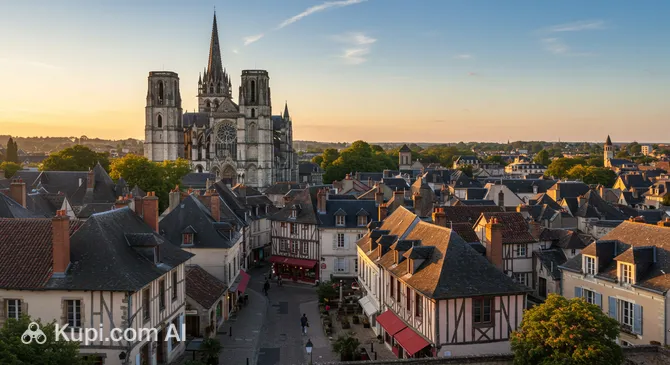
Bourges is a true treasure trove of experiences, nestled in the heart of the country in the picturesque Centre-Val de Loire region. Located on a plain roughly equidistant from Paris and Lyon, this city is perfect for those who want to see authentic France without the hustle and noise of major metropolises. With a population of about 65,000, Bourges harmoniously combines medieval charm with the comfortable rhythm of modern life.

Bourges. Illustration.
Source: Kupi.com AI

Strolling through the cobbled streets, it is impossible not to notice the city's rich historical heritage. Once the capital of Aquitaine and the Duchy of Berry, today Bourges invites travelers to admire ancient half-timbered houses and majestic Renaissance palaces. Here, the past meets the present, creating a unique atmosphere steeped in ancient legends and the aroma of fresh pastries from local bakeries.

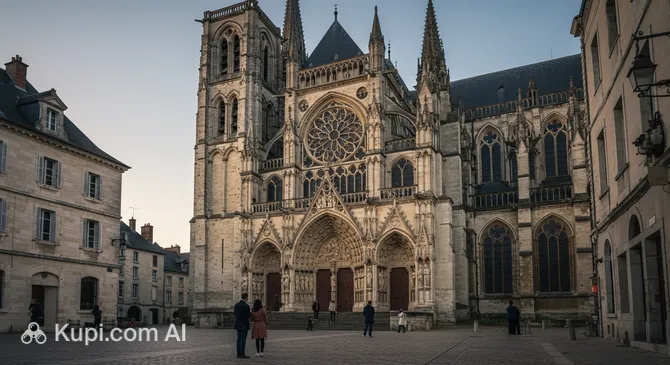
The crown jewel and the ultimate pride of the local residents is St. Stephen's Cathedral, which is rightfully included in the UNESCO World Heritage list. This masterpiece of Gothic architecture is striking in its scale and beauty. Bourges is an excellent destination for those seeking inspiration and tranquility, wishing to enjoy beautiful architecture over a cup of coffee on a cozy, sun-drenched terrace.

Weather Overview

The climate in Bourges can be described as temperate and mild, making the city pleasant to visit almost any time of year. However, to pack your suitcase correctly and ensure that the whims of nature don't catch you off guard, we recommend checking the current weather in Bourges for your travel dates in advance.

The summer here is truly comfortable: in July and August, the average temperature is about 21°C, and during the day, the air often warms up to 26°C. This is the most favorable period for long walks, as the number of rainy days drops to 7–8 per month. Expect a warm summer with plenty of sunny days and cool, yet fairly damp winters.

The winter months, especially December and January, bring coolness with average temperatures ranging from 5–6°C and frequent precipitation—up to 16 rainy days per month. Spring and autumn serve as smooth transitions: in May, the air already warms up to a pleasant 19°C, and October retains remnants of summer warmth, although it serves as a reminder of approaching winter with more frequent rains.

Average monthly temperature

Average monthly precipitation

Interesting Facts

Beyond its famous architectural masterpieces, Bourges holds many fascinating secrets and pages of history that often escape the attention of tourists. This city is capable of surprising even connoisseurs of France with its unique features and legends.
  • The city's history dates back to ancient times: even in the pre-Roman era, a large Celtic settlement existed here. Later, the city, then named Avaricum, became the capital of Aquitaine, and in the Middle Ages, its status was so high that it hosted the royal court of Charles VII and one of the country's first universities.

  • The majestic Bourges Cathedral (Saint-Étienne) impresses not only with its size—125 meters long and 40 meters wide—but also with its unique interior. Inside its walls, you can see a functioning astronomical clock dating back to the 15th century and descend into ancient crypts.

  • Throughout its long history, Bourges earned the unfortunate nickname "city of fires," having survived many destructive blazes starting from 588. The chronicle of one of the most terrible fires was so detailed that it occupied a scroll 120 meters long, and even that was not enough to describe all the destruction.

  • The city is famous not only for its antiquity but also for its musical traditions. Every year, it hosts the famous Printemps de Bourges ("Spring in Bourges") festival, which is considered one of the oldest and most prestigious in France, attracting music lovers from all over Europe.

Bourges Cathedral. Illustration.
Source: Kupi.com AI

Traveler photos:

How to Get There

When planning your travel logistics, it is worth studying the available routes in advance. You can find out more about how to get to Bourges on our dedicated page, while in this section, we will look at key transport hubs in neighboring cities that often serve as starting points for the final leg of the journey.

Since there are no major international airports in the immediate vicinity of the city, tourists usually fly into neighboring regions. One of the most popular options is Orly Airport (ORY) in Paris. It is a major aviation hub receiving flights from all over the world, located about 183 km from Bourges. The journey from there by car takes about 2–2.5 hours.

A closer alternative might be the regional Tours Val de Loire Airport (TUF) in the city of Tours (about 132 km). It is less crowded, allowing for faster processing of all formalities. Travelers also frequently choose Clermont-Ferrand Auvergne Airport (CFE), located 156 km away.

Main data for the nearest airports is presented in the table:

AirportPassenger trafficDistance
Val de Loire Airport206 084132 km
Clermont-Ferrand Auvergne Airport231 344156 km
Bellegarde Airport290 000165 km
Poitiers-Biard Airport93 492169 km
Paris Orly Airport33.1 mln183 km

As for rail connections, to plan a trip with transfers or use high-speed lines, it is convenient to look at major transport hubs in the region. For example, the Tours station (XJT) is located about 133 km from Bourges. It is an important hub with high passenger traffic, from where it is easy to continue the journey by regional train or rented car.

Also significant is the Saint-Pierre-des-Corps station (XSH), located near Tours (about 131 km). It is often used for transfers to high-speed TGV trains. If you are coming from the capital, you can consider the Massy TGV station (XJY), located 183 km away, which allows you to bypass central Paris.

A list of the nearest major railway stations for route planning:

StationPassenger trafficDistance
Saint-Pierre-des-Corps Station4.3 mln131 km
Tours Railway Station6.5 mln133 km
Poitiers Railway Station3.5 mln167 km
Massy TGV Station1.5 mln183 km
Le Mans Railway Station5.4 mln195 km

Main Attractions

Bourges is a city where every stone breathes history, and a walk through its streets feels like a journey back in time. The main architectural landmark is undoubtedly the majestic Bourges Cathedral (Saint-Étienne). This masterpiece of Gothic art, a UNESCO World Heritage site, is striking for its unique design without a transept and its stunning 13th-century stained glass windows. Tourists come here to feel the power of medieval architects and admire the play of light through the ancient glass.

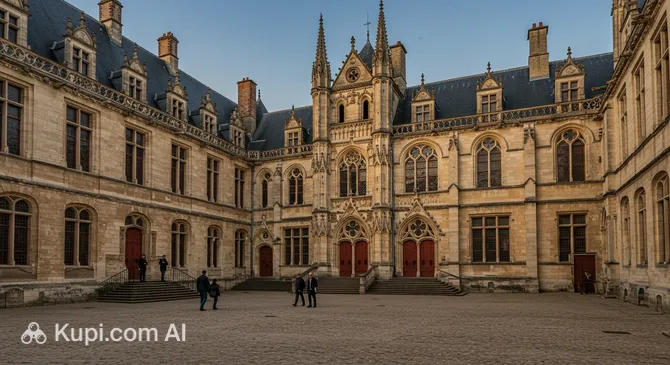
No less significant as a monument of civil architecture is the Jacques Cœur Palace. Built in the mid-15th century by the wealthy merchant and treasurer to King Charles VII, this mansion is considered one of the most beautiful Gothic buildings in France. Visitors are drawn to the elegance of the facade, adorned with sculptures, and the interiors that tell the story of the nobility's life in that era. This is a must-visit for anyone who wants to see how the influential figures of the French Renaissance lived.

Jacques Coeur Palace. Illustration.
Source: Kupi.com AI

Traveler photos:

For nature lovers and those who enjoy quiet walks, the Jardin des Prés-Fichaux will be a true discovery. This Art Deco style park is famous for its geometrically precise flower beds, yew alleys, and graceful sculptural compositions. It is a pleasant place to escape the city's hustle and bustle, enjoying the harmony of greenery and water. The garden is especially beautiful during the warm season when numerous flowers bloom, creating a bright and fragrant living carpet.

Another green oasis in the city center is the Archbishop's Garden. Located right at the foot of the cathedral, this French formal park offers magnificent views of the church's apse. It is the perfect spot for a leisurely promenade or a short rest on a bench in the shade of the trees. Tourists appreciate it for its well-kept grounds, beautiful floral arrangements, and the opportunity to take postcard-perfect photos of the city's main attraction from a unique angle.

If you are traveling with children or are interested in science, it is worth stopping by the Bourges Natural History Museum. The museum's collection is rich and diverse, ranging from paleontological finds to taxidermy and insect collections. The museum actively uses modern interactive technologies, making the study of nature an exciting and educational process for visitors of all ages.

Local Cuisine

The cuisine of Bourges is a harmonious reflection of the gastronomic traditions of the Berry region, where rustic heartiness meets French refinement. Local chefs rely on high-quality seasonal products: wild game, mushrooms, and fresh vegetables. The city's hallmark is rightfully considered the famous goat cheese "Crottin de Chavignol", served both with crusty baguettes and baked in warm salads.

For lovers of hearty dishes, the "potée berrichonne" is a must-order—a thick, aromatic pork stew with vegetables, perfect for warming up in cool weather. Those with a sweet tooth will enjoy the traditional apple dessert "galette aux pommes," the aroma of which often wafts from local bakeries. In season, restaurant menus are often enriched with exquisite dishes featuring black truffles.

A meal in Bourges is unthinkable without a glass of good wine. The surrounding vineyards are famous for producing excellent white and red wines that perfectly complement the taste of local cheeses and meat delicacies. The dining culture itself here encourages the leisurely enjoyment of food and conversation, especially on the cozy open terraces in the city center.

To experience the true taste of local life, head to the food markets, which abound with farmhouse sausages, pâtés, and the freshest fruits. For a pleasant dinner after a busy day of sightseeing, the city offers many establishments for every taste: from classic French bistros to cozy spots like the restaurant La Pasta.

Travel Tips

Proper preparation for your trip to Bourges will help you avoid minor inconveniences and focus entirely on the beauty of this ancient city. We have gathered a list of practical recommendations to help you feel confident and comfortable during your trip.

  1. Clothing and comfort. Since the historic city center is paved with old cobblestones, flat-soled shoes or sneakers are your main ally; heels are best left for a restaurant dinner that you reach by taxi. The climate here is mild but changeable, so the "onion principle" (layering clothes) is always relevant. When visiting St. Stephen's Cathedral, follow a modest dress code: shoulders and knees should be covered.

  2. Transport. Bourges is a compact city, and its main sights are best explored on foot. For trips over longer distances, it is convenient to use the local AggloBus network. A free shuttle (navette) runs in the center, connecting key points. Renting a car only makes sense for regional trips; inside the old town, narrow streets and limited parking can create unnecessary problems.

  3. Finances and payment. The official currency in France is the Euro (€). Bank cards are accepted almost everywhere, but for buying a baguette at a small bakery or souvenirs at the market, it's better to have small denomination cash. Tips are usually already included in the bill (service compris), but leaving a few coins or rounding up the amount is considered a sign of good manners.

  4. Health and safety. Pharmacies are easily recognized by a flashing green cross; many close around 7:00 PM, but a list of on-duty pharmacies is always posted on the door. Bourges is a quiet and safe city, but standard precautions won't hurt: watch your bags in crowded places and do not leave valuables in the car in plain sight. The emergency number is 112.

  5. Communication and language. While staff in hotels and tourist offices speak English, in small shops and cafes, communication may only be in French. Download an offline translator and learn a few basic phrases. Free Wi-Fi is available in many cafes and public zones ("Mairie de Bourges"), but for stable connection, it's more convenient to buy a local SIM card at tobacco shops (Tabac) or mobile stores.

  6. Local etiquette. Politeness is the foundation of French culture. When entering a shop, cafe, or even an elevator, be sure to say "Bonjour," and when leaving—"Au revoir." A lack of greeting can be perceived as rudeness and affect the quality of service. Also, in public places, it is customary to speak quietly so as not to disturb others.

  7. What to avoid. At food markets, you should not touch fruits and vegetables with your hands without the seller's permission—this is considered bad manners; just point to what you like, and they will gladly pick the best for you. Also, try not to rush the waiters in restaurants: lunch and dinner here are rituals that should not be hurried.

  8. Secret spot. Don't limit yourself to the stone center of the city. Be sure to walk to "Marais de Bourges"—a unique area of gardens on the water, located just a 10–15 minute walk from the cathedral. This idyllic place with canals and vegetable plots, where locals escape the city bustle, is perfect for a picnic or a morning jog.

We hope these tips will help you easily blend into the rhythm of life in Bourges and get the maximum pleasure from discovering this amazing corner of the Centre-Val de Loire region. We wish you an unforgettable journey and bright discoveries!

Entertainment & Nightlife

Entertainment and nightlife:

The nightlife in Bourges has a special charm: you won't find deafening mega-clubs operating until dawn here, but you will discover the cozy atmosphere of an ancient French city that knows how to relax with style. Evenings are typically spent in the company of friends, enjoying good wine and leisurely conversations on terraces surrounded by medieval architecture.

The heart of evening leisure is rightfully considered to be Place Gordaine. It is here, among the half-timbered houses, that most of the popular bars and pubs are concentrated. As dusk falls, the square comes alive: students, locals, and tourists fill the outdoor tables. The atmosphere here is democratic and relaxed, and most establishments have no dress code—neat casual style is sufficient.

If you are looking for a place for a delicious dinner before starting your nightly adventures, the restaurant La Pasta is worth noting. This establishment is popular for its cozy atmosphere and hearty dishes, making it an excellent starting point for the evening. On weekends, it is better to book tables in the city center in advance, as there are many people looking to spend time out.

For those who prefer a more modern format of relaxation, the Avaricum Shopping Center has become a point of attraction. This architecturally interesting complex, integrated into the historic buildings, offers not only shopping but also various leisure options, including cafes and restaurants open until late evening. Another location for shopping and walking enthusiasts is the Cœur de Marais Shopping Center, where you can also have a pleasant time.

Practical tips: Activity in bars usually winds down by 1:00 or 2:00 AM. Drink prices are moderate: a glass of beer or wine will cost on average 4–6 euros. Bourges is a safe city, and nighttime walks through the illuminated center (especially around the cathedral and Rue Moyenne) are perfectly safe. Public transport is rare at night, so if you stay out late, it is most convenient to call a taxi or use local ride-hailing services.

During the day, the city's entertainment program shifts toward culture and quiet relaxation. Travelers can look forward to numerous museums, theaters, and exhibition halls. In good weather, locals and tourists head to the parks to enjoy nature within the city limits or visit local markets, which often serve as venues for daytime gastronomic festivals.

Parks & Museums

While the most famous green spaces and museums of Bourges are often well-known, the city hides many other amazing corners where nature and art are revealed from a new perspective. If you have already seen the main sights, it is time to delve into the study of unique landscapes and cultural treasures that give this place its special charm.

A true natural phenomenon of the city is The Marshes (Les Marais). This is not just a park, but a unique ecosystem spanning 135 hectares, located literally a stone's throw from the historic center. The territory is a labyrinth of canals, islets, and lush vegetation. Locals call this place the "green lungs" of the city. Hundreds of private gardens are laid out here, which owners reach by traditional flat-bottomed boats. Picturesque walking and cycling routes are laid out for tourists, allowing them to enjoy the silence and observe water birds in their natural habitat.

For lovers of active recreation and water landscapes, the ideal location is Lake Auron (Lac d'Auron). This man-made reservoir, created in the 1970s, is located just a few kilometers from the center. A six-kilometer path ("Rocade verte") is set up around the lake, popular among runners, cyclists, and rollerbladers. Here you can not only have a picnic on the shore but also go rowing, sailing, or simply relax in the shade of the trees, enjoying the space that is so lacking in the narrow medieval streets.

Art connoisseurs should pay attention to the Estève Museum (Musée Estève). It is housed in the magnificent Hôtel des Échevins, which is itself a masterpiece of 15th-century Gothic architecture. Inside, the contrast of eras becomes palpable: the ancient halls display the bright, abstract paintings and collages of artist Maurice Estève. This collection allows you to see how modern art can harmoniously coexist with centuries-old stone walls, creating a unique aesthetic space.

Immersing yourself in the region's past is made possible by the Berry Museum (Musée du Berry), occupying the premises of the Hôtel Cujas mansion. The museum's exposition covers a vast timeframe—from the Gallo-Roman era to the present day. Of particular interest are the archaeological finds, rural life objects, and art that tell the story of the traditions and daily life of local residents over centuries. Here you can see the famous "mourners" (pleurants)—sculptures that are an important part of the region's artistic heritage.

Getting Around

The transport system in Bourges is designed to ensure maximum comfort for residents and guests while preserving its cozy atmosphere. Given the city's compact size and population of about 65,000, there are no metros or trams. The primary burden falls on an efficient and extensive bus network that covers both the historic center and adjacent areas.

The main public transport operator is the AggloBus company. There is great news for tourists: travel on all buses in the city network is completely free. This is a unique feature of Bourges that saves travelers from having to figure out complex tariff zones, search for change, or validate transit cards. You can move freely around the city by simply boarding any bus you like.

The special Navette Cœur de Ville shuttle deserves particular attention. These are small, eco-friendly electric buses that circulate through the very heart of the historic center, connecting main attractions, pedestrian streets, and parking lots. They are ideal for those tired of walking on ancient cobblestones. The shuttles run at intervals of about 15–20 minutes and allow you to quickly get from the cathedral to the shopping districts.

Although you don't need to buy tickets, there are certain rules for using transport. Entry to the bus is exclusively through the front door. In France, it is customary to greet the driver upon boarding—a simple "Bonjour" is considered a mandatory sign of politeness. To exit the bus, you must press the "Stop" button on the handrail in advance; otherwise, the driver may pass the stop if there are no passengers waiting.

When planning trips, it's important to consider the operating schedule. Buses start running early in the morning, around 6:00 AM, but finish quite early—most routes stop service between 8:00 PM and 9:00 PM. On Sundays and public holidays, the number of trips is significantly reduced, and intervals increase. For navigation, we strongly recommend downloading the official AggloBus app, which shows schedules and route maps in real time.

As an alternative to public transport, cycling is popular. The Cycloplus rental service offers convenient rental terms, and the city's relatively flat terrain (except for the climb to the cathedral) makes cycling a pleasant activity. This is the best way to reach the famous water gardens (Les Marais), where regular buses do not go.

If you are planning a late dinner or traveling with heavy luggage, it's worth using a taxi. Taxi stands are located at the railway station and in the center, but it's more reliable to call a car by phone or through apps. However, using a rental car in the historic center can be inconvenient due to narrow medieval streets and a shortage of parking; it's better to leave the car in specially equipped parking lots on the perimeter of the center and switch to a free bus.

Accommodation

The choice of accommodation in Bourges will pleasantly surprise travelers with its diversity and authenticity. The city offers a wide range of options: from cozy family-run guesthouses (chambres d'hôtes) located in ancient half-timbered houses, to classic international chain hotels and comfortable apartments. There aren't many extravagant five-star resorts here, but there is an abundance of charming boutique hotels that allow you to literally touch history.

The most popular and atmospheric area to stay is undoubtedly the historic center. By staying here, you will be within walking distance of the main attractions, such as the majestic Bourges Cathedral. This is the ideal choice for those who want to wake up to the sound of bells and have croissants for breakfast at the nearest bakery. The narrow cobbled streets create a unique ambiance, immersing guests in the Middle Ages.

Jacques Coeur Palace. Illustration.
Source: Kupi.com AI

Traveler photos:

If logistics are important to you or if you plan frequent trips around the region, consider accommodation options near the railway station. This is a practical choice: prices here are often slightly lower than in the heart of the old town, and the center can be reached on foot in 15–20 minutes or by free bus. Another interesting option could be renting accommodation near the famous marshes (Les Marais)—this offers the feeling of a countryside retreat within the city limits.

Many hotels in the center are located in restored mansions, adjacent to architectural monuments like the Jacques Cœur Palace. Staying in such places allows you to feel the spirit of old France without sacrificing modern comfort. For budget travelers, inexpensive chain hotels on the outskirts and youth hostels are available.

Price range and booking:

  • Budget segment: A night in an inexpensive hotel or guesthouse will cost approximately 50–80 euros.
  • Mid-range: Comfortable rooms in the city center cost on average 90–140 euros.
  • Premium: The cost of staying in the best boutique hotels starts from 150 euros per night.

Booking tip: Bourges is a popular destination, so it's best to look for accommodation in advance. This is especially true if your trip coincides with April, when the famous music festival Printemps de Bourges ("Spring in Bourges") takes place. During these days, the city is packed, and finding a free room becomes a real quest. It is convenient to use large online platforms for booking, but sometimes contacting small private hotels directly can guarantee better terms or a pleasant compliment from the owners.

Nearby Cities

For those looking to explore the surroundings, Bourges serves as an excellent starting point for day trips to several interesting nearby locations:

Just an hour's drive away is Orleans—a city inextricably linked to the name of Joan of Arc. This is an ideal destination for history buffs who wish to see the majestic Sainte-Croix Cathedral, reminiscent of Notre-Dame, and stroll along the picturesque banks of the Loire. Orleans combines the dynamics of a modern city with the charm of ancient architecture.

Slightly further is Blois, often called the royal gateway to the Loire Valley. The city's main pride is its famous castle, which served as a residence for French monarchs for centuries and represents a unique blend of architectural styles. The narrow, winding streets of the old town, descending toward the river, create an incredibly romantic atmosphere.

Also worth noting is Nevers, located at the confluence of the Loire and Allier rivers. The city is known for its Ducal Palace, considered one of the first Loire castles, and its long-standing tradition of producing artistic faience. This peaceful place with a rich spiritual heritage also attracts pilgrims wishing to visit the Convent of Saint-Gildard.

CityPopulationDistance
Saint-Doulchard9 6073 km
Vierzon25 72529 km
Issoudun11 69034 km
Saint-Amand-Montrond9 53140 km
Cosne-Cours-sur-Loire9 74153 km

These nearby destinations allow you to get a sense of the diverse culture and landscapes of the region.

Shopping & Souvenirs

Shopping in Bourges is a pleasant and relaxed activity that allows you to combine sightseeing with the search for unique items. Unlike bustling metropolises, there is no rush here, and the shopping districts are harmoniously integrated into the ancient buildings. The city offers a balanced mix of well-known brand boutiques, local craft shops, and gastronomic stores where you can find authentic products from the Berry region.

The city's main shopping artery is considered to be Rue Moyenne. It crosses the historic center and is literally dotted with shops selling clothing, shoes, perfumes, and accessories. This is an ideal place for a leisurely promenade: storefronts here sit adjacent to medieval facades. It is also worth checking out the pedestrian street Rue d'Auron and wandering through the alleys around Place Gordaine, where small independent boutiques, antique shops, and decor stores are hidden.

For those who prefer to do all their shopping in one place, there are several large complexes in Bourges. In the heart of the city, successfully integrated into the historical landscape, is the Avaricum Shopping Center. This is a modern open-air space with wooden finishes, housing popular mass-market brands and cozy cafes. If you are interested in larger-scale shopping with hypermarkets, you should head to the Cœur de Marais Shopping Center, located a bit further from the center.

An integral part of the French lifestyle are the markets, and Bourges is no exception. The most colorful is the market at Halles Saint-Bonnet, open on Sunday mornings. Here, local farmers offer the freshest vegetables, cheeses, and meats. Also popular is the market on Place des Marronniers, which takes place on Saturdays at the foot of the cathedral—a great opportunity to buy groceries with a magnificent view of Gothic architecture.

When choosing souvenirs, pay attention to the city's gastronomic symbols. Be sure to buy the famous "Forestines" candies—the first French candies with a soft praline filling in a hard caramel shell, invented right here in Bourges. The city is also the birthplace of the world-famous Monin syrups, so a bottle of exotic syrup would make an excellent gift. Among non-edible items, look for ceramics from the neighboring village of La Borne or porcelain products.

Shops in Bourges are generally open from 10:00 AM to 7:00 PM from Monday to Saturday. It is important to remember that small private shops often close for a lunch break from 12:00 PM to 2:00 PM. Sunday is traditionally a day off for most shops, except for some bakeries and souvenir kiosks. Card payments are accepted everywhere, but it's better to have some cash at the markets.

Tourists residing permanently outside the European Union can take advantage of the Tax Free system (VAT refund). If the total of your purchases in one store exceeds 100.01 euros, don't forget to ask the seller for a "détaxe" form. This will allow you to get a portion of your spent funds back when leaving the country.
Reached the end of the page?

That means the route is fully explored