Support

Orleans

About

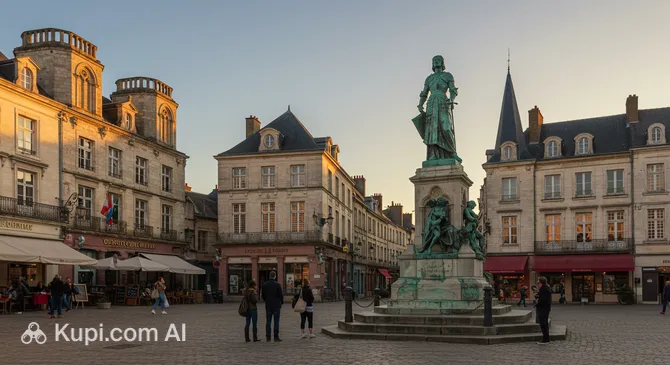
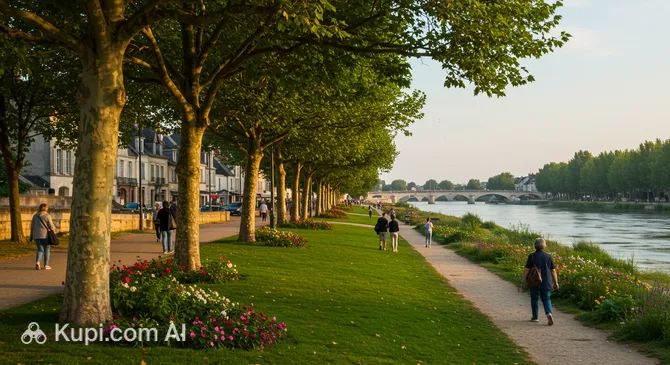
Orleans is a city with a rich history and a unique atmosphere, nestled comfortably on the banks of the majestic Loire River in the heart of France. Located just 120 kilometers southwest of Paris, Orleans serves as the administrative center of the Loiret department and is an important cultural hub of the Centre-Val de Loire region. The city is literally steeped in greenery, where the vast Orleans forests frame ancient buildings, creating a romantic setting.

Orleans. Illustration.
Source: Kupi.com AI

With a population of about 116,000 people, Orleans maintains a cozy, intimate atmosphere that makes it easy to feel at home. Despite its relatively compact size, its significance to French history and culture is immense. The city is inextricably linked with the name of Joan of Arc, the legendary Maid of Orleans, whose feat of liberating the city in the 15th century became a symbol of heroism. Her memory is carefully preserved, and her spirit seems to float over the ancient streets.

Beyond the legacy of Joan of Arc, Orleans attracts visitors with the charm of its old town, featuring narrow medieval streets where monuments of past eras are found at every turn. The picturesque banks of the Loire are ideal for leisurely strolls, while numerous cozy cafes, boutiques, and art galleries add a sense of vitality to the city. Orleans is a wonderful place for those who appreciate the combination of antiquity and modernity, and it undoubtedly deserves a visit to experience its unique spirit of freedom and heroism.

You can find more interesting facts on the Orleans city history page.
Weather Overview

The weather in Orleans is characterized by a moderate climate. Summers are generally warm: the average temperature in July and August is about 20-21°C, and the maximum can reach 26°C. During this period, occasional but usually not heavy rain is possible. Winters in Orleans are cool, with an average January temperature of about 5°C and minimum values dropping to 2-3°C. In winter, precipitation occurs quite often, although the total amount is small. Overall, Orleans receives a modest amount of precipitation throughout the year, but it is distributed over a significant number of days. For more detailed information on climatic conditions, you can visit the weather in Orleans page.

Average monthly temperature

Average monthly precipitation

Interesting Facts

In addition to its famous historical milestones associated with Joan of Arc, Orleans holds many other fascinating secrets and amazing stories. Here are just a few of them:

Orleans Cathedral. Illustration.
Source: Kupi.com AI

Traveler photos:

  • Although Joan of Arc's feat in Orleans is known worldwide, not everyone knows that the annual celebrations in her honor, dating back to 1430, are among the oldest continuous celebrations of their kind in France. Even today, these festivals impress with their scale and historical accuracy, colorfully recreating the events of the lifting of the siege.

  • The Museum of Fine Arts of Orleans is not only among the richest in France, as is often mentioned, but also boasts the second-largest collection of pastels in the country, second only to the Louvre in Paris. This makes it a must-visit for connoisseurs of this art form.

  • The majestic Sainte-Croix Cathedral (Holy Cross) preserves the memory of unusual patronage: after being destroyed during the wars of religion, its restoration was actively supported by King Henry IV, originally a Huguenot, as a sign of national reconciliation. The famous stained-glass windows depicting the story of Joan of Arc were added much later, in the 19th century.

  • Many people know the American city of New Orleans, but not everyone realizes the direct connection of its name to the French Orleans. It was named in 1718 in honor of Philippe II, Duke of Orléans, who was the Regent of France during the founding of its overseas namesake.

How to Get There

Orleans is located in the heart of France, and thanks to its proximity to the capital, getting here is quite simple. Although the city itself does not have a large international airport, the region's excellent transport infrastructure allows for easy travel by train or car from neighboring transport hubs. You can find all the details and plan your perfect route on the more about how to get to Orleans page.

Since there is no airport in the city of Orleans itself, most travelers fly into Paris airports, which are within 100-140 km. The nearest major hub is Orly Airport (IATA: ORY), located in Paris approximately 97 km from Orleans. This is a convenient option for domestic and European flights. The journey by car or taxi from there will take about 1 hour and 30 minutes.

Another popular option is the country's main international hub, Charles de Gaulle Airport (IATA: CDG), also located in Paris, at a distance of about 132 km from Orleans. Most long-haul flights arrive here. The travel time by taxi is approximately 2 hours. You could also consider flying into Tours Airport if your route takes you through the Loire Valley.

For convenience, here is a summary of the main airports used to reach the region:

AirportPassenger trafficDistance
Paris Orly Airport33.1 mln97 km
Val de Loire Airport206 084103 km
Charles de Gaulle Airport70.3 mln132 km
Beauvais-Tille Airport6.5 mln173 km
Poitiers-Biard Airport93 492190 km

Rail travel is one of the most comfortable ways to travel in France. There is a station in the city of Orleans itself, but many tourists using high-speed TGV trains may arrive at major stations in the vicinity. For example, the Massy TGV Station (IATA: XJY) is located in the suburbs of Paris, about 95 km from Orleans. This is an important hub for trains bypassing the city center. From here, you can continue your journey in a rental car or on a regional train.

Also worth noting is Gare de Lyon (IATA: LYY) in Paris, one of the largest stations in Europe, located 110 km from Orleans. Trains from the southeast of France and neighboring countries arrive here. Although the station is not in Orleans, a convenient transfer to Gare d'Austerlitz in Paris will allow you to quickly board a direct train to your destination.

Below are the major railway hubs within a radius of 100-120 km that may be useful when planning a complex itinerary:

StationPassenger trafficDistance
Massy TGV Station1.5 mln96 km
Saint-Pierre-des-Corps Station4.3 mln106 km
Tours Railway Station6.5 mln108 km
Gare de Lyon113.2 mln110 km
Gare de l'Est34 mln113 km

Main Attractions

Orleans, a city with a rich history, offers its guests many interesting places. Among them, several key attractions stand out, forming the unique character of the city and telling the story of its glorious past.

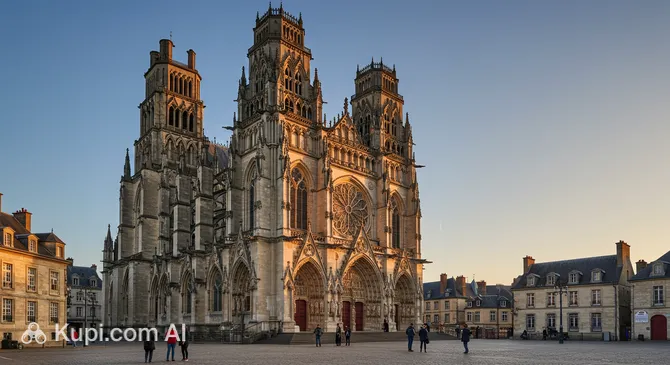
One of the main gems of the city is the Orleans Cathedral, also known as the Sainte-Croix Cathedral. This majestic Gothic structure impresses with its size and the beauty of its stained-glass windows. The cathedral is closely linked to the name of Joan of Arc—it was here that she prayed after the liberation of the city in 1429. A visit to the cathedral allows you to touch centuries of history and enjoy magnificent architecture.

Orleans Cathedral. Illustration.
Source: Kupi.com AI

Traveler photos:

It is impossible to imagine Orleans without mentioning its heroine. The Statue of Joan of Arc, located in Place du Martroi, is one of the city's symbols. The monument depicts the Maid of Orleans on horseback and serves as a reminder of her feat and key role in French history. This is a popular spot for photos and a starting point for exploring the city.

Joan of Arc Statue. Illustration.
Source: Kupi.com AI

Traveler photos:

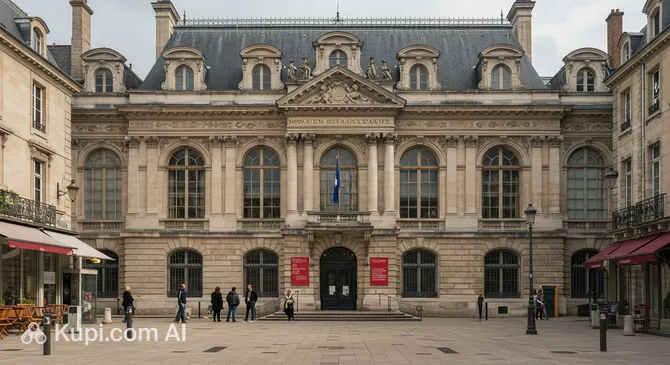
Art lovers should definitely visit the Museum of Fine Arts of Orleans. It is considered one of the oldest and richest provincial museums in France. Its collection covers European painting, sculpture, and graphic arts from the 15th to the 20th century, including works by masters such as Velázquez, Van Dyck, Gauguin, and Delacroix. This is a wonderful opportunity to see masterpieces of world art.

Museum of Fine Arts of Orléans. Illustration.
Source: Kupi.com AI

Traveler photos:

Another iconic site is the Hôtel Groslot. This elegant Renaissance building once served as the city hall. Today, it is a historical monument where you can admire the magnificent 16th-century architecture, preserved interiors, and learn more about the history of the city's administration. The building is often used for official receptions and wedding ceremonies, which emphasizes its special atmosphere.

Hôtel Groslot. Illustration.
Source: Kupi.com AI

Traveler photos:

For those looking for a peaceful break in nature, Pasteur Park is a true oasis. This large city park offers well-kept walking paths, a picturesque rose garden, a pond, and playgrounds for children. It is the perfect place to relax, have a picnic, or simply enjoy the silence away from the city bustle.

Local Cuisine

The gastronomy of Orleans is a fascinating journey into the world of refined French flavors, where centuries-old culinary traditions are harmoniously combined with the abundance of local products from the Loire Valley. Orleans' cuisine will delight connoisseurs of authentic dishes and offer many discoveries even to sophisticated gourmets.

One of the city's main gastronomic gems is the famous Orleans mustard (Moutarde d'Orléans). It is considered one of the oldest in France, and its piquant yet balanced taste perfectly complements meat dishes and is used in sauces and marinades. It is definitely worth trying dishes made from fresh river fish caught in the Loire. Among them, pike-perch à l'Orléanaise, often baked with onions and white wine, and tender salmon prepared with aromatic herbs stand out. Don't miss the chance to taste local cheeses, which pair beautifully with the region's wines.

Speaking of drinks, one cannot fail to mention the exquisite wines of the Loire Valley. Orleans and its surroundings are famous for their fresh and aromatic white wines, such as Sancerre or Pouilly-Fumé, which are perfect accompaniments to fish dishes and goat cheeses. Local ciders and light fruit liqueurs are also popular. For non-alcoholic drinks, you can always find freshly squeezed juices, traditional French lemonade, and, of course, aromatic coffee served in every cafe.

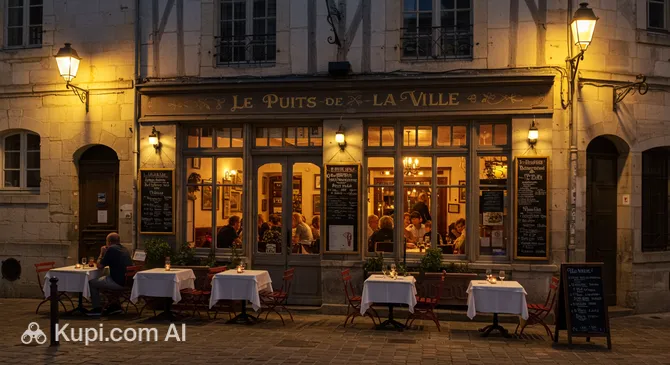
Le Puits de la Ville. Illustration.
Source: Kupi.com AI

Traveler photos:

The dining culture in Orleans is diverse. Locals and tourists love to dine in cozy restaurants serving both classic French dishes and regional specialties. One such place to experience local cuisine is the restaurant Le Puits de la Ville. Farmers' markets, such as the market on the banks of the Loire, have a special charm; here you can buy the freshest products, artisanal cheeses, and pâtés, as well as try street food like hot savory pies with seasonal fillings or sweet tartlets. Occasionally, gastronomic festivals are held in the city, becoming true celebrations of taste.

Overall, the gastronomic scene of Orleans is characterized by a commitment to quality local products, respect for traditions, and a desire to give every guest an unforgettable taste experience. A visit to Orleans is an opportunity not only to see historical sights but also to enjoy the true French art de vivre (art of living), of which excellent food is an integral part.

Travel Tips

Welcome to Orleans, a city with a rich history and a charming atmosphere! To make your journey in the footsteps of Joan of Arc and along the banks of the Loire as comfortable and pleasant as possible, we have prepared some practical tips.

  1. Clothing and Essentials: The climate in Orleans is moderate, so choose clothing according to the season. In summer, light clothing will be useful, but don't forget a sweater or light jacket for evening walks. In winter, warm clothing will be needed, including a hat and gloves. Be sure to bring comfortable shoes for walking on the cobbled streets of the old town. Don't forget an umbrella or raincoat, especially in spring and autumn. For electrical appliances, you will need a Type E adapter. When visiting Sainte-Croix Cathedral and other religious sites, choose clothing that covers your shoulders and knees.
  2. Getting Around the City: The center of Orleans is quite compact and pleasant to explore on foot. For longer trips, use the convenient TAO public transport network, which includes trams and buses. Tickets can be bought at machines at stops or from the driver (slightly more expensive). Taxis are available, and you can also use apps to call them. Renting a car can be useful if you plan to explore the Loire châteaux, but for moving around Orleans itself, it's not always practical due to potential parking difficulties in the center. Bicycles are also popular in the city, and there is a Vélo'+ rental system.
  3. Financial Matters: The official currency in France is the Euro (EUR). You can exchange money at banks or exchange offices, but the rate may be better if you withdraw cash from an ATM. Credit and debit cards (Visa, Mastercard) are widely accepted in most shops, restaurants, and hotels. It is recommended to always have a small amount of cash on hand for small purchases. An approximate daily budget per person (excluding accommodation) can be 50-100 euros. Tips in restaurants are often included in the bill (service compris). If not, or if the service was exceptional, you can leave 5-10% of the bill amount.
  4. Health and Safety: Pharmacies are easy to find by the green cross; information about duty pharmacies (pharmacie de garde) is usually posted on the doors of closed ones. Before your trip, take out travel medical insurance. The emergency number is 112. Orleans is considered a fairly safe city. Nevertheless, follow standard precautions: watch your belongings in crowded places and on public transport, and avoid walking alone in poorly lit areas late at night.
  5. Communication: The official language is French. In tourist areas, hotels, and large restaurants, staff often speak English, but knowing a few basic French phrases (e.g., "Bonjour" – Hello, "Merci" – Thank you, "S'il vous plaît" – Please) will be very helpful and will win over the locals. A mobile SIM card with internet access can be purchased at local operator stores. Free Wi-Fi is often available in hotels, cafes, and some public places.
  6. Local Etiquette: The French value politeness. When entering a shop, cafe, or other establishment, it is customary to say hello ("Bonjour" during the day, "Bonsoir" in the evening) and goodbye ("Au revoir"). Address strangers as "vous" (you - formal). Try not to speak too loudly in public places.
  7. What to Avoid: You should not start eating in a restaurant until everyone in your company has been served, unless the host or waiter suggests otherwise. Also, try not to discuss sensitive topics such as politics or personal finances too loudly in public places.
  8. Special Tip for Orleans: If your trip coincides with the beginning of May, try to attend the Joan of Arc Festival (Fêtes Johanniques). This is a massive annual event with parades, medieval markets, and reenactments dedicated to the liberation of the city by the Maid of Orleans. It is a unique opportunity to immerse yourself in the city's history.

We hope these tips help you better prepare for your trip and enjoy every moment in Orleans. We wish you an unforgettable journey through this amazing corner of France!

Entertainment & Nightlife

Orleans, a city with a rich history, offers its guests not only daytime excursions but also pleasant opportunities for evening and nighttime leisure. The nightlife here is not as hectic as in major metropolises, but it possesses its own charm and coziness, concentrated mainly in the historical center.

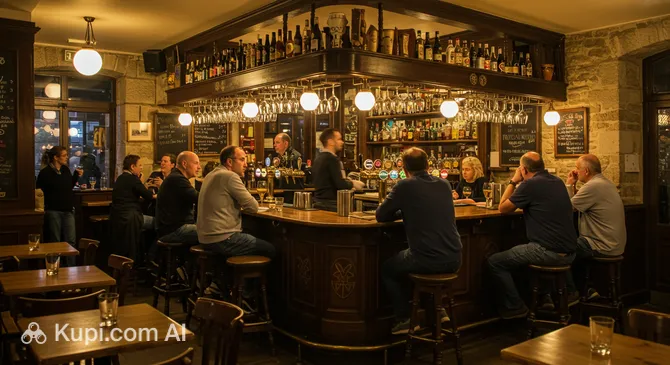
The main artery of Orleans' nightlife is Rue de Bourgogne and its adjacent streets. Here you will find many bars, pubs, wine cellars, and restaurants open until late. The atmosphere in most establishments is quite relaxed and friendly, attracting both locals and tourists. There is usually no strict dress code; casual style prevails. Evening venues begin to come alive around 9:00 PM – 10:00 PM.

Among the popular spots, one can highlight, for example, the Breton Creperie, where you can not only enjoy traditional Breton crepes but also have a glass of cider in an authentic setting. For a more substantial late dinner, you might consider restaurants like Le Puits de la Ville, which offers local cuisine. While Orleans is not famous for large nightclubs with electronic music, you can find several places with dance music and DJs, especially on weekends. Concert venues and theaters also contribute to the city's evening program, offering a variety of performances.

Breton Crêperie. Illustration.
Source: Kupi.com AI

Traveler photos:

Regarding practical tips, the center of Orleans is quite compact, and many venues are within walking distance of each other. Approximately, a glass of wine or beer in a bar can cost from 5 to 8 euros, while cocktails range from 8 to 12 euros. Entry to the few clubs, if there is a fee, usually does not exceed 10-15 euros. It is worth noting that night markets are not a characteristic feature of Orleans, so it is better to go for souvenirs and local products during the day. At night, for travel over longer distances, it is better to use a taxi. Check the possibility of calling a taxi with the venue staff or use mobile apps. Overall, the central areas of Orleans are considered safe for nighttime walks, but one should always follow standard precautions.

During the day, Orleans offers a rich cultural program. You can visit the famous Orleans Cathedral, stroll through the halls of the Museum of Fine Arts of Orleans or the Orleans Museum for Biodiversity and the Environment. For outdoor relaxation, Pasteur Park or the picturesque Loire Park are excellent choices. If you are traveling with children or simply enjoy active recreation, check out the Léo Adventure Park.

Parks & Museums

Orleans, a city with a rich history and a picturesque location on the banks of the Loire, offers its guests not only an introduction to outstanding architectural monuments but also excellent opportunities for outdoor relaxation and immersion in the world of art. Here, everyone will find an activity to their liking, whether it's a leisurely stroll along shaded park alleys or a fascinating journey through museum halls.

Among the city's green oases, the Loire Park (Parc Floral de la Source) particularly stands out. This is a vast territory where you can enjoy the beauty of themed gardens, watch flamingos and other birds by the ponds, and visit a pavilion with tropical butterflies. The park is ideal for family holidays and long walks, offering visitors peace and unity with nature. No less attractive is Pasteur Park, located closer to the city center. This traditional city park with well-kept flower beds, playgrounds, and cozy benches is a great place for a short break during sightseeing. For active recreation and picnics, the Île Charlemagne Leisure Park, located on an island and offering various water activities, is perfect.

Loire Park. Illustration.
Source: Kupi.com AI

Traveler photos:

The cultural life of Orleans is unthinkable without its museums. One of the main ones is the Museum of Fine Arts of Orleans. Its collection covers European painting, sculpture, and decorative arts from the 15th to the 20th century, including works by famous masters. This place is a must-visit for connoisseurs of classical art. Another interesting site is the Orleans Museum for Biodiversity and the Environment (MOBE). This modern interactive museum will be particularly interesting for families with children, offering a fascinating introduction to the world of nature and ecology.

Orléans Museum for Biodiversity and the Environment. Illustration.
Source: Kupi.com AI

Traveler photos:

In addition to parks and museums, Orleans is proud of its rich historical heritage. Walking through the city, you will see the majestic Sainte-Croix Cathedral, closely linked to the story of Joan of Arc, whose famous statue adorns one of the central squares. Also worthy of attention is the Hôtel Groslot—the former city hall and now a museum telling the history of the city.

To get a truly authentic experience, step off the popular tourist routes and stroll through the quiet streets of the old town, discovering charming courtyards and lesser-known architectural details. Also, don't miss the chance to enjoy the calm atmosphere on the banks of the Loire, especially at sunset.

Getting Around

When planning your movement around Orleans, you can count on a convenient public transport system managed by the company TAO (Transports de l'Agglomération Orléanaise). The backbone of the transport network consists of modern trams (two main lines, A and B, crossing the city) and an extensive network of bus routes that connect the center with the suburbs and various city districts. This is an efficient way to reach most of Orleans' attractions and key points.

The fare system in Orleans is quite flexible. You can purchase single tickets (Ticket 1 Voyage), which are usually valid for one hour with transfer options, day tickets (Ticket Journée) for unlimited travel, or carnets—sets of multiple tickets that are more economical. For longer stays, there are monthly or annual passes. Tickets can be bought at vending machines at tram stops, at TAO agencies, from bus drivers (sometimes with a small surcharge and it's best to have exact change), or at some newsstands (Relais TAO). The TAO Mobilités mobile app is also available, where you can buy tickets and plan your route. Don't forget to validate your ticket every time you enter a tram or bus, even if you are transferring.

Public transport in Orleans usually starts operating early in the morning, around 5:00-5:30 AM, and ends service around 12:30-1:00 AM at night. On weekends and public holidays, intervals may increase and operating hours may be reduced, so it is recommended to check the schedule in advance, especially if you plan late trips. Current information can always be found on the official TAO website or in their mobile app.

Besides public transport, there are other ways to get around Orleans. Taxis are available, but they are a more expensive option. The city is very cyclist-friendly, so the public bike-share system (e.g., Vélo'+) is popular, allowing you to rent a bike for a short time. The historical center of Orleans is quite compact, and many of its corners are pleasant to explore on foot, enjoying the atmosphere of the old streets. Given the city's size, a combination of public transport and walking or cycling often proves to be the most convenient option for tourists.

Accommodation

In Orleans, you will find a variety of accommodation options to suit the needs of any traveler. The city offers everything from budget hostels and guesthouses for budget-conscious tourists to comfortable mid-range hotels. For those looking for something special, charming boutique hotels in historical buildings are available, as well as modern apartments for short-term rentals offering more space and a homey feel.

The most popular area for tourists to stay is the historical center of Orleans (Vieux Orléans). By staying here, you will be within walking distance of major attractions, such as the majestic Orleans Cathedral and the historical Hôtel Groslot. The areas along the banks of the Loire are also attractive, offering picturesque views. Choosing accommodation near tram stops will ensure convenient movement around the city and its surroundings.

Orleans Cathedral. Illustration.
Source: Kupi.com AI

Traveler photos:

While specific hotels require individual selection, Orleans offers a wide range of establishments for every taste. To guarantee the best option at an optimal price, especially if your trip coincides with the peak tourist season (for example, in spring during the Joan of Arc Festival or in summer), it is recommended to book your accommodation in advance. This will also give you more time to study reviews and compare offers.

The price range for accommodation in Orleans varies: from affordable options for backpackers to luxury offerings in high-end hotels. Most hotels and apartments can be easily booked through popular online booking platforms. Some travelers prefer direct booking through hotel websites, which can sometimes provide special offers or better terms.

Nearby Cities

For those who want to explore the surrounding area, Orleans serves as an excellent starting point for day trips to several interesting nearby places:

CityPopulationDistance
Saint-Jean-le-Blanc9 0701 km
Saint-Jean-de-la-Ruelle16 4453 km
Fleury-les-Aubrais21 0703 km
Olivet22 3864 km
La Chapelle Saint-Mesmin10 2055 km

These nearby destinations provide an insight into the diverse culture and landscapes of France. Each of these cities possesses its own unique charm and historical heritage, whether it's the majestic châteaux of the Loire near Blois, the famous cathedral in Chartres, or the picturesque corners of smaller towns. A trip to any of them will enrich your journey and provide new experiences.

Shopping & Souvenirs

Shopping in Orleans offers a pleasant mix of boutiques, well-known brands, and local finds that reflect the charm of this historic city on the Loire. While Orleans may not be a global fashion capital, you can find high-quality goods here, especially French-made items, and unique souvenirs.

The main shopping opportunities are concentrated in the historical city center. Walking along pedestrian streets such as Rue de la République, Rue Royale, and their adjacent side streets, you will discover many clothing, shoe, and accessory stores, bookstores, and confectioneries. A cozy atmosphere prevails here, perfect for leisurely shopping.

If you prefer shopping under one roof, check out the Place des Halles Châtelet shopping center. This modern complex offers a good selection of well-known brand stores, as well as cafes and restaurants where you can take a break.

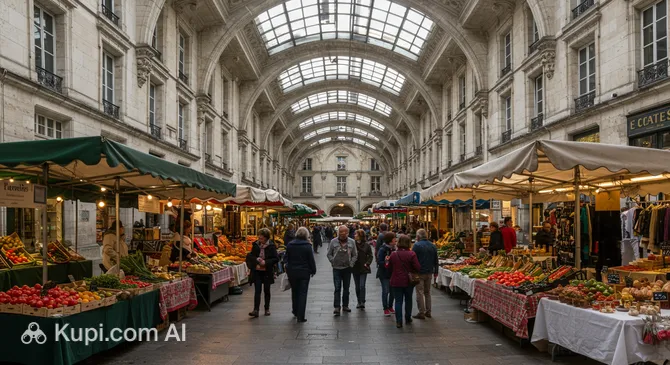
Halles Châtelet. Illustration.
Source: Kupi.com AI

Traveler photos:

In Orleans, there are also traditional French markets. The indoor market Les Halles Châtelet, located next to the shopping center of the same name, is particularly interesting; here you can buy fresh local products: cheeses, meat delicacies, pastries, vegetables, and fruits. On certain mornings during the week, open-air markets may operate in different parts of the city, offering food, clothing, and household goods.

As souvenirs from Orleans, consider items related to Joan of Arc, the city's main heroine. These could be figurines, magnets, books, or postcards. Local delicacies are also popular: Orleans vinegar (vinaigre d'Orléans), mustard, honey, and, of course, Loire Valley wines. In confectioneries, you can find "cotignac" (cotignac d'Orléans)—a traditional quince jelly.

Most shops in Orleans are open from Monday to Saturday, roughly from 10:00 AM to 7:00 PM. Some small boutiques may close for a lunch break (usually from 12:30/1:00 PM to 2:00/2:30 PM). Large supermarkets and shopping centers usually work without a break. On Sundays, most shops, with the exception of some souvenir and food shops, are closed. Bank cards are widely accepted, and cash can also be used.

Tourists from non-European Union countries can take advantage of the Tax Free system when making purchases over a certain amount in participating stores. This allows for a partial VAT refund. Don't forget to ask the store for a special tax-free form to process the refund at the airport when leaving the EU.

Reached the end of the page?

That means the route is fully explored