Support

Fontainebleau

About

Fontainebleau is a true gem of the Île-de-France region, a town with a unique atmosphere where history, art, and nature are harmoniously intertwined. Located just 60 kilometers southeast of Paris, it feels secluded from the capital's hustle and bustle, offering its guests an immersion into a world of royal majesty and tranquility. The town is nestled on the edge of the vast forest of the same name, which for centuries served as a favorite hunting ground for French monarchs and today attracts outdoor enthusiasts and lovers of picturesque landscapes.
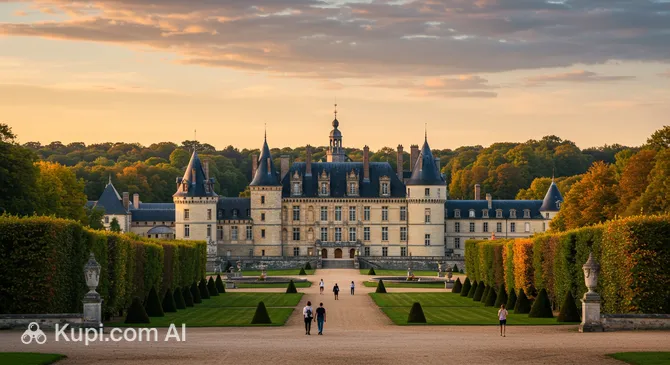
Fontainebleau. Illustration.
Source: Kupi.com AI

With a population of about 15,700, Fontainebleau retains the charm of a small but very colorful town. Despite its size, it plays a significant role in the cultural and tourist life of France. Millions of travelers visit every year to experience its rich historical heritage and enjoy the unmistakable spirit of old Europe.

The main jewel and heart of Fontainebleau is undoubtedly the magnificent Palace of Fontainebleau – the former residence of French kings and emperors, from Francis I to Napoleon III. This architectural masterpiece, surrounded by a vast park and the famous forest, is striking in its scale and beauty. However, the town is more than just the palace. Here you will find charming squares with cozy cafes, the historic Church of Saint-Louis, an elegant Italian-style theater, and even a lively racecourse where prestigious equestrian events are held.

Fontainebleau enchants with its elegance, measured pace of life, and wonderful combination of grand architecture and natural beauty. It is a place where it is easy to feel like a character in a historical novel while strolling along the ancient paths of the park or enjoying a cup of coffee on a local cafe terrace. A visit to Fontainebleau is a wonderful opportunity to discover another side of France, full of charm and royal dignity.

You can find more interesting facts on the Fontainebleau city history page.
Weather Overview

A temperate climate prevails in Fontainebleau. In summer, the average temperature is a comfortable 19-21°C (June-August), while in winter it drops to 5-6°C (December-February). Expect warm summers with occasional but usually not heavy rain, and cool winters when precipitation is also not high in quantity (averaging 2-3 mm per month) but can be frequent, especially in March and December (up to 15 rainy days). You can learn more on the Fontainebleau Climate page.

Average monthly temperature

Average monthly precipitation

Interesting Facts

Beyond its majestic palaces and picturesque forests, Fontainebleau holds many surprising stories and little-known details. This town is not just a point on the map, but a true box of secrets, and here are a few of them:

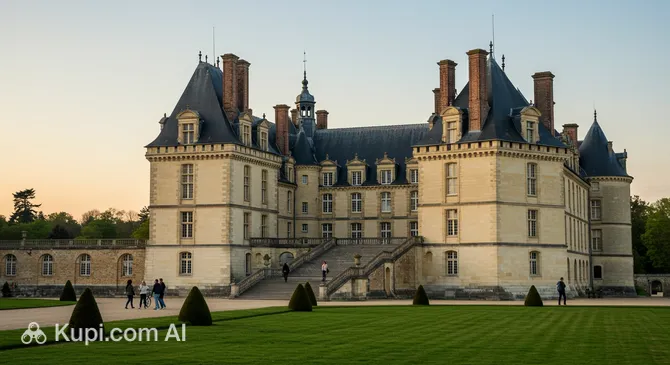
Château de Fontainebleau. Illustration.
Source: Kupi.com AI

Traveler photos:

  • The town's name, Fontainebleau, translates poetically as "beautiful fountain" or "blue spring" (from the French fontaine belle eau). According to legend, this spring was discovered by royal hunters, and it was this source that gave its name to the future town and the famous palace.

  • The famous Château de Fontainebleau is the only one in all of France that served as a home to all French monarchs for nearly seven centuries, from the 12th to the 19th century. Each ruler contributed to its appearance, turning it into a unique architectural ensemble and the cradle of the French Renaissance, especially thanks to masterpieces like the Gallery of Francis I.

  • The vast Fontainebleau Forest surrounding the town is not only a picturesque place for walks along trails like the famous Denecourt Path, but also one of the world's most famous spots for bouldering (a form of rock climbing). Its unique sandstone boulders with whimsical shapes attract athletes from across the planet.

How to Get There

The most convenient way to reach the charming town of Fontainebleau, a pearl of the Île-de-France region, is through Paris, which has excellent transport links. Fontainebleau itself does not have its own airport, so travelers should look toward the major air gateways of the French capital.

The primary and most convenient option for international flights is Orly Airport (ORY), located in Paris, about 44 km north of Fontainebleau. This is a large international airport from which Fontainebleau can be reached by taxi in about 1 hour and 20 minutes, depending on traffic. Another major transport hub is Charles de Gaulle Airport (CDG), also in Paris, approximately 69 km from Fontainebleau. It is one of Europe's largest airports, and a taxi ride to Fontainebleau will take about 2 hours. For those using low-cost airlines, Beauvais-Tillé Airport (BVA) might be relevant; it is located in Paris but much further away – about 125 km from Fontainebleau. A trip from there by car or bus can take more than 3 hours.

For convenience, here is a summary of the main airports used to reach Fontainebleau:

AirportPassenger trafficDistance
Paris Orly Airport33.1 mln44 km
Charles de Gaulle Airport70.3 mln69 km
Beauvais-Tille Airport6.5 mln124 km
Val de Loire Airport206 084183 km
Saint Gatien Airport65 664215 km

Traveling by train is another convenient way to get to Fontainebleau. Although there is no station in the town itself for long-distance trains, the station closest to the attractions is called Fontainebleau-Avon. Most tourists arrive at one of the major stations in Paris and then continue their journey. The most convenient for a trip to Fontainebleau is the Gare de Lyon station in Paris, located about 55 km away. From this station, direct Transilien Line R trains depart regularly to Fontainebleau-Avon station, with a journey time of about 40 minutes. Another option is arriving at the Massy TGV Station in Paris, which is about 48 km from Fontainebleau. From there, Fontainebleau can be reached by taxi in about 1 hour and 30 minutes or by using regional trains with a possible transfer.

Below is information about some major railway stations in the vicinity from which you can plan a route to Fontainebleau:

StationPassenger trafficDistance
Massy TGV Station1.5 mln48 km
Marne-la-Vallée–Chessy Station11.5 mln52 km
Gare de Lyon113.2 mln55 km
Gare de l'Est34 mln58 km
Gare du Nord Station220 mln59 km

Upon arrival at Fontainebleau-Avon station, the town center, the famous palace, and the park can be easily reached by local buses (Line 1) or by taxi, a journey of 5-10 minutes. Fontainebleau is also easily accessible by car via the A6 motorway from Paris.

Main Attractions

Fontainebleau, a charming town with a rich history, attracts travelers primarily with its magnificent heritage and natural beauty. Here, everyone will find something to their liking, from exploring royal chambers to walking through ancient forests.

Château de Fontainebleau. Illustration.
Source: Kupi.com AI

Traveler photos:

The main jewel of the city is undoubtedly the Château de Fontainebleau. This grand palace, which served as a residence for French monarchs for eight centuries, is impressive in its scale and luxury. Visitors can spend hours wandering through its halls, admiring the unique interiors, art collections, and historical atmosphere. The palace has witnessed many key events in French history, making it particularly attractive to history buffs.

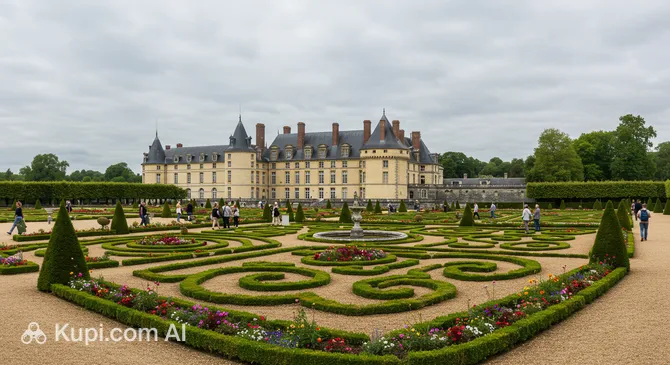
An integral part of the palace complex is the Garden of Diana. This exquisite garden, named after the goddess of the hunt, offers a peaceful stroll among manicured flower beds, sculptures, and fountains. It is an ideal place to relax after exploring the palace, where you can enjoy the beauty of the landscape design and tranquility. The central element of the garden is the Diana Fountain with a bronze statue of the goddess.

Diana Garden. Illustration.
Source: Kupi.com AI

Traveler photos:

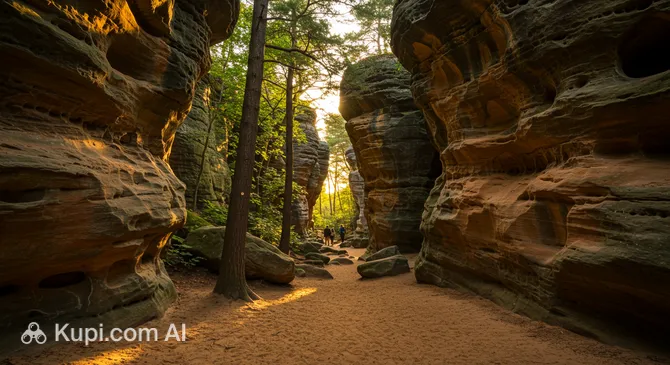
For those who prefer active outdoor recreation, the Denecourt Path in the famous Fontainebleau Forest will be a true discovery. This picturesque hiking trail, created by Claude-François Denecourt in the 19th century, allows you to explore unique rock formations, caves, and forest groves. The route offers various difficulty levels and provides unforgettable views, attracting both experienced hikers and families with children.

Denecourt Trail, Fontainebleau. Illustration.
Source: Kupi.com AI

Traveler photos:

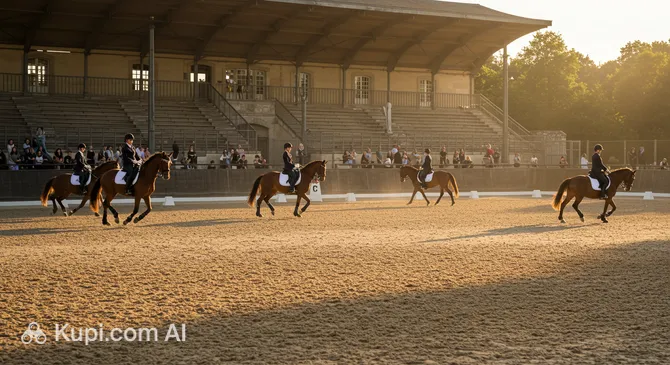
Equestrian sports enthusiasts will be interested in the Le Grand Parquet racecourse. This is one of the most famous venues for equestrian competitions in France. A visit to the racecourse can be an exciting event, especially if you manage to catch one of the many activities regularly held here. Even just walking around its grounds and feeling the atmosphere of this prestigious place is quite interesting.

Local Cuisine

The gastronomy of Fontainebleau is a delightful blend of classic French culinary traditions and the freshness of local farm products. Travelers can expect a true immersion into the flavors of the Île-de-France region, where every dish tells its own story. Inspired by its royal past, the local cuisine offers exquisite delicacies that once graced the tables of monarchs.

Among the dishes you should definitely try in Fontainebleau are duck with oranges, various pâtés, and hearty game stews. Special place is given to seasonal delicacies made from mushrooms and wild berries gathered in the famous Fontainebleau Forest. You cannot overlook the famous Brie cheeses from the region, especially the soft and aromatic Brie de Meaux, which pairs perfectly with fresh crusty baguettes and homemade jams. Local patisseries will delight those with a sweet tooth with delicate custard pastries, almond cookies, and desserts with hazelnuts and fruits.

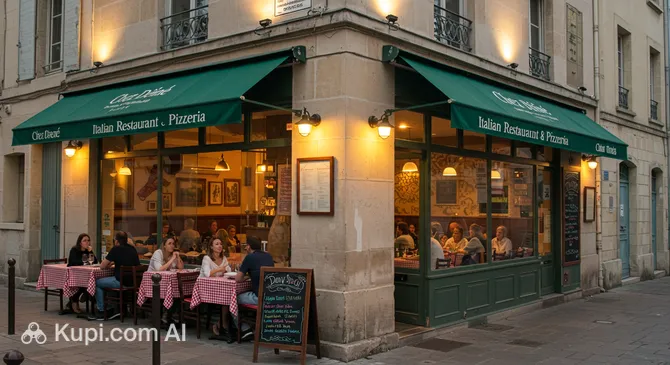
Chez Démé Italian Restaurant & Pizzeria. Illustration.
Source: Kupi.com AI

Traveler photos:

As for drinks, a meal in France is unthinkable without wine. Restaurants in Fontainebleau will offer you a wide selection of French wines from various regions, which perfectly complement any dish. Among non-alcoholic beverages, fresh juices, herbal teas, and, of course, aromatic coffee, which is so pleasant to enjoy on the terrace of a cozy cafe, are popular.

The food culture in Fontainebleau is diverse. Locals and tourists alike enjoy visiting both traditional French restaurants and more modern establishments. For instance, if you crave Italian cuisine, you can stop by Chez Démé Italian restaurant and pizzeria. Be sure to visit the farmers' markets, where you can buy the freshest vegetables, honey, homemade cheeses, and sausages. Street food is also present: here you can quickly grab a fresh croissant or a savory galette. The town periodically hosts gastronomic festivals and fairs where local chefs demonstrate their skills, offering guests dishes made from old recipes.

Travel Tips

Welcome to charming Fontainebleau! To make your journey to this historical corner of France as comfortable and pleasant as possible, we have prepared several practical tips. They will help you better navigate the location and enjoy every moment of your stay.

  1. Clothing and Essentials:

    The climate in Fontainebleau is temperate, similar to that of Paris. It can be quite warm in summer and cool in winter. We recommend bringing clothing that can be layered. A key element of your wardrobe is comfortable shoes, as you will be doing a lot of walking while touring the palace and perhaps strolling through the famous forest. Don't forget an adapter for electrical appliances if you are not coming from Europe (standard Type E sockets). When visiting churches, such as the Church of Saint-Louis, show respect by choosing modest clothing that covers your shoulders and knees.

  2. Getting Around Town:

    Fontainebleau is a small town, and its historical center along with the palace is easy to explore on foot. For trips to the famous Fontainebleau Forest or the surrounding areas, you can use local buses. If you plan a trip to Paris, it is easily reached by train (Line R Transilien from Gare de Lyon in Paris to Fontainebleau-Avon station). Taxis are available in town, but there may not be as many as in large metropolises; ride-hailing apps may have limited coverage. Renting a car can be useful for exploring the Île-de-France region, but for Fontainebleau itself, it is not mandatory.

  3. Financial Matters:

    The official currency is the Euro (EUR). You can exchange money at banks or exchange offices, though there may be fewer than in major tourist centers. ATMs are widely available. Credit and debit cards (Visa, Mastercard) are accepted in most shops, restaurants, and hotels. International cards generally work without issues. An approximate daily budget can vary, but Fontainebleau is generally less expensive than Paris. Tipping: in restaurants, a service charge ("service compris") is usually included in the bill. However, if you particularly enjoyed the service, you can leave a small amount (round up the bill or add a few euros) in cash.

  4. Health and Safety:

    Fontainebleau is considered a very safe town. Nevertheless, always follow standard precautions, especially in crowded places like the palace or the market, to avoid petty theft. Pharmacies (marked by a green cross) are easy to find; check for "pharmacie de garde" info for after-hours service. For medical assistance, EU tourists are recommended to have a European Health Insurance Card (EHIC); others are strongly advised to have travel insurance. In case of emergency, call 112. If you plan to hike in the Fontainebleau Forest, stick to marked trails and let someone know your route, especially if going alone.

  5. Communication:

    The primary language is French. In tourist spots (hotels, palace ticket offices, some restaurants), staff often speak English, but knowing a few basic phrases in French will be very helpful and appreciated by the locals. For example: "Bonjour" (Hello), "Merci" (Thank you), "S'il vous plaît" (Please), "Parlez-vous anglais?" (Do you speak English?). A SIM card for mobile service can be purchased at mobile provider shops or some supermarkets. Wi-Fi is available in many hotels, cafes, and public places.

  6. Local Etiquette:

    The French value politeness. When entering a shop, cafe, or other establishment, it is customary to say hello ("Bonjour" during the day, "Bonsoir" in the evening) and goodbye ("Au revoir"). Addressing someone as "Monsieur" (to a man) or "Madame" (to a woman) adds courtesy to your greeting. In public places, try not to be noisy. If you accidentally bump into someone, simply say "Pardon" (Excuse me).

  7. What to Avoid:

    Try not to start a conversation immediately in English without checking if the person understands it – it is better to start with a polite "Bonjour, parlez-vous anglais?". Also, avoid loud conversations and noisy behavior in restaurants and public places, especially in churches. When visiting the Fontainebleau Forest, it is strictly forbidden to leave trash or light fires in unauthorized areas.

  8. Useful Tip:

    Be sure to visit the local market (marché) if your stay coincides with its operating days. This is a wonderful opportunity to try fresh local products and soak up the atmosphere of the French province. Also, keep in mind that many small shops may close for lunch (usually from 12:00/1:00 PM to 2:00/3:00 PM) and may be closed on Sundays or Mondays. Plan your shopping ahead of time!

We hope these tips make your journey to Fontainebleau even more memorable. Enjoy its royal heritage, magnificent nature, and unique atmosphere!

Entertainment & Nightlife

Fontainebleau, known for its magnificent palace and picturesque forest, offers guests not only daytime excursions but also pleasant opportunities for evening relaxation. While Fontainebleau is not a capital of loud night clubs, its evening life possesses a special charm—think cozy bars, refined restaurants, and a peaceful atmosphere, perfect for unwinding after a busy day.

The main concentration of evening venues is in the town center, particularly on the streets adjacent to Place Napoléon Bonaparte and along Rue Grande. Here you will find many restaurants offering both French and international cuisine, as well as small bars where you can enjoy a glass of wine or a signature cocktail. The atmosphere in most places is quite quiet and respectable, attracting both locals and tourists who wish to spend an evening in pleasant company over leisurely conversation.

Although the choice of large nightclubs in Fontainebleau is limited, the town offers excellent options for dinner and evening drinks. For example, you can visit Chez Démé Italian restaurant and pizzeria to enjoy delicious food in a cozy setting. Besides restaurants, the town has traditional French bistros and several bars, including those in hotels, where you can have a pleasant time. Many establishments stay open until late evening, especially on weekends.

A strict dress code is usually not required for an evening out in Fontainebleau; a smart casual style is quite appropriate. The best time to visit restaurants is from 7:00 PM to 9:00 PM, while bars usually come to life a bit later. Getting around the town center is convenient on foot. If you need to reach a more distant area or return to your hotel late at night, it is recommended to use taxi services, which are best booked in advance.

Fontainebleau is considered a safe town, and evening walks along the central, well-lit streets usually do not cause any concern. Nevertheless, it is always worth following standard precautions, especially late at night. You can call a taxi through local services or ask the staff at your hotel or restaurant to do so.

During the day, Fontainebleau offers a rich cultural and natural program. You should definitely visit the majestic Château de Fontainebleau, one of the largest royal residences in France. Also worth noting are walks through the beautiful Garden of Diana or along famous hiking routes like the Denecourt Path in the Fontainebleau Forest. Fans of active recreation and equestrian sports can check out the Le Grand Parquet racecourse.

Château de Fontainebleau. Illustration.
Source: Kupi.com AI

Traveler photos:

Parks & Museums

Fontainebleau, a town with a rich history and a royal past, offers its guests not only magnificent palace ensembles but also vast green areas for relaxation and unique museum exhibitions. Here, everyone will find something for themselves: from immersion in pristine nature to discovering the centuries-old heritage of France.

The main natural treasure is the famous Fontainebleau Forest, former royal hunting grounds and now a true paradise for hikers, climbers, and those simply seeking union with nature. The forest is crisscrossed with numerous trails, among which the Denecourt Path is particularly popular, known for its picturesque views and whimsical rock formations. These trails are ideal for active recreation and enjoying the natural beauty of the region.

Denecourt Trail, Fontainebleau. Illustration.
Source: Kupi.com AI

Traveler photos:

Directly adjacent to the palace complex are magnificent gardens created for royal strolls. The Garden of Diana, with its elegant fountain and peaceful atmosphere, is a lovely place for quiet relaxation. Also part of the Château de Fontainebleau palace ensemble is the Grand Parterre, designed by André Le Nôtre – an impressive example of a French formal garden, perfect for leisurely walks and admiring the majestic palace facades.

Diana Garden. Illustration.
Source: Kupi.com AI

Traveler photos:

The cultural heart of the town is undoubtedly the Château de Fontainebleau. This majestic palace, listed as a UNESCO World Heritage site, is a vast museum complex in itself. Within its walls is housed an incredible collection of artworks, antique furniture, and historical artifacts that tell the centuries-long history of French monarchs.

Château de Fontainebleau. Illustration.
Source: Kupi.com AI

Traveler photos:

Inside the Château de Fontainebleau, several key museum spaces deserve separate attention. The Napoleon I Museum (Musée Napoléon Ier) is dedicated to the emperor and his era, displaying personal belongings, documents, and artworks related to Napoleon Bonaparte and his family. The Empress Eugénie's Chinese Museum (Musée Chinois de l'Impératrice Eugénie) houses an impressive collection of Far Eastern art collected by the wife of Napoleon III. And the Grand Apartments (Grands Appartements) of the kings and emperors amaze with their luxurious decor and allow you to trace the evolution of styles and tastes of French rulers over the centuries.

Beyond the palace, the town of Fontainebleau itself charms with its cozy streets and historical buildings reflecting its close connection with the French crown. The architecture around the palace, including ancient stables and residences, complements the historical atmosphere. For those seeking different experiences, the Le Grand Parquet racecourse offers exciting equestrian competitions in a picturesque forest setting – a tradition rooted in the past.

Grand Parquet Equestrian Stadium. Illustration.
Source: Kupi.com AI

Traveler photos:

To get a truly authentic experience, head to the lesser-known corners of the Fontainebleau Forest, away from the main tourist paths, where you can discover hidden grottoes and ancient trees. Also, don't miss the opportunity to visit the local market to discover regional products and crafts, feeling the atmosphere of real French life.

Getting Around

When planning a trip to Fontainebleau, it is helpful to understand the local public transport system in advance. Although the town is quite compact, knowing the available options will help you get around comfortably.

The main form of public transport in Fontainebleau is buses. The local bus network (Réseau de Bus de Fontainebleau Agglomération) links various areas of the town and connects Fontainebleau with the Fontainebleau-Avon railway station and some nearby settlements. There are no subways or trams in the town.

The fare payment system is quite simple. Single-trip tickets (ticket t+) can be purchased directly from the bus driver. For more frequent travel, passes or booklets of multiple tickets (carnets) may be advantageous, as they sometimes offer a small discount. Since Fontainebleau is in the Île-de-France region, it's worth checking if Navigo transport cards are valid here, especially if you plan frequent travel throughout the region, including Paris. However, for a short visit to Fontainebleau itself, single tickets are usually sufficient. The cost of a ticket from the driver is typically slightly higher than when purchased in advance, if such an option is available (e.g., at tobacco kiosks or machines at the station).

Tourists should note several practical points. When entering the bus, the ticket must be validated in a special device. Bus schedules are usually posted at stops and can also be found on the official websites of the transport companies. Buses run according to a schedule that may be less intensive on weekends and holidays. Keep in mind that public transport operating hours usually cover the daytime and evening, but buses may not run late at night.

In addition to buses, there are other ways to get around Fontainebleau. Given the small size of the central part of the town, many attractions, including the famous palace and adjacent streets, are easily accessible on foot. For exploring the vast Fontainebleau Forest or more distant corners of the town, you can use bicycle rentals – this is a popular and pleasant way to explore the surroundings. Taxi services are also available in town, which can be convenient for trips to/from the station or if you have a lot of luggage.

An important logistical feature for many tourists is arriving in Fontainebleau by train from Paris (Line R Transilien from Gare de Lyon to Fontainebleau-Avon station). From Fontainebleau-Avon station to the town center and the palace, bus number 1 runs regularly, making this route very convenient for visitors.

Accommodation

When planning a trip to Fontainebleau, you will find a variety of accommodation options to suit different preferences and budgets. The town offers cozy guest houses, charming boutique hotels, self-catering apartments, as well as more traditional hotels. The choice is wide enough for every traveler to find something suitable.

The most popular area for tourists to stay is undoubtedly the town center, especially in the immediate vicinity of the main attraction – the magnificent Château de Fontainebleau. Staying here provides easy access not only to the castle but also to numerous restaurants, cafes, and shops. You can also consider options in quieter side streets, from where central points will still be easily accessible on foot or by local transport.

Fontainebleau features hotels of various categories, from more affordable to high-end options. Although specific hotel examples are not listed in our attractions list, the town has enough hotels to satisfy tourist demands. The price range varies depending on the level of comfort, location, and season. You can book accommodation through popular online platforms, directly on hotel websites, or by contacting local travel agencies.

It is highly recommended to book your accommodation in advance, especially if your trip coincides with the peak tourist season (usually spring and summer) or during major events in the town or its surroundings. This will help you not only guarantee availability but potentially find better deals.

Nearby Cities

For those looking to explore the surroundings, Fontainebleau serves as an excellent starting point for day trips to several interesting nearby locations.

For example, Melun, located just 16 km away, is the capital of the Seine-et-Marne department and attracts tourists with its rich history, including the Gothic Notre-Dame Cathedral, as well as picturesque views of the Seine. Another interesting option is Corbeil-Essonnes (28 km), a town at the confluence of the Essonne and Seine rivers, offering pleasant walks along the embankments and a chance to explore local architecture. Also worth noting is Dammarie-les-Lys (13 km), the closest of the listed towns, which can offer a more tranquil escape from the urban hustle.

Below is a table with more detailed information about some towns in the vicinity of Fontainebleau, including their population and distance:

CityPopulationDistance
Avon13 6621 km
Vaux-le-Penil11 10113 km
Dammarie-les-Lys22 17713 km
Le Mee-sur-Seine21 07115 km
Nemours13 16515 km

These nearby destinations allow you to get a sense of the diverse culture and landscapes of the Île-de-France region, complementing the experience of visiting Fontainebleau itself.

Shopping & Souvenirs

Shopping in Fontainebleau offers a charming immersion into the atmosphere of a French town, where cozy boutiques, craft shops, and specialized stores prevail over large shopping malls. The town is not famous for unique mass-produced goods, but here you can find exquisite items that reflect the local character and history.

The main shopping areas are concentrated in the town center, especially along the main street Rue Grande and its adjacent side streets. Here you will find clothing, shoe, and accessory shops, bookstores, confectioneries, as well as home decor and interior design stores. A walk through these streets is a pleasure in itself, allowing you to enjoy the architecture and the leisurely pace of life.

In Fontainebleau, there are no large shopping centers in the conventional sense. Shopping here is more about exploring individual shops and boutiques, each with its own unique character.

One of the main attractions for shopping enthusiasts and local atmosphere is the Fontainebleau Market (Marché de Fontainebleau). It is traditionally located at Place de la République (sometimes called Place du Marché) and operates several times a week, usually on Tuesday, Friday, and Sunday mornings. Here you can buy fresh farm products, cheeses, meat delicacies, pastries, flowers, as well as clothing, souvenirs, and household goods. This is a great place to feel like a local and purchase something authentic.

As souvenirs from Fontainebleau, it's worth bringing items related to its main attraction — the Château de Fontainebleau: these could be books, postcards, reproductions, or small themed gifts. Also popular are works by local craftsmen, antiques found in specialized shops, and, of course, gastronomic souvenirs – regional cheeses, wines, honey, or handmade chocolate.

Shops in Fontainebleau are usually open from 10:00 AM to 7:00 PM; many may close for a lunch break (approximately from 12:30/1:00 PM to 2:00/2:30 PM). Some small shops may be closed on Sundays and/or Mondays. Large supermarkets, if located on the outskirts, may work longer hours and without breaks. Bank cards (Visa, Mastercard) are accepted almost everywhere, but for purchases at the market or in small shops, it is better to have some cash with you.

For tourists from non-European Union countries, the Tax Free refund system is available in France. If the amount of your purchases in one store exceeds a certain threshold (usually around 100-175 euros, but it is better to check on-site), you can ask to issue a special check (bordereau de vente à l'exportation). This check will need to be presented at customs when leaving the EU to receive a VAT refund.

Reached the end of the page?

That means the route is fully explored