Support

Saint-Sulpice Church

About

The majestic Saint-Sulpice Church is one of the most impressive religious monuments in Paris, second in size only to the legendary Notre Dame Cathedral. Located in the historic Saint-Germain-des-Prés district of France, this church attracts travelers with its austere classical Baroque facade and the unique asymmetry of its two towers, built in different eras.
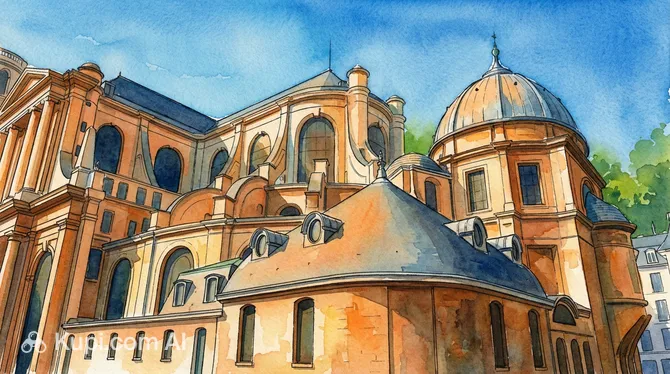
Saint-Sulpice Church. Illustration.
Source: Kupi.com AI

Traveler photos:

The building is striking in its scale: the central nave is 120 meters long, and the vaults reach a height of 30 meters. The church is named after Saint Sulpitius the Pious and is a true treasury of art. Inside, you can find not only elements of the ancient 12th-century structure but also magnificent works by later masters, including the famous frescoes by Eugène Delacroix.

Saint-Sulpice gained particular fame for its unique gnomon—an astronomical instrument for determining the time of the vernal equinox—and one of the greatest organs in the world. Today, it is not only an active parish but also a recognized historical monument that has become even more popular after being mentioned in mass culture and literature.

Contacts

When planning a visit to Saint-Sulpice, we recommend checking the current information on the church's operation in advance. This will help you better plan your time, especially if you want to attend an organ concert or a special service.

For your convenience, the main contact details and official resources are listed below, where you can find the schedule of events in this majestic Paris church.

How to contactContact
Address2 Rue Palatine, 75006 Paris, Франция
Phone+33 1 46 33 21 78
Websitewww.paroissesaintsulpice.paris

What to Do

Inside Saint-Sulpice, visitors will find masterpieces of world art. Be sure to visit the Chapel of the Holy Angels to see the monumental frescoes by Eugène Delacroix. It is also worth noting the magnificent organ by Aristide Cavaillé-Coll—one of the most powerful and beautiful instruments in France, on which masterpieces of classical music are regularly performed.

One of the most mysterious interior details is the gnomon—a brass line embedded in the floor that leads to a marble obelisk. This 18th-century solar observatory allows visitors to observe the movement of a beam of light marking the solstice days. Additionally, the church became famous thanks to the novel "The Da Vinci Code," and many tourists come here to see for themselves the places described in the book.

After exploring the interior, spend some time on Place Saint-Sulpice itself. Here you can admire the Fountain of the Four Bishops and enjoy a cup of coffee at one of the legendary establishments in the Saint-Germain district, observing the steady rhythm of Parisian life.

Getting There

Saint-Sulpice Church is located at 2 Rue Palatine, in the city's 6th arrondissement. Getting there by public transport is easy: the nearest metro stations—Saint-Sulpice (Line 4) or Mabillon (Line 10)—are in the immediate vicinity of the square.

For those who prefer surface transport, bus routes 58, 70, 84, and 87 stop nearby. The area is very pedestrian-friendly: for example, the walk from the Luxembourg Garden takes only about 5 minutes.

If you are near Notre Dame Cathedral, a walk through the picturesque Saint-Germain-des-Prés district to the church will take about 20 minutes. There are also Vélib' bike-sharing stations nearby, but keep in mind that car parking in this historic district is very limited.

Nearest city: Paris

History & Facts

The history of this site began in the 10th century with a small parish chapel, which eventually evolved into a Romanesque church. However, by the 17th century, the building had become too cramped, and in 1646, at the initiative of Jean-Jacques Olier, the construction of the modern temple began. Queen Anne of Austria laid the foundation stone of the future sanctuary.

The construction of Saint-Sulpice spanned more than 130 years due to a lack of funds and historical upheavals. During this time, masters such as Louis Le Vau and Daniel Gittard worked on the project. The final look of the Neoclassical facade was designed by architect Giovanni Servandoni in the mid-18th century, but the asymmetrical towers remain a reminder of the long construction history.

During the reign of Louis XIV, the church was considered one of the most significant in France. It was here in 1822 that the great writer Victor Hugo married Adèle Foucher. In 1915, the building was officially recognized as a historical monument, preserving for posterity not only its architectural grandeur but also the burials of prominent figures from the past.

Time Needed

To leisurely explore the interiors of Saint-Sulpice, study the famous gnomon, and admire the frescoes in the side chapels, most visitors need about 1 to 1.5 hours. This is quite enough for a relaxed look at the architecture and atmospheric photos in the square in front of the church.

If you decide to attend one of the organ concerts or want to study historical relics in detail with a tour, we recommend allowing about 2–3 hours in your travel plan. Keep in mind that the area around the church is extremely picturesque and ideal for a long break in local pastry shops and bistros after visiting the attraction.

Working Hours

Saint-Sulpice Church is open to visitors daily. You can enter from 08:00 to 19:45 any day of the week, including Sunday. This makes it a convenient site to visit both early in the morning and in the evening during a stroll around the city.

Please keep in mind that during church services, masses, or musical concerts, access to some parts of the nave and side chapels may be restricted for tourists. Before visiting, it is recommended to check the current schedule of events on the parish's official website, especially during public and religious holidays.

08:00–19:45

Nearby

A stroll around the surroundings of Saint-Sulpice will allow you to immerse yourself deeper in the atmosphere of historic Paris. Just a couple of blocks from the church lies the magnificent Luxembourg Garden—an ideal place to relax by the fountains or leisurely discover the sculptures of Parisian queens.

If you are interested in Gothic architecture, the famous Sainte-Chapelle with its stunning stained glass windows is within walking distance. The proximity to the Saint-Germain district also provides access to many cozy cafes, bookstores, and small museums, such as the Zadkine Museum, which will round out your impression of visiting this area.

NameDistance
Le Caveau de la Huchette0.8 km
Louvre Museum1.1 km
Musée d'Orsay1.2 km
Les Invalides1.7 km
Galerie Vivienne1.7 km
Napoleon's Tomb1.7 km
Hôtel de Crillon2.1 km

Reached the end of the page?

That means the route is fully explored