Support

Villa Cavrois

About

Imagine a castle from the future, transported back to the early 20th century: this is exactly the impression made by Villa Cavrois—a masterpiece of French Modernism. Located in the town of Roubaix, this grand residence was built in 1932 according to the design of the famous architect Robert Mallet-Stevens for the textile tycoon Paul Cavrois. France is rightfully proud of this site, which has regained its original splendor after an extensive restoration.
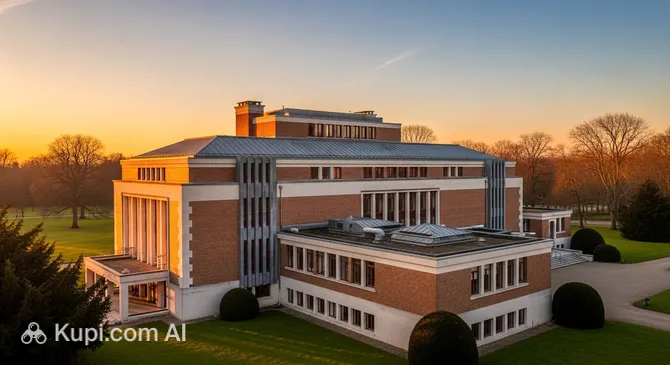
Villa Cavrois
Villa Cavrois. Иллюстрация. Источник: Kupi.com AI

The building is striking in its scale and technological advancement for its time. The 60-meter-long facade is clad in specially manufactured yellow brick, while inside lies a space of 3,800 square meters. The villa was equipped with the latest technology of the 1930s: there were functioning elevators, central heating, and even a radio system for all rooms. The use of reinforced concrete allowed for the creation of massive open spaces and terraces, flooded with light thanks to panoramic windows.

The villa's interiors are a true hymn to luxury and minimalism. The finishes used four types of marble (Swedish green, Italian yellow, Carrara white, and Belgian black), precious woods, and polished steel. Today, it is not just a historical building, but a museum-manifesto, vividly demonstrating how avant-garde ideas changed the perception of comfortable housing and modern aesthetics.

Contacts

For more information regarding your visit, ticket prices, or booking group tours, you can use the official contact details. The site administration is always ready to assist tourists in planning their visit.

How to contactContact
Address60 Av. du Président John Fitzgerald Kennedy, 59170 Croix, Франция
Phone+33 3 20 73 47 12
Websitewww.villa-cavrois.fr

What to Do

A visit to the villa is a captivating journey through floors where every room reveals new facets of design. On the first level, it's worth lingering in the grand hall and the large living room to appreciate the scale of the space. Be sure to look into the children's dining room and the high-tech kitchen, which looked like a scientific laboratory in the 1930s due to the abundance of white tiles and built-in appliances.

Going upstairs, you will see the private quarters of the Cavrois family. Of particular note is the parents' bathroom, covering about 60 square meters and finished in white marble, and the playroom on the top floor, designed for children's theatrical performances. Pay attention to the details: built-in furniture made of exotic woods, unusual glowing pylons, and a staircase with steps resembling piano keys.

Don't limit yourself to just the living rooms. Head down to the basement to see the wine cellar and laundry room, or go up to the roof terraces for views of the park and the surrounding area. For a deep dive into the context of the era, we recommend taking an audio guide, which tells not only about the architecture but also about the daily life of the industrialist's family and innovative solutions, such as the famous elevator by Jean Prouvé.

Getting There

The attraction is located at: 60 Av. du Président John Fitzgerald Kennedy, 59170 Croix. This is a quiet suburb that is easily accessible from the region's major transport hubs.

If you are traveling by car, the drive from Lille takes approximately 20–30 minutes via the A22 motorway. From the center of Roubaix, the villa can be reached in just 10 minutes. Free parking is provided on-site for visitors, making a trip by private or rental vehicle very convenient.

For those who prefer public transport, there are several options. From Lille, you can take a regional train to the Gare de Croix station, after which the walk to the villa takes about 15–20 minutes. Buses on lines L4 or L8 also run from Roubaix; you should get off at the stop named "Villa Cavrois." If necessary, taxi services are available from the station or the city center.

Ближайший город: Roubaix

History & Facts

The history of this architectural masterpiece began in 1925, when the industrialist Paul Cavrois purchased a plot of land to build a family residence. Initially, the project was planned in a more traditional style, but after visiting an international exhibition in Paris, the client changed direction and invited the avant-garde architect Robert Mallet-Stevens. Construction was completed by July 1932, just in time for the wedding of the owner's daughter.

The Cavrois family owned the villa for decades. However, after the death of Paul's widow in the 1980s, the building was sold to a developer and virtually abandoned to its fate. In 1990, the site received the status of a national monument, but this did not save it from vandals and gradual decay. By the early 2000s, the villa was in a deplorable state: the interiors had been looted, and the walls were covered in graffiti.

In 2001, the French government purchased the building to save it from total disappearance. An unprecedented restoration began, lasting 13 years and costing the state 23 million euros. Restorers performed a colossal amount of work, restoring the unique brickwork, sourcing identical types of marble from the same quarries used in the 1930s, and recreating the original furniture from archival photographs.

Today, Villa Cavrois is considered a true manifesto of modernism. It lacks traditional decoration—the building's beauty lies in its strict geometry, the play of light on surfaces, and the impeccable quality of materials. It is a symbol of an era when technology and art combined to create a comfortable living environment for the modern person.

Time Needed

To leisurely explore all levels of the villa, including the basement with technical services and the magnificent roof terraces, we recommend allocating 2 to 3 hours. This time is enough to examine the room finishes in detail and take a stroll through the garden.

If you plan to use an audio guide or carefully study the information boards about the restoration process, your visit may take longer. Architectural photography enthusiasts should also set aside extra time, as the play of light in the interiors of Villa Cavrois creates an endless number of great angles.

Working Hours

When planning your visit, please note that the museum is closed on Mondays. On other days, the villa's doors are open to visitors throughout the day, allowing you to choose a convenient time for your visit.

Current opening hours for Villa Cavrois:

  • Monday: Closed
  • Tuesday: 10:00 – 18:00
  • Wednesday: 10:00 – 18:00
  • Thursday: 10:00 – 18:00
  • Friday: 10:00 – 18:00
  • Saturday: 10:00 – 18:00
  • Sunday: 10:00 – 18:00
DayWorking hours
понедельникЗакрыто
вторник10:00–18:00
среда10:00–18:00
четверг10:00–18:00
пятница10:00–18:00
суббота10:00–18:00
воскресенье10:00–18:00

Nearby

After immersing yourself in the modernist atmosphere of the 1930s, it is worth spending time at other interesting locations nearby. Exploring the city's surroundings will allow you to see how the region's industrial past harmoniously coexists with modern art spaces and recreation areas.

NameDistance
Mallet-Stevens Park0.3 km
Palomano Lille1.3 km
Heavy Brique La Maillerie1.3 km
Parc Barbieux1.3 km
Brasserie Cambier2.2 km
JB's Pub2.7 km
La Piscine Museum of Art and Industry André Diligent2.9 km

Reached the end of the page?

That means the route is fully explored