Support

Goslar

About

Goslar is a true gem in northern Germany, nestled at the foot of the picturesque Harz mountains in Lower Saxony. This town, surrounded by dense forests and crystal-clear streams, is seamlessly integrated into the hilly landscape, creating a unique atmosphere of comfort, tranquility, and harmony with nature.

Goslar. Illustration.
Source: Kupi.com AI

With a population of around 50,753 people, Goslar retains the charm of a compact town while playing an important role as a historical and cultural center of the region. It is famous for its magnificently preserved medieval architecture, numerous old half-timbered houses, and unique monuments, making it a must-stop for anyone wishing to immerse themselves in an atmosphere of antiquity.

Strolling through the winding streets of Goslar's Old Town gives the feeling of traveling back in time, where every house seems to hold its own centuries-old secrets. The city captivates with its calmness, harmony, and special charm. Here, you will find not only architectural masterpieces and museums but also fascinating festivals and famous Christmas markets, offering a rich cultural program and an authentic German atmosphere. Discover this amazing corner of Germany, where history and nature have created a unique ensemble!

You can find more interesting facts on the Goslar city history page.

Weather Overview

The climate in Goslar is temperate, making it attractive for visiting in different seasons. In summer, especially in July and August, average temperatures hover around 17-19°C, with maximums reaching a comfortable 22-23°C. In winter, for example in January, the average temperature is about 1.9°C, with minimum values dropping near zero. Overall, Goslar is characterized by warm summers with occasional precipitation (about 13-14 rainy days in the summer months, while the total amount of precipitation is low, 2-3 mm) and cool winters with more frequent but usually not heavy precipitation (up to 17 rainy days in December and January, with precipitation around 3 mm). For a more detailed look at the weather conditions by month, you can visit the Goslar Climate page.

Average monthly temperature

Average monthly precipitation

Interesting Facts

In addition to its famous landmarks, Goslar hides many amazing stories and curious details that make it even more attractive to travelers. Ready to learn a few secrets of this ancient city?

Rammelsberg Mine (UNESCO World Heritage). Illustration.
Source: Kupi.com AI

Traveler photos:

  • The Emperor's Heart: In Goslar, in St. Ulrich's Chapel, which is part of the Imperial Palace, the heart of the Holy Roman Emperor Henry III was buried according to his will. This fact emphasizes the special significance of the city in medieval Germany and gives it a mystical aura.

  • Record Holder for Half-Timbered Houses: Goslar's Old Town, a UNESCO World Heritage site, has more than 1,800 beautifully preserved half-timbered houses. This is one of the largest and most complete collections of such architecture in Germany, turning a walk through its streets into a real journey back in time.

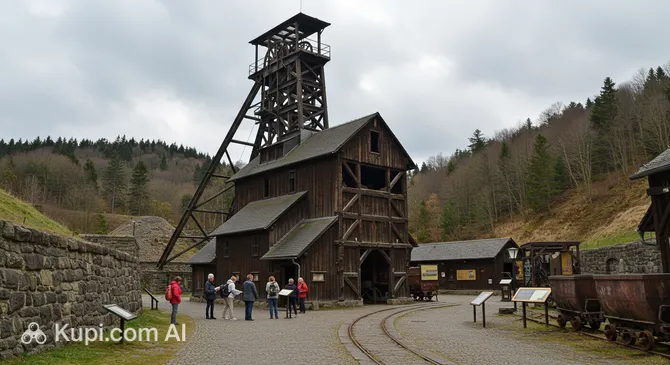
  • A Millennium of Mining History: The wealth and prosperity of Goslar were brought by the mines of Mount Rammelsberg. The famous Rammelsberg Mine operated continuously for over 1,000 years, from 968 to 1988, making it one of the oldest and longest-operating mines in the world. It was thanks to the mining of silver and other metals that Goslar became an important economic center.

  • City of Witches and Festivals: Goslar is famous for its vibrant traditional festivals, among which Walpurgis Night holds a special place. Every year on the night from April 30 to May 1, thousands of people, many in witch and devil costumes, gather for festivities, continuing the ancient pagan traditions of the Harz region and creating an unforgettable atmosphere.

How to Get There

Goslar is conveniently located in central Germany, and you can reach it in various ways, combining flights with train or car trips. Since the city itself does not have a large airport, travelers usually use the transport hubs of neighboring metropolitan areas. You can find all the ways to get to the city on our separate page.

For international tourists, Hannover Airport (HAJ) is often the most convenient option. It is located not in Goslar, but in the city of Hannover, at a distance of approximately 79.6 km. This is an international airport receiving flights from many countries. The journey from there to Goslar by taxi or rental car will take roughly 2 hours and 20 minutes. You can also use the train connection between the airport and Goslar with a transfer at Hannover main station.

An alternative option is Leipzig/Halle Airport (LEJ), located in the city of Leipzig. It is further away, about 135 km from Goslar. The travel time by road will be around 3 hours and 45 minutes. This airport also handles international flights and can be convenient if you plan to visit the eastern part of the country before your trip to the Harz Mountains.

For clarity, here is a summary of the main airports through which you can reach the region:

AirportPassenger trafficDistance
Hannover Airport5.3 mln80 km
Kassel-Calden Airport107 61591 km
Erfurt Airport138 002109 km
Paderborn Lippstadt Airport818 378130 km
Leipzig/Halle Airport2.2 mln135 km

The rail connection in Germany is excellently developed, and the train is often the most comfortable way to get to Goslar. It is worth noting that the main high-speed lines pass through major neighboring cities. The main transfer hub for a trip to Goslar is Hannover Hauptbahnhof. It is located in the city of Hannover, about 70 km from your destination. Regional trains regularly depart from this station, taking you directly to the center of Goslar.

Another important point on the railway map is the Kassel-Wilhelmshöhe station in the city of Kassel (about 95 km from Goslar). This is a major hub for ICE high-speed trains connecting the north and south of the country. Arriving here, tourists can transfer to regional transport or take a taxi to cover the remaining distance to the Harz.

Below is a table with the nearest major railway hubs:

StationPassenger trafficDistance
Hanover Main Station91.3 mln70 km
Messe Bahnhof (Messe-Bf) Station78 km
Kassel-Wilhelmshöhe Station10.9 mln95 km
Eisenach Hauptbahnhof1.8 mln104 km
Halle (Saale) Railway Station12.8 mln107 km

Main Attractions

Goslar, a charming town in the foothills of the Harz, is famous for its thousand-year history and its beautifully preserved Old Town, a UNESCO World Heritage site. A journey here is an immersion into the atmosphere of the Middle Ages, where every street and building holds its own secrets. Among the many attractions of Goslar, several key locations especially stand out.

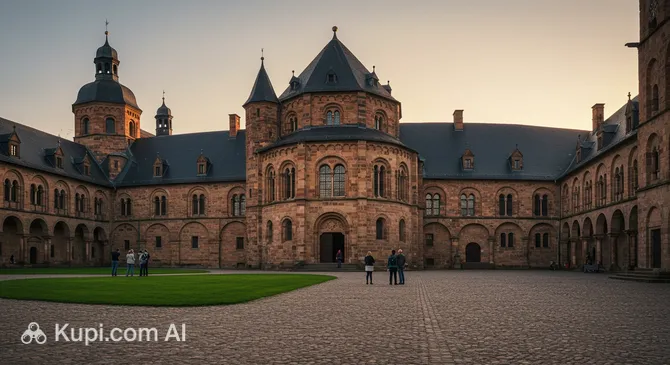
One of the main jewels is the Imperial Palace of Goslar (Kaiserpfalz). This majestic 11th-century complex was one of the favorite residences of the Holy Roman Emperors. Today, visitors can explore its impressive halls, including the Kaiserhaus and St. Ulrich's Chapel, and touch the imperial past of Germany.

Imperial Palace of Goslar. Illustration.
Source: Kupi.com AI

Traveler photos:

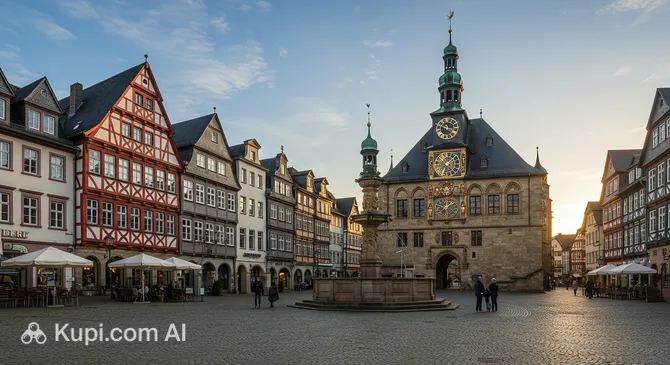
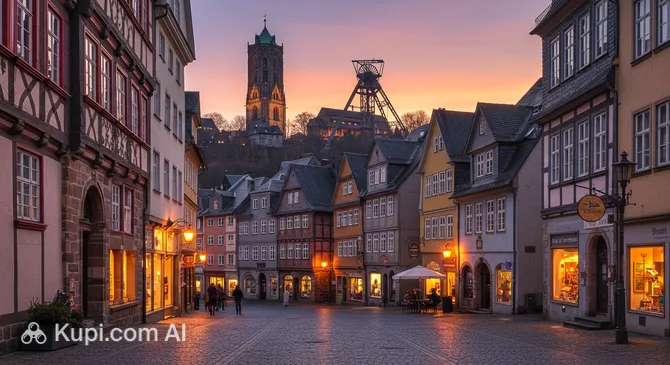
The heart of old Goslar is undoubtedly the Market Square (Marktplatz). It is surrounded by magnificent half-timbered houses, among which the Town Hall with its famous Hall of Homage and the Kaiserworth building, a former cloth merchants' guild, stand out. The square also features a fountain with the city's symbol—the eagle—and four times a day, you can hear the melodic ringing of the carillon telling stories from the lives of the local miners.

Market Square. Illustration.
Source: Kupi.com AI

Traveler photos:

It is impossible to imagine Goslar without the Rammelsberg Mine (a UNESCO World Heritage site). This mine, where silver, copper, and lead were mined for over a thousand years, played a key role in the city's prosperity. Today, it is an impressive museum complex offering fascinating tours of the ancient tunnels and introducing the history of mining. Visiting the mine is a unique opportunity to learn about the hard work of miners and the technologies of the past.

Rammelsberg Mine (UNESCO World Heritage). Illustration.
Source: Kupi.com AI

Traveler photos:

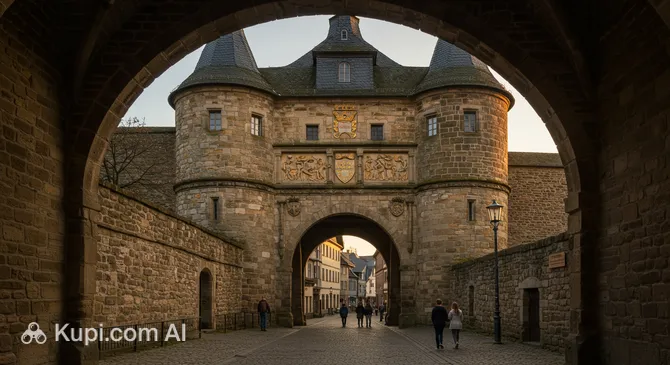
Evidence of the former power and importance of Goslar is the Wide Gate (Breites Tor). This is the largest and best-preserved of the medieval city gates, built in the 15th century. They were an important part of the city's defense system and still impress with their monumentality, reminding us of the rich history of Goslar.

The Broad Gate. Illustration.
Source: Kupi.com AI

Traveler photos:

Local Cuisine

Goslar's gastronomy is an exciting journey into the world of traditional German cuisine with an emphasis on hearty dishes that preserve the warmth of the Harz region's mountain and village recipes. One of the main gastronomic jewels that you should definitely try is the famous Harz cheese (Harzer Käse). This pungent cheese, made according to ancient techniques, is often served with a slice of fresh aromatic bread and local sausages, creating a perfect flavor combination.

Meat delicacy enthusiasts will find much to interest them in Goslar. Pay attention to the venison roast, which is prepared here with the addition of a sweet and sour cranberry sauce that gives the dish a special touch. No less popular are various smoked sausages, each possessing its own unique aroma thanks to specialized smoking methods. The perfect accompaniment to such a meal would be a mug of local beer, brewed at one of Goslar's traditional breweries, whose taste perfectly complements the rich dishes.

You can experience Goslar's culinary culture not only in cozy restaurants. Visit the lively local markets or small family shops, where fresh pastries, fragrant gingerbread, and various sweets with natural honey and nuts await you. A special atmosphere reigns in the city during Christmas markets, when the air is filled with the aromas of hot drinks, homemade pies, and the traditional German cake Stollen. In these moments, Goslar turns into a real gastronomic paradise, also offering seasonal delicacies at numerous culinary festivals.

Travel Tips

Welcome to Goslar! To ensure your trip to this charming city at the foot of the Harz Mountains is as comfortable as possible and leaves only pleasant impressions, we have prepared some practical tips.

  1. Clothing and gear by season: The climate in Goslar is temperate, so layered clothing is recommended, especially if you plan on nature walks. Be sure to bring comfortable shoes, as the historical center is paved with cobblestones, and they will be useful for exploring the surroundings. Don't forget a plug adapter (type F, standard for Germany). When visiting churches, choose modest clothing.
  2. Getting around Goslar: Goslar's historical center is compact and ideal for leisurely walks. For longer trips around the city and its surroundings, you can use local buses. Taxis are available, but renting a car for getting around the city itself is usually not necessary unless you plan to actively explore the entire picturesque Harz region.
  3. Finances and currency: The official currency is the Euro (EUR). Credit and debit cards (Visa, Mastercard) are widely accepted in most hotels, restaurants, and large shops. However, it is always useful to have some cash with you, especially for paying in small souvenir shops, at markets, or in some cafes. ATMs (Geldautomat) are easy to find in the city. In restaurants, it is customary to leave a tip of 5-10% of the bill if you liked the service.
  4. Health and safety: Goslar is a very safe city, but standard precautions, such as keeping an eye on personal belongings, are never out of place. There are pharmacies (Apotheke) in the city; information about duty pharmacies can be found online or requested at your hotel. Be sure to get travel medical insurance before your trip.
  5. Language and communication: The official language is German. In tourist areas, hotels, and restaurants, many staff members speak English, especially the younger generation. Nevertheless, knowing a few basic phrases in German, such as \"Hallo\" (Hello), \"Guten Tag\" (Good day), \"Danke\" (Thank you), and \"Bitte\" (Please/You're welcome), will be gratefully received by the locals. Wi-Fi is usually available in hotels and many cafes.
  6. Local etiquette: Germans are known for their punctuality, so try to arrive for meetings on time. When entering small shops or cafes, it is customary to say hello. In public places and transport, try not to make noise and respect the personal space of others. Addressing strangers, especially older people, as \"Sie\" (the formal "You") is a norm of politeness.
  7. What to avoid: Try not to make a lot of noise in public transport and residential areas, especially in the evening and at night—Germans value peace and order very much. It is also worth avoiding comparing different regions of Germany in a disparaging way and being tactful when discussing historical topics.
  8. Special features of Goslar: Be sure to plan a visit to the Rammelsberg Mine—a unique UNESCO World Heritage site that tells the centuries-old history of mining in the region. Also keep in mind that most shops in Germany, and Goslar is no exception, are closed on Sundays and on public holidays. Plan your shopping in advance.

We hope these tips help you better prepare for your trip and fully enjoy the beauty and unique atmosphere of Goslar. We wish you an unforgettable journey to this historical corner of Germany!

Entertainment & Nightlife

As evening falls, Goslar, with its medieval charm, offers guests a cozy and peaceful atmosphere for relaxation. While the city is not famous for boisterous nightclubs, you can find pleasant spots for dinner, soulful conversations over a drink, and quiet evening walks.

Most of Goslar's evening life is concentrated in its historical center, especially around the Market Square and its adjacent streets. Here you will find most of the restaurants and bars. The atmosphere is generally relaxed and friendly, attracting both tourists and locals. The dress code in most establishments is casual.

Those who enjoy spending an evening in a bar will appreciate the local spots offering both traditional German beer and other beverages. One such place is Müller's Tapas & Steak, where you can enjoy drinks and snacks in a pleasant setting. Bars are usually open until late in the evening, especially on weekends. The crowd here is mixed, from young people to the elderly.

Müller's Tapas & Steak. Illustration.
Source: Kupi.com AI

Traveler photos:

For dinner, Goslar offers a variety of options. You can find both traditional German cuisine and international dishes. For example, you can visit the Asia Gourmet Goslar Chinese restaurant or try Indian cuisine at Laddu Gopal. Restaurants usually stop taking food orders by 9:00 PM–10:00 PM, so plan your dinner in advance.

Asia Gourmet Chinese Restaurant Goslar. Illustration.
Source: Kupi.com AI

Traveler photos:

Regarding nightclubs and large concert venues, there are few in Goslar. The nightlife here is more intimate. Some bars may offer live music on weekends or themed evenings. Mostly, evening entertainment boils down to a pleasant time in restaurants, bars, or walks through the beautifully illuminated old town.

The best time for evening outings is Friday and Saturday. Prices in Goslar's bars and restaurants are considered moderate. It is convenient to move around the city center on foot in the evening. If you need to get to a more distant area or return to your hotel late at night, it is better to use a taxi. You can order a taxi by phone or through special apps; taxi stands are also usually located in the city center.

Goslar is considered a safe city, and evening walks through the central streets generally do not cause concern. Nevertheless, it is always worth taking usual precautions, especially late at night. Keep valuables in a safe place and be mindful of your surroundings.

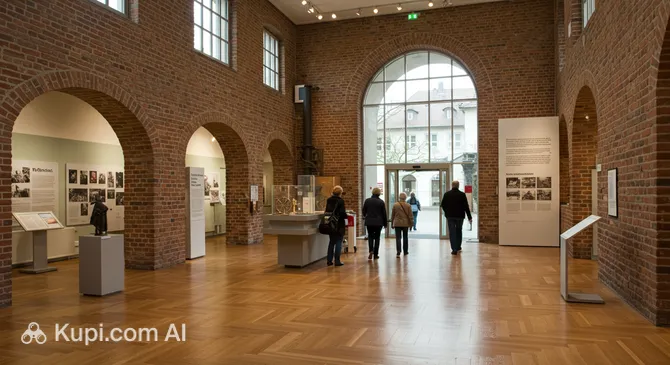
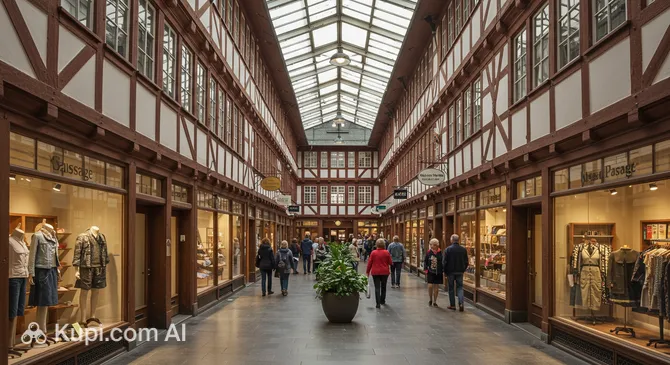
During the day, Goslar also offers many interesting activities. You can visit historical sites such as the Imperial Palace or the unique Rammelsberg Mine. For culture lovers, the doors of museums are open, such as the Vistory Museum in Goslar. For shopping, you can stop by the Kaiser-Passage.

Vistory Museum Goslar. Illustration.
Source: Kupi.com AI

Traveler photos:

Overall, evening Goslar is a place for those who appreciate quiet relaxation, a historical atmosphere, and the opportunity to enjoy delicious food and drinks in a cozy setting. It is a wonderful end to a day full of exploring this charming city in Germany.

Parks & Museums

Goslar, a charming city with a rich history, offers its guests not only an immersion in the medieval atmosphere but also the opportunity to enjoy cultural treasures and relax surrounded by greenery. Here you will find unique museums as well as pleasant corners for walks in the fresh air.

Among the key cultural sites of Goslar, the Rammelsberg Mine (a UNESCO World Heritage site) stands out. This is not just a museum, but an entire historical complex where ore was mined for over a thousand years. Visitors can descend into the tunnels, learn about the hard work of the miners, and see unique industrial equipment. This place is a must for anyone interested in the history of technology and industry.

Another jewel of the city is the Imperial Palace of Goslar (Kaiserpfalz), one of the most significant secular monuments of the Middle Ages in Germany. It once served as a residence for the Holy Roman Emperors. Today, you can explore the magnificent halls, learn about imperial history, and enjoy views of the old town. For lovers of history and architecture, this place will be a true discovery.

The Vistory Museum in Goslar also invites you to get acquainted with local history and culture. The museum's exhibits tell about various aspects of city life over the centuries, featuring artifacts and interactive installations that will be of interest to both adults and children.

Although Goslar is primarily famous for its architecture, nature lovers will also find things to do here. The area around the Rammelsberg Mine offers picturesque hiking trails with views of the surroundings. In addition, the city ramparts (Wallanlagen), once defensive structures, have today been converted into green areas, ideal for leisurely strolls. For longer hikes and enjoying nature, remember the proximity of the Harz National Park, which offers a variety of routes.

In addition to these main attractions, the historical center of Goslar is itself an open-air museum. Be sure to walk through the Market Square with its famous fountain and Town Hall building, and pass through the Wide Gate (Breites Tor), one of the well-preserved city gates that testify to the city's former greatness.

For an authentic experience, we suggest turning off the main tourist routes and exploring the narrow cobbled streets of the Old Town. Here you can discover charming half-timbered houses, cozy courtyards, and feel the unique atmosphere of medieval Goslar.

Getting Around

Getting around Goslar and its surroundings is quite convenient thanks to a well-developed public transport system, the core of which is buses. The city is compact, and many attractions in the historical center are within walking distance, but for trips over longer distances or to neighboring towns, buses will be indispensable.

Main types of transport:

Buses: This is the main type of public transport in Goslar. City bus routes (Stadtbus Goslar) connect different areas of the city, while regional buses allow you to reach other towns and interesting places in the Harz region. Buses run according to a schedule that can be found at stops or on the websites of local transport companies.

Payment system and tickets:

In Goslar, as in many cities in Germany, there is a unified tariff system for public transport. Usually, the following types of tickets are available:

Single ticket (Einzelfahrschein): Valid for one trip in one direction, with the possibility of transfers within a certain time. The approximate cost of such a ticket is around 2.50–3.50 euros.

Day ticket (Tageskarte): Allows for an unlimited number of trips during the day. This is a cost-effective option if you plan to move around a lot. There are options for one person or for small groups. The approximate price of a day ticket is 5–8 euros.

Weekly or monthly pass (Wochenkarte/Monatskarte): Suitable for a long stay and offer even greater savings for frequent trips.

Tickets can be purchased directly from the bus driver, at special machines at some stops (if available), or at customer service centers of transport companies. Sometimes tickets can also be bought at tourist information centers. Prices can vary depending on the tariff zone and current rates, so it is always better to check them on the spot or on the official websites of transport operators. For tourists staying in hotels in the Harz region, it is worth asking about the possibility of using a special guest card (e.g., Harzer Urlaubs-Ticket, HATIX), which may grant the right to free or discounted travel on public transport in the region.

Practical tips for tourists:

Buying tickets: The easiest way is to buy a ticket from the driver when entering the bus. It is recommended to have small change for convenience.

Validation: If you purchased a ticket not from the driver but, for example, from a machine, you may need to validate it in a special device located inside the bus. Tickets bought directly from the driver are usually already activated.

Schedule: Familiarize yourself with the bus schedule in advance, especially if you plan trips in the evening or on weekends and holidays when the intervals between buses may be longer.

Stops: As in many cities in Germany, it is customary to inform the driver in advance of your intention to get off at the next stop by pressing a special button in the bus cabin.

Alternative ways to get around:

On foot: The historical center of Goslar is ideal for walking. Distances here are small, and every street and square holds its own history and charm, which are best discovered during a leisurely walk.

Taxi: Taxi services operate in the city. This is a more expensive but convenient option, especially if you are traveling with luggage, late at night, or simply prefer individual comfort. Taxi stands can usually be found at the railway station and other key points in the city.

Bicycle rental: For active recreation and exploring the picturesque surroundings of Goslar and the Harz region, you can rent a bicycle. There are many cycling routes of varying difficulty in this area, suitable for both leisurely rides and more serious excursions.

Given the size of Goslar, combining walking with the use of buses for longer trips seems to be the most optimal option for tourists. This will allow you to comfortably get to know both the city itself and the beauty of the surrounding Harz region.
Accommodation

In Goslar, you will find a wide range of accommodation options to suit the needs of any traveler. The city offers cozy family hotels, traditional guesthouses (pensions), as well as comfortable apartments for those who prefer more independence. A particularly popular area for staying is the historical center (Altstadt), where you will be within walking distance of the main attractions, such as the Market Square and the majestic Imperial Palace of Goslar.

Market Square. Illustration.
Source: Kupi.com AI

Traveler photos:

To guarantee the best choice and prices, especially if your trip coincides with the tourist season or you plan to visit iconic sites like the Rammelsberg Mine (a UNESCO World Heritage site), it is recommended to book accommodation in advance. In Goslar, a wide selection of hotels and apartments is available, which are easy to find and reserve through popular online services.

The price range for accommodation in Goslar varies from budget options in small pensions and apartments to more expensive offers in hotels with high service standards. You can book a suitable option through well-known international online platforms or directly on hotel websites. Early planning and comparing offers will help you find the best value for your trip to this charming city.

Nearby Cities

For those who want to explore the surrounding area, Goslar serves as an excellent starting point for day trips to several interesting nearby locations. For example, Wernigerode, known as the "colorful town on the Harz," will charm you with its fairytale castle and historical center with half-timbered houses, as well as the opportunity to ride the famous Brockenbahn narrow-gauge railway. Wolfenbüttel attracts visitors with its magnificent Duke August Library, one of the oldest and most significant libraries in the world, and its well-preserved old town with the ducal residence. Salzgitter, although a younger city, offers relaxation by Lake Salzgittersee and an introduction to the region's industrial history.

CityPopulationDistance
Langelsheim14 9907 km
Bad Harzburg21 9459 km
Clausthal-Zellerfeld15 88812 km
Seesen19 34017 km
Ilsenburg9 52618 km

These nearby destinations provide an insight into the region's diverse culture and landscapes. Each of these cities offers its own unique attractions, from historical centers to natural beauty, making them a wonderful addition to your trip to Goslar.

Shopping & Souvenirs

Goslar, a charming town in the Harz Mountains, offers its guests pleasant shopping opportunities, combining a historical atmosphere with modern shops. Here you won't find giant malls, but you can enjoy shopping in cozy boutiques, souvenir shops, and stores selling local goods. The city is especially famous for its handmade products and regional delicacies.

The main shopping arteries of Goslar are concentrated in its historical center (Altstadt). Stroll through pedestrian streets such as Fischemäkerstraße and Rosentor, which radiate from the central Market Square. Here you will find many small shops offering clothing, shoes, jewelry, books, and, of course, souvenirs. The atmosphere of the ancient city makes shopping particularly pleasant.

For those who prefer to shop under one roof, Goslar has the Kaiser-Passage shopping center. It offers a good selection of famous brand stores, as well as cafes where you can relax.

Kaiser Passage. Illustration.
Source: Kupi.com AI

Traveler photos:

Twice a week, usually on Tuesdays and Fridays, a lively farmer's market (Wochenmarkt) unfolds on Goslar's Market Square. This is a great place to buy fresh local products: vegetables, fruits, cheeses, meat products, bread, and flowers. You can also find regional specialties and chat with the locals. In the pre-Christmas period, Goslar is famous for its magical Christmas market, which attracts tourists from all over Germany and abroad.

As souvenirs from Goslar, it is worth bringing items related to the history of the Harz region and its mining past. Popular items include witch figurines (a symbol of the Harz), items depicting the Imperial Palace or the Rammelsberg Mine, as well as local liqueurs and herbal blends. In souvenir shops, you will also find traditional German products, ceramics, and textiles.

Most shops in Goslar are open from Monday to Friday from about 10:00 AM to 6:00 PM or 7:00 PM, and on Saturdays, they close earlier, around 2:00 PM or 4:00 PM. Sunday is generally a day off for most shops, except for some souvenir stores in tourist zones or during special city events. Both cash (Euro) and bank cards (Visa, Mastercard) are accepted for payment. However, in small shops or at the market, it is preferable to have cash with you.

Tourists residing permanently outside the European Union can use the Tax Free system when making purchases of a certain amount in participating shops. To do this, you must ask the salesperson for a special Tax Free form, which you will then need to present at customs when leaving the EU to receive a VAT refund.

Reached the end of the page?

That means the route is fully explored