Situated on the scenic banks of the Saale River, Halle represents a wonderful blend of centuries-old heritage and dynamic student energy. This major city in the federal state of Saxony-Anhalt, part of Germany, is rightfully considered one of the region's cultural centers. With a population of about 238,000 people, it maintains the cozy atmosphere of "Old Europe," avoiding the excessive hustle and bustle of megacities while offering guests a rich intellectual and artistic life.
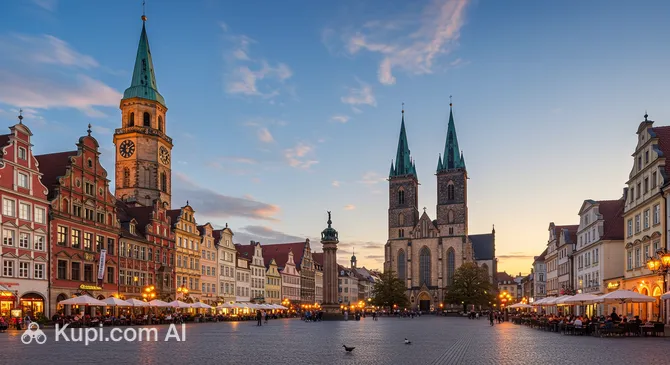
Geographically, the city spreads across a plain, and its landscape is largely defined by the proximity of the river, along which green park zones stretch. Halle. Illustration.
Source: Kupi.com AI
The unique history of Halle is inextricably linked to salt mining, which was carried out here for centuries and brought prosperity to the city. Today, the panorama of the central square and the ancient towers that have become symbols of the city serve as reminders of this past.
The main magnets for travelers remain the house-museum of the great composer George Frideric Handel, who was born here, and the majestic Marktkirche with its recognizable spires. Halle is a place where you can leisurely stroll through the narrow streets of the old town, enjoy the silence in shady squares, or immerse yourself in modern art at Moritzburg Castle. We invite you to discover this authentic corner where traditions are carefully preserved and the future is created within the walls of one of the country's oldest universities.
Weather Overview
Halle is characterized by a typical Central European temperate continental climate. The city is located in a relatively dry zone, protected by the Harz mountain range, though the proximity of the Saale River often brings morning mists, giving the ancient streets a special atmosphere. You can check the current forecast by visiting the section describing the weather in Halle.
Winters in the city are moderately cold: in January, the average temperature fluctuates around 0°C, occasionally dropping to slight frosts. Summers are usually warm and pleasant; average daytime temperatures in July and August are about +20...+25°C. Precipitation is evenly distributed throughout the year, so a light umbrella or raincoat will be useful in any season. Spring and early autumn are considered the ideal time for walking, when the city is either lush with greenery or colored in golden tones.
Average monthly temperature
Average monthly precipitation
Interesting Facts
Halle is often called the "city of five towers": this unique silhouette is created by the four towers of the Marktkirche and the standalone 84-meter Red Tower (Roter Turm).
The great composer George Frideric Handel was born in this city in 1685, and his house-museum remains a major shrine for music lovers worldwide.
Halle is one of the few cities where you can still see the legendary Tatra T4 trams in regular service, which have become a true retro attraction for transport fans.
It is home to one of Germany's oldest universities—the Martin Luther University of Halle-Wittenberg, founded back in 1694.
The city is considered one of the greenest in the country due to numerous parks, squares, and protected areas along the Saale River.
How to Get There
Halle is an important transport hub in Central Germany, making it easily accessible for travelers. The city is connected by a network of the A9 and A14 autobahns, as well as a modern railway line with the country's key cities. Detailed information on routes and schedules can be found on the page describing how to get to Halle.
For air travelers, the most convenient option is Leipzig/Halle Airport (LEJ), located just 30–40 minutes away from the city center. It is a modern aviation hub serving both domestic and international flights. You can reach the city from the airport via regular S-Bahn trains or by taxi.
Railway connections in Halle are excellently developed. The city's main station, Halle Hauptbahnhof, receives ICE high-speed trains and regional expresses. A trip from Berlin takes about an hour and a half to two hours, from Leipzig just 20–30 minutes, and from Munich between 4 and 5 hours. The station is conveniently located and linked to the city center by numerous tram routes.
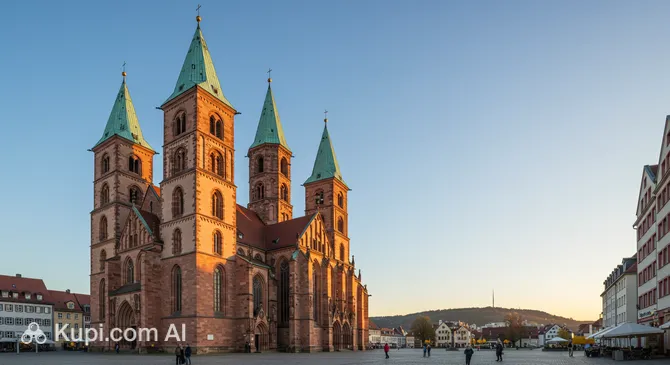
The heart of the city is adorned by the magnificent Market Church of Our Lady—a unique church with four towers erected in the 16th century. It is famous not only for its architecture but also for the fact that Handel himself played the organ here and Martin Luther delivered his sermons. Nearby rises the Red Tower, which, along with the church spires, forms the famous "five towers" silhouette.
Market Church of Our Lady. Illustration.
Source: Kupi.com AI
Traveler photos:
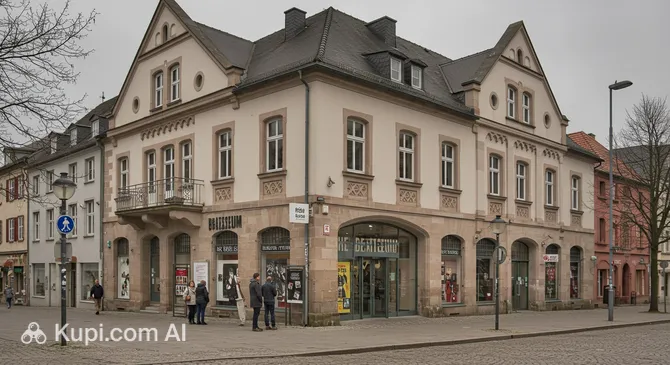
Music and history enthusiasts should definitely visit the Handel House, where the great composer spent his youth. The museum's exhibition tells the story of the maestro's life and work, as well as the region's rich musical traditions. No less interesting is the Beatles Museum—a private collection dedicated to the legendary Fab Four, which is considered one of the most extensive in the world.
Beatles Museum. Illustration.
Source: Kupi.com AI
Traveler photos:
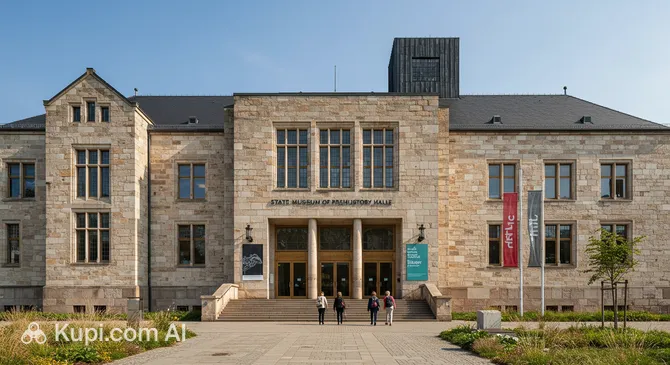
For those interested in the mysteries of the distant past, the State Museum of Prehistory in Halle is open. This is where the famous Nebra Sky Disk is kept—the world's oldest concrete depiction of the cosmos, recognized as a UNESCO heritage object. The museum's exhibition masterfully immerses visitors in the atmosphere of ancient eras, making history visual and exciting.
State Museum of Prehistory Halle. Illustration.
Source: Kupi.com AI
Traveler photos:
Local Cuisine
The gastronomic face of Halle is classic Saxon cuisine with an emphasis on hearty meat dishes and traditional sides. One of the main local specialties is Hallesche Klöße—potato dumplings that are usually served with juicy roast or goulash. It is also worth trying the famous Thuringian sausages (Thüringer Rostbratwurst), which are prepared here with special skill.
The food culture in the city is closely linked to its history: due to centuries of salt mining, salty products are still valued here, and the local salt museum even offers unique delicacies. It is best to look for a traditional lunch or dinner in the old gasthauses of the city center, for example, at an establishment like Gasthaus "Zum Schad", where dishes are served according to time-tested recipes in an authentic atmosphere.
Gasthaus Zum Schad. Illustration.
Source: Kupi.com AI
Traveler photos:
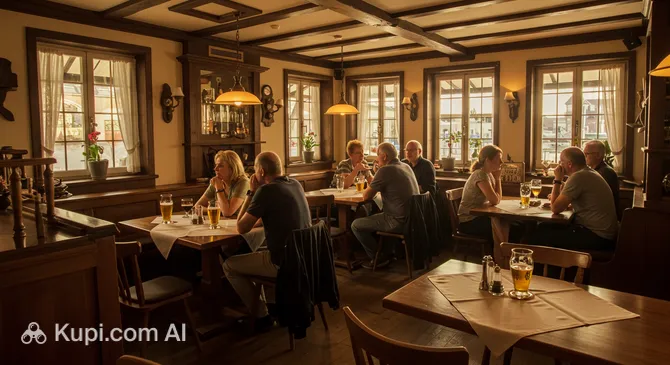
If you crave variety, international cuisine is widely represented in Halle. The Chinese Restaurant Pavilion is popular, offering a palette of Eastern flavors. Don't forget to complement your meal with a glass of local beer from the region's private breweries or a cup of aromatic coffee in one of the many cafes in the old town, where it's so pleasant to watch life go by on the Marktplatz.
Pavilion Chinese Restaurant. Illustration.
Source: Kupi.com AI
Traveler photos:
Travel Tips
Planning a trip to this charming corner of Germany? Here are some practical tips to help make your journey to Halle as comfortable and interesting as possible.
Clothing and items: The climate in the region is changeable, so even in summer, it's worth taking a light jacket and an umbrella in case of rain. Comfortable flat-soled shoes are essential for walking along the cobbled streets of the old town.
Transport: Halle is a compact city whose center is best explored on foot. For trips to outlying districts, use the trams; it is most convenient to download the official app for buying tickets online.
Finance: The official currency is the Euro. While bank cards are accepted in most hotels and large stores, small cafes and souvenir shops may ask for cash. Tips in restaurants are usually 5–10% of the bill.
Health and Safety: The city is generally safe, but in the evening, tourists are advised to stick to the lit central streets and avoid deserted outskirts in industrial zones. Pharmacies (Apotheke) are easily found by the red sign with the letter "A".
Communication: The main language is German. In the university and tourist areas, staff speak English, but knowing a few simple phrases like "Guten Tag" (Good day) or "Danke" (Thank you) will be received very warmly.
Local Etiquette: It is customary to say hello when entering small shops or cafes. Germans value punctuality and observing silence in public places in the evening.
What to avoid: Do not cross the road on a red light, even if there are no cars—this is considered bad manners and can result in a fine. Also, avoid loud conversations on public transport.
Extra tip: If you plan to visit several museums, check for combined tickets—this can help save significantly on entrance fees.
Following these simple recommendations, you can fully immerse yourself in the city's atmosphere and enjoy its hospitality without extra worries. Have a great trip!
Entertainment & Nightlife
Halle in the evening offers a calm and cozy atmosphere characteristic of university towns. Nightlife here is concentrated around the central Marktplatz and its adjacent streets, where students and locals gather in pubs and bars. Establishments often stay open until late at night, especially on weekends, and the crowd is friendly with no strict dress code.
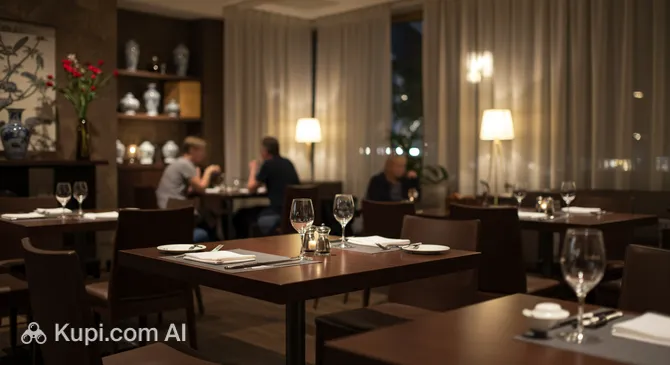
For those looking for a stylish place to relax, the LUJAH Restaurant Lounge Bar is a perfect choice, where you can enjoy high-quality cocktails in a modern setting. If you prefer more intimate and soulful spots, check out Cafe Ludwig or Cafe N8—popular locations for evening meetups. Safety in the city center is maintained at a high level, so night walks along illuminated streets are quite comfortable.
LUJAH Restaurant Lounge Bar. Illustration.
Source: Kupi.com AI
Traveler photos:
Besides bars, cultural leisure is provided by the Oper Halle opera house and the Steintor Varieté, which regularly hosts concerts and shows. In the summer, life moves outdoors: beer gardens by the Saale River become centers of attraction. If you crave more vibrant parties, locals often take a short trip to neighboring Leipzig, which is famous for its techno clubs and large-scale festivals.
Parks & Museums
Halle is deservedly considered one of the greenest cities in the region. The main natural adornment is the banks of the Saale River with its shady alleys and lawns, where citizens love to relax. Be sure to visit Bergzoo—the unique Halle Zoo, located on Reilsberg hill. Its landscape design allows you to enjoy not only rare animals but also panoramic views of the city and the river valley.
The city's museum map can impress even a seasoned tourist. In addition to the famous Handel House and the Museum of Prehistory, it's worth checking out the art museum in Moritzburg Castle (Kunstmuseum Moritzburg), which houses an outstanding collection of modern art. Also interesting is the Gasometer on Holzplatz—an industrial facility transformed into a modern space reflecting the industrial aesthetics of the past.
Those with a sweet tooth and families with children will enjoy the Halloren Chocolate Museum at Germany's oldest chocolate factory. Here you can not only learn the history of candy creation but also see the famous "chocolate room" and, of course, purchase the signature Halloren-Kugeln candies. Halle offers a harmonious combination of intellectual enrichment in museums and quiet relaxation in numerous squares and parks.
Getting Around
The public transport system in Halle operates clearly and efficiently, providing a convenient connection between all areas of the city. Trams form the basis of the network, running radially from the main station and covering the entire center. A special feature of the city is the use of the legendary Tatra T4 trams, which give the rides a slight touch of nostalgia. Tram routes are supplemented by a bus network and S-Bahn city train lines connecting Halle with Leipzig and the airport.
Public transport fares operate on the Mitteldeutschland-Tarif zonal system. Tickets can be purchased from machines at stops, directly on the trams, or via mobile applications. For tourists, a day pass (about 7 euros) is often the most cost-effective option, allowing for unlimited trips throughout the day. It's important to remember that tickets not purchased on the transport vehicle usually require validation (stamping) upon entry.
As an alternative to public transport, many locals and students choose bicycles—the city has many bike paths, and the terrain is predominantly flat. Taxis are available through popular apps or at stands near the station and major hotels. During peak hours (7–9 AM and 4–6 PM), transport can be crowded, but at other times, getting around Halle remains fast and comfortable, allowing you to reach any key point in 15–20 minutes.
Accommodation
Accommodation options in Halle are primarily geared toward travelers who value comfort and moderate prices. Most hotels are concentrated in the historic center (Altstadt) and near the main railway station, making it easy to reach major attractions on foot or by tram.
The price range in the city is quite stable: rooms in mid-range hotels (3–4 stars) typically cost from 80 to 150 euros per night. The city features chain hotels such as Dorint, as well as cozy apart-hotels, which are especially popular among those planning to stay in Halle for several days. There aren't many luxury grand hotels here, but there is a large selection of budget hostels and private apartments available through popular online services.
We recommend booking accommodation in advance if your trip coincides with the annual Handel Festival in the summer or the Christmas markets in December, when demand for rooms increases sharply. The Altstadt and Universitätsviertel areas are considered the most pleasant for staying due to their architecture, abundance of cafes, and proximity to the city's cultural sites.
Nearby Cities
Halle serves as an excellent starting point for exploring the eastern part of Germany, offering travelers convenient routes to neighboring cultural and historical centers. Thanks to the developed railway connection, many interesting cities are within an hour's ride, which is ideal for day trips.
Just 20–30 minutes away by train is dynamic Leipzig—a vibrant cultural center with magnificent cathedrals, passages, and a rich musical history. Architecture lovers should head to Merseburg to see its majestic cathedral and castle, or visit the industrial yet charming Schkopau. For those who prefer the coziness of small settlements, Teutschenthal and historical Bad Lauchstädt will be of interest.
City
Population
Distance
Schkopau
10 937
12 km
Teutschenthal
12 850
13 km
Bad Lauchstaedt
8 849
14 km
Merseburg
34 080
16 km
Zörbig
9 216
18 km
The region around the city is rich in attractions: from the Bauhaus architecture in Dessau to the classical monuments of Weimar. We highly recommend setting aside time to explore the surroundings to fully experience the diversity and depth of Saxon culture and history.
Shopping & Souvenirs
Shopping in Halle is a pleasant activity that can be combined with a walk through the historic center. The main shopping streets, such as Mansfelder Straße, lead to the central Marktplatz, where famous brand stores, cozy bookstores, and boutiques are concentrated. The city is not a mecca for high fashion, but it offers an excellent selection of quality German goods and everyday items.
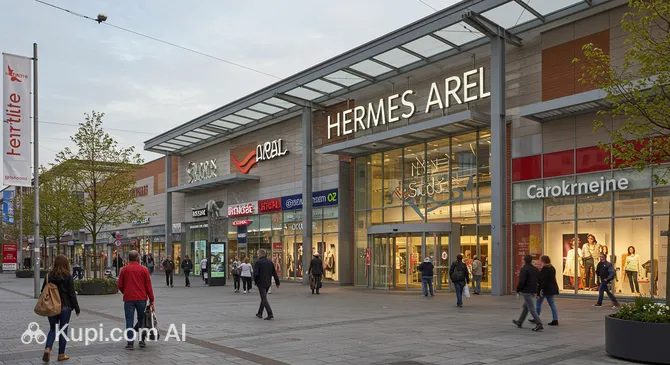
For those who prefer the format of shopping malls with many stores under one roof, it's worth visiting the Neustadt Centrum Halle or looking into the Hermes Areal. These complexes feature both popular European brands and specialized departments, and food courts allow for a snack between purchases.
Neustadt Centrum Halle. Illustration.
Source: Kupi.com AI
Traveler photos:
If you are looking for authentic souvenirs, pay attention to salt products made in the local salt museum or souvenirs with Handel symbolism. Regular farmers' markets in the squares are a great place to buy fresh regional delicacies. Shops usually operate from 10:00 to 20:00; Sunday in Germany is a traditional day off. Cards are accepted almost everywhere, but a small amount of cash (euros) is worth having for small shops and markets.