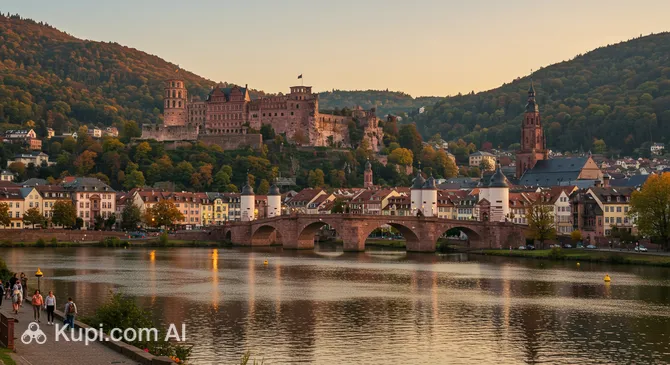
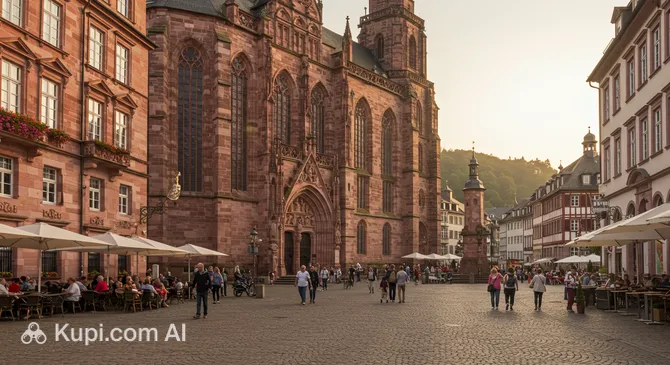
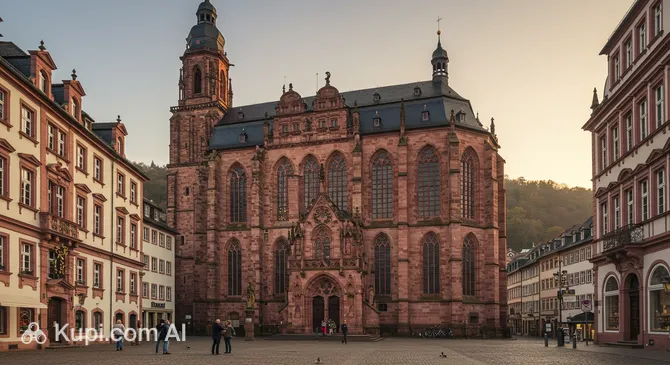
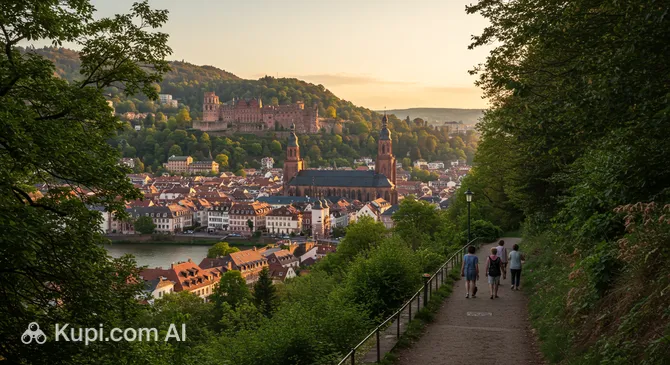
Heidelberg is a city where history comes alive at every step, creating a unique atmosphere of romance and comfort. Nestled in the picturesque Neckar River valley in southwestern Germany, in the state of Baden-Württemberg, it attracts travelers from all over the world with the charm of its ancient streets and majestic landscapes.
Heidelberg. Illustration.
Source: Kupi.com AI
Among Heidelberg's main treasures is the famous Heidelberg Castle, whose impressive ruins tower over the city, offering panoramic views of the river and the tiled roofs of the Old Town (Altstadt). Equally famous is the Old Bridge (Karl Theodor Bridge), elegantly spanning the Neckar and serving as one of the city's symbols. Heidelberg is also home to one of Europe's oldest and most prestigious universities—Heidelberg University, founded in 1386—which gives the city a special intellectual and youthful energy.
With a population of about 160,000 people, Heidelberg manages to combine the dynamism of a university center with the tranquility of a historic site. A stroll along the Philosopher's Walk, offering magnificent views of the castle and the city, or an exploration of the narrow alleys of the Altstadt will leave an unforgettable impression. Heidelberg is a place where everyone will find something for the soul, whether it's immersing themselves in history, enjoying nature, or experiencing a vibrant culture.
The weather in Heidelberg is generally comfortable for travel throughout most of the year. Summers are warm, with peak temperatures in July and August when the average high reaches 25-26°C. Winters are usually mild; for example, in January, the average temperature is about 3.2°C, with a minimum around 1.0°C.
Expect a warm summer with occasional, but usually not heavy, rain (averaging 2 mm of precipitation and 11-12 rainy days per month), and cool winters when precipitation is more frequent (up to 17 rainy days in December or January), but also in small amounts (2-3 mm). For a more detailed forecast and monthly weather information, you can check the Heidelberg Climate section.
Average monthly temperature
Average monthly precipitation
Interesting Facts
In addition to its world-famous landmarks, Heidelberg hides many amazing stories and little-known facts that make it even more attractive to curious travelers. Here are just a few of them:
A Massive Wine Vat: In the cellars of Heidelberg Castle lies one of the largest wine vats in the world—the Heidelberg Tun (Heidelberger Fass). Built in 1751 by Elector Karl Theodor, it could hold about 220,000 liters of wine! Although it is now mainly a tourist attraction, its size and history are truly staggering.
The University "Prison" for Students: From the end of the 18th century until 1914, Heidelberg had a Student Jail (Studentenkarzer). Students could be sent here for a few days for minor offenses such as rowdy behavior at night, drunkenness, or dueling. The "prisoners" passed the time by leaving numerous drawings and inscriptions on the walls, which have been preserved to this day, turning the site into a unique monument of student life.
The Cradle of "Heidelberg Man": It was in the vicinity of Heidelberg, in the village of Mauer, that the jaw of the so-called "Heidelberg Man" (Homo heidelbergensis) was found in 1907. This find became one of the most important pieces of evidence of early human presence in Europe; the fossil's age is estimated at approximately 600,000 years.
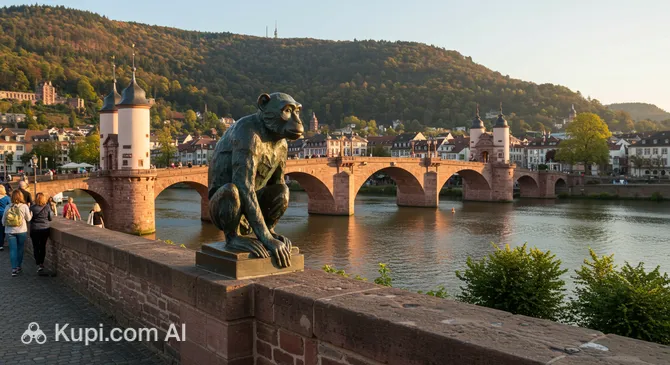
The Mysterious Bridge Monkey: On the Old Bridge (Karl Theodor Bridge), travelers are greeted by a bronze sculpture of the Bridge Monkey holding a mirror. Legend has it that if you rub the mirror, you will definitely return to Heidelberg, and touching the monkey's fingers promises wealth. Small mice sit near the monkey—it is believed that stroking them brings good luck in business.
Bridge Monkey. Illustration.
Source: Kupi.com AI
Traveler photos:
How to Get There
Getting to Heidelberg is easy via several convenient methods, the main ones being flights to nearby major airports followed by a transfer, as well as traveling by rail. The city has excellent transport links with the rest of Germany and Europe.
By Air:
Heidelberg does not have its own airport, but there are several international air hubs nearby from which the city is easily accessible.
The primary and most preferred option for most travelers is Frankfurt Airport (FRA), located in Frankfurt am Main. It is one of Europe's largest aviation hubs, situated about 72 km from Heidelberg. A trip by car or taxi from here to Heidelberg takes approximately 2 hours and 10 minutes. There are also direct trains and buses connecting the airport to Heidelberg.
Another major international airport is Stuttgart Airport (STR), located in Stuttgart, about 88 km southeast of Heidelberg. The journey from here to Heidelberg by car or taxi takes about 2 hours and 30 minutes. This airport also offers good international and domestic flights.
It is also worth considering the regional Baden Airpark (FKB), located near Karlsruhe, about 81 km from Heidelberg. It serves a number of European destinations, including flights by budget airlines. The trip to Heidelberg from here takes approximately 2 hours and 20 minutes.
For convenience, here is summary information on the main airports used to reach Heidelberg:
Heidelberg is perfectly connected by rail to other cities in Germany and Europe. The city itself has a main station, Heidelberg Hauptbahnhof, which serves many regional and some long-distance trains. However, for many international and high-speed routes, it is more convenient to use the larger hub stations in neighboring cities.
The key station is Mannheim Hauptbahnhof (MHJ), located in the neighboring city of Mannheim, just 17 km from Heidelberg. This is a major railway hub with very high passenger traffic, from which you can reach the center of Heidelberg by regional train (S-Bahn) or tram in just 15-25 minutes. Most high-speed ICE (InterCity Express) trains stop here, providing excellent connections to Frankfurt, Stuttgart, Cologne, Munich, and other major cities.
Karlsruhe Hauptbahnhof (KJR), located in Karlsruhe about 49 km south of Heidelberg, can also be a convenient alternative. It is also a significant transport hub with regular trains to Heidelberg. The journey takes about 30-40 minutes.
Main railway stations that may be convenient for a trip to Heidelberg:
In addition to air and rail links, Heidelberg is easily accessible by car via the extensive network of German autobahns (e.g., A5 and A656). Long-distance buses (e.g., FlixBus) are also popular, offering budget travel options from many cities in Germany and neighboring countries, arriving at the bus station located next to Heidelberg's main railway station.
Main Attractions
Heidelberg is a city where every corner breathes history and romance. There are many amazing places here that can enchant any traveler. Here are just a few of the main attractions you should definitely include in your itinerary:
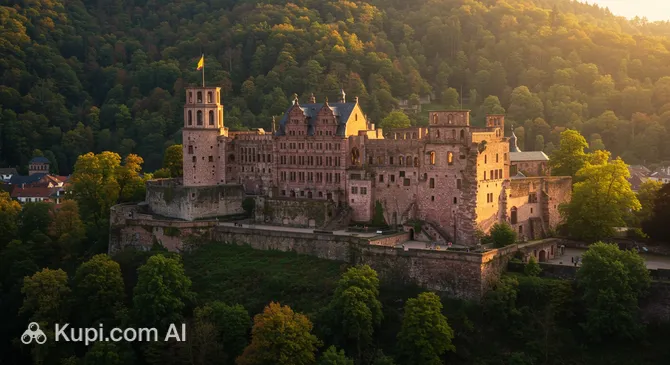
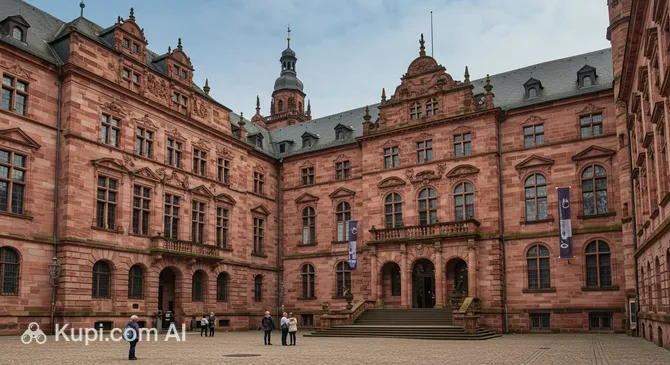
The symbol of the city is undoubtedly the majestic Heidelberg Castle (Heidelberger Schloss). These impressive ruins, combining Gothic and Renaissance elements, tower proudly on the slope of the Königstuhl hill, offering breathtaking panoramic views of the Old Town and the Neckar valley. The castle is interesting not only for its rich history as the residence of the Electors of the Palatinate but also for the unique sites within its grounds, such as the famous Heidelberg Tun—one of the largest wine vats in the world—and the German Pharmacy Museum.
Heidelberg Castle. Illustration.
Source: Kupi.com AI
Traveler photos:
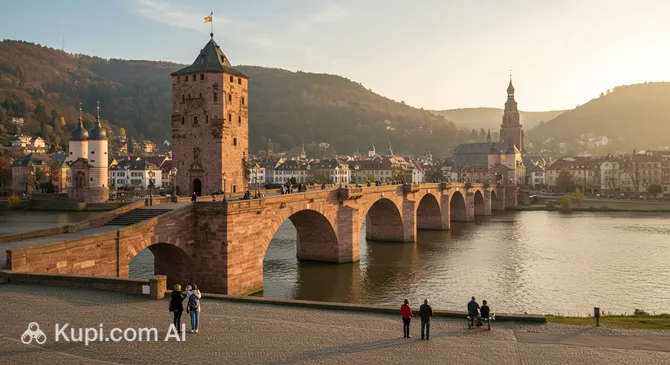
No less iconic is the Old Bridge (Alte Brücke), officially known as the Karl Theodor Bridge. This elegant stone bridge crossing the Neckar is adorned with medieval gates and sculptures, including the famous Bridge Monkey. Walking across the bridge is an opportunity to enjoy classic views of the castle and the embankment, take unforgettable photos, and feel the atmosphere of old Heidelberg.
Old Bridge Heidelberg. Illustration.
Source: Kupi.com AI
Traveler photos:
The heart of the Old Town (Altstadt) is the Market Square (Marktplatz). This lively historic space is surrounded by beautiful old buildings, including the Town Hall (Rathaus) and the Hercules Fountain. For centuries, the square has been the center of the city's social and commercial life. Today, it is a pleasant place to sit in one of the many cafes, watch the city bustle, or visit local markets and festive events often held here.
Heidelberg Market Square. Illustration.
Source: Kupi.com AI
Traveler photos:
Dominating the Market Square is the impressive Church of the Holy Spirit (Heiliggeistkirche). This Gothic church is one of the most famous and significant in Heidelberg. Its high tower is visible from afar and serves as an excellent landmark. Tourists are attracted not only by its architecture and interior but also by the opportunity to climb the tower's observation deck, which offers a magnificent view of the Altstadt's tiled roofs, the castle, and the Neckar River. The church is also known for its unusual history, including the fact that it once housed the famous Bibliotheca Palatina.
Church of the Holy Spirit. Illustration.
Source: Kupi.com AI
Traveler photos:
For those seeking inspiration and peace, a walk along the Philosopher's Walk (Philosophenweg) is a must. This picturesque path, running along the slope of the Heiligenberg mountain on the opposite bank of the Neckar from the castle, offers some of the best views of Heidelberg Castle, the Old Bridge, and the entire Old Town. It got its name because professors and students of Heidelberg University loved to walk here, reflecting and engaging in philosophical conversations. It is an ideal place for a leisurely stroll and for enjoying the beauty of the city from above.
Philosophers' Way. Illustration.
Source: Kupi.com AI
Traveler photos:
Local Cuisine
Heidelberg's cuisine is an appetizing blend of the hearty traditions of the Baden-Württemberg region and fresh influences brought by the lively university atmosphere. Here, you can enjoy classic German dishes prepared with heart and attention to local products. Be sure to try Maultaschen—large dumplings with various fillings, often served in broth or pan-fried. Another iconic dish is Spätzle, especially the Käsespätzle version with cheese and fried onions, which will warm and satisfy even the hungriest traveler.
A gastronomic journey through Heidelberg would be incomplete without tasting the local drinks. The Baden region is famous for its wines, so don't miss the chance to try a glass of local Riesling or Pinot Noir (Spätburgunder). Beer lovers will appreciate the products of local breweries, such as the traditional "Heidelberger Export". Popular non-alcoholic drinks include "Apfelschorle" (apple juice mixed with sparkling mineral water) and various fruit schorles, which are great for quenching thirst.
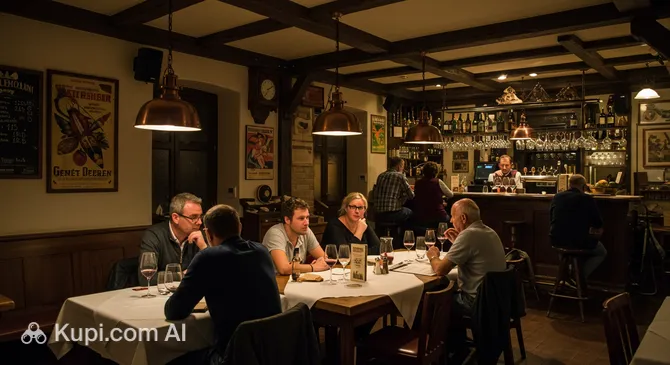
The food culture in Heidelberg is diverse. Locals and tourists alike love to gather in traditional German restaurant-pubs (Gasthaus) and cozy wine cellars (Weinstube), where you can enjoy authentic dishes in a colorful setting. One such place where you can immerse yourself in the atmosphere of the old town and enjoy local cuisine is the Schnitzelbank Wine Tavern. It is also worth visiting the Market Square, especially on market days, where you can find fresh produce and local delicacies, while numerous surrounding cafes offer a place to relax over a cup of coffee.
Schnitzelbank Wine Tavern. Illustration.
Source: Kupi.com AI
Traveler photos:
Other dishes to try in Heidelberg include Flammkuchen, a thin open pie similar to pizza topped with sour cream, onions, and bacon, as well as various hearty meat dishes, including sausages and stews. The city's gastronomic scene is a harmonious blend of centuries-old traditions and modern trends, offering options for every taste and budget—from inexpensive student cafes to fine dining restaurants. The main focus here is on quality, heartiness, and the unique taste of regional cuisine.
Travel Tips
Planning a trip to charming Heidelberg? To ensure your journey goes smoothly and leaves only the most pleasant impressions, we have prepared a few practical tips. They will help you navigate the city better and enjoy every moment of your stay in this corner of Germany.
Clothing and Essentials: The climate in Heidelberg is temperate. In summer, bring light clothing, but don't forget a sweater or a light jacket for the evenings. In spring and autumn, layered clothing and an umbrella will come in handy. In winter, bring a warm jacket, hat, and gloves. The key point is comfortable shoes! You will be walking a lot on the cobblestones of the Old Town and possibly climbing to the castle or up the Philosopher's Walk. Don't forget a power adapter (type F). When visiting churches, such as the Church of the Holy Spirit, modest clothing is expected.
City Transport: The historic center of Heidelberg is best explored on foot. However, the city also has an excellent public transport system, including buses and trams (operated by RNV). Tickets can be purchased at vending machines at stops or from the driver. Taxis are available, and apps like Free Now also work. Renting a car for getting around the city itself is not necessary and can cause parking problems, but it will be useful if you plan trips to the surrounding area.
Finances: The official currency is the Euro (€). Bank cards (Visa, Mastercard) are accepted in most hotels, restaurants, and large stores. However, it is always useful to have some cash with you for small cafes, markets, or souvenir shops. ATMs (Geldautomat) are easy to find throughout the city. An approximate daily budget per person (excluding accommodation) can be 70-100 euros. Tipping in restaurants is usually 5-10% of the bill if you liked the service; it is often customary to just round the amount up.
Health and Safety:Heidelberg is a very safe city. Pharmacies (Apotheke) are marked with a red letter "A"; information about duty pharmacies (Notdienst Apotheke) can be found on the doors of any pharmacy or online. In case of a medical emergency, call 112. Standard precautions, such as keeping an eye on personal belongings in crowded places, are always relevant. The Old Town and popular tourist routes are safe for walking even in the evening.
Communication: The official language is German. However, in the tourism sector, hotels, and among young people, English is widely spoken. Learning a few basic phrases in German, such as "Hallo" (Hello), "Danke" (Thank you), "Bitte" (Please/You're welcome), and "Sprechen Sie Englisch?" (Do you speak English?), will be a polite gesture. SIM cards from local operators can be purchased at mobile phone shops or supermarkets. Free Wi-Fi is available in many cafes, hotels, and some public areas.
Local Etiquette: When entering small shops or cafes, it is customary to say hello ("Hallo" or "Guten Tag"). Germans value punctuality. In public transport and public places, try not to speak too loudly. Using the informal "you" (Du) is common among young people, but with older strangers, it's better to use the formal "You" (Sie).
Things to Avoid: Try not to make noise in residential areas, especially in the evening and at night—Germans highly value peace and quiet. Also, avoid crossing the road on a red light (even if there are no cars)—this is frowned upon and can result in a fine.
Useful Life Hack: Consider purchasing the HeidelbergCARD. This card often includes free public transport, free admission, or discounts to many attractions, including Heidelberg Castle and the funicular ride. It can be a worthwhile investment, especially if you plan a busy cultural program.
We hope these tips help you plan the perfect trip to Heidelberg. Enjoy its unique atmosphere, historic treasures, and hospitality!
Entertainment & Nightlife
Heidelberg, known for its romantic castle and ancient university, transforms as evening falls, offering guests and residents a lively and diverse nightlife. Thanks to the large number of students, the atmosphere here is always young and dynamic, and the choice of entertainment can satisfy a wide range of tastes—from cozy gatherings to vibrant dancing until dawn.
The main center of Heidelberg's nightlife is undoubtedly the Old Town (Altstadt), and specifically, Untere Straße. This narrow cobbled street is often called "Germany's longest bar counter" because of the incredible concentration of bars, pubs, and small clubs located literally door-to-door. It is always noisy, fun, and crowded here, especially on Friday and Saturday evenings. The crowd is mainly students and young people, but you will also find tourists of all ages. The dress code in most establishments is casual—the main thing is to be comfortable.
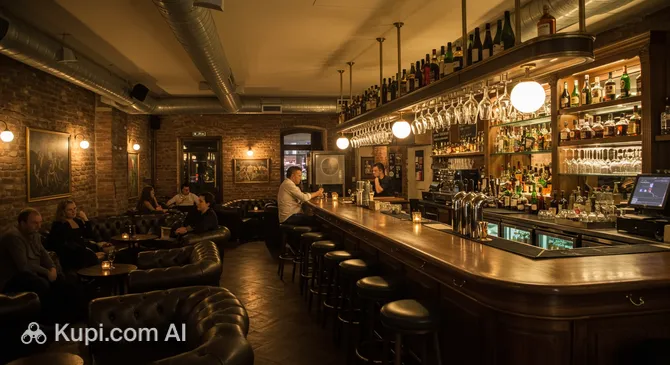
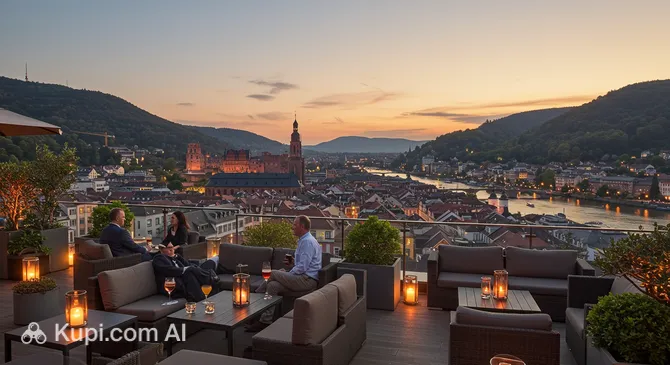
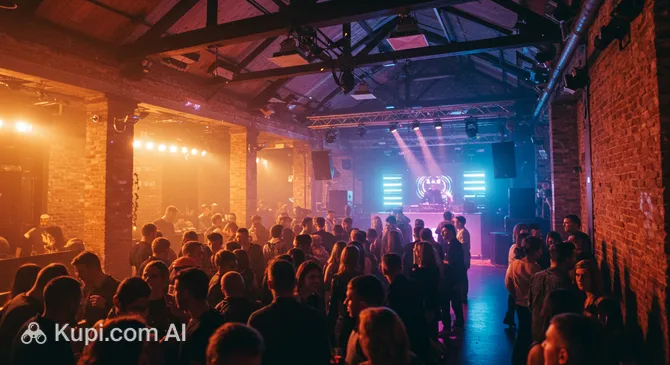
The choice of venues on Untere Straße and its surroundings is impressive: from traditional German pubs (Kneipen), where you can have a glass or two of local beer, to stylish cocktail bars with signature drinks and trendy clubs with diverse music. For example, lovers of a modern atmosphere and good cocktails can visit NEO Bar and Restaurant, while those who appreciate panoramic views and exquisite drinks will enjoy the Schilling Roofbar. For those looking for a more club-like atmosphere with concerts and parties, it is worth checking out the Karlstorbahnhof cultural center, located in a former railway station building, which offers a rich program of events. Most bars are open until late at night, and clubs stay open until early morning.
NEO Bar and Restaurant. Illustration.
Source: Kupi.com AI
Traveler photos:
Schilling Roofbar. Illustration.
Source: Kupi.com AI
Traveler photos:
Karlstorbahnhof. Illustration.
Source: Kupi.com AI
Traveler photos:
The best time to dive into Heidelberg's nightlife is, of course, the weekend, although many student-oriented venues offer special promotions and parties on weekdays as well. Average drink prices are quite moderate: a beer will cost around 3-5 euros, and cocktails start from 8 euros. You can get around the city at night using night buses that run on main routes, or by taxi. You can call a taxi by phone, via an app, or find one at designated taxi stands. Heidelberg is considered a safe city, and walking through the well-lit streets of the Old Town in the evening is quite comfortable; however, standard precautions are never out of place.
During the day, Heidelberg also offers plenty of interesting activities. In addition to visiting world-famous landmarks like the castle and the Old Bridge, you can visit numerous museums, such as the Palatinate Museum with its rich collection of regional history. For family vacations, amusement parks like Heidelberg Fairytale Paradise (Märchenparadies) are ideal, or simply pleasant walks along the Neckarwiese riverbank. The city's theaters and concert halls also offer a diverse cultural program.
Parks & Museums
Heidelberg is not only a city of majestic castles and ancient universities but also a place where you can enjoy the tranquility of green oases and immerse yourself in rich history through its many museums. The city offers a harmonious blend of natural beauty and cultural heritage, making it an ideal destination for curious travelers.
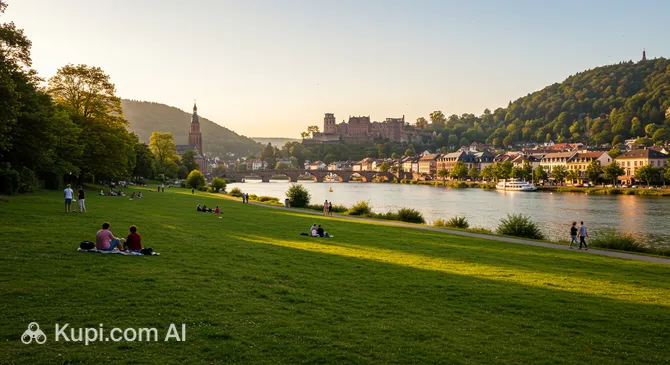
For those seeking solitude with nature or just wanting to take a break from the city bustle, Heidelberg offers several wonderful green zones. One of the most popular is the Neckarwiese—a spacious meadow on the banks of the Neckar River. It is a favorite spot for locals and tourists for picnics, sunbathing, active games, or just leisurely walks with a magnificent view of Heidelberg Castle and the Old Town. Various events and festivals are often held here.
Neckar Meadow. Illustration.
Source: Kupi.com AI
Traveler photos:
The famous Philosopher's Walk (Philosophenweg) should not be overlooked. Although mentioned earlier, its importance as a green space for contemplation and walking is invaluable. Climbing its slopes, you will not only enjoy the best panoramic views of the city but also follow in the footsteps of many thinkers and poets who drew inspiration here. Botany enthusiasts should visit the Heidelberg Botanical Garden, which belongs to the university. It features thousands of plant species from around the world and is a wonderful place for an educational and relaxing walk.
Heidelberg Botanical Garden. Illustration.
Source: Kupi.com AI
Traveler photos:
Heidelberg's cultural heritage is carefully preserved in its museums. A key one is the Palatinate Museum (Kurpfälzisches Museum). Located in the Baroque Morass Palace, it offers an extensive exhibition covering the history of the Palatinate region, archaeological finds (including a replica of the "Heidelberg Man" jaw), painting, and sculpture. It is an excellent place to gain a deeper understanding of the city's historical context.
Palatinate Museum. Illustration.
Source: Kupi.com AI
Traveler photos:
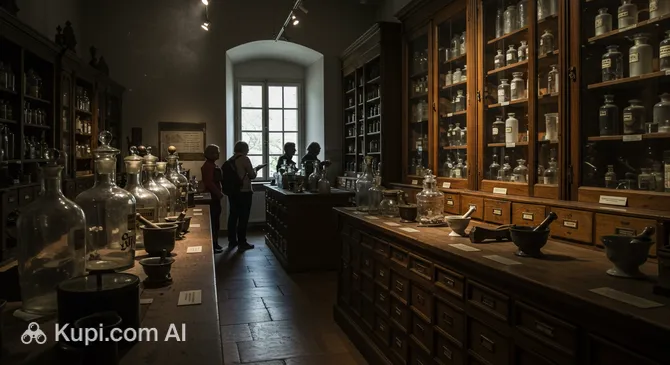
Unique and very popular is the German Pharmacy Museum (Deutsches Apotheken-Museum), located right on the grounds of Heidelberg Castle. Its exhibition tells the history of pharmacy from antiquity to the present day, demonstrating ancient pharmacy interiors, laboratory equipment, and medications. Another iconic and unusual site is the Student Jail (Studentenkarzer). This is a former university prison where students served sentences for minor offenses, leaving behind numerous drawings and inscriptions on the walls that have turned this place into a kind of historical monument to student freedom.
German Pharmacy Museum. Illustration.
Source: Kupi.com AI
Traveler photos:
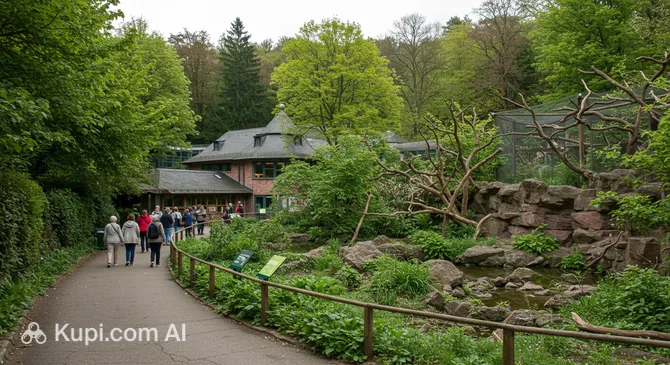
For families with children, the Heidelberg Zoo is a great leisure option, where you can see fauna from all over the world living in spacious enclosures. If you are looking for something less known but no less charming, pay attention to the gardens of Schwetzingen Palace, which house, among other wonders, a unique Mosque in the Palace Garden. Although the palace itself is located a bit away from Heidelberg, its magnificent 18th-century garden complex, including this exotic building, is well worth a visit if time permits. And for a full immersion in the city's atmosphere, don't be afraid to turn off the main tourist paths and explore the quiet alleys of the Altstadt—there you will find hidden courtyards and feel the true spirit of ancient Heidelberg.
Heidelberg Zoo. Illustration.
Source: Kupi.com AI
Traveler photos:
Getting Around
Getting around Heidelberg by public transport is quite convenient and efficient. The backbone of the city's transport system consists of trams and buses, which are operated by Rhein-Neckar-Verkehr GmbH (RNV). The route network is well-developed and covers both the city itself and its immediate surroundings within the Verkehrsverbund Rhein-Neckar (VRN) transport association.
Main modes of transport:
Trams (Straßenbahn): This is one of the most popular ways to get around Heidelberg. Tram lines connect key areas of the city, including the Old Town (Altstadt), the main railway station (Hauptbahnhof), and university campuses. Trams run frequently and on schedule.
Buses (Bus): The bus network complements the tram network, providing access to areas not reached by trams and linking the city with its suburbs. There are both daytime and nighttime bus routes.
S-Bahn (Suburban Railway): While the S-Bahn is more related to regional travel, some of its lines pass through Heidelberg (for example, the Heidelberg-Altstadt stop near the Old Town) and can be convenient for quick travel between certain parts of the city or for trips to neighboring towns like Mannheim.
Heidelberg's special feature – Funiculars (Bergbahnen): Historic funiculars are used to ascend to the famous Heidelberg Castle and further up the Königstuhl mountain. The lower section is a modern funicular that takes you from the Kornmarkt station in the Old Town to the castle and the Molkenkur station. From Molkenkur to the top of Königstuhl, an ancient funicular—one of the oldest operating in Germany—with original wooden carriages takes over. A funicular ride is not just a way to reach the sights, but an exciting adventure in itself with beautiful views.
Payment system and tickets:
The VRN tariff system applies in Heidelberg. The ticket price depends on the number of tariff zones crossed. For most tourist trips within the city, a ticket for the city zone (Preisstufe 2, Stadttarif Heidelberg) is sufficient.
Single tickets (Einzelfahrschein): Valid for one trip in one direction with the possibility of transfers.
Day tickets (Tageskarte): Cost-effective if you plan to make several trips during the day. There are options for one person and for groups of up to 5 people.
Weekly (Wochenkarte) and monthly (Monatskarte) passes: Suitable for longer stays.
HeidelbergCARD: A tourist card that, in addition to free admission or discounts on attractions, often includes free use of public transport in Heidelberg. This can be a very profitable option for active tourists.
Tickets can be purchased at vending machines at stops (accepting coins and, usually, cards), at RNV customer centers (e.g., at the main station), from bus drivers (usually only single tickets and with a small surcharge), and through mobile apps like the VRN-App or RNV-App, where you can not only buy a ticket but also plan your route.
Practical tips for tourists:
Ticket validation: Most tickets purchased at vending machines or ticket offices (except those that already have a date and time, such as those bought from a driver or via an app) must be validated before or immediately after boarding the vehicle in special devices (Entwerter). An unvalidated ticket is considered invalid, which can lead to a fine.
Opening hours: Public transport in Heidelberg runs regularly throughout the day, usually from early morning (around 5:00-6:00) until late at night (around midnight or 1:00 AM). There may be changes in the schedule on weekends and holidays. At night, night buses (Nachtbus) or trams run on major routes, but with longer intervals.
Route planning: Use the official RNV or VRN websites, as well as their mobile apps, to plan trips, view schedules, and get up-to-date transport information. Information displays at stops also show the arrival time of upcoming services.
Alternative ways to get around:
On foot: Heidelberg's historic center (Altstadt) is compact and ideal for walking. Many attractions are within walking distance of each other.
Bicycle: Heidelberg is a very cyclist-friendly city. There are many bike paths, and renting a bike (for example, through the VRNnextbike system) can be a great way to explore the city and its picturesque surroundings, including the banks of the Neckar.
Taxi: Taxis are available throughout the city and can be called by phone, via an app (e.g., Free Now), or found at designated taxi stands. This is a more expensive option, but convenient for nighttime trips or traveling with luggage.
Car sharing: Some car-sharing services are present in the city, which can be convenient for longer trips out of town.
Overall, Heidelberg's transport system is well-organized and allows tourists to easily and comfortably move around the city while getting to know its beauty.
Accommodation
In Heidelberg, you will find accommodation options for every taste and budget, from cozy guesthouses to elegant hotels, allowing every traveler to find the perfect place to rest in this charming city in Germany.
The choice of housing in Heidelberg is very diverse. Tourists can stay in budget hostels, offering both shared and private rooms, or choose traditional pensions (Pension) and guesthouses (Gasthaus), often family-run, where you can experience local hospitality. Mid-range hotels offering comfort and good service are widely represented, as are more luxurious hotels with a full range of services. For those who prefer more independence, apartments and flats for short-term rent are available.
The most popular area to stay is undoubtedly the Altstadt (Old Town). Staying here puts you in the heart of the historic center, just steps away from major attractions like Heidelberg Castle and the Old Bridge. However, keep in mind that prices here can be higher. The Bergheim district, located around the main railway station (Hauptbahnhof), is convenient for those planning to travel a lot around the region and offers a good selection of modern hotels. A quieter atmosphere can be found in the Neuenheim district, on the other side of the Neckar, with its beautiful villas and proximity to the Philosopher's Walk.
The price range for accommodation in Heidelberg varies from budget options to luxury offerings. You can book accommodation through popular online booking platforms (e.g., Booking.com, Expedia, Airbnb), or directly on hotel websites or by contacting them. Some small pensions and private apartments may only be available through local tourist offices or specialized German portals.
An important tip: if your trip to Heidelberg falls during the peak tourist season (usually from May to September, as well as during the Christmas markets) or during major events and festivals, it is strongly recommended to book accommodation in advance. This not only guarantees you a place but often allows you to get better prices and a wider choice of options.
Nearby Cities
For those who want to explore the surrounding area, Heidelberg serves as an excellent starting point for day trips to several interesting nearby locations:
City
Population
Distance
Eppelheim
15 359
3 km
Leimen
27 016
6 km
Plankstadt
10 321
6 km
Sandhausen
15 378
6 km
Dossenheim
12 515
6 km
These nearby destinations provide a glimpse into the diverse culture and landscapes of the region. Each of these towns has its own unique charm: for example, Schwetzingen is famous for its magnificent palace and garden ensemble, Hockenheim is known for the Hockenheimring racing circuit, while Leimen, Wiesloch, and Walldorf offer the cozy atmosphere of small German towns with their picturesque streets and local traditions.
Shopping & Souvenirs
Heidelberg offers a pleasant experience for shopping enthusiasts, combining the charm of historic streets with a variety of modern stores. The city is not famous for any unique industrial goods, but here you can find high-quality German products, fashionable clothing, books, and, of course, charming souvenirs. The main focus is on shops in the pedestrian zone, making the shopping process particularly enjoyable.
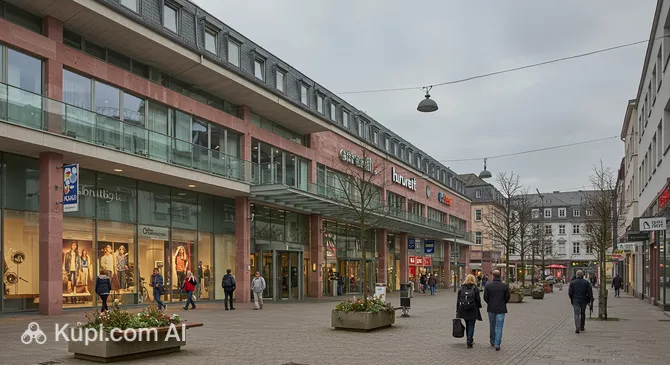
The main artery for shopping in Heidelberg is Hauptstraße—one of the longest pedestrian streets in Europe. It stretches through the entire Old Town (Altstadt), and a huge number of shops are concentrated here: from large department stores and well-known chain brands to small boutiques, bookstores, and souvenir shops. A walk along Hauptstraße is not just about shopping, but also an opportunity to enjoy the atmosphere of the ancient city. Another important commercial hub is Bismarckplatz, where large stores are also located and from which shopping streets radiate.
While Heidelberg is better known for its street-side shops, there are also several shopping centers. One notable one is the Darmstädter Hof Centrum, conveniently located in the city center near Bismarckplatz. It offers a good selection of clothing, electronics, and home goods stores. Outside the historic center, larger shopping complexes can also be found, such as Fashion Park, which focuses on outlet shopping.
Darmstädter Hof Centrum. Illustration.
Source: Kupi.com AI
Traveler photos:
Markets are an important part of Heidelberg's commercial life. Twice a week (usually Wednesdays and Saturdays), a lively farmers' market (Wochenmarkt) takes place in the Market Square (Marktplatz) in the Old Town, where you can buy fresh local produce, flowers, cheeses, and other delicacies. This is a great place to feel the local flavor. Periodically, other themed fairs are held in the city, as well as flea markets (Flohmarkt), where you can find interesting vintage items and antiques.
As a memento of your trip to Heidelberg, it is worth bringing back something special. Popular choices include "Student’s Kisses" (Studentenkuss)—famous Heidelberg chocolate pralines that have become a symbol of the city. Items with symbols of Heidelberg Castle or the university, engravings with city views, high-quality stationery, and books are also good choices. Wine lovers can purchase a bottle of local Baden wine.
Most shops in Heidelberg are open from Monday to Saturday, approximately from 10:00 to 19:00 or 20:00. Large department stores and shops on Hauptstraße may have longer opening hours. On Saturdays, many shops close earlier, around 16:00 or 18:00. It is important to remember that almost all shops (except some souvenir shops and those at the station) are closed on Sundays. Cash (Euros) and bank cards (Visa, Mastercard) are widely accepted. In small shops or markets, cash may be preferred.
Tourists from non-European Union countries can take advantage of the VAT refund system (Tax-Free Shopping) when purchasing goods for a certain amount in participating stores. To do this, you must ask the seller for a special Tax-Free form and present it along with your purchases at customs when leaving the EU.