Support

Rostock (Hauptbahnhof)

About the Station

Rostock Hauptbahnhof
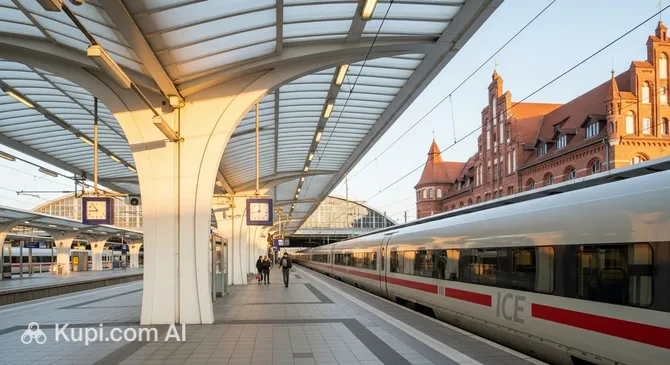
Rostock Hauptbahnhof. Source: Kupi.com AI
Rostock Central Station (Rostock Hauptbahnhof) is the largest railway hub in the federal state of Mecklenburg-Western Pomerania and an important transport gateway to the Baltic Sea coast. The station connects the city with direct routes to Berlin, Hamburg, and other major German centres, while also providing convenient connections to the resort district of Warnemünde and the ferry terminal. Following extensive reconstruction in the early 2000s, this location has been transformed into a modern, bright, and passenger-friendly complex.

CityRostock
CountryGermany
TypeRailway station

It is important for passengers to know that the station has a two-level structure, which is quite unusual for cities of this size. Platforms 1 and 2 (primarily for the S-Bahn city trains) are located on the underground level, while platforms for regional and long-distance trains (3 to 10) are situated on the upper level. Navigating inside is easy thanks to a clear signage system; the main exits lead to the north (towards the city centre) and to the south (towards residential areas).

Contact Information

To plan your journey and receive up-to-date information, please use the following station contact details:

  • Official Website: www.bahnhof.de (Rostock Hbf section)
  • Address: Konrad-Adenauer-Platz 1, 18055 Rostock, Germany
  • DB Information Phone: +49 30 2970 (available 24/7, call costs vary by operator)
  • Station Opening Hours: The building is open round the clock, however, individual services and shops have their own schedules.
  • Travel Centre (DB Reisezentrum): Usually open from early morning until evening (Mon-Fri from 06:00 to 21:00, Sat-Sun from 08:00 to 18:00).
  • Luggage Storage: Automated lockers are available 24/7.
  • Accessibility: The station is fully equipped for passengers with reduced mobility (elevators, ramps, tactile lines); assistance can be requested via the Mobilitätsservice.

Getting There

Getting to Rostock Central Station is very simple, as it serves as the heart of the city's transport system.

Public Transport: Tram (Straßenbahn) and bus stops are located directly beneath and in front of the station. Tram lines 1, 2, 5, and 6 connect the station to almost all districts of the city. A tram ride from the central square, Neuer Markt, takes just about 5–7 minutes.

City Train (S-Bahn): Lines S1, S2, and S3 connect the station with the Warnemünde district (about 20 minutes travel time) and the port. This is the fastest way to reach the sea.

Taxi and Car: Taxi stands are located at the north (main) and south exits. A trip from the city centre will cost approximately 10–15 Euros. Parking lots and short-term stopping zones (Kiss & Ride) are provided for private vehicles.

On Foot: You can walk to the station from Rostock's historic centre (for example, from the Steintor gate) in 15–20 minutes. The route is direct and passes through lively streets.

Services and Amenities

Rostock Central Station offers a wide range of services to ensure a comfortable wait and preparation for your journey.

The building houses the DB Reisezentrum (Travel Centre), where you can purchase tickets and receive advice from staff. For quick ticket purchases, red DB machines are installed throughout the station; they operate around the clock and support multiple languages. Free Wi-Fi (network WIFI@DB) is available throughout the premises.

For luggage storage, automated lockers (Schließfächer) of various sizes are provided in the main tunnel. The station also features clean paid toilets, ATMs, a police station, and the Bahnhofsmission service, which provides assistance to travellers in difficult situations. Elevators to all platforms are available for citizens with reduced mobility.

Dining

At Rostock Station, you certainly won't go hungry, as there are plenty of places for a snack before your journey.

In the main hall and passageways, there are bakeries (such as Le Crobag or local chains) where you can buy fresh pastries, sandwiches, and coffee. This is an excellent option for a quick breakfast, with an average bill of 5–8 Euros. For fast food lovers, a quick-service restaurant (usually McDonald's) is available and stays open until late at night.

If you need to buy groceries for the road, there is a supermarket at the station (often Edeka or Spar brand) that works late and on weekends, which is a significant advantage in Germany. There, you can purchase water, fresh fruits, and snacks at standard city prices.

Station History

The history of railway transport in Rostock began in the mid-19th century, but the Central Station in its current status was formed later. Initially, from 1886, the Lloyd-Bahnhof operated here, serving trains to Berlin. In 1896, it was combined with other stations into a central hub.

During the Second World War, the building suffered serious damage from bombing but was restored during the GDR era, becoming a key transport hub for East Germany. A key stage in the station's modern history was the massive reconstruction between 1999–2003. During these works, the historic building was integrated with new architectural elements, underground tunnels for trams were built, and the station itself was brought up to the highest European standards.

Travel Tips

To ensure your trip through Rostock goes smoothly, make use of these practical tips:

Arrival Time: The station is not huge, but it is quite busy. Arrive 15–20 minutes before your train departs to calmly find the correct platform, especially if you need to descend to the underground level for the S-Bahn.

Tickets and Validation: If you buy a ticket for regional transport or the S-Bahn from a machine and it does not have a date/time printed on it, do not forget to validate it in the special validators on the platform before boarding. Fines for travelling without a valid ticket in Germany are strict.

Transfers: Transferring between platforms is done via tunnels. There are elevators everywhere, so changing trains with heavy luggage will not be difficult. If you are transferring to a ferry, look for S-Bahn trains heading towards Warnemünde.

Safety: The station is considered safe, but as in any crowded place, keep an eye on your belongings. The building is patrolled at night, but it is best to wait for your train in well-lit areas or 24-hour cafes.

Reached the end of the page?

That means the route is fully explored