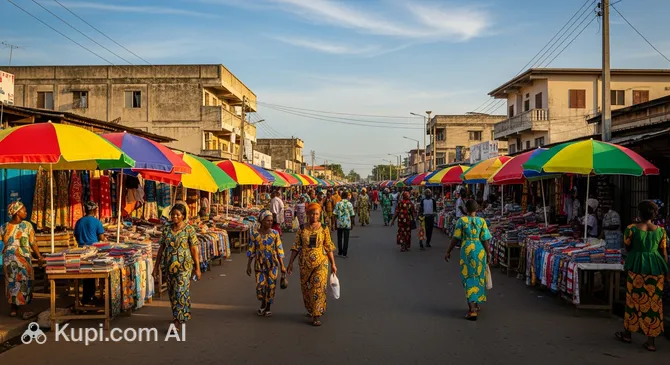
Ashaiman is a dynamic and densely populated city in Ghana, located in the Greater Accra Region. Situated just 30 kilometers northeast of the capital, it serves as an important residential and commercial hub, closely linked to the industrial port of Tema. With a population of over 200,000, the city is a true "melting pot" of cultures, where representatives of many ethnic groups, from the Ga-Adangbe to the Ashanti, coexist harmoniously.
Founded in the 17th century as a modest farming settlement, modern Ashaiman grew significantly in the 1960s, becoming home to thousands of people displaced during the construction of the Tema Port. You can learn more about the stages of its development in the section on the city's history. Today, it is a place bursting with the energy of markets, the sounds of highlife music, and the unmistakable atmosphere of an African metropolis.
Ashaiman. Illustration.
Source: Kupi.com AI
While the city is not a classic tourist center, it attracts travelers with its authenticity. Here, you can witness real everyday life in Ghana: from lively football matches on local fields to colorful neighborhoods with unusual names like "Lebanon." Ashaiman is a destination for those who want to go beyond the usual routes and feel the genuine rhythm of life in West Africa.
Weather Overview
The climate in Ashaiman is typical of coastal Ghana: a perpetual tropical summer prevails here. The year is clearly divided into two main periods. From November to March, the dry season lasts, characterized by high temperatures (up to +33°C during the day) and the influence of the harmattan wind, which can bring dust from the Sahara. This time is considered the sunniest and most predictable for travel.
The rainy season usually begins in April and continues until October. During this period, intense downpours are possible, which sometimes lead to localized flooding due to the terrain. Detailed monthly data can be found in the section on weather in Ashaiman. June is traditionally the wettest month, when air humidity reaches its peak values.
Despite the seasonality, air temperatures remain consistently high year-round, rarely dropping below +23°C at night. Average annual values range between +27–30°C. Travelers are advised to always carry sunscreen and drinking water, and a light raincoat during the rainy season, as precipitation can start suddenly.
Average monthly temperature
Average monthly precipitation
Interesting Facts
Ashaiman is a city with a distinctive culture and an interesting destiny. Here are a few facts to help you get to know it better:
Origin of the name: The word "Ashaiman" in the Ga language means "Ashai's town." The city was named after Ashai, the third son of the founding family from Tema.
Fishing roots: The founder of the settlement in the 17th century is considered to be the fisherman Nii Tetteh Amui I. He decided to take up farming on these lands when the ocean catches became too meager.
Geography in names: Many of the city's suburbs bear the names of foreign countries and biblical places. For instance, there is a district called Lebanon, named by peacekeepers and returnees from abroad.
Multicultural hub: Due to its location, the city has become home to representatives of almost all ethnic groups in Ghana, making it one of the most diverse places in the Greater Accra Region.
Rapid growth:Ashaiman only received the status of a separate municipality in 2008, transforming from a small suburb into an independent economic center.
How to Get There
Ashaiman is conveniently located at the intersection of transport routes between the capital and the country's main port, ensuring good accessibility. The main artery connecting the city to the outside world is the N1 highway. The journey from Accra by car or taxi takes between 45 and 90 minutes, though it is worth considering that heavy traffic jams often occur during morning and evening rush hours.
For those planning a trip, detailed information can be found on the page how to get to Ashaiman. The city does not have its own airport, so travelers use Kotoka International Airport in Accra, which is the main air gateway to Ghana. From the airport, you can reach the city by taxi or by combining public transport options.
There is no direct rail service within the city itself. The nearest stations are in the neighboring city of Tema, from where Ashaiman can be reached quickly by taxi or motorized rickshaw in 15–20 minutes. Most locals and tourists prefer using tro-tros (minibuses), which run with high frequency.
Station
Passenger traffic
Distance
1
25 km
Kojokrom Train Station
1
204 km
Main Attractions
Ashaiman is not a city of classic historical monuments; however, it offers a unique experience of immersion into the contemporary urban culture of Ghana. The main "attraction" here is the atmosphere of endless movement and trade. The city's central markets are the heart of its life, where within a labyrinth of stalls you can find everything from fresh tropical fruits to vibrant African textiles.
An interesting feature of the city is its administrative division into districts with "foreign" names. For example, the Lebanon quarter is considered one of the oldest migrant neighborhoods, preserving a special community spirit. A walk through such places allows you to see how the traditions of various ethnic groups intertwine, bringing their customs to the city's character.
For those interested in sports, a visit to the local football fields is a must. Ashaiman is famous as a forge of talent, and evening matches draw hundreds of emotional fans. This is a great opportunity to meet locals and see how vital football is to the region's cultural identity.
Local Cuisine
The cuisine of Ashaiman is a vibrant palette of flavors from all over Ghana, gathered in one place. Thanks to the ethnic diversity, you can try authentic dishes from different ethnic groups here. One of the main hits is banku (sour corn dough), served with fried tilapia and spicy shito sauce. It is also worth trying jollof rice—a spicy rice dish with tomatoes and seasonings, which is prepared here with special passion.
Street food is an integral part of the gastronomic experience. On every corner, you can find vendors selling kelewele (fried plantains with ginger and pepper) or kenkey—fermented corn dough that is excellent for satisfying hunger. The proximity to Tema Port guarantees the freshness of seafood, so fish dishes are deservedly popular here.
For drinks, be sure to try bissap (a refreshing infusion of hibiscus flowers) or pito—a traditional local beer made from millet. Fans of the exotic may appreciate fresh palm wine. It is best to dine in "chop bars"—small local eateries where the food is always fresh and the atmosphere is as friendly and simple as possible.
Travel Tips
A trip to Ashaiman will provide you with many vivid impressions if you prepare in advance for the peculiarities of the local pace of life. These practical tips will help you feel confident and safe.
Clothing and Essentials: Choose light clothing made from natural fabrics (cotton, linen), as the city is almost always hot and humid. Be sure to bring comfortable closed-toe shoes for walking through markets and a power adapter (Ghana uses British Type G plugs).
Transport: To move around the city and for trips to Tema, it is best to use the Uber or Bolt apps—this will ensure a fixed price and comfort. If you decide to take a tro-tro, prepare small change in advance.
Finance: The main currency is the Ghanaian cedi (GHS). Cards are rarely accepted, so always carry cash. It is best to exchange currency at official Forex bureaus in Accra or Tema.
Health: A yellow fever vaccination certificate is mandatory for entry into the country. Drink only bottled water and use repellents, especially in the evening.
Safety: Ashaiman is a densely populated city. Avoid walking alone after dark in poorly lit areas and do not display valuables (expensive phones, jewelry) in crowded markets.
Etiquette: Ghanaians are very friendly and value politeness. Always greet people first, especially elders. Use only your right hand for greetings and for handing over money.
What to Avoid: Do not photograph people, their homes, or government buildings without explicit permission—this can cause resentment or problems with security.
Connectivity: Buy a local SIM card (e.g., MTN) immediately upon arrival at Accra Airport. Mobile internet here is stable and inexpensive, which will help you use navigation.
Be open to communication, respect local traditions, and Ashaiman will reveal itself to you as one of the most hospitable places in the region.
Entertainment & Nightlife
Entertainment in Ashaiman is inextricably linked with music and sports. The city is considered a real incubator for musical talent, especially in the highlife and hip-hop genres. In the evening, the streets come alive with rhythms wafting from bars, and live performances by local bands are often found in open spaces. The nightlife here is quite simple, centered in small bars and "spots" (grill bars) along the main roads, where a relaxed and friendly atmosphere prevails.
The center of daytime activity is the football fields. Matches between local teams are not just sports, but large-scale social events that unite the entire city. If you are looking for more traditional cultural venues, such as large theaters or cinemas, locals usually head to neighboring Tema or Accra, which are no more than an hour's drive away.
For family leisure in the evening, the market squares are perfect as they transform into gathering spots with street food and music. However, it should be noted that most activity in the city quietens down after 10:00 PM. For safe travel after dark, it is recommended to use taxis called via official apps, as public transport runs much less frequently toward midnight.
Parks & Museums
In Ashaiman, there are practically no museums in the conventional sense, as it is a young and rapidly developing suburb. The city's cultural heritage lives not within the walls of buildings, but on its streets and market squares. However, for those who want to get acquainted with the region's history, the ideal solution is a trip to Accra, where the National Museum of Ghana is located, offering extensive collections of artifacts and artworks.
Green zones are limited due to Ashaiman's dense urban development. The role of parks is often played by the open spaces near local markets and football fields, which become centers of recreation in the evening. These are places where people gather to socialize, relax, and play sports, creating a living social ecosystem.
For those seeking full-fledged gardens or nature parks, locals recommend heading to neighboring areas. Very close by, on the border with Tema, you can find more spacious recreation areas by the coast, while the Aburi Botanical Gardens in the hills are the best choice for those who miss thick tropical greenery and quiet.
Getting Around
The transport system of Ashaiman is primarily represented by private carriers that ensure high mobility for the population. The most popular and affordable way to get around is by tro-tro (minibuses). They connect the city with all districts of Greater Accra and Tema. The fare is very cheap (usually from 1 to 5 cedis within the city), but you should be prepared for crowded conditions and the lack of a fixed schedule—vehicles depart as they fill up.
For faster travel over short distances, locals often use okai (motorcycle taxis). This is a convenient way to bypass the traffic jams that can paralyze main streets during rush hours (from 7 to 9 AM and from 5 to 8 PM). However, tourists should exercise caution and always agree on the price before the ride starts.
If you prefer comfort, ride-hailing apps like Uber and Bolt work well in the city. This is the safest and most predictable option for traveling between Ashaiman, Tema, and Accra. Bicycle rentals are not developed here, and pedestrian areas are limited, so wheeled transport remains the main way to explore the surroundings.
Accommodation
The accommodation market in Ashaiman is primarily geared toward business travelers and those looking for budget options for a short stay. Small guesthouses and cozy mini-hotels offering a basic set of amenities predominate here. There are no luxury five-star hotels in the city itself, reflecting its status as a residential and commercial hub rather than a tourist resort.
Accommodation prices are very affordable, typically ranging from $20 to $50 per night. Most hotels are concentrated in the central part of the city, near the markets and main transport interchanges, which is convenient for those planning early trips to Tema or Accra. Due to high demand from employees of industrial enterprises on business trips, it is recommended to book accommodation in advance.
If you are accustomed to international service standards and swimming pools, you should consider accommodation options in neighboring Tema or in the center of Accra. Nevertheless, staying directly in Ashaiman provides a unique opportunity to experience local hospitality and the real way of life of a Ghanaian community.
Nearby Cities
Ashaiman is a convenient starting point for exploring the eastern part of the Greater Accra Region. Due to its location, the city allows quick access to key economic and cultural centers of the coast using the developed network of tro-tro minibuses or rented transport.
Just 8 kilometers away is Tema—the country's largest seaport. It is worth visiting to see the impressive industrial architecture, visit the fish market, or relax on the coastal beaches. For a richer cultural program, a trip to the capital, Accra, is ideal, where museums, contemporary art galleries, and lively shopping centers are concentrated.
Nature lovers should look toward the town of Aburi, located in the hills. It is famous for its magnificent botanical garden, where you can escape the heat in the shade of exotic trees. A trip there takes just under an hour and offers a completely different perspective on Ghana's landscapes.
Each of these destinations offers its own unique look at the country's life: from the bustle of the capital to the serene tranquility of mountain gardens, making Ashaiman a practical choice for a traveler's base camp.
Shopping & Souvenirs
Shopping in Ashaiman is, first and foremost, an experience of visiting bustling African markets. There are no huge air-conditioned shopping malls here, but there is the incredible energy of street trade. The main city market is a place where you can buy absolutely everything: from car parts to the freshest spices. Trade here is active, and the ability to haggle will be your main advantage—the initial price can always be lowered during a friendly dialogue.
Special attention should be paid to textiles. There are many shops in the city offering fabrics with traditional prints and ready-made clothing. If you want to bring a unique souvenir from Ashaiman, order a custom-made shirt or dress from local tailors—they are famous for their skill and speed. Craft products and local seasonings that convey the taste of Ghanaian cuisine are also popular.
Shops are usually open from early morning until sunset, and the most active trading in the markets takes place in the first half of the day. Payments are made primarily in cash using local cedi (GHS). While some large pharmacies or modern shops may accept cards, it is always worth having small bills with you for trips to the market.