Support

Piraeus

About

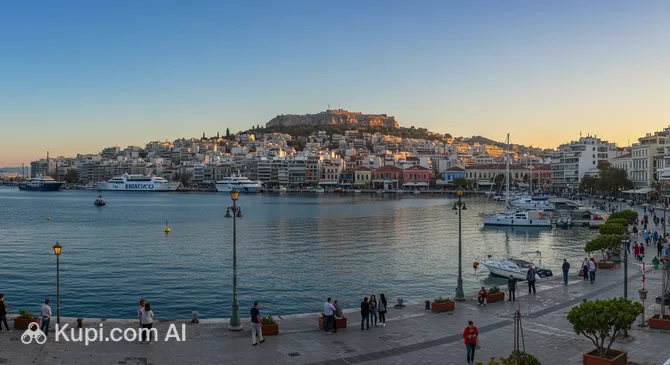
Piraeus is more than just a city; it is the true maritime gateway to Greece and one of the largest and most important ports in the Mediterranean. It boasts a rich history dating back to antiquity and a unique atmosphere of constant movement and maritime romance.

Located in the Attica region, right next to Athens, Piraeus is an independent and bustling city with a population of about 450,000 people. Its strategic position has made it the country's main maritime hub, connecting mainland Greece with the countless islands of the Aegean Sea.

Piraeus. Illustration.
Source: Kupi.com AI

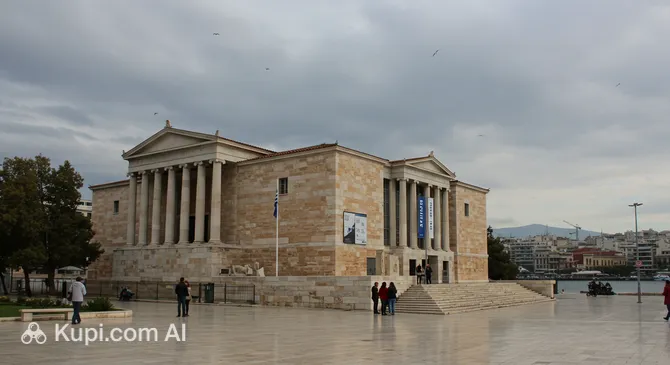
The heart of Piraeus is undoubtedly its massive port, where life hums around the clock. Ferries depart from here to picturesque islands, cruise liners arrive from all over the world, and active trade is conducted. In addition to the main port, it is worth visiting the charming smaller harbors, such as Mikrolimano and Pasalimani, known for their cozy taverns where you can taste the freshest seafood. History buffs will be interested in the Archaeological Museum of Piraeus, which houses ancient artifacts, and the Hellenic Maritime Museum, which tells the story of the city's glorious naval past.

Piraeus offers its guests an amazing blend of dynamic modern life and deep historical traditions. It is a place where you can feel the true spirit of a Mediterranean port city and embark on an unforgettable sea journey.

You can find more interesting facts on the history of Piraeus page.

Weather Overview

Piraeus is dominated by a pleasant Mediterranean climate, making the city attractive for visits at various times of the year. Preparing for your trip, expect a hot and very dry summer: in July and August, the average maximum air temperature reaches +32°C (for example, in July the average maximum is +32.6°C), and precipitation is practically non-existent (0 mm in July and August). Winters here are mild and wetter, with an average January temperature of about +9.1°C (minimum temperatures around +6.0°C) and about ten rainy days per month, although the total amount of precipitation remains low (about 2 mm). Spring and autumn are characterized by comfortable temperatures and moderate rainfall. For more detailed information by month, we recommend studying the Climate in Piraeus page.

Average monthly temperature

Average monthly precipitation

Interesting Facts

Beyond its bustling harbors and rich maritime history, Piraeus hides many surprising stories and facts that not everyone knows. Ready to take a look behind the scenes of this ancient port city?

  • An Ancient Island: Few people know that in deep antiquity, Piraeus was actually an island! Only over time, thanks to natural siltation and possibly human efforts, did it connect to the mainland part of Attica, becoming the peninsula we know today.

  • The Traveling Lion: The famous Piraeus Lion, which gave the Venetians the name "Porto Leone" (Lion Port), has a fascinating fate. The original 4th-century BC marble statue was taken to Venice in 1687 as a war trophy and still adorns the entrance to the Venetian Arsenal. In Piraeus, you can see its exact replica.

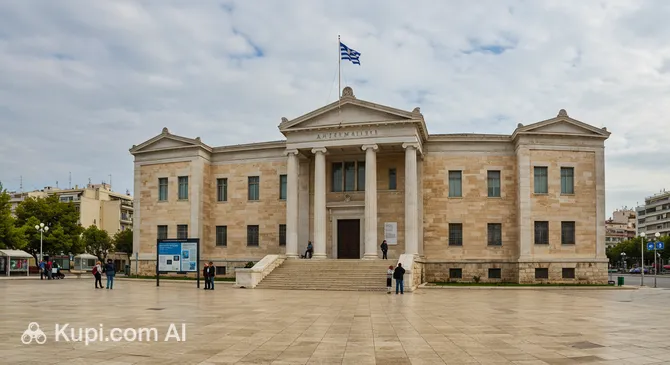
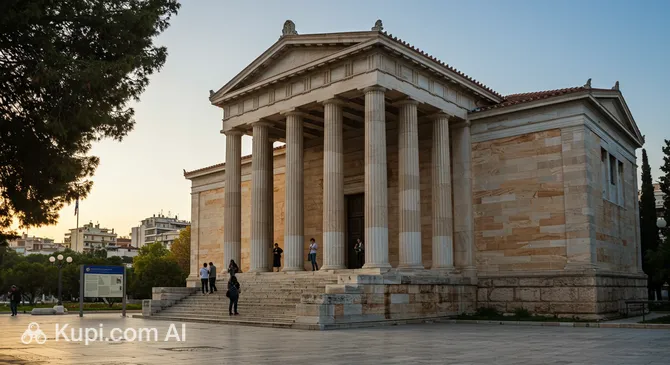
  • Treasures Underfoot: The Archaeological Museum of Piraeus houses unique bronze statues accidentally discovered in 1959 during roadworks. Among them are the famous archaic kouroi and a statue of Athena, which are considered masterpieces of ancient Greek art.

  • A "Telling" Name: The name "Piraeus" (Πειραιεύς) comes from an ancient Greek word meaning "place of passage" or "one who provides passage." This perfectly reflects its historical and modern role as a key transport hub.

Archaeological Museum of Piraeus. Illustration.
Source: Kupi.com AI

Traveler photos:

How to Get There

Piraeus is a key transportation hub for the region, so getting here is quite easy. For those planning their route, we have prepared detailed information on how to reach the city. You can find all the details by following the link: all ways to get to Piraeus.

Piraeus itself does not have its own airport, so the main air gateway for tourists is Athens International Airport Eleftherios Venizelos (IATA: ATH). It is the largest and busiest airport in Greece, receiving flights from all over the world. it is located approximately 26 km from the center of Piraeus.

Getting from Athens airport to Piraeus is very convenient and fast. A direct metro line (Blue line) and the 24-hour X96 express bus connect the terminal directly to the port and the city center. A trip by car or taxi will take about 60 minutes, depending on traffic. Other air harbors, such as Skiathos Airport or the airport in Volos, are located at a considerable distance (over 130 km) and are generally not used for direct travel to Piraeus.

For clarity, here is a summary of the main airports:

AirportPassenger trafficDistance
Eleftherios Venizelos International Airport31.9 mln26 km
Skyros Airport25 000135 km
Skiathos Airport552 844138 km
Milos Airport77 501157 km
Nea Anchialos120 000160 km

Regarding rail connections, Piraeus has excellent transport accessibility. The city's railway station is located right across from the main port. Suburban railway trains (Proastiakos) arrive here, providing direct links to the airport and other regions of the country, including the Peloponnese. The city is also the terminus for Line 1 (Green line) and an important hub for Line 3 (Blue line) of the Athens Metro, allowing you to reach central Athens in just 20–30 minutes.

Furthermore, Piraeus is the country's maritime gateway. A huge number of tourists arrive here by ferry from the Greek islands or on cruise ships. The city is also easily accessible by car via modern highways connecting it to Athens and the rest of mainland Greece.

Main Attractions

Piraeus, being one of the largest ports in the Mediterranean, offers tourists not only boat trips but also a rich cultural program. There are several iconic sites in the city that are definitely worth a visit to better understand its history and character.

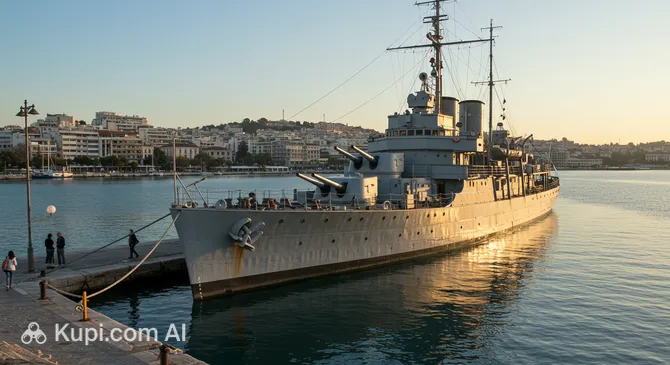
One of the most striking attractions is the legendary Museum Ship "Averof". This armored cruiser, launched in the early 20th century, served as the flagship of the Greek navy and participated in many historical naval battles. Today it has been converted into a museum where visitors can step on deck, look into the interior spaces, and touch the glorious naval past of Greece. It is a unique opportunity to feel like part of maritime history.

Museum Ship Averof. Illustration.
Source: Kupi.com AI

Traveler photos:

For those interested in ancient history, the Archaeological Museum of Piraeus is a must-see. Its collection is truly impressive, featuring artifacts found in Piraeus and its surroundings. Among the exhibits are the famous bronze statues of Apollo and Athena, as well as ceramics and everyday objects that tell the story of the ancient port city's life from Mycenaean times to the Roman era. A visit to the museum allows for a deeper understanding of the region's rich ancient heritage.

Continuing the maritime theme, one cannot overlook the Hellenic Maritime Museum. It is the oldest maritime museum in Greece, founded in 1949. Its exposition covers thousands of years of Greek naval history, from ancient triremes to modern ships. Visitors will see detailed ship models, antique navigation instruments, maps, seascapes, and relics related to the maritime exploits of the Greeks.

Hellenic Maritime Museum. Illustration.
Source: Kupi.com AI

Traveler photos:

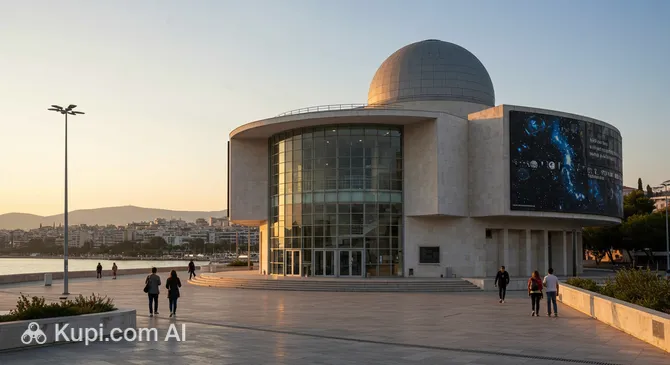
If you are traveling with children or are simply fascinated by space, the Eugenides Planetarium is an excellent choice. It is one of the largest and most technologically advanced planetariums in the world. Here you can watch breathtaking films about the universe on a huge dome, visit interactive exhibitions, and learn many new things about astronomy and science. It is an educational and exciting place for the whole family, offering a virtual journey to the stars.

Eugenides Planetarium. Illustration.
Source: Kupi.com AI

Traveler photos:

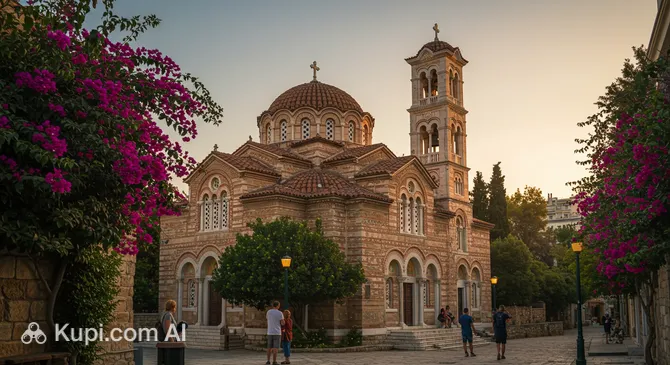
Not far from the port rises the majestic Orthodox Church of Saint Nicholas. Saint Nicholas the Wonderworker is the patron saint of sailors and travelers, so it is no surprise that the main church of the city, which is closely tied to the sea, is dedicated to him. The church impresses with its beautiful architecture, rich interior decoration with frescoes and icons, and is an important spiritual center for locals and visitors alike.

Saint Nicholas Orthodox Church. Illustration.
Source: Kupi.com AI

Traveler photos:

Local Cuisine

The gastronomic scene of Piraeus is inextricably linked to its status as the largest port in Greece. Here, a true feast of the freshest seafood prepared according to traditional recipes awaits you. The main highlight of the local cuisine is, undoubtedly, fish and seafood. Imagine: freshly caught red mullet, sea bream, or sea bass, masterfully grilled (psari skaras), tender squid (kalamarakia tiganita), juicy grilled octopus (htapodi scharas) or octopus stewed in wine—all this forms the basis of the Piraeus table.

In addition to the main fish dishes, be sure to try a variety of mezedes (Greek appetizers), which perfectly complement a glass of local wine or ouzo. These can include tzatziki (yogurt sauce with cucumber and garlic), taramasalata (cod roe paste), melitzanosalata (roasted eggplant salad), as well as olives, cheeses, and small portions of hot dishes. Of course, in Piraeus, as in all of Greece, you will also find classic dishes such as moussaka (eggplant casserole with minced meat and béchamel sauce) or souvlaki (small skewers). Don't forget the traditional Greek salad (horiatiki) with fresh vegetables, feta, and olive oil.

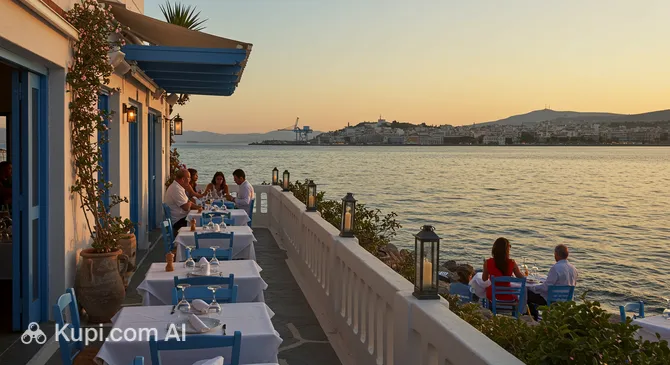
For drinks, it is certainly worth trying ouzo—an anise-flavored spirit that Greeks drink diluted with water or with ice, especially when paired with seafood. Retsina, a white wine with a characteristic resinous aftertaste, is also popular. Non-alcoholic drink lovers will enjoy frappe (cold instant coffee with foam) or traditional Greek coffee (ellinikos kafes) brewed in a briki. Locals and tourists prefer to dine in tavernas and psarotavernas (fish taverns), many of which are located right by the water, especially in the picturesque harbors of Mikrolimano and Pasalimani. The atmosphere here is casual, and the portions are generous and tasty. One of the famous places where you can enjoy exquisite maritime cuisine is the Varoulko Seaside restaurant, which offers a modern take on traditional dishes.

Varoulko Seaside. Illustration.
Source: Kupi.com AI

Traveler photos:

The gastronomic scene of Piraeus is a combination of freshness, authenticity, and Mediterranean hospitality. The main emphasis is on the quality of the raw ingredients, especially the seafood, which reaches the table literally "from the ship." Many establishments are family-run, passing down culinary traditions from generation to generation, which creates a special, warm atmosphere. A visit to Piraeus is a wonderful opportunity to immerse yourself in the world of authentic Greek cuisine, where every dish tells a story of the sea and the sun.

Travel Tips

Welcome to Piraeus, the bustling maritime gateway of Greece! To make your trip to this historic port city as comfortable and pleasant as possible, we have prepared some practical tips. They will help you find your way around and enjoy everything Piraeus has to offer.

  1. Clothing and Essentials:

    The climate in Piraeus is Mediterranean: summers are hot and dry, while winters are mild and wetter. In summer (June-August), choose light, breathable clothing made from natural fabrics, and be sure to bring sunscreen, a hat, and sunglasses. In spring and autumn, the weather is comfortable, but evenings can be cool, so a light jacket or sweater will come in handy. In winter (December-February), you will need warmer clothes and an umbrella or raincoat. Comfortable shoes are your best friend, as you will be doing a lot of walking while exploring the port and the city. Don't forget a European adapter (type F). When visiting churches, such as the Orthodox Church of Saint Nicholas, it is customary to cover your shoulders and knees.

  2. Local Transport:

    Getting around Piraeus and its surroundings is quite convenient. The city has well-developed public transport: there is the metro (Line 1, Green, connects Piraeus with the center of Athens), buses, and trolleybuses. Tickets can be bought at kiosks or machines at stations. Taxis are easy to find, especially in the port area. It is recommended to use official taxis with a meter or order through apps (such as Beat). Car rental is possible, but keep in mind that traffic in Piraeus, especially near the port, can be very heavy, and parking is not easy to find. For most tourist purposes, public transport will be a more convenient and economical option.

  3. Finances:

    The official currency in Greece is the Euro (EUR). You can exchange currency at banks or exchange offices; avoid exchanging at the airport or port, as the rates there may be less favorable. Credit and debit cards (Visa, Mastercard) are widely accepted in most shops, restaurants, and hotels. However, it is always useful to have some cash on hand for small purchases or in case cards are not accepted somewhere. ATMs can easily be found throughout the city. Tipping in Greece is welcome but not always mandatory. In restaurants and cafes, it is customary to leave 5-10% of the bill for good service or simply round up the bill. Small tips can also be given to taxi drivers.

  4. Health and Safety:

    Pharmacies (in Greek "Φαρμακείο", recognizable by a green cross) are in all districts. Some of them work at night and on weekends according to a duty schedule (information can be found on pharmacy doors or online). To receive medical assistance, tourists from EU countries are recommended to have a European Health Insurance Card (EHIC). All other tourists are strongly advised to take out travel insurance. In emergencies, call 112 (the general European emergency number) or 166 (ambulance). Piraeus is generally a safe city, but as in any large port city, you should follow standard precautions: keep an eye on your belongings in crowded places (especially in the port and markets), and avoid walking alone in poorly lit or deserted areas late at night.

  5. Communication:

    The official language is Greek. In tourist areas, hotels, restaurants, and shops, many people speak English, especially the youth. Learning a few simple Greek phrases will be useful and appreciated by the locals: "Yassas" (Hello—formal/plural), "Yassou" (Hi—informal), "Efharisto" (Thank you), "Parakalo" (Please/You're welcome), "Ne" (Yes), "Ohi" (No), "Signomi" (Sorry/Excuse me). A local SIM card can be bought at mobile operator stores (Cosmote, Vodafone, Wind) or at kiosks (periptero); you will need a passport for this. Free Wi-Fi is available in many hotels, cafes, and restaurants.

  6. Local Etiquette:

    Greeks are very friendly and hospitable people. A greeting usually includes a handshake. When addressing strangers or elders, use the polite form "Yassas". In public places, Greeks can be quite expressive and talk loudly—this is part of their culture. However, try not to be overly noisy in churches or museums. One of the most offensive gestures in Greece is the "moutza" (an open palm with fingers spread, directed at someone). Avoid it. Also, note that the traditional Greek nod for "yes" is a slight downward tilt of the head, while "no" can be expressed by a sharp upward tilt of the head with a click of the tongue.

  7. Things to Avoid:

    Try not to engage in discussions on sensitive political topics, especially those concerning Greece and its history, with people you don't know well. If locals offer you a small treat (for example, a shot of ouzo or a sweet), refusing without a good reason might be seen as impolite, as it is a sign of hospitality.

  8. Special Feature of Piraeus: Port and Islands:

    Piraeus is, above all, a massive port, the main hub for ferry connections to the Greek islands. If you plan a sea trip, buy your ferry tickets in advance, especially in high season (summer). Arrive at the port well ahead of time, as it is very large, and finding the right pier can take time. Carefully check the gate number on your ticket. For a more peaceful break and dinner with the freshest seafood, head to the picturesque harbors of Mikrolimano or Pasalimani.

We hope these tips help you better prepare for your trip and get the most out of your stay in sunny and hospitable Piraeus. We wish you an unforgettable journey!

Entertainment & Nightlife

When the sun sets over the Saronic Gulf, Piraeus is transformed, offering its guests a variety of opportunities for evening and night relaxation. As a bustling port city, it doesn't go to sleep after dark; on the contrary, it fills with new energy. The main nightlife centers are concentrated around the picturesque harbors of Mikrolimano and Pasalimani (Zea Marina), as well as on some central streets.

In these areas, you will find many bars, cafes, and restaurants open until late at night. The atmosphere here is usually relaxed and casual, especially in the seaside establishments where you can enjoy the sea breeze and beautiful views. The crowd is diverse—from locals out for dinner or socializing with friends to tourists. The dress code in most places is quite casual, but a smarter look (smart casual) might be required for some fashionable clubs or bars.

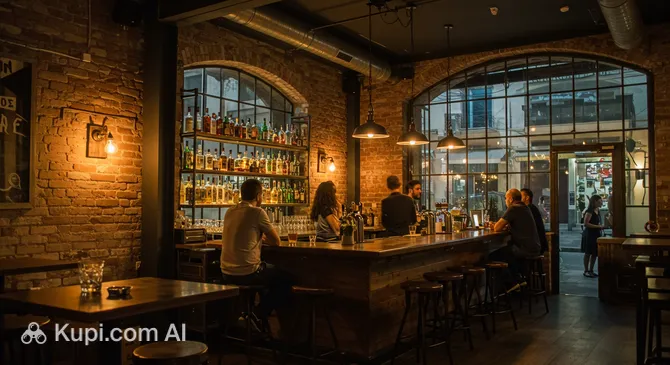
Cocktail lovers and music enthusiasts will appreciate the stylish bars, many of which offer signature drinks and DJ sets. For instance, Warehouse Edge is known for its atmosphere and selection of drinks. For wine connoisseurs, Paleo Wine Bar is an excellent choice, where you can taste both Greek and international varieties. If you feel like dancing until morning, you should check out the nightclubs. One popular spot is Katafygio, which offers high-energy parties. The music format in Piraeus clubs is diverse—from Greek pop (bouzoukia) to modern international hits and electronic music.

Warehouse Edge. Illustration.
Source: Kupi.com AI

Traveler photos:

The best time to visit nightlife venues is after 10:00 PM–11:00 PM, especially on weekends when life hums until dawn. Average drink prices in bars and clubs are comparable to those in Athens. You can reach the nightlife areas by taxi; it is recommended to use official services or ride-hailing apps. Public transport, including the metro, usually stops running around midnight, although some bus routes may run later, but this should be checked in advance.

As for safety, popular nightlife districts like Mikrolimano and Pasalimani are well-lit and patrolled, making them quite safe for walking. Nevertheless, it is always wise to follow standard precautions: keep an eye on your personal belongings and avoid deserted dark streets. Finding a taxi at night is not difficult, or you can find a taxi stand.

Katafygio. Illustration.
Source: Kupi.com AI

Traveler photos:

During the day, Piraeus also offers plenty of entertainment. In addition to the already mentioned maritime museums, such as the Hellenic Maritime Museum or the Museum Ship "Averof", and the Archaeological Museum of Piraeus, you can visit the Municipal Theater, stroll through parks such as Andreas Papandreou Park, or stop by the Eugenides Planetarium for an educational break. However, it is after evening falls that Piraeus truly reveals its Mediterranean character, inviting you to dive into an atmosphere of fun and hospitality.

Parks & Museums

Piraeus is not only the largest port in Greece but also a city that offers its guests opportunities for cultural enrichment and outdoor relaxation. Here you can find quiet green corners to take a break from the city bustle, as well as fascinating museums telling the story of the rich history and multifaceted culture of this maritime hub.

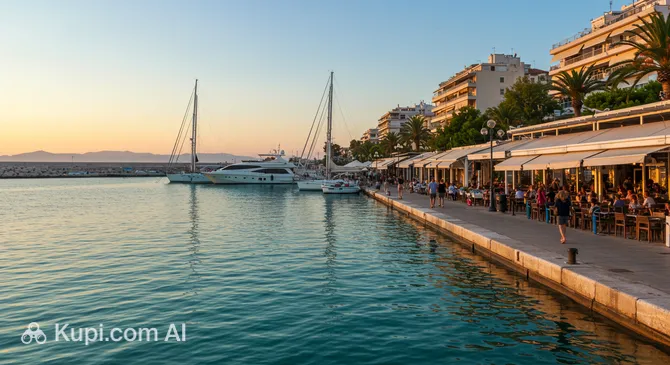
For those seeking a corner of nature and relaxation, Piraeus and its immediate surroundings offer several pleasant options. Although Piraeus itself is primarily a bustling port, you can find places for strolling and relaxation here. One such popular destination is the coastal area of Palaio Faliro. Formally it is a separate municipality, but its long promenade with beaches, bike paths, playgrounds, and cafes is a favorite holiday spot for both locals and tourists. Here you can enjoy the sea breeze and beautiful views of the Saronic Gulf.

Palaio Faliro. Illustration.
Source: Kupi.com AI

Traveler photos:

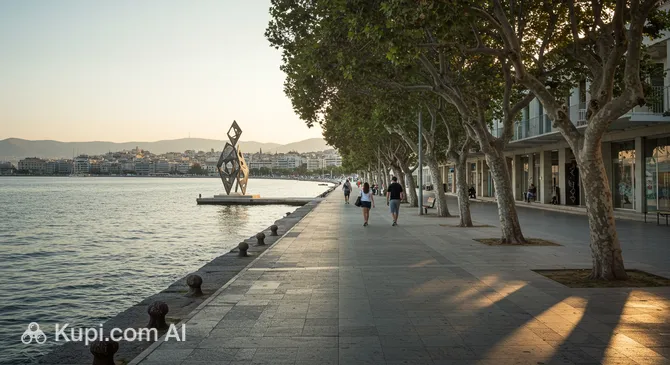
In Piraeus itself, it is worth paying attention to Andreas Papandreou Park. This park offers residents and guests of the city a green respite with shaded alleys for walking and benches for resting. Another place for a quiet pastime is Pikioni Park, a small but cozy green oasis. Also popular is Water Square (Plateia Nerou), which, although not a park in the traditional sense, represents an important public space by the water where events are often held.

Andreas Papandreou Park. Illustration.
Source: Kupi.com AI

Traveler photos:

The cultural heritage of Piraeus is rich and diverse, and its museums offer a fascinating dive into various aspects of history and art. In addition to the already mentioned key museums, such as the Archaeological Museum of Piraeus and the Hellenic Maritime Museum, which are fundamental to understanding the ancient and maritime history of the city, Piraeus is proud of other unique collections. For a family visit or those who want to plunge into the world of childhood, the Benaki Toy Museum will be a real discovery. Its charming collection includes toys, dolls, and games from different eras and cultures, evoking nostalgia in adults and delight in children.

\"Benaki

Technology and modern history buffs will be interested in the Hellenic IT Museum. This museum traces the evolution of computers and digital technologies, presenting rare exhibits and telling the story of Greece's contribution to this field. It is an educational place for those interested in the development of the IT industry and who want to see how the world changed with the advent of new technologies.

Hellenic IT Museum. Illustration.
Source: Kupi.com AI

Traveler photos:

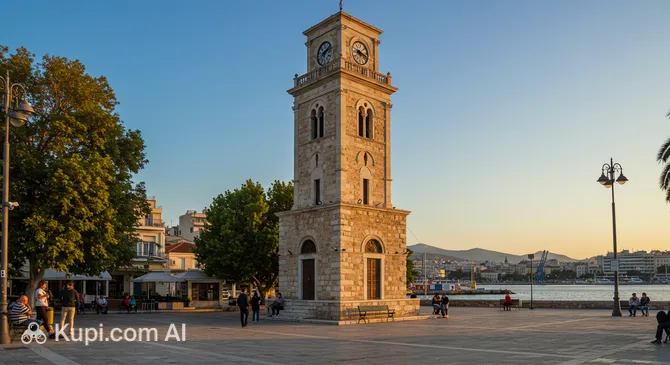
Beyond the museums, the city itself preserves traces of its long history. While walking through Piraeus, look out for interesting architectural details and historical buildings. One of the city's prominent landmarks is the Piraeus Clock—a historical clock tower that serves as a reminder of the city's past and a popular meeting spot.

Clock of Piraeus. Illustration.
Source: Kupi.com AI

Traveler photos:

For an authentic experience and lesser-known spots, try turning off the main tourist routes and exploring Piraeus' residential neighborhoods. Stop by one of the many small squares, for example, Ippodamia Square or Terpsithea Square, to have a coffee in a local kafenio and observe the daily life of the city dwellers. This will allow you to feel the real rhythm of this port city.

Getting Around

Getting around Piraeus and its surroundings is quite convenient thanks to a well-developed public transport system that is closely integrated with the Athens transport network. This allows you to easily reach not only any point in the city but also the capital of Greece and the international airport.

The basis of public transport consists of metro, buses, trolleybuses, and trams. The heart of Piraeus' transport system, connecting it to Athens, is Line 1 (Green) of the Athens Metro. This historical line, one of the oldest in Europe (partially opened in the 19th century as a steam railway), will take you from the port directly to the center of Athens (for example, to "Monastiraki" or "Omonia" stations) and to other key points. The terminal station of Line 1, "Piraeus," is located directly at the port.

An extensive network of buses and trolleybuses covers both Piraeus itself and provides connections to Athens and the suburbs. Routes and schedules can be found at stops or on the website of the Athens transport organization OASA. Modern trams are also a convenient form of transport, especially for trips along the coast. Tram lines connect Piraeus (for example, the Neo Faliro district) with central Athens and the southern coastal areas, offering sometimes very picturesque views.

For trips to/from Athens International Airport "Eleftherios Venizelos" and to some other cities, the suburban train (Proastiakos) is convenient. The Proastiakos station in Piraeus is also located near the port and the metro station.

The fare payment system in Piraeus, as in the entire Athens metropolitan area, is unified and called the ATH.ENA Ticket. There are various types of tickets: a standard 90-minute ticket (costing about 1.20 Euro), which allows for transfers between different modes of transport (metro, buses, trolleybuses, trams within the city zone), as well as tickets for 24 hours, 3 days (tourist ticket, including travel to/from the airport), 5 days, and reloadable cards (ATH.ENA Card). Tickets can be purchased from machines at metro and tram stations, at ticket offices, and in some newsstands (periptero). Don't forget to validate your ticket at the start of your first trip: in the metro and on the tram—at the turnstiles or special validators before going onto the platform; in buses and trolleybuses—inside the vehicle.

Public transport in Piraeus usually starts running early in the morning (around 5:00-5:30 AM) and finishes around midnight. On Friday and Saturday, some metro and tram lines may run longer (until about 2:00 AM). It is always useful to check the current schedule, especially for night trips. Try to have small change with you for buying tickets from machines.

As an alternative to public transport, taxis are always available. They are easily found at the port, at special ranks, or can be called by phone or through mobile apps (for example, FREENOW, formerly Beat). Ensure the driver has turned on the meter, or agree on the price in advance for long-distance trips. Bicycle rental in Piraeus is less common but may be available in some tourist zones along the coast for leisurely rides.

Accommodation

Finding a suitable place to stay in Piraeus is easy, as the city offers a variety of accommodation options for every taste and budget. Whether you are planning a short stopover before departing for the islands or a longer stay to explore this bustling port city, you will be able to find the perfect option.

A wide range of housing is presented in Piraeus: from budget hostels and guesthouses, ideal for thrifty travelers, to comfortable mid-range hotels and more luxurious hotels with a full range of services. Apartments and private flats for rent are also popular, offering more space and home comfort, especially convenient for families or groups of friends. Many options offer beautiful views of the port or the sea.

When choosing a place to stay, pay attention to the areas located near the main port—this is particularly convenient if you are planning sea trips to the Greek islands. Life is always humming here, and all the necessary infrastructure will be at hand. Areas with good transport accessibility, such as those near metro stations where it is easy to reach the center of Athens, are also popular. For a more peaceful stay and beautiful views, you can consider options in the picturesque harbors, such as Mikrolimano or Pasalimani (Zea Marina), or in the coastal area of Palaio Faliro (although this is a neighboring municipality, it is easily accessible), where many restaurants and cafes are concentrated and there are beaches. The choice of hotels in these coastal zones can range from boutique hotels to apartments.

As for booking, as with many popular tourist destinations, it is recommended to take care of accommodation in advance, especially if your trip falls during the peak season (summer months) or during major events. Accommodation prices vary from affordable options to premium ones. You can book accommodation through popular online platforms, on official hotel websites, or, in the case of small guesthouses, sometimes directly. Since no specific hotel examples are provided in the data, we recommend researching offers on specialized booking sites to find the most suitable option for you.

Nearby Cities

For those who want to explore the surroundings, Piraeus serves as an excellent starting point for day trips to several interesting nearby places:

CityPopulationDistance
Drapetsona13 9682 km
Nikaia89 3803 km
Moschato25 4413 km
Keratsini77 0773 km
Agios Ioannis Rentis16 0504 km

These nearby destinations offer a glimpse into the diverse culture and landscapes of the region. Each has its own unique charm: from the world-famous ancient monuments of Athens to the lively modern quarters of the suburbs. A trip to any of these cities will not take much time but will provide plenty of new impressions and allow for a deeper acquaintance with Attica.

Shopping & Souvenirs

Shopping in Piraeus offers an interesting mix of modern shops, traditional stores, and colorful markets, reflecting the character of a bustling port city. Here you can find both everyday goods and unique Greek souvenirs that will remind you of your trip to Greece.

The main shopping arteries of Piraeus are Sotiros Dios Street and its surrounding streets, as well as Grigoriou Lambraki Avenue. Many shops selling clothes, shoes, accessories, cosmetics, jewelry, and home goods are concentrated here. You will find stores of well-known international brands as well as boutiques by Greek designers. A stroll through these streets will allow you to immerse yourself in the local shopping atmosphere and perhaps find something special.

Piraeus is not famous for huge modern shopping malls in the sense that some other major cities are. Shopping here is more concentrated on street-front shops and small retail outlets. Instead of giant malls, you will discover many individual stores and a few smaller department stores offering a diverse range of products.

A must-visit for fans of authentic shopping and fresh produce is the Central Municipal Market of Piraeus (Dimotiki Agora Pirea). This is a lively place where you can buy the freshest fish and seafood (not surprising for a port city!), meat, fruit, vegetables, olives, cheeses, spices, and local delicacies. You can also find inexpensive clothes, shoes, and home goods here. Additionally, in the port area and along the waterfronts, you can find small kiosks and stalls selling souvenirs and beach items.

As souvenirs from Piraeus and Greece in general, it is worth bringing back extra virgin olive oil, a variety of olives, natural honey, and Greek herbs and spices (oregano, thyme). Alcoholic beverages such as ouzo or tsipouro are also popular. For non-edible souvenirs, look out for ceramic items, komboloi (Greek worry beads), leather goods (sandals, bags), natural cosmetics based on olive oil, and jewelry or amulets with the "mati" symbol (the evil eye). Given the city's maritime character, you can also find nautical-themed souvenirs.

Typical shop opening hours in Piraeus, as in many parts of Greece, can vary. Usually, shops are open from Monday to Saturday. On Monday, Wednesday, and Saturday, they often work from 9:00 AM to 3:00 PM. On Tuesday, Thursday, and Friday, many shops have an afternoon break (siesta) and work roughly from 9:00 AM to 2:00 PM and then from 5:30 PM to 9:00 PM. Large chain stores and shops in tourist areas may work without a break and for longer hours, especially during the summer season. Most shops are closed on Sundays, except for some souvenir shops and kiosks. Payment methods: in most places, both cash (Euros) and bank cards (Visa, Mastercard) are accepted. However, it is always useful to have some cash with you for small purchases or at markets.

For tourists from countries outside the European Union, the Tax Free service is available in Greece. This means you can get a refund of part of the VAT (Value Added Tax) on purchases made in stores participating in this system. Usually, this requires making a purchase for a certain minimum amount in one store, asking the seller for a special Tax Free form, filling it out, and presenting it along with the receipts and the goods at customs when leaving the EU to get a stamp. Look for stores with the "Tax Free Shopping" logo.
Nearby cities

Reached the end of the page?

That means the route is fully explored