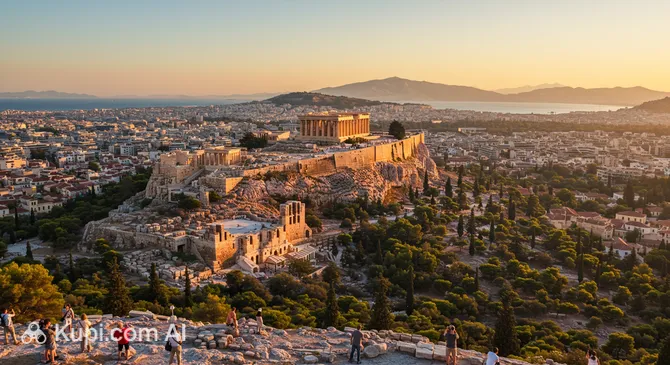
Athens is a city where the ancient world seamlessly blends with modern life, creating a unique atmosphere that captivates visitors from the moment they arrive. As the capital of Greece and the historical capital of Europe, it stands as a testament to the birth of Western civilization, offering a vibrant mix of culture, art, and gastronomy. The city's energy is palpable, from its bustling squares to the quiet, sun-drenched streets lined with bitter orange trees.
Athens. Illustration.
Source: Kupi.com AI
Located in the administrative region of Attica, Athens sprawls across a central plain bound by mountains and the Saronic Gulf. The city enjoys a Mediterranean climate with hot, dry summers and mild winters, making it a year-round destination. With a metropolitan population of over 3 million people, it is the beating heart of the country's economic and political life. The history of Athens is legendary, stretching back thousands of years as the birthplace of democracy, philosophy, and theatre, leaving an indelible mark on the world.
Travelers are naturally drawn to its iconic landmarks, most notably the majestic Acropolis which watches over the city. The Parthenon, a symbol of classical antiquity, is a must-see, while the charming neighborhood of Plaka offers a labyrinth of streets filled with neoclassical architecture and traditional tavernas. Whether you are exploring world-class museums or enjoying a sunset view from Lycabettus Hill, Athens promises an unforgettable journey through time and culture.
Weather Overview
The city enjoys a classic Mediterranean climate, making it a year-round destination with distinct seasonal variations. Visitors can generally expect hot, dry summers and mild winters with occasional rainfall. During the peak summer months of July and August, average temperatures climb to around 27.6°C, with daily highs often reaching 32.5°C, while precipitation is practically non-existent.
In contrast, the winter season brings cooler air and more frequent showers. January is typically the coldest month, with an average temperature of 9.0°C and lows dipping to around 5.8°C. December and January are also the wettest periods, seeing about 10 wet days each. For a comprehensive forecast and monthly averages to help plan your packing, you can view the detailed weather in Athens page. The shoulder seasons of spring and autumn are particularly pleasant, with comfortable averages between 15°C and 24°C.
Average monthly temperature
Average monthly precipitation
Interesting Facts
Beyond the iconic landmarks and sun-drenched plazas, Athens holds many fascinating secrets that surprise even seasoned travelers. From architectural marvels to record-breaking cultural statistics, the city offers a treasure trove of unique details.
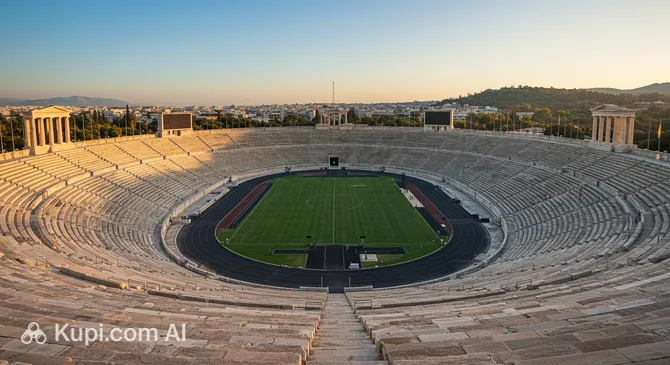
The Panathenaic Stadium stands alone in history as the only stadium in the world built entirely of marble. It is a stunning reconstruction of an ancient venue and famously hosted the first modern Olympic Games in 1896.
Although the Parthenon looks perfectly straight from a distance, it is actually an architectural masterpiece of optical illusions. The columns bulge slightly and the base curves upward to correct the human eye's natural distortion, ensuring the structure appears flawless.
Athens is a true haven for performing arts, boasting more theatrical stages than London's West End or New York's Broadway. This enduring love for drama traces its roots back to the Theatre of Dionysus, considered the world's first theater.
The city's metro system serves as an underground museum, showcasing over 50,000 artifacts discovered during its construction. Commuters can view ancient walls, pottery, and urns displayed directly in the stations, blending daily life with deep history.
Panathenaic Stadium. Illustration.
Source: Kupi.com AI
Traveler photos:
How to Get There
Reaching the historic capital of Greece is a straightforward experience for travelers, with excellent connections by air, land, and sea. Whether you are arriving from a neighboring European country or crossing continents, the city is well-served by major transport hubs. For a comprehensive guide on all travel options, including ferries and buses, you can read more about how to get to Athens.
The primary gateway for international and domestic travelers is Eleftherios Venizelos International Airport(IATA: ATH). Located in the town of Spata, it sits approximately 20 km from the city center. As the busiest airport in Greece, handling over 31 million passengers annually, it offers modern amenities and efficient connections. A journey to downtown Athens by taxi or car typically takes around 50 minutes, depending on traffic. The airport is also well-connected by the Metro (Line 3) and express buses, making the transfer smooth and convenient.
While Eleftherios Venizelos is the only airport serving the city directly, there are other regional airports in the wider vicinity, though they are significantly further away and often located on islands. For instance, Skyros Airport(IATA: SKU) is located on Skyros island, about 128 km from Athens, and Skiathos Airport(IATA: JSI) is situated on Skiathos, roughly 134 km away. These airports primarily serve their respective islands and are not practical entry points for Athens itself, as reaching the capital from there would require additional travel by ferry or connecting flights.
For clarity, here is a summary of the main airports:
Travelers can also reach Athens by train, which offers a scenic route through the Greek mainland. The city's main railway hub is the Athens Railway Station, commonly known as Larissa Station. It connects the capital with major northern cities like Thessaloniki and serves as a central point for the suburban railway network. The station is centrally located and connected to the Athens Metro system, allowing for easy access to various parts of the city upon arrival.
Main Attractions
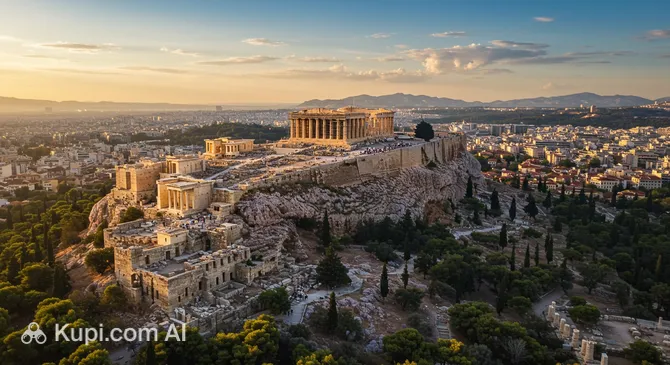
Athens is an open-air museum where ancient history meets contemporary urban life. Standing sentinel over the city is the Acropolis of Athens, a UNESCO World Heritage site that serves as the most enduring symbol of Ancient Greece. Climbing the sacred rock offers not only a close-up view of architectural masterpieces like the Parthenon and the Erechtheion but also breathtaking panoramic views of the sprawling metropolis below. It is the essential starting point for any visitor wishing to understand the magnitude of classical civilization.
Acropolis of Athens. Illustration.
Source: Kupi.com AI
Traveler photos:
Located at the foot of the sacred rock, the Acropolis Museum is a stunning modern counterpart to the ancient ruins. This world-class facility houses thousands of artifacts found on the Acropolis slopes, displayed in natural light with a direct visual connection to the monuments themselves. Visitors are particularly fascinated by the glass floors that reveal ancient neighborhoods excavated beneath the building, bridging the gap between the past and the present in a truly unique way.
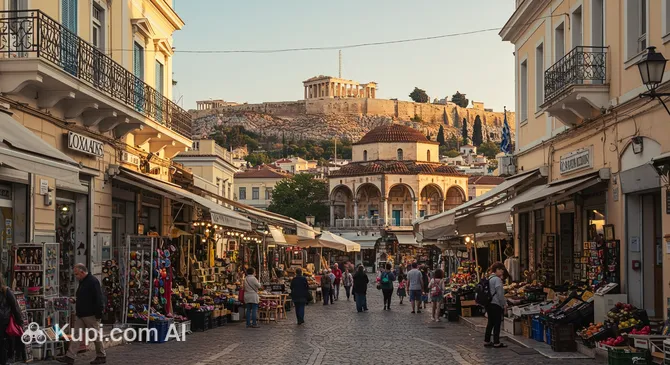
For a taste of the city's vibrant atmosphere, travelers should head to Monastiraki Square. This bustling hub is famous for its eclectic flea market, where you can find everything from vinyl records to handmade sandals. The square is a melting pot of cultures and eras, surrounded by historic buildings including the Tzistarakis Mosque and the Library of Hadrian. It is the perfect place to grab a coffee, people-watch, and soak in the energetic rhythm of Athenian life.
Monastiraki Square. Illustration.
Source: Kupi.com AI
Traveler photos:
Those seeking a peaceful retreat from the city's buzz will find solace in the National Garden of Athens. Originally created as the Royal Garden for Queen Amalia, this lush oasis in the city center features narrow gravel paths, wooden benches, and duck ponds shaded by exotic trees and plants. It offers a cool, green escape right next to the Greek Parliament, making it a favorite spot for a leisurely afternoon walk among locals and tourists alike.
Finally, history enthusiasts should not miss the National Archaeological Museum. Widely considered one of the greatest museums in the world, it contains the richest collection of artifacts from Greek antiquity. From the golden Mask of Agamemnon to the intricate Antikythera mechanism, the exhibits here provide a comprehensive narrative of Greek history, art, and culture that spans thousands of years.
Local Cuisine
The culinary landscape of Athens is a vibrant reflection of Greek culture, where food is not just sustenance but a social ritual. The city’s gastronomy relies heavily on fresh, high-quality ingredients like extra virgin olive oil, sun-ripened tomatoes, and aromatic herbs. For a quick and iconic taste of the city, street food is king. Visitors cannot leave without trying souvlaki or gyros—succulent meat wrapped in pita bread with tzatziki, onions, and tomatoes—perfect for a snack while exploring the bustling streets.
For a more leisurely dining experience, traditional tavernas offer a feast of flavors. A staple on every table is the classic Horiatiki (Greek salad), a refreshing mix of tomatoes, cucumbers, olives, and a block of feta cheese. Heartier dishes like Moussaka, a baked casserole of layered eggplant, minced meat, and béchamel sauce, showcase the comforting side of local home cooking. Savory pies, such as spanakopita (spinach pie) or cheese pie, are also essential staples found in bakeries on nearly every corner.
Ama Lachei. Illustration.
Source: Kupi.com AI
Traveler photos:
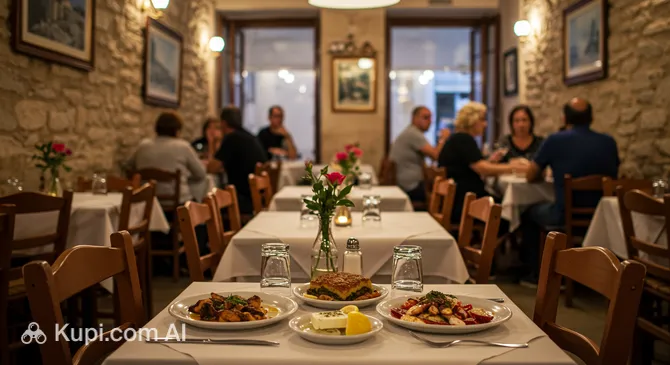
To experience the authentic atmosphere of an Athenian neighborhood eatery, you might visit Ama Lachei. Located in a converted schoolyard, this restaurant is a favorite among locals for its charming courtyard and small plates known as mezedes, which are designed to be shared. It captures the essence of the city's dining culture: relaxed, communal, and full of conversation.
Given its proximity to the sea, Athens is also a fantastic destination for seafood lovers. The picturesque harbor of Mikrolimano is renowned for its upscale fish restaurants right by the water's edge. Here, you can enjoy fresh grilled octopus, calamari, or the catch of the day while gazing at the fishing boats, making it a perfect spot for a romantic dinner or a special evening out.
No culinary journey is complete without sampling the local beverages. Coffee culture is huge here; locals sip on an icy Freddo Espresso or Freddo Cappuccino for hours. In the evening, the national aperitif, Ouzo, is often enjoyed with ice and water, turning a milky white. For those interested in the modern cocktail scene, the city boasts world-class bars like Baba au Rum, where innovative mixology meets a lively ambiance.
Travel Tips
Welcome to Athens! While the city's ancient charm is undeniable, its modern rhythm can be fast-paced and occasionally chaotic for first-time visitors. To ensure your journey through the Greek capital is as smooth and enjoyable as possible, we have compiled a list of essential practical tips to help you navigate the city like a local.
Clothing and Gear: In the summer, lightweight, breathable fabrics, a hat, and high-SPF sunscreen are essential to survive the heat. However, the most important item to pack is a pair of sturdy, comfortable walking shoes; the marble paths of the Acropolis and the cobblestones of Plaka are slippery and uneven. If you plan to visit churches or monasteries, remember to dress modestly by covering your shoulders and knees.
Transportation: The Athens Metro is clean, reliable, and often the fastest way to escape traffic. For destinations not served by rail, yellow taxis are plentiful; it is highly recommended to use apps like FREENOW or Uber to hail rides and avoid language barriers or pricing disputes. renting a car is generally discouraged for city exploration due to heavy congestion and extremely limited parking.
Finances: The official currency is the Euro (€). While credit and debit cards are widely accepted in restaurants and shops, it is wise to carry some cash for small purchases at street kiosks, bakeries, or for taxi fares. ATMs are widely available. Tipping is not strictly mandatory but is appreciated; rounding up the bill or leaving a 5-10% tip for good service is standard practice.
Health and Safety: Pharmacies are marked with a green cross and are found in almost every neighborhood; they are excellent first stops for minor ailments. Athens is generally a safe city, but like any major capital, you should be vigilant against pickpockets, especially on the Metro and in crowded tourist hubs like Monastiraki. It is advisable to stay aware of your surroundings late at night in areas like Omonia.
Communication: Greek is the official language, but English is very widely spoken, especially in the hospitality sector. Learning a few basic words like Kalimera (Good morning) and Efcharisto (Thank you) will be met with warm smiles. Free Wi-Fi is common in cafes and public squares, and SIM cards are easily purchasable from providers like Cosmote or Vodafone upon arrival.
Local Etiquette: Greeks are known for their hospitality (philoxenia) and relaxed pace of life. Dining happens much later than in many other countries; lunch is typically served around 2:00 PM to 3:00 PM, and dinner often starts after 9:00 PM. Do not feel rushed to leave a table at a taverna; lingering over food and conversation is a cherished cultural norm.
What to Avoid: Be careful with your hand gestures. Never extend your arm with an open palm and spread fingers toward someone's face; this gesture, known as the moutza, is considered highly offensive. Additionally, strictly avoid touching or leaning on ancient marble monuments, as guards are very strict about preserving the heritage.
Local Insight: Make friends with the ubiquitous peripteros (street kiosks). These small yellow structures are scattered on nearly every corner and are lifesavers for tourists. They sell everything from water, snacks, and cigarettes to bus tickets and newspapers, and many stay open very late, acting as the city's mini-convenience stores.
By keeping these practicalities in mind, you will be well-equipped to embrace the vibrant energy of Athens without the stress. Whether you are navigating the metro to a museum or enjoying a late-night souvlaki, you can now explore this historic metropolis with confidence and ease.
Entertainment & Nightlife
Entertainment and Nightlife:
When the sun sets over the ancient ruins, Athens transforms into a city that truly never sleeps. The nightlife here is legendary, offering a diverse spectrum of entertainment that caters to every taste, from laid-back bohemian bars to high-energy superclubs. The atmosphere is distinctively Mediterranean: vibrant, loud, and incredibly welcoming. Locals typically dine late, so the nightlife scene kicks off well after midnight and often continues until the first light of dawn.
The heart of the city's clubbing scene is undoubtedly Gazi. Once an industrial gasworks district, it has been revitalized into a sprawling complex of venues, where music pumps through the streets and crowds hop from one dance floor to another. For a more alternative and artistic vibe, the neighborhood of Psiri is a labyrinth of narrow streets filled with quirky bars, small live music joints, and traditional rembetika tavernas. If you prefer something more upscale, the district of Kolonaki offers chic cocktail bars and exclusive lounges where the dress code is smarter and the crowd is more glamorous.
For those seeking a world-class live music experience, the Greek "Bouzoukia" (large live music stages) are a cultural phenomenon not to be missed. A prime example is NOX Athens, a state-of-the-art venue that hosts some of the country's biggest music stars, offering a spectacular show that blends concert energy with club service. Another major destination for high-end musical performances is YTON The Music Show, known for its impressive production values and electric atmosphere.
NOX Athens. Illustration.
Source: Kupi.com AI
Traveler photos:
If you prefer a more intimate setting with unique character, the city's bar scene is thriving. Hidden in a cluster of abandoned houses in the Petralona neighborhood, Upupa Epops is a standout choice. This artistic bar is famous for its vintage decor, colorful courtyard, and creative cocktail list, making it a perfect spot for a relaxed evening with friends. For beer enthusiasts, Arch Beer House in the Peristeri district offers an extensive selection of brews in a rock-inspired setting.
Practical advice for a night out in Athens revolves around timing. Don't expect clubs to fill up before 1:00 AM; arriving too early often means dancing alone. Entry fees for clubs can range from 10 to 20 euros, usually including a drink, while cocktails in bars typically cost between 9 and 12 euros. During the summer months, the center can quiet down as the nightlife migrates to the Athens Riviera (Posidonos Avenue), where massive open-air clubs line the coast, offering parties by the sea.
Regarding safety, Athens is generally safe for night owls, especially in busy districts like Monastiraki, Psiri, and Gazi. However, standard precautions apply. Stick to well-lit main streets when walking between venues. Taxis are plentiful and safe, but it is highly recommended to use an app like Uber or FREENOW to book your ride, ensuring you have a tracked route and a set price, especially late at night.
While the nights are for partying, the city offers plenty of daytime entertainment beyond ancient history. Families and thrill-seekers can cool off at Aquapolis Athens, a modern water park featuring slides and pools suitable for all ages. For a more educational yet entertaining experience, the Hellenic Cosmos Cultural Center uses cutting-edge technology and virtual reality to bring Greek history to life, making it a fascinating stop before the evening festivities begin.
Parks & Museums
Beyond its world-famous archaeological sites, Athens boasts a vibrant cultural scene with museums that cover everything from ancient Cycladic art to modern European masterpieces. The city is also dotted with verdant parks and hills that offer a refreshing counterpoint to the urban landscape, providing essential spaces for relaxation and recreation.
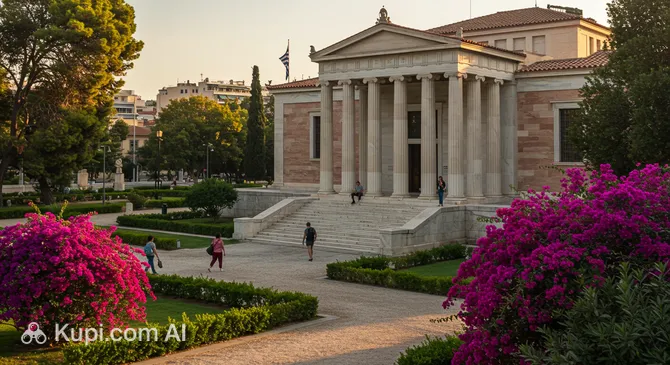
For a comprehensive dive into Greek culture, the Benaki Museum is an essential stop. Housed in a stunning neoclassical mansion, its collections span the entire history of the Greek world, from antiquity and the Byzantine era to the War of Independence and the 20th century. It offers a unique narrative that connects the ancient past with modern Greek identity.
Benaki Museum. Illustration.
Source: Kupi.com AI
Traveler photos:
Art lovers will find a haven in the Museum of Cycladic Art. This institution is renowned for its collection of iconic flat-faced marble figurines from the 3rd millennium BC, which have influenced many modern artists. Speaking of modern art, the Basil & Elise Goulandris Foundation is a recent addition to the city's cultural scene, displaying an exquisite private collection that includes works by Picasso, Van Gogh, Monet, and El Greco.
Another significant institution is the National Gallery – Alexandros Soutsos Museum, which houses a vast collection of Greek and European art. After a major renovation, it stands as a beacon of modern Greek culture, showcasing the evolution of the country's artistic expression.
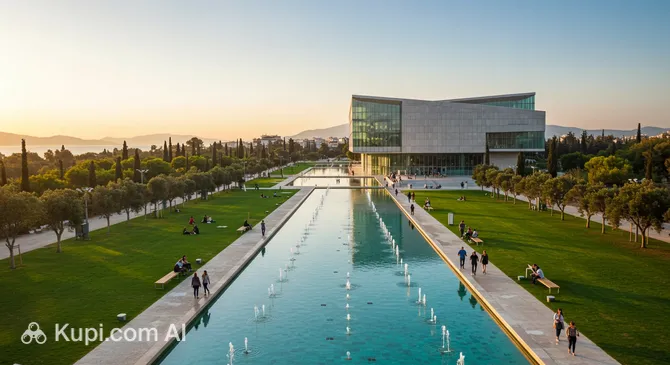
When it comes to green spaces, the Stavros Niarchos Park represents the new face of Athens. Located in the Kallithea district near the coast, this sustainable park is part of a massive cultural center designed by Renzo Piano. It features dancing fountains, a canal, Mediterranean gardens, and open-air movie screenings, making it a favorite gathering spot for locals.
Stavros Niarchos Park. Illustration.
Source: Kupi.com AI
Traveler photos:
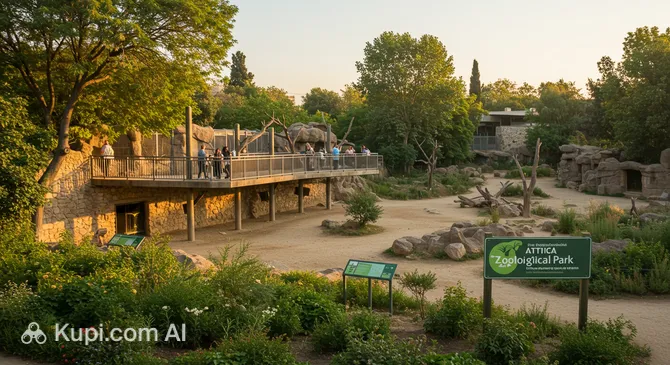
For families and wildlife enthusiasts, the Attica Zoological Park offers a chance to see animals from around the globe. Located in the suburb of Spata, it is the only zoo in Greece and hosts over 2,000 animals, including dolphins, big cats, and reptiles. It provides an educational and fun day out, just a short drive from the city center.
Attica Zoological Park. Illustration.
Source: Kupi.com AI
Traveler photos:
Finally, for those seeking panoramic views combined with a nature walk, Lycabettus Hill is the highest point in Athens. A pine-covered limestone peak rising from the concrete jungle, it offers a steep but rewarding hike to the top, where the Chapel of St. George awaits along with breathtaking sunsets over the Aegean Sea.
Getting Around
Navigating Athens is surprisingly easy and affordable, thanks to a comprehensive and integrated public transport network managed by OASA. The system is designed to help visitors move seamlessly between the historic center, the urban neighborhoods, and the coastal suburbs. The backbone of the network is the Metro, which is widely considered one of the cleanest and most modern in Europe. It consists of three lines: Line 1 (Green), an overground electric train that connects the port of Piraeus to the northern suburbs; and Lines 2 (Red) and 3 (Blue), which run underground and serve the city center and the airport.
Complementing the metro is an extensive network of buses and trolleybuses that cover virtually every corner of the city. While traffic can sometimes cause delays, these are often the only way to reach specific neighborhoods or spots further afield. For a more scenic route, the Tram is a favorite among tourists. Starting from Syntagma Square or Piraeus, it winds its way down to the coast, offering a leisurely ride along the Athenian Riviera with beautiful sea views. It is slower than the metro but perfect for a relaxed journey to the beaches.
The payment system is unified and user-friendly, utilizing the Athena Ticket and Athena Card. You can purchase a rechargeable paper ticket or a plastic card at automatic vending machines located at all metro and tram stations, as well as some ticket booths. A standard single ticket costs approximately €1.20 and is valid for 90 minutes across all modes of transport (metro, bus, tram, trolleybus, and suburban railway in the urban zone), allowing for unlimited transfers within that time. For tourists, there are also convenient 24-hour or 5-day passes available, as well as a special 3-day tourist ticket that includes round-trip airport transfer.
Practicality is key when using the system. You must validate your ticket every time you enter a bus or trolleybus by tapping it on the blue readers. For the metro and suburban railway, you must tap your ticket at the gates to both enter and exit the station. Failure to validate can result in a hefty fine, so keep your ticket handy throughout your journey. Public transport generally operates from around 05:00 AM until midnight. However, on Fridays and Saturdays, Metro Lines 2 and 3 extend their operating hours until approximately 02:00 AM, making it easier to enjoy the city's nightlife.
If you prefer a more direct route or are traveling late at night, the city’s yellow taxis are plentiful and reasonably priced compared to other European capitals. You can hail them on the street, find them at designated ranks, or book one via apps like FREENOW or Uber (which hails licensed taxis in Greece). This is often the safest and most transparent way to pay, avoiding potential language barriers. Ride-sharing services with private cars are not legally permitted in the same way as in other countries, so the app-based taxi is the standard alternative.
For a unique transport experience, visitors should not miss the Lycabettus Funicular. This cable car departs from the Kolonaki district and climbs steeply inside a tunnel to the summit of Lycabettus Hill. While it is more of a tourist attraction than a daily commute option, it saves you a strenuous hike and rewards you with the best panoramic views of the city. Additionally, the city center is becoming increasingly bike-friendly, with rental schemes available, though the hilly terrain and traffic mean cycling is best reserved for designated paths and the coastal promenade.
Accommodation
Finding the perfect place to stay in Athens is part of the adventure, as the city offers a diverse array of accommodation options to suit every traveler's style and budget. The choices range from vibrant youth hostels and cozy family-run guesthouses to stylish boutique hotels and ultra-luxury resorts. In recent years, there has also been a surge in high-quality rental apartments, providing a "home away from home" experience in the heart of the city.
For those who want to be in the center of the action, the neighborhoods of Plaka, Monastiraki, and Syntagma are the most convenient choices. Staying here puts you within walking distance of the Acropolis, museums, and the main shopping streets. If you prefer a more upscale and quiet atmosphere, the district of Kolonaki offers chic hotels surrounded by designer boutiques and galleries. Alternatively, travelers looking for a resort-style experience by the sea should look towards the Athens Riviera, particularly in areas like Glyfada and Vouliagmeni.
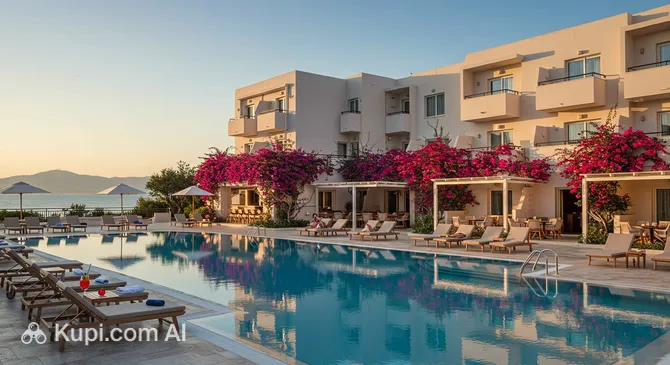
For a luxurious stay that combines urban convenience with relaxation, you might consider the Athens Grand Hotel. This establishment is known for its refined service and comfortable amenities, making it a solid choice for discerning travelers. If you are seeking a true seaside escape without leaving the metropolitan area, the Aesthesis Resort on the Riviera offers a stunning setting that feels worlds away from the city center, yet remains easily accessible.
Aesthesis Resort. Illustration.
Source: Kupi.com AI
Traveler photos:
When planning your trip, keep in mind that Athens is a year-round destination, but the summer months (June to September) are the absolute peak season. During this time, the best rooms fill up quickly, so it is highly advisable to book at least 2-3 months in advance to secure your preferred location and rate. Off-season travel in spring or autumn often allows for more spontaneity and better deals.
Price ranges vary significantly depending on the season and location. Budget travelers can find hostel beds or simple rooms for approximately €30–€60 per night. Mid-range hotels typically charge between €80 and €150, while luxury accommodations and five-star resorts can start from €200 and go well beyond. Booking is most commonly done through major online platforms, though contacting smaller hotels directly can sometimes result in better offers or personalized service.
Nearby Cities
For those looking to explore the surroundings, Athens serves as an excellent base for day trips to several interesting nearby locations:
Just a short journey along the coast lies Cape Sounion, home to the majestic Temple of Poseidon. Perched on a cliff plunging into the sea, it is arguably one of the most romantic spots in Greece, particularly famous for its breathtaking sunsets. Visitors can explore the ancient ruins while enjoying panoramic views of the Aegean Sea, making it a perfect afternoon escape from the city center.
For history enthusiasts, a trip to Delphi offers a profound connection to the ancient world. Once considered the "navel of the world," this UNESCO World Heritage site is nestled on the slopes of Mount Parnassus. It features the Temple of Apollo and an ancient theater with stunning mountain backdrops. Although it requires a longer drive, the combination of history and dramatic natural scenery makes it an unforgettable experience.
If you prefer an island escape, Hydra is easily accessible by ferry from the port of Piraeus. This unique island is entirely car-free, preserving its traditional character and peaceful atmosphere. Visitors can wander through cobblestone streets lined with 18th-century mansions, enjoy a donkey ride, or swim in the crystal-clear waters of the Saronic Gulf.
City
Population
Distance
Gazi
19 221
1 km
Ampelokipoi
37 381
3 km
Kaisariani
26 458
3 km
Tavros
14 972
3 km
Kallithea
100 641
4 km
These nearby destinations offer a glimpse into the diverse culture and landscapes of the region.
Shopping & Souvenirs
Shopping in Athens is a delightful mix of the old and the new, offering everything from high-end international fashion to traditional handcrafted treasures. The city's retail scene is vibrant and diverse, catering to luxury seekers, bargain hunters, and souvenir collectors alike. Whether you prefer strolling down bustling pedestrian streets or exploring air-conditioned malls, the Greek capital has something to satisfy every taste and budget.
The most famous shopping street in the city is Ermou Street, a pedestrianized thoroughfare that connects Syntagma Square to Monastiraki. It is lined with major international brands, department stores, and local fashion chains, making it the commercial heart of the city. For a more exclusive experience, the district of Kolonaki is the place to be. Here, you will find upscale boutiques, haute couture designers, and high-end jewelry shops nestled among chic cafes, attracting a fashionable crowd.
For those who prefer a comprehensive shopping experience in a single location, the city offers excellent modern facilities. A top destination for brand lovers is the McArthurGlen Designer Outlet Athens. Located in the suburb of Spata, it features a wide range of designer brands at discounted prices, all designed in a beautiful neoclassical style that mimics a traditional village.
A trip to Athens would not be complete without visiting its vibrant markets. The most iconic is the flea market around Monastiraki Square, which becomes particularly lively on Sundays. This area is a treasure trove for vintage lovers, selling everything from old vinyl records and antique furniture to military boots and rare books. Just a short walk away is the Central Municipal Market (Varvakios), a chaotic but fascinating food market where locals buy fresh meat, fish, and spices.
When it comes to souvenirs, visitors are spoiled for choice. Leather sandals are a classic buy, often handmade in workshops around the Plaka and Psiri districts. Other popular items include extra virgin olive oil, local honey, and dried herbs like oregano. For something more cultural, look for komboloi (worry beads), a traditional Greek accessory, or high-quality ceramic replicas of ancient museum artifacts.
Store opening hours can vary, but generally, shops in the city center are open Monday, Wednesday, and Saturday from 9:00 AM to 3:00 PM, and Tuesday, Thursday, and Friday from 9:00 AM to 9:00 PM. Major department stores and malls usually stay open continuously until 9:00 PM on weekdays and Saturdays. Most shops are closed on Sundays, except for souvenir shops and mini-markets in tourist areas like Plaka. Credit and debit cards are widely accepted, though carrying some cash is useful for small purchases at markets or kiosks.
Travelers from outside the European Union are eligible for a VAT refund on purchases made in a single store that exceed a certain amount (typically €50). Look for the "Tax Free" signage in shop windows and ask for a refund form at the checkout. You will need to present these forms along with your passport and the goods at the customs office at the airport before leaving the EU to claim your refund.