Support

Leros

About

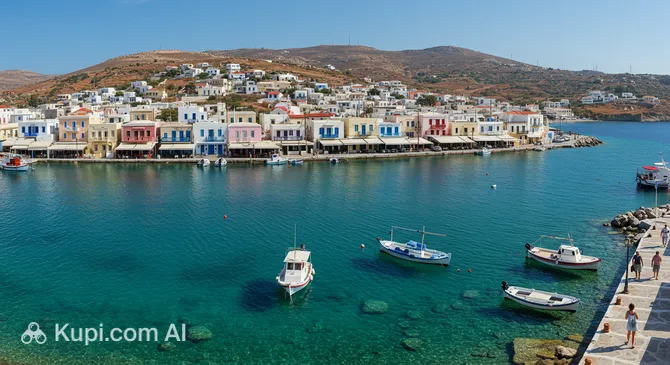
Leros is a captivating island destination located in the southeastern edge of the Aegean Sea. Often overlooked by mass tourism, this peaceful retreat in the Dodecanese archipelago offers a truly authentic experience of island life in Greece. With a population of approximately 8,200 residents, it maintains a vibrant yet laid-back atmosphere, characterized by picturesque bays, rolling hills, and a deep connection to the sea.

Leros. Source: Kupi.Binoculars

What sets this island apart is its rich past, which has left an indelible mark on its architecture and culture. Visitors diving into the history of Leros will discover a unique blend of influences, ranging from Byzantine heritage to the striking Italian Rationalist architecture found in the port town of Lakki. This eclectic mix creates a visual journey that is distinct from the typical white-and-blue Cycladic scenery found elsewhere.

Travelers are often drawn to the imposing Castle of Panteli (Castle of Our Lady), which stands guard atop Apitiki Hill and offers breathtaking panoramic views of the surrounding archipelago. The island is also famous for its submerged historical sites, making it a paradise for scuba diving enthusiasts. Additionally, the charming lined windmills and the serene beaches of Alinda and Gourna provide perfect spots for relaxation and exploration.

Whether you are seeking a quiet escape to enjoy fresh seafood by the water or an adventure through time, Leros welcomes you with open arms. It is the perfect destination for those looking to uncover a different, more tranquil side of the Aegean.

Weather Overview

Leros enjoys a classic Mediterranean climate, characterized by warm, dry summers and mild, wetter winters. This weather pattern makes the island an inviting destination throughout much of the year, though conditions vary by season. For a more detailed breakdown of what to expect during your trip, you can check the guide to the weather in Leros.

The summer months are ideal for beach lovers, with August seeing average temperatures peaking around 25.9°C. During this time, rainfall is virtually non-existent, with July and August typically recording 0 wet days, ensuring uninterrupted sunshine. In contrast, the winter season brings cooler temperatures and increased precipitation. January is generally the coldest and wettest month, with an average temperature of 13.3°C and approximately 15 wet days.

Spring and autumn offer a delightful balance, with comfortable temperatures ranging from 16.7°C in April to 21.1°C in October. These shoulder seasons see significantly less rain than winter, making them perfect for hiking and exploring the island's lush landscapes without the peak summer heat.

Interesting Facts

Beyond the main attractions, Leros holds many fascinating secrets that make it unique among the Dodecanese islands. While it offers the classic Greek summer experience, the island is also a treasure trove of mythology, unique architectural experiments, and maritime history.

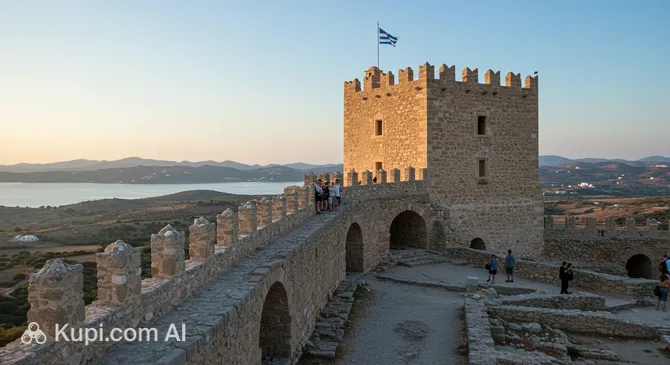
Castle of Leros (Panteli). Source: Kupi.Binoculars
  • According to mythology, Leros was the sanctuary of Artemis, the goddess of the hunt. Legend says she was sent here by Zeus and became the patron deity of the island, which explains the ancient ruins of the Temple of Artemis found near the airport.

  • The port town of Lakki is an open-air museum of Italian Rationalist architecture, a style rarely seen in such concentration elsewhere in Greece. Built in the 1930s as a model city named Portolago, its wide boulevards and Art Deco buildings give it a distinct, cinematic atmosphere unlike the typical Cycladic style.

  • The majestic Castle of Leros (Panteli), which watches over the island, has a history involving the Knights of Saint John. It is said that the fortress was so well-positioned that it served as the primary refuge for the locals during pirate raids in the medieval era.

  • The sea surrounding the island is often described as a vast underwater museum. Leros is a premier destination for wreck diving, with the seabed scattered with numerous well-preserved shipwrecks and aircraft from the 20th century, attracting divers from all over the world.

How to Get There

Reaching this picturesque island in the South Aegean often involves a mix of air and sea travel, adding a sense of adventure to your arrival. You can learn more about how to get to Leros and the various connection options available. Since the major transport hubs are located on neighboring islands or the mainland, planning your transfer via ferry is a key part of the journey.

One of the most common gateways for international travelers is Kos Airport (IATA: KGS), located in the city of Kos. This is a significant airport serving millions of passengers annually, situated approximately 44.2 km from Leros. Since it is located on a different island, you cannot take a taxi directly to your final destination. Instead, travelers typically take a taxi or bus to a port in Kos (such as Mastichari) and then catch a ferry to Leros, which takes around an hour depending on the vessel.

Another convenient option is Kalymnos Island National Airport (IATA: JKL), located in Kalymnos, just 21.3 km away. This airport is smaller and handles less traffic, offering a more relaxed arrival experience. Like Kos, Kalymnos is a separate island, so you will need to transfer to the local port for a short boat ride to reach Leros.

For those traveling through the wider region, Milas-Bodrum Airport (IATA: BJV) in Bodrum is another significant hub, located about 73.4 km away. This is a large international airport. However, arriving via this route involves crossing from the Turkish coast, so you would need to take a ferry from Bodrum to Leros.

For clarity, here is a summary of the main airports:

Airport Name City Passenger Traffic Km from City
Izmir Adnan Menderes Airport Izmir Very Large 130.7
Milas-Bodrum Airport Bodrum Large 73.4
Kos Airport Kos Large 44.2
Ikaria Airport Ikaria Small 74.8
Kalymnos Island National Airport Kalymnos Small 21.3

Main Attractions

Leros offers a fascinating mix of history, culture, and natural beauty, with sights that range from medieval fortifications to unique culinary destinations. Exploring these attractions provides a deeper understanding of the island's rich heritage and its laid-back Aegean lifestyle.

The most iconic landmark of the island is undoubtedly the Castle of Leros (Panteli). Perched high on Apitiki Hill, this impressive medieval fortress watches over the villages of Agia Marina and Panteli. Originally built by the Byzantines and later fortified by the Knights of Saint John, it offers visitors a journey through time. Beyond its historical significance, the castle provides the best vantage point on the island, rewarding the climb with breathtaking 360-degree views of the Aegean Sea and the surrounding coastline.

For history enthusiasts, the War Museum in Merikia is a fascinating site that highlights the island's strategic importance during World War II. Housed inside an authentic network of underground tunnels built by the Italian army, the museum creates an atmospheric experience. Exhibits include guns, maps, uniforms, and memorabilia from the Battle of Leros, offering a poignant glimpse into the island's turbulent past.

Dimitris o Karaflas. Source: Kupi.Binoculars

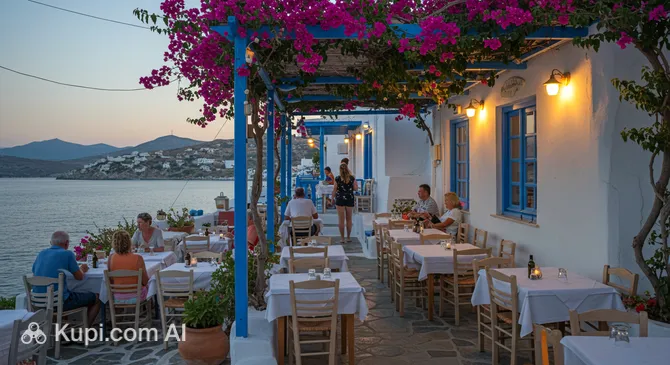
Dining in Leros can be an attraction in itself, especially at Dimitris o Karaflas. Located on a prominent hilltop, this renowned venue is celebrated not only for its exceptional Greek cuisine but also for its spectacular location. Guests can enjoy signature dishes while taking in panoramic vistas of Vromolithos Bay and the open sea. It is a perfect spot for a romantic evening or a memorable meal that combines local flavors with stunning scenery.

Another must-see location is the picturesque chapel of Agios Isidoros in the Kokkali area. This tiny white church is built on a rock detached from the shore, connected to the mainland by a narrow stone causeway. It is an idyllic location that captures the essence of the Greek islands, particularly beautiful during sunset when the changing light reflects off the sea and the whitewashed walls.

Local Cuisine

The culinary scene in Leros is a delightful reflection of its authentic Dodecanese character, relying heavily on fresh, locally sourced ingredients and traditional recipes passed down through generations. Unlike more commercialized islands, the food here is honest and unpretentious, with a strong emphasis on the bounties of the Aegean Sea. Visitors can expect a gastronomic experience that combines the saltiness of the sea with the rich flavors of local herbs and produce.

Seafood lovers will find themselves in paradise, as the island is renowned for its fresh catch brought in daily by local fishermen. A signature delicacy worth seeking out is the marinated fish, often prepared with rosemary and vinegar, offering a zestful taste of the island's maritime heritage. For those with a sweet tooth, Leros is famous for patsavouropita, a unique "rag pie" made with crumpled phyllo dough, yoghurt, and syrup, which has become a staple dessert across Greece but has its roots deeply planted here. Another rare treat is the gavafes, a tropical fruit similar to guava that grows on the island and is often enjoyed as a spoon sweet.

When it comes to beverages, the island offers distinct local flavors. The most iconic drink is soumada, a refreshing non-alcoholic syrup made from bitter almonds. Traditionally served at weddings, it can now be found in many cafes, usually diluted with cold water and served with ice. For something stronger, local wine accompanies most meals, and the ouzo culture is vibrant, typically enjoyed with a platter of meze as the sun sets.

The food culture is centered around social dining, with a mix of seaside tavernas and family-run eateries. The fishing village of Panteli is the heart of this scene, where tables are often set right on the sand, allowing diners to eat with the waves lapping just feet away. For a more elevated dining experience, both literally and figuratively, places like Dimitris o Karaflas offer exceptional dishes combined with sweeping views, showcasing the perfect marriage of Lerian hospitality and gastronomy.

Travel Tips

Welcome to Leros! To help you embrace the slow pace and authentic charm of this Dodecanese gem, we have compiled some essential practical advice. These tips will ensure your journey is as smooth as the Aegean waters surrounding the island.

  1. Clothing and Gear: Summers are warm and sunny, so pack breathable clothing, swimwear, and a hat. However, the "Meltemi" winds can make evenings breezy, so a light jacket is useful. Since exploring often involves walking on uneven terrain or climbing to the Castle of Panteli, bring sturdy, comfortable walking shoes. Remember that when visiting religious sites like the church of Panagia, you should dress modestly, covering your shoulders and knees.
  2. Transportation: While there is a local bus service connecting the main towns of Lakki, Agia Marina, and Alinda, the schedules can be infrequent. To truly discover the island's hidden coves and historical sites at your own pace, it is highly recommended to rent a car or scooter. Taxis are available, but since there are a limited number on the island, booking in advance is smart during July and August.
  3. Finances: The official currency is the Euro (€). While most hotels and larger tavernas accept cards, cash is still king in smaller shops, bakeries, and for bus fares. ATMs are easily found in the main hubs of Lakki and Agia Marina. Tipping is not mandatory but is customary; leaving around 10% for good service is greatly appreciated.
  4. Health and Safety: Leros is a very safe destination with a low crime rate. Uniquely for an island of its size, it hosts a fully operational General Hospital located in Lakki, providing peace of mind for travelers. Pharmacies are marked with a green cross; if you need one outside of business hours, look for the schedule of duty pharmacies posted on their windows.
  5. Communication: The local language is Greek, but English is widely spoken in tourist areas, restaurants, and hotels. Locals appreciate it if you try a few basic words like Kalimera (Good morning) or Efharisto (Thank you). Wi-Fi is standard in most cafes and accommodations, and mobile signal is generally good across the island.
  6. Local Etiquette: Embrace the local rhythm. Between 2:30 PM and 5:30 PM, many locals observe the quiet hours (mesimeri). During this time, smaller shops may close for a break, and it is polite to keep noise levels down in residential areas. When entering a shop or cafe, a friendly greeting is always the norm.
  7. What to Avoid: One critical rule throughout Greece is to never flush toilet paper down the toilet. The plumbing systems are old and narrow, so you must place paper in the small bin provided in every restroom. Additionally, avoid sitting at a table in a taverna that hasn't been cleared yet without asking, as staff generally prefer to seat you.
  8. Local Insight: Don't be surprised by the siga-siga (slowly-slowly) attitude. Service in Leros is relaxed and not meant to be rushed. Meals are social events often lasting hours, so sit back, enjoy your wine, and don't feel the need to ask for the bill the moment you finish eating.

With these practical tips in hand, you are well-prepared to navigate the island with ease and respect. We hope you enjoy every moment of your stay in this beautiful and welcoming corner of the Aegean!

Entertainment & Nightlife

While Leros is often celebrated for its tranquility, its nightlife offers a vibrant and authentic charm that surprises many visitors. Far from the intense party scenes of Mykonos or Ios, the island provides a more relaxed yet lively atmosphere where evenings are spent socializing in atmospheric bars, enjoying long dinners by the sea, and dancing until the early hours in select venues. The nightlife here is intimate, welcoming, and distinctly Greek, favoring good company and stunning settings over massive clubs.

The heartbeat of the island's evening entertainment is undoubtedly Agia Marina. As the sun sets, this port town transforms into a bustling hub where locals and tourists mingle. The waterfront is lined with a variety of cafe-bars that transition from serving coffee to cocktails as the night progresses. Venues here, such as Meltemi or The Lounge Bar, play a mix of international and Greek music, creating a spirited vibe perfect for bar-hopping. For those looking to dance, Apothiki is a legendary spot in the area, known for its energetic crowd and late-night parties that often last until dawn.

A short distance away, the fishing village of Panteli offers a slightly different flavor of nightlife. It is famous for its seaside tavernas where dinner often extends late into the night. However, it is also home to one of the island's most iconic nightlife staples, the Savana Bar. This classic rock bar has been a favorite for decades, drawing a loyal crowd with its eclectic music library and laid-back character. It is the perfect place to enjoy a drink while listening to great tunes in a friendly environment.

For a truly memorable start to your evening, consider heading up to the Dimitris o Karaflas restaurant. Perched on a hill with commanding views over Vromolithos Bay, it is an ideal location to enjoy a sunset dinner before descending into the towns for drinks. The combination of exquisite local cuisine and panoramic vistas makes it a standout choice for a romantic or special night out.

If you prefer a more cultural evening, the island offers charming alternatives to bars. The Cine Leros in Lakki is a beloved local institution, offering movie screenings in an atmospheric setting that captures the nostalgia of Greek summer cinemas. Additionally, a walk up to the Castle of Leros (Panteli) during the golden hour provides a breathtaking backdrop for evening photography, allowing you to watch the lights of the villages flicker on below.

Practicalities for a night out in Leros are straightforward. The island is incredibly safe, and walking between Agia Marina, Platanos, and Panteli is common, though the terrain can be hilly. Taxis are available but can be scarce in peak season, so it is wise to book one in advance if you plan to stay out late in a different village. The dress code is almost exclusively "island casual"—linen shirts, summer dresses, and comfortable sandals are the norm everywhere. Prices for drinks and entry are generally very reasonable, making Leros a wallet-friendly destination for night owls.

Parks & Museums

Leros is an island where history and nature intertwine in quiet, unassuming ways. Beyond its famous fortress and war tunnels, the island offers a collection of smaller museums and unique urban landscapes that provide a deeper look into its diverse heritage. From ancient artifacts to architectural marvels nestled in greenery, there are plenty of spots for culturally curious travelers to explore.

For a journey into the distant past, the Archaeological Museum of Leros in Agia Marina is a hidden treasure. Although compact, this museum houses fascinating finds that span from the prehistoric age to the early Christian era. Visitors can examine ancient inscriptions, classical pottery, and small statues that reveal the island's significance in antiquity. It is a quiet space that allows for an intimate connection with the civilizations that once thrived here.

In the seaside village of Alinda, the Belenis Tower stands as one of the most beautiful architectural landmarks on the island. This restored stone mansion hosts the Historical and Folklore Museum, offering a rich tapestry of local life. The exhibits range from traditional costumes and household tools to surgical instruments from the old hospital. Notably, the museum also dedicates a section to the island's modern history, including poignant reminders of the political prisoners exiled here, adding a layer of depth to the visitor experience.

Nature lovers and architecture enthusiasts will find a unique combination in Lakki. Designed by Italian architects in the 1930s as a "garden city," this town functions as a massive open-air park. Unlike the narrow alleys typical of the Aegean, Lakki features wide, tree-lined boulevards and extensive green spaces interspersed with striking Rationalist buildings. A stroll here, under the shade of eucalyptus trees, offers a refreshing break and a chance to admire one of the most distinct urban plans in the Mediterranean.

For panoramic views and a breath of fresh air, the area around the restored windmills is a favorite local spot. Located on the ridge above Panteli, near the Castle of Leros (Panteli), this row of traditional structures commands spectacular views over the harbor and the open sea. It is an ideal location for a late afternoon walk, where the wind cools the air and the sunset paints the sky, providing a peaceful setting to appreciate the island's rugged natural beauty.

Getting Around

The public transport system in Leros is relatively simple and scaled to the size of the island. Unlike large European cities, there is no metro, tram, or train network here. The primary form of public transportation is the local bus service, often referred to as the municipal bus or KTEL. These buses connect the main port of Lakki with key villages such as Agia Marina, Platanos, Alinda, Partheni, and Xirokampos. While the network covers the most popular areas, the buses are generally small and the frequency of service varies significantly depending on the season.

For tourists, using the bus is an economical way to get around, with ticket prices being very affordable, typically costing around 1.50 to 2.00 euros per ride. Tickets can sometimes be purchased at local kiosks or mini-markets in the main towns, but it is also common practice to pay the driver directly in cash upon boarding. It is highly advisable to carry small change, as drivers may not always have enough change for large banknotes. There are no complex travel cards or digital apps for ticketing; the system remains traditional and straightforward.

Schedules change throughout the year, with more frequent connections during the peak summer months of July and August. In the off-season, services are reduced. Bus timetables are usually posted at the main stops in Lakki and Platanos, as well as in some hotels and shops. However, these times can be approximate, so a relaxed attitude towards punctuality is helpful. Buses generally operate from early morning until late evening, but late-night services are rare, even in summer.

Given the infrequent bus schedules, many visitors opt for alternatives to explore the island with more freedom. Taxis are a popular and comfortable option, readily available at the taxi stand in Lakki and often waiting at the port when ferries arrive. Since the fleet is small, it is recommended to book a taxi by phone or ask your hotel to arrange one for you, especially if you have a specific appointment or need a transfer to the airport. Fares are generally reasonable and often fixed for standard routes between villages.

For those who wish to discover secluded beaches and hidden chapels not served by public transport, renting a vehicle is the most practical solution. Car, scooter, and ATV rental agencies are plentiful in Lakki, Agia Marina, and Alinda. A scooter is a favorite choice for navigating the island's narrow, winding roads and enjoying the scenic views. Additionally, because the central villages of Platanos, Agia Marina, and Panteli are clustered closely together, walking is often a viable and pleasant way to move between them, allowing you to soak in the local atmosphere.

Accommodation

Accommodation in Leros is characterized by its intimate and personal scale, reflecting the island's authentic and low-key tourism model. Unlike the massive all-inclusive resorts found on more commercialized Greek islands, the lodging options here consist primarily of family-run hotels, cozy apartments, and traditional studios. Visitors can expect a warm welcome and a homely atmosphere, ranging from budget-friendly rooms to mid-range boutique hotels that offer modern amenities without losing their local charm. There are also a few luxury villas and renovated windmills available for those seeking a more unique and private experience.

Choosing the right area to stay depends largely on the type of holiday you prefer. Alinda is the most popular resort area, known for its long tree-lined beach and a high concentration of hotels and rentals, making it ideal for families and beach lovers. For travelers who want to be in the heart of the action with easy access to shops, cafes, and nightlife, Agia Marina is a convenient and scenic base. Meanwhile, the fishing village of Panteli offers a romantic setting with tables right on the sand, perfect for couples and foodies. For a quieter stay, the bay of Vromolithos provides a peaceful retreat near the water, while the port town of Lakki is excellent for those interested in architecture and easy transport connections.

When planning your trip, a crucial booking tip is to secure your accommodation well in advance, especially if you are visiting during the peak summer months of July and August. Leros is a favorite destination for Greek tourists, particularly around mid-August for the Feast of the Virgin Mary, and the best rooms tend to sell out quickly during this period. Booking several months ahead ensures you have a wider selection of places with the best views and locations.

In terms of pricing, Leros remains a very affordable destination compared to the Cyclades. The general price range is budget to mid-range, offering excellent value for money. While major online booking platforms are widely used and convenient, many smaller, family-owned establishments also accept direct bookings via phone or email, which can sometimes result in a more personalized service or a better rate.

Nearby Cities

For those looking to explore the surroundings, Leros serves as an excellent base for day trips to several interesting nearby locations. The Dodecanese archipelago is well-connected by ferries, allowing travelers to easily hop between islands and discover the unique character of the region.

One of the most popular choices for a short excursion is Kos. Located relatively close to Leros, it is famous for its sandy beaches and rich history. Visitors can explore the ancient Asclepeion, the castle of the Knights of Saint John, or simply cycle along the palm-lined avenues of the main town. Its proximity makes it an ideal destination for spending a day sightseeing before returning to the quieter atmosphere of Leros.

Although a bit further away, Rhodes is the capital of the island group and a destination of immense historical significance. Known as the Island of the Knights, it boasts a UNESCO World Heritage medieval town that transports visitors back in time. While the journey is longer, the chance to walk through the Palace of the Grand Master and the Street of the Knights makes it a worthwhile addition to any itinerary in the South Aegean.

City Population Distance (km)
Rhodes 56,969 145
Kos 33,387 48
Mytilene 27,871 220
Agios Nikolaos 27,074 239
Chios 26,850 150

These nearby destinations offer a glimpse into the diverse culture and landscapes of the region.

Shopping & Souvenirs

Shopping in Leros is a delightful reflection of the island's relaxed and authentic character. Unlike cosmopolitan hubs, you will not find massive department stores or international luxury chains here. Instead, the retail experience is centered around small, family-owned businesses, charming boutiques, and traditional workshops. Visitors can expect a warm, personal service where shop owners are often the artisans themselves, eager to share the story behind their products.

The commercial heartbeat of the island is undoubtedly Lakki. With its wide Italian-designed boulevards and unique architecture, it hosts the highest concentration of shops. Here, you can find everything from clothing and shoes to bookstores, pharmacies, and household goods. It is the primary destination for locals to do their daily shopping, offering a functional yet pleasant atmosphere for browsing.

For a more picturesque shopping experience, the alleys of Agia Marina are the place to be. This traditional settlement is dotted with small souvenir shops, jewelry stores, and art boutiques nestled in old neoclassical buildings. As you wander through the narrow streets connecting Agia Marina to Platanos, you will discover unique spots selling handmade crafts, summer accessories, and stylish beachwear, perfect for leisurely exploration after a morning swim.

Travelers looking for large shopping malls will find that Leros follows a different rhythm. The island does not have modern shopping centers or enclosed complexes. The "mall" here is the open sky and the vibrant streets of the main villages, where commerce mixes with cafe culture. This absence of large-scale retail preserves the island's traditional charm and supports the local economy.

While there is no central covered market, the food shopping scene is vibrant and fresh. Early risers should head to the waterfronts of the fishing villages to buy fresh catch directly from the boats. Local bakeries and pastry shops act as delicious marketplaces for the island's culinary treasures. Additionally, small grocery stores and greengrocers offer excellent local produce, including sun-ripened tomatoes, capers, and aromatic herbs gathered from the hillsides.

When it comes to souvenirs, culinary products are the top choice. Leros is famous for its traditional sweets, particularly poungia (fried dough pockets filled with almonds and honey) and amygdalota (almond cookies). A jar of local thyme honey or a bottle of soumada (bitter almond syrup) makes for a perfect gift. Beyond food, look for handmade ceramics and intricate embroidery, which are crafts with a long history on the island.

Store opening hours generally follow the traditional Greek island schedule. Shops typically open around 9:00 AM and stay open until 1:30 PM or 2:00 PM. After a midday break for rest (siesta), they reopen in the evening, usually from 5:30 PM to 9:00 PM or later, especially in tourist areas like Agia Marina. Most shops are closed on Sundays, except for some souvenir stores and mini-markets.

regarding payment methods, major credit and debit cards are widely accepted in supermarkets, larger shops, and most boutiques in the main towns. However, it is highly advisable to carry some cash (Euros) for smaller transactions, older traditional shops, or when buying fresh produce from local vendors. Tax-free shopping (VAT refund) is available for eligible non-EU tourists at participating stores, though such shops are less common here than in major Greek cities.
Reached the end of the page?

That means the route is fully explored