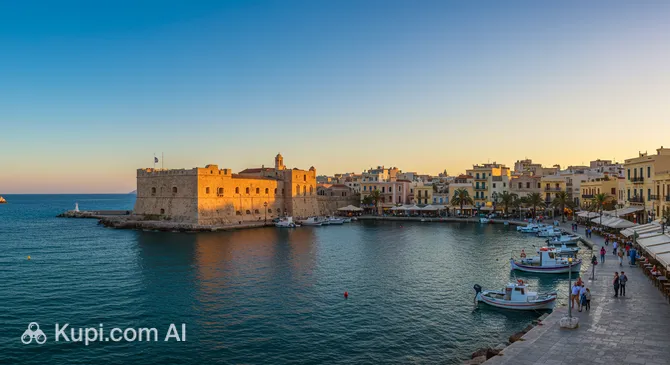
Heraklion is the vibrant administrative capital of Crete and one of the most fascinating destinations in the Mediterranean. As the fifth-largest city in Greece, it serves as a bustling economic and cultural hub, home to approximately 211,000 inhabitants. Located on the island's northern coast, the city offers a unique blend of urban energy and seaside charm, making it the perfect starting point for exploring the region.
Heraklion. Illustration.
Source: Kupi.com AI
The history of Heraklion stretches back thousands of years, serving as a testament to the diverse civilizations that have shaped this land. From the ancient Minoans to the Venetians and Ottomans, every era has left its mark on the city's architecture and character. Today, visitors can walk through centuries of heritage simply by strolling through the old town's fortified walls and lively squares.
Travelers are often drawn here to visit the world-renowned Palace of Knossos, the center of the Minoan civilization and the legendary home of the Minotaur, located just a short distance from the city center. Within the city itself, the imposing Koules Fortress guards the Venetian harbor, while the Heraklion Archaeological Museum houses an unparalleled collection of Minoan art and artifacts.
With its rich cultural tapestry, delicious local cuisine, and welcoming atmosphere, Heraklion invites you to discover its secrets. Whether you are a history buff or simply seeking the warmth of the Cretan sun, this dynamic city promises an unforgettable experience.
Weather Overview
Heraklion enjoys a classic Mediterranean climate, making it a year-round destination with distinct seasonal charms. Visitors can generally expect warm, sun-drenched summers with very little rain and mild, wetter winters. For a more detailed breakdown of what to expect during your specific travel dates, you can consult the guide to the weather in Heraklion.
The summer months, particularly July and August, are the hottest time of the year, with average temperatures hovering around 25.5°C to 25.7°C and daytime highs often reaching nearly 29°C. This period is exceptionally dry, with July typically seeing zero precipitation and only a single wet day on average, ensuring uninterrupted sunshine for beachgoers.
Winters are significantly cooler and bring the majority of the region's rainfall. From December through February, temperatures usually range between a low of roughly 9°C and a high of 14°C. Travelers visiting during these months should pack for mixed conditions, as January and December can see up to 14 wet days per month. Spring and autumn offer a pleasant balance with moderate temperatures, perfect for outdoor exploration.
Average monthly temperature
Average monthly precipitation
Interesting Facts
Beyond the main attractions, Heraklion holds many fascinating secrets. The city's layered history reveals surprising stories of resilience, engineering, and literature that are often overlooked by visitors.
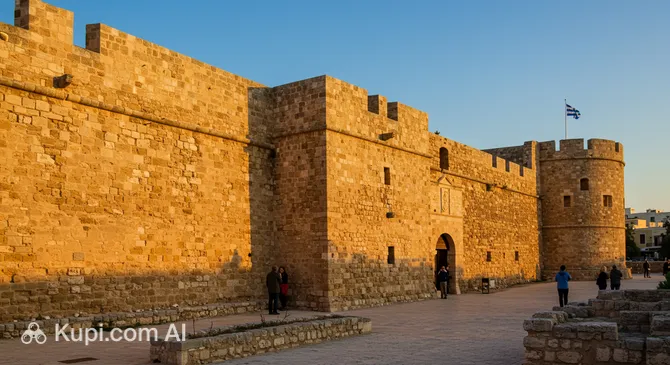
Venetian Walls of Heraklion. Illustration.
Source: Kupi.com AI
Traveler photos:
Heraklion was the site of one of the longest sieges in history. The massive Venetian Walls of Heraklion were so well-constructed that the city’s defenders managed to hold off the Ottoman army for an incredible 21 years, from 1648 to 1669, before finally surrendering.
The city has suffered from an identity crisis over the centuries, changing its name multiple times under different rulers. It was known as Rabdh el-Khandak (Castle of the Ditch) by the Saracens, Candia by the Venetians, and Megalo Kastro (Big Castle) by the Ottomans, before officially reclaiming its ancient name in the 19th century.
The famous Cretan writer Nikos Kazantzakis, author of Zorba the Greek, rests in a highly unusual spot. Because his philosophical views were considered controversial by the church, he was not buried in a cemetery but atop the Martinengo Bastion on the city walls; you can visit the Grave of Nikos Kazantzakis to see his epitaph: "I hope for nothing. I fear nothing. I am free."
The iconic Morosini Fountain in Lions Square was more than just a decoration; it was a feat of Venetian engineering. Francesco Morosini constructed a 15-kilometer aqueduct system to channel fresh water from Mount Juktas, ensuring the city had a reliable water supply for the first time.
How to Get There
Reaching the capital of Crete is a straightforward experience, with several convenient options for international and domestic travelers. To help you plan your journey seamlessly, you can read more about how to get to Heraklion in our detailed guide.
The primary gateway to the city is Heraklion Airport (IATA: HER), officially known as Nikos Kazantzakis Airport. As the main international airport serving the island, it is conveniently located just 2.8 km from the city center. This close proximity means that a transfer by taxi or bus is very quick, typically taking around 25 minutes depending on traffic. It is a busy hub, welcoming millions of visitors each year who come to enjoy the Cretan sunshine.
Another popular option for reaching the island is Chania International Airport (IATA: CHQ), located in the city of Chania. While this airport is approximately 93 km from Heraklion, it is a significant entry point for travelers exploring western Crete or finding better flight connections. The journey from Chania to Heraklion by road usually takes about 2 hours and 40 minutes, offering a scenic drive along the coast.
For clarity, here is a summary of the main airports:
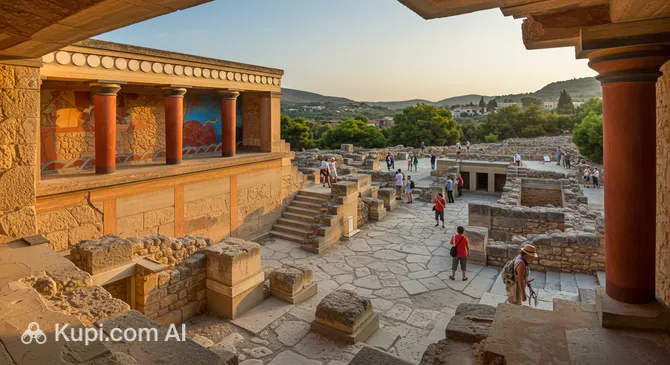
No trip to Heraklion is complete without stepping back in time at the Palace of Knossos. Located just outside the city limits, this vast archaeological site is the probable setting behind the famous legends of the Minotaur and the Labyrinth. Visitors can wander through the partially restored ruins, admiring the vivid red columns and intricate frescoes that offer a fascinating glimpse into the sophisticated world of the Minoans, Europe's oldest city-based civilization.
Palace of Knossos. Illustration.
Source: Kupi.com AI
Traveler photos:
To fully understand the treasures unearthed at Knossos and other local sites, a visit to the Heraklion Archaeological Museum is essential. Considered one of the most important museums in the country, it houses an extensive collection of Minoan art and artifacts spanning over 5,500 years. Highlights include the mysterious Phaistos Disc, elegant jewelry, and the original frescoes from the ancient palaces, all displayed in a modern and well-organized setting.
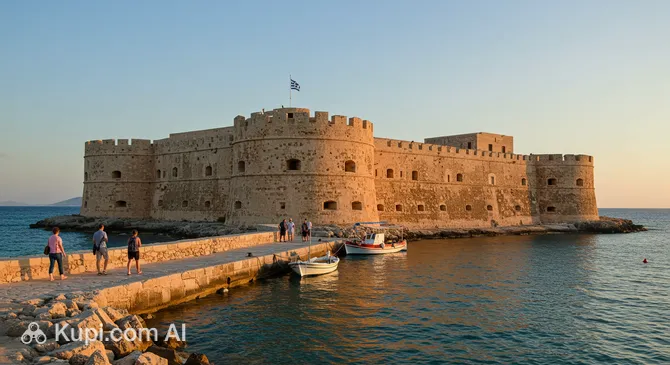
Dominating the entrance to the old port stands the majestic Koules Fortress. Built by the Venetians in the 16th century to protect the city from pirate raids and Ottoman invaders, this massive sea fort is remarkably well-preserved. Today, tourists can explore its vaulted chambers, see historic cannons, and climb to the roof for panoramic views of the harbor and the city skyline.
Koules Fortress. Illustration.
Source: Kupi.com AI
Traveler photos:
For a touch of spiritual grandeur, the Cathedral of Saint Minas is an architectural masterpiece dedicated to the patron saint of Heraklion. As one of the largest cathedrals in Greece, its imposing dome and twin bell towers are visible from many points in the city. The interior is equally breathtaking, featuring stunning Byzantine-style iconography and impressive chandeliers that create a serene atmosphere for reflection.
Local Cuisine
The culinary scene in Heraklion is a vibrant reflection of the famous Cretan diet, widely considered one of the healthiest and most delicious in the world. Local cuisine relies heavily on high-quality ingredients produced on the island, particularly extra virgin olive oil, wild herbs, fresh vegetables, and locally produced cheeses. Dining here is not just about sustenance; it is a social ritual often enjoyed slowly with friends and family in the city's many bustling tavernas.
One dish you absolutely must try is dakos, a quintessential Cretan meze. It consists of a dried barley rusk soaked in olive oil and topped with grated fresh tomato, oregano, and a generous mound of soft mizithra or feta cheese. For those with a sweet tooth, Heraklion is renowned for its bougatsa, a flaky pastry filled with custard or cheese and sprinkled with cinnamon and icing sugar. You will find some of the oldest and most traditional bougatsa shops near Lions Square.
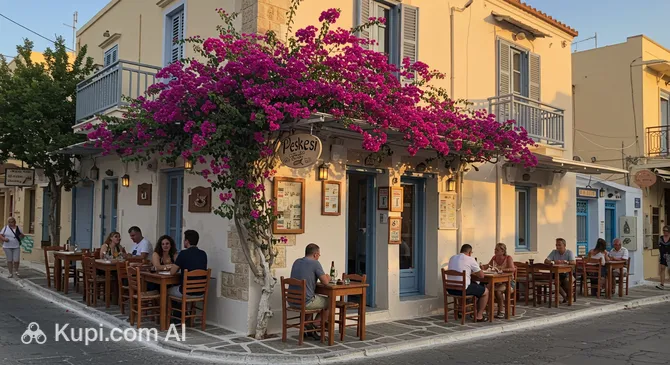
Peskesi. Illustration.
Source: Kupi.com AI
Traveler photos:
When it comes to drinks, the undisputed king of Cretan culture is raki, also known as tsikoudia. This strong, clear spirit distilled from grape pomace is a symbol of hospitality and is almost always served complimentary at the end of a meal, often accompanied by fruit or a small dessert. Unlike the anise-flavored ouzo found elsewhere in Greece, raki is pure and potent. For a non-alcoholic option, try a refreshing glass of homemade lemonade or Greek coffee brewed on hot sand.
To experience the true depth of local flavors, visitors should explore the city's diverse dining establishments. For an authentic gastronomic journey, Peskesi is a highly acclaimed restaurant tucked away in a restored historical mansion, offering dishes based on ancient Minoan and traditional Cretan recipes. Another excellent spot for food lovers is Thigaterra, which focuses on the "slow food" philosophy and sustainable practices.
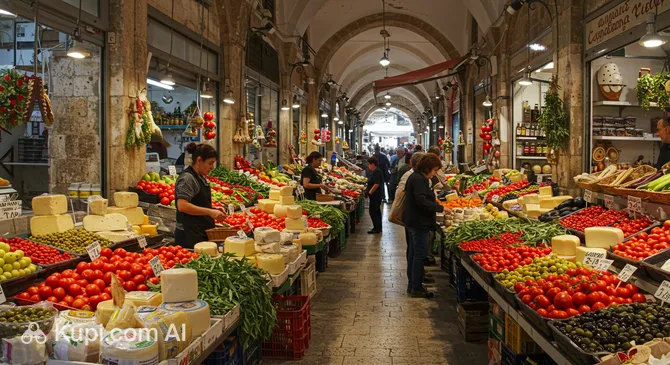
Heraklion Central Market. Illustration.
Source: Kupi.com AI
Traveler photos:
For a more casual and immersive experience, a walk through the Heraklion Central Market (Agora) is a delight for the senses. Here, locals buy their daily supplies of spices, olives, and cheeses. It is the perfect place to grab a quick bite of street food, such as a gyro or souvlaki, and observe the lively daily rhythm of the city's inhabitants.
Travel Tips
To ensure your visit to the bustling capital of Crete is as smooth and enjoyable as possible, a little preparation goes a long way. Here are some essential practical tips to help you navigate Heraklion with confidence and ease.
Clothing and Gear: If visiting in summer, pack breathable fabrics, a wide-brimmed hat, and high-SPF sunscreen to handle the intense Mediterranean sun. Winters are mild but can be wet, so a waterproof jacket and layers are advisable. Comfortable walking shoes are a must for exploring the cobblestone streets of the old town. When visiting religious sites like the Cathedral of Saint Minas, remember to dress modestly, covering shoulders and knees.
Transportation: The city center is compact and best explored on foot. For longer distances, Heraklion has a reliable "Blue Bus" network for urban routes and "Green KTEL" buses for exploring the rest of the island. While renting a car is excellent for seeing Crete, driving within Heraklion can be stressful due to traffic and scarce parking; it is often better to park on the outskirts or use taxis within the city limits.
Finances: The currency is the Euro (€). Credit and debit cards are widely accepted in hotels, restaurants, and larger shops, but it is wise to carry cash for small purchases at kiosks (peripteros), local buses, or traditional markets. Tipping is not mandatory but is customary; rounding up the bill or leaving a 5-10% tip for good service is appreciated.
Health and Safety: Heraklion is a safe city for tourists, but standard precautions against pickpocketing should be taken in crowded areas like Lions Square. Pharmacies are marked with a green cross and are easy to find; a rotating schedule ensures some remain open 24/7 or on weekends. For emergencies, dial 112.
Communication: English is widely spoken throughout the city, especially in the hospitality sector. However, learning a few basic Greek phrases like Kalimera (Good morning) and Efcharisto (Thank you) will go a long way with the locals. Free Wi-Fi is available in most cafes, but for reliable navigation, you can purchase a prepaid SIM card from providers like Cosmote or Vodafone in the city center.
Local Etiquette: Cretans are famous for their hospitality (philoxenia). It is common to be greeted warmly, and the pace of life is generally slower and more relaxed. When dining, service might not be rushed, so embrace the "siga siga" (slowly, slowly) attitude. A firm handshake is a standard greeting for new acquaintances.
What to Avoid: One specific rule in Greece that catches many visitors off guard is the plumbing; do not flush toilet paper down the toilet. The pipes are narrow and easily clogged, so always use the small bin provided next to the toilet. Additionally, avoid refusing a complimentary glass of raki offered after a meal, as this is a gesture of friendship.
Siesta Time: Keep in mind that many smaller local shops observe a midday break (siesta), typically closing around 2:00 PM and reopening after 5:00 PM on Tuesdays, Thursdays, and Fridays. Large supermarkets and tourist-centric shops generally stay open, but if you plan to visit specific boutiques, check their hours in advance.
Armed with this local knowledge, you are all set to experience the authentic charm of Heraklion without the common tourist pitfalls. Embrace the warm Cretan spirit, and your trip is sure to be a memorable adventure.
Entertainment & Nightlife
Entertainment and Nightlife:
Heraklion transforms when the sun goes down, shedding its historical daytime persona to reveal a vibrant and energetic nightlife scene. As a university city and a major tourist hub, the capital of Crete offers a diverse array of evening entertainment that caters to everyone from students seeking a wild night out to couples looking for a romantic cocktail under the stars. The atmosphere is generally relaxed yet lively, with a "come as you are" attitude that makes visitors feel instantly welcome.
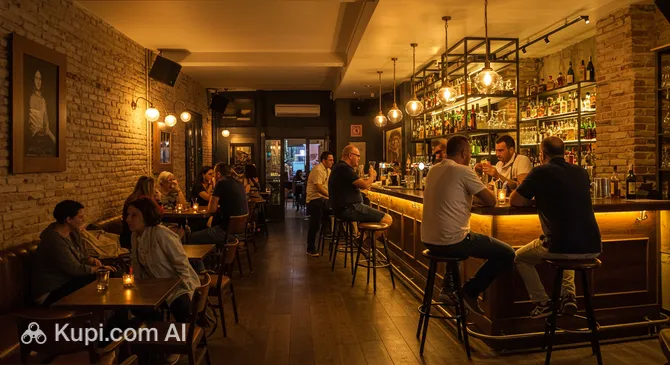
The heart of the city's nightlife beats strongest in the pedestrianized streets of the city center. Korai Street and Milatou Street are the most famous hotspots, lined with rows of bustling cafe-bars that stay open late. Here, the music spills out onto the street, and locals gather to enjoy drinks and conversation. For a sophisticated evening, you can visit Swing Thing, a popular cocktail bar known for its creative menu and upbeat atmosphere. It is an excellent place to start your night before heading to louder venues.
Swing Thing. Illustration.
Source: Kupi.com AI
Traveler photos:
If you prefer a more rhythmic experience, the city has several clubs that keep the energy high until the early hours. Senses Club is a staple of Heraklion's clubbing scene, frequently hosting DJs and themed parties that draw a younger crowd. For those who enjoy a mix of dining and music, El Sur Ethnic Resto Bar offers a colorful setting with Latin American influences, perfect for enjoying exotic flavors and drinks in a festive environment. Another notable spot for late-night entertainment is Phygokentros, where the music often continues well past midnight.
During the summer months, the action often shifts towards the waterfront and the coastal road west of the harbor (Ammoudara area), where open-air beach bars and clubs take advantage of the warm sea breeze. The dress code in Heraklion is generally smart-casual; while some high-end clubs might appreciate a polished look, most bars are very accepting of relaxed summer attire.
Practical Tips for Night Owls:
Timing: The night starts late in Greece. Bars typically get busy after 10:00 PM, and clubs often don't reach their peak until 1:00 AM or 2:00 AM.
Prices: Nightlife here is generally more affordable than in Mykonos or Santorini. A beer usually costs around €4-6, while cocktails range from €8-12.
Safety & Transport: Heraklion is safe for night walks, especially in the busy center. However, public transport stops running around midnight. The best way to return to your hotel is by taxi. You can find taxi ranks at major squares like Eleftherias Square, or simply use a radio taxi service.
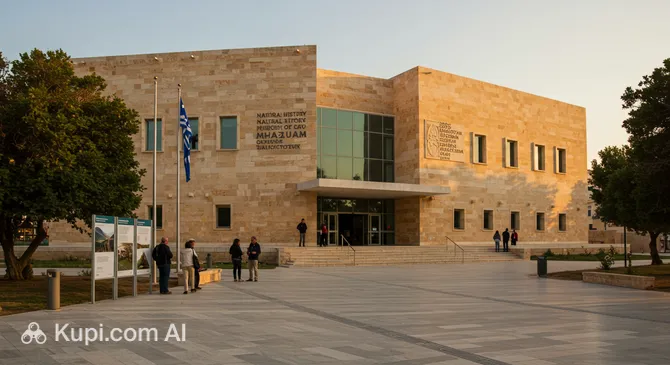
While the nights are for partying, the city offers plenty of daytime entertainment beyond the ancient ruins. Families and thrill-seekers can head to Luna Park Katerina, a classic amusement park offering rides and games that provide a fun break from sightseeing. For a more educational yet engaging experience, the Natural History Museum of Crete is a fantastic destination. Located on the seafront, it features interactive exhibits, including a simulator that lets you safely experience an earthquake, making it a hit with children and adults alike.
Natural History Museum of Crete. Illustration.
Source: Kupi.com AI
Traveler photos:
Culture enthusiasts should also consider the Historical Museum of Crete, which offers a deep dive into the island's Christian, Venetian, and Ottoman eras, contrasting beautifully with the Minoan focus of other sites. Whether you are exploring the wonders of science by day or dancing the night away, Heraklion ensures there is never a dull moment.
Parks & Museums
While Heraklion is primarily known for its bustling urban energy and ancient fortifications, the city also offers refreshing pockets of greenery and a wealth of cultural institutions that go beyond the famous archaeological sites. For travelers seeking a quiet escape or a deeper dive into specific aspects of Greek heritage, the city's parks and specialized museums provide a perfect counterbalance to the busy streets.
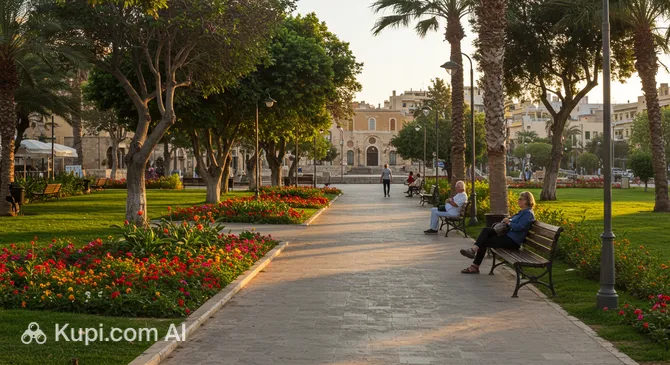
One of the most beloved green spaces in the city center is Georgiadis Park. Located just a short walk from Freedom Square, this lush oasis serves as the city's main "lung," filled with eucalyptus, cypress, and pine trees that offer welcome shade during the hot summer months. It is a favorite spot for locals to enjoy a coffee at the park's chalet, while children play in the playground. The park often hosts open-air concerts and organic markets, making it a lively hub of community life.
Georgiadis Park. Illustration.
Source: Kupi.com AI
Traveler photos:
For those who prefer the "blue" of nature to the green, a visit to Karteros Beach is highly recommended. situated just east of the airport, this expansive sandy stretch is more than just a place to swim; it is a natural area backed by hills and the mouth of a gorge. It offers a relaxed atmosphere with organized facilities, making it an ideal escape for visitors wanting to combine a seaside experience with views of the rugged Cretan landscape.
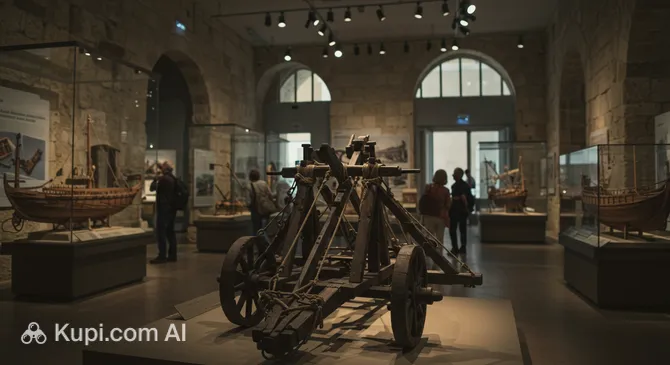
Heraklion's museum scene is world-class. While the massive archaeological collections draw the crowds, the city is also home to unique institutions like the Museum of Ancient Greek Technology. This fascinating venue highlights the incredible ingenuity of the ancient Greeks, showcasing working replicas of inventions such as the Antikythera mechanism, ancient robots, and telecommunication devices. It provides an interactive and educational experience that reveals the scientific prowess of the ancestors, often surprising visitors with how advanced their technology truly was.
Museum of Ancient Greek Technology. Illustration.
Source: Kupi.com AI
Traveler photos:
To understand the soul of Crete through its sounds, a visit to the Thirathen Museum of Musical Instruments is essential. Housed in a beautifully restored building, this museum is dedicated to the musical tradition of the Mediterranean. It displays a wide array of traditional instruments, from the lyra to the laouto, and explores how music has been an integral part of social and religious life on the island for centuries.
For a truly authentic and off-the-beaten-path experience, consider taking a short trip to the Agia Irini Aqueduct in the Spilia area. This impressive historical structure, built by the Egyptians during their occupation in the 1830s, is set within a picturesque valley. It offers a peaceful setting for a walk, allowing you to admire a piece of engineering history surrounded by the quiet beauty of the Cretan countryside.
Getting Around
The public transport system in Heraklion is primarily reliant on a comprehensive bus network, as the city does not have a metro, tram, or train service. For visitors, this means that getting around is relatively simple, with the "KTEL" bus service forming the backbone of local mobility. The system is efficient and connects the city center with major points of interest, including the airport, the port, and nearby archaeological sites.
The buses are divided into two distinct categories based on their color and destination. Blue Buses (Urban KTEL) serve the city itself and its immediate suburbs. These are the buses you will use to travel from the airport to the city center, to the Palace of Knossos, or to the coastal resort area of Ammoudara. Green Buses (Regional KTEL), on the other hand, are designed for longer journeys to other towns and villages across the island, such as Chania, Rethymno, or Agios Nikolaos.
Payment for transport is straightforward, but it is important to know that tickets should generally be purchased before boarding. You can buy tickets at small street kiosks known as "peripteros," at ticket machines located at major bus stops, or at the central bus stations. While it is sometimes possible to buy a ticket from the driver at a higher price, this is not guaranteed for all routes. Ticket prices are affordable, typically ranging from €1.10 to €2.00 depending on the distance zone (Zone A or Zone B).
Once you board the bus, you must validate your ticket immediately using the machines provided. The operating hours for urban buses generally run from early morning, around 6:00 AM, until late evening, approximately 11:00 PM. Frequencies vary, with popular lines like the one to Knossos or the Airport running every 10 to 20 minutes during peak tourist seasons, while suburban lines may be less frequent.
For those seeking more flexibility, taxis are a widely available alternative. You can easily hail them on the street, find them at designated ranks in major squares like Eleftherias Square, or book them via phone or mobile apps. Taxis operate on a meter system, and while they are more expensive than buses, they offer a convenient door-to-door service, especially late at night when buses are not running.
Given the compact nature of Heraklion's historic center, walking is often the best way to explore the main attractions within the Venetian walls. However, if you plan to venture beyond the city limits to explore hidden beaches or mountain villages, renting a car is a very popular choice among tourists. Car rental agencies are plentiful at the airport and in the city center, offering the freedom to explore the island at your own pace.
Accommodation
Finding the perfect place to stay in Heraklion is relatively easy, as the city offers a wide spectrum of accommodation options to suit every budget and travel style. Whether you are a backpacker looking for a sociable hostel, a family seeking a convenient city apartment, or a couple desiring the luxury of a five-star seaside resort, the region has something to offer. The hospitality standards are generally high, reflecting the island's long tradition of welcoming visitors.
For those who want to be in the heart of the action, staying in the City Center is the most practical choice. Accommodation here places you within walking distance of major landmarks like the Lions Square, the Archaeological Museum, and the Venetian Harbor. This area is ideal for history buffs and those who want to enjoy the city's vibrant nightlife and dining scene without worrying about transportation. However, if your priority is sun and sea, you might prefer the coastal suburbs such as Ammoudara to the west or Karteros to the east. These areas feature long stretches of sandy beaches and are lined with larger resort complexes.
Candia Maris. Illustration.
Source: Kupi.com AI
Traveler photos:
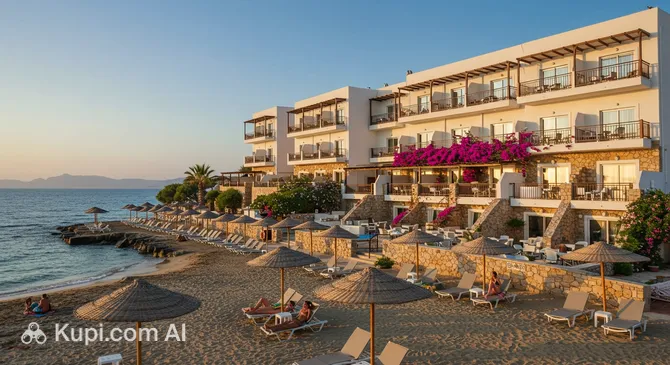
Travelers looking for a premium resort experience often choose properties located along the coast, where amenities are plentiful. For example, Candia Maris is a well-known resort hotel that offers guests a blend of relaxation and luxury right by the water. Similarly, the Teatro Beach Resort provides excellent facilities for those who wish to unwind in style while remaining close enough to the city to visit its attractions. These types of accommodations typically feature pools, spa services, and direct beach access.
Booking Tips and Prices:
Heraklion is a year-round destination, but demand peaks significantly during the summer months of July and August. During this time, it is highly recommended to book your accommodation at least two to three months in advance to secure the best rates and availability. In the shoulder seasons of spring and autumn, last-minute deals are easier to find.
Price ranges vary considerably depending on the category and season:
Budget: Hostels and basic hotels typically range from €40 to €70 per night.
Mid-Range: Comfortable city hotels and boutique apartments usually cost between €80 and €150 per night.
Luxury: High-end resorts and exclusive suites generally start from €200 and can go much higher.
Most accommodations can be easily booked through major online travel platforms, though contacting smaller family-run hotels directly can sometimes result in a warmer welcome or a better offer.
Nearby Cities
For those looking to explore the surroundings, Heraklion serves as an excellent base for day trips to several interesting nearby locations. Just a short drive west, Rethymno charms visitors with its well-preserved Renaissance architecture and the massive Fortezza castle guarding the old town. Further to the west, Chania is often cited as the island's most beautiful city, featuring a stunning Venetian harbor and a maze of atmospheric alleyways. To the east, the coastal town of Agios Nikolaos offers a more relaxed vibe, centered around the picturesque Lake Voulismeni, which is lined with inviting cafes and restaurants.
These nearby destinations offer a glimpse into the diverse culture and landscapes of the region.
Shopping & Souvenirs
Shopping in Heraklion offers a delightful mix of modern European trends and traditional Cretan culture. As the commercial hub of the island, the city caters to all tastes, ranging from high-end fashion boutiques to quaint local workshops. Visitors will find that the shopping experience here is not just about purchasing goods but also about exploring the vibrant streets and discovering the rich craftsmanship that Crete is famous for.
The heart of the city's retail scene beats along Dedalou Street, a lively pedestrian avenue lined with international brand names, designer stores, and chic jewelry shops. It is the perfect place for a leisurely stroll while browsing for clothes and accessories. Connected to it is Dikaiosynis Avenue, another major thoroughfare where you can find larger department stores and popular commercial chains. For a more traditional atmosphere, the pedestrianized side streets around Lions Square are filled with smaller boutiques selling books, music, and local art.
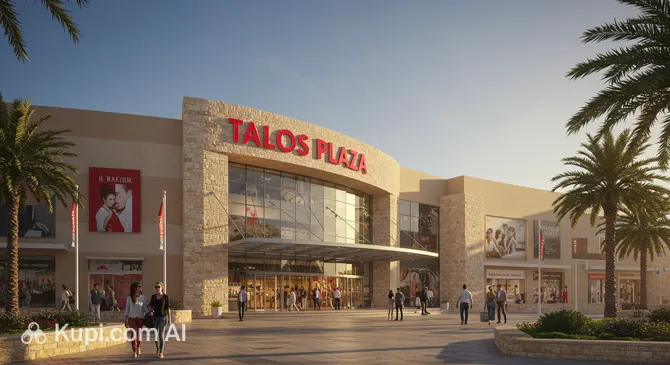
For those who prefer a comprehensive shopping experience under one roof, Talos Plaza is the city's premier destination. Located on the seafront just outside the ancient walls, this modern shopping center features a wide variety of fashion outlets, electronics stores, and cafes. Its open-air design allows visitors to enjoy the pleasant sea breeze while moving between shops, making it a favorite spot for both locals and tourists.
Talos Plaza. Illustration.
Source: Kupi.com AI
Traveler photos:
An essential stop for any visitor is the Heraklion Central Market, often referred to simply as the "Agora," located along 1866 Street. This historic market street is a sensory explosion of colors and scents. Here, vendors display an abundance of fresh local produce, aromatic herbs, and spices. It is the ideal place to mingle with the locals and get a true taste of the island's daily life.
When it comes to souvenirs, Heraklion offers high-quality local products that make for perfect gifts. Cretan olive oil and honey are top choices, renowned worldwide for their purity and flavor. Other popular items include dried herbs like oregano and mountain tea, handmade leather sandals, and ceramics. For something truly unique, look for a traditional Cretan knife, often engraved with a poem (mantinada) on the blade, or a bottle of local raki.
Store opening hours in Heraklion can be a bit complex for visitors used to all-day shopping. Generally, shops open around 9:00 AM. On Mondays, Wednesdays, and Saturdays, they typically close by 2:30 PM. On Tuesdays, Thursdays, and Fridays, they observe a split shift, closing for a siesta in the afternoon and reopening from approximately 5:30 PM to 9:00 PM. Large supermarkets and malls like Talos Plaza usually stay open continuously from morning until evening on weekdays and Saturdays. Most shops are closed on Sundays, except for souvenir shops and mini-markets in tourist areas. Major credit and debit cards are widely accepted, though carrying some cash is advisable for small purchases in the market.
Travelers from outside the European Union may be eligible for a VAT refund on purchases made in stores that display the "Tax Free" sign. To claim this, you typically need to spend a minimum amount (often around €50) in one store and ask for a tax-free form at the checkout, which you will then present at the airport customs upon departure.