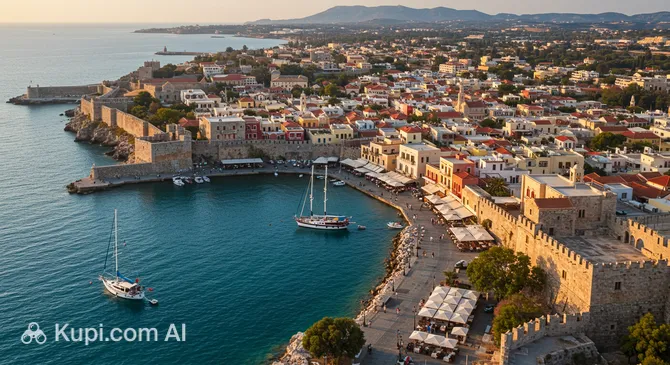
Rhodes is the largest of the Dodecanese islands and stands as one of the most captivating destinations in the Mediterranean. Known as the "Island of the Knights," it offers a unique atmosphere where medieval architecture seamlessly blends with lively modern culture and stunning natural beauty. From its sun-drenched beaches to its fortified old town, the city exudes a charm that appeals to history buffs and beach lovers alike.
Located in the South Aegean region, this historic city is a jewel of Greece. It serves as a major port and is home to a population of approximately 57,000 people. The island enjoys a wonderful Mediterranean climate, characterized by mild winters and hot, sunny summers, making it an ideal location for outdoor exploration almost year-round.
Rhodes. Illustration.
Source: Kupi.com AI
The rich and complex history of Rhodes is visible at every turn, particularly within the walls of the Medieval Old Town, a UNESCO World Heritage site. Visitors can walk the famous Street of the Knights or marvel at the imposing Palace of the Grand Master, which transports travelers back to the era of the Crusades. Beyond the fortifications, the city offers vibrant markets and scenic harbors that reflect its long-standing maritime heritage.
Whether you are eager to explore ancient ruins or simply wish to relax by the turquoise sea, Rhodes promises an unforgettable journey. Its perfect combination of cosmopolitan energy, historical depth, and warm hospitality makes it a top recommendation for your next travel adventure.
Weather Overview
The climate in Rhodes is defined by distinct seasons, offering hot summers and mild winters. From June to September, the weather is perfect for sunbathing, with August seeing average temperatures of 27.0°C and zero wet days. Travelers visiting during this time can enjoy consistent sunshine and warmth, with maximum temperatures reaching up to 28.5°C.
In contrast, the winter months are cooler and significantly wetter. January is the coolest month with an average of 13.4°C and frequent precipitation, recording about 16 wet days. For a deeper dive into seasonal conditions, you can view the detailed weather in Rhodes page.
Expect hot, dry summers with highs around 28°C and mild, damp winters where temperatures stay comfortably above 12°C.
Average monthly temperature
Average monthly precipitation
Interesting Facts
Beyond the main attractions, Rhodes holds many fascinating secrets that reveal layers of history spanning thousands of years. The city is a tapestry of myths and medieval realities, offering stories that go far beyond standard guidebooks.
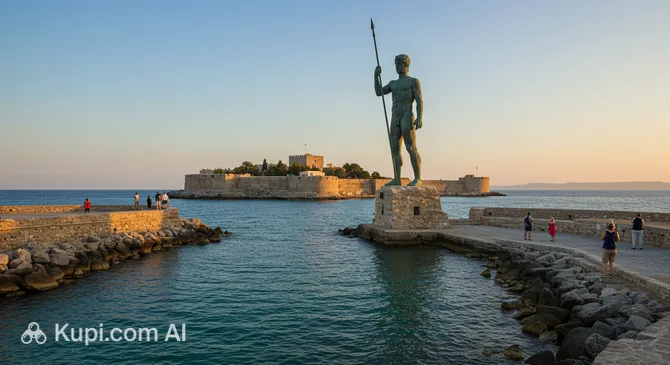
Colossus of Rhodes. Illustration.
Source: Kupi.com AI
Traveler photos:
Although the massive Colossus of Rhodes was destroyed by an earthquake in 226 BC, its legend continues to define the harbor. Today, instead of the giant sun god, two bronze statues of deer—Elafos and Elafina—stand on columns at the Mandraki harbor entrance, symbolizing the fallow deer that are native to the island's forests.
The Medieval City of Rhodes is distinct because it is not just a historical monument but a vibrant, living community. Unlike many other UNESCO World Heritage sites that become ghost towns at night, approximately 6,000 residents still live and work within these 14th-century walls, making it the oldest inhabited medieval town in Europe.
A walk down the Street of the Knights offers a glimpse into the structured life of the Order of St. John. The historic inns lining this cobblestone path were originally organized by "tongues," or languages, serving as quarters for knights from different countries, which functioned similarly to modern embassies.
The magnificent Palace of the Grand Master of the Knights of Rhodes features a surprising artistic detail from another island. During the Italian restoration in the 1930s, intricate ancient floor mosaics were transported from the island of Kos to pave the palace halls, meaning visitors are walking on art that originated miles away.
How to Get There
Reaching this Dodecanese gem is relatively straightforward, with air travel being the most popular method for international visitors. While the island is well-connected, planning your arrival depends on your starting point and preferred mode of transport. For a complete breakdown of routes, including ferries and seasonal connections, you can read more about how to get to Rhodes.
The primary gateway to the island is Rhodes Airport (IATA: RHO), also known as Diagoras International Airport. It is conveniently located just 12.2 km from the city center. As a major hub handling significant passenger traffic, it receives numerous international and domestic flights, especially during the summer season. The journey from the airport to the city center typically takes approximately 40 minutes by taxi or bus, making it a quick and efficient transfer.
Travelers may also consider arriving via nearby transport hubs combined with a sea crossing. Dalaman Airport (IATA: DLM) in the city of Mugla is situated about 60 km away across the water. While it serves as a large regional airport, reaching Rhodes from here requires a transfer to a ferry. Similarly, Kos Airport (IATA: KGS) on the neighboring island of Kos is another option, located roughly 108 km away, offering connections via the extensive Greek ferry network.
For clarity, here is a summary of the main airports:
Rhodes is a city where layers of history coexist with vibrant modern life, offering visitors a wealth of sights ranging from ancient ruins to sun-soaked coastlines. Whether you are a history enthusiast or simply looking for picturesque views, the city's landmarks provide a fascinating journey through time.
The heart of the island's capital is the Medieval City of Rhodes, a UNESCO World Heritage site that stands as one of the best-preserved medieval settlements in Europe. Walking through its imposing gates feels like stepping back into the era of the knights. Visitors can lose themselves in a maze of cobblestone alleys filled with shops, traditional tavernas, and historic architecture that has remained largely unchanged for centuries.
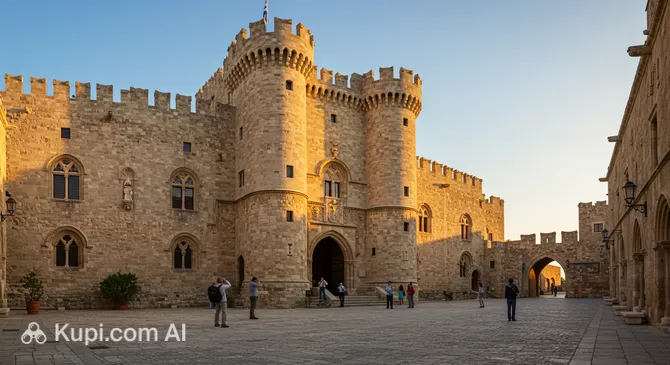
Dominating the highest point of the old town is the magnificent Palace of the Grand Master of the Knights of Rhodes. Originally built as a Byzantine citadel and later expanded by the Knights of St. John, this massive fortress is a masterpiece of Gothic architecture. Today, it operates as a museum, allowing tourists to explore its grand halls, intricate mosaic floors, and impressive fortifications that once defended the city against sieges.
Palace of the Grand Master of the Knights of Rhodes. Illustration.
Source: Kupi.com AI
Traveler photos:
For a glimpse into the island's ancient past, the Acropolis of Rhodes offers a serene escape from the bustling town center. Located on Monte Smith Hill, this site features the remnants of the Temple of Apollo, an ancient stadium, and a small theatre. Unlike the fortified medieval town, the Acropolis is open and blends naturally with the landscape, providing spectacular panoramic views of the Aegean Sea and the sunset.
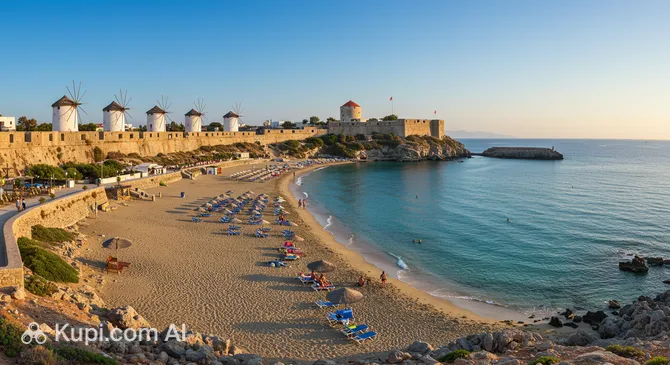
If you prefer to relax by the water, Elli Beach is the city's most famous coastal destination. Situated at the northern tip of the town, this cosmopolitan beach is known for its crystal-clear waters and the iconic diving board that sits offshore. It is a perfect spot to unwind on a sunbed, enjoy water sports, or sip a cold drink at one of the lively beach bars while soaking up the Mediterranean sun.
Elli Beach. Illustration.
Source: Kupi.com AI
Traveler photos:
Culture lovers should not miss the Archaeological Museum of Rhodes, housed in the monumental Hospital of the Knights. The building itself is an architectural gem, and inside, visitors can discover a vast collection of artifacts, including burial finds, statues, and jewelry that tell the story of the island's rich heritage from the Mycenaean era to the Middle Ages.
Local Cuisine
The culinary scene in Rhodes is a delightful reflection of its rich history, blending traditional Greek flavors with subtle influences from the Ottoman era and the wider Mediterranean. The island is blessed with fertile soil and abundant sunshine, producing fresh ingredients like olive oil, citrus fruits, and herbs that form the backbone of local recipes. Dining here is not just about sustenance; it is a social ritual often enjoyed slowly in the open air.
One of the most iconic dishes to try is pitaroudia, delicious chickpea fritters made with onions, tomatoes, and plenty of mint, often served as a starter. Meat lovers should look for lakani (or lakanie), a hearty stew traditionally prepared with beef or lamb and coarse wheat (chondros), slow-cooked in a ceramic pot overnight. Being an island, fresh seafood is also a staple, with grilled octopus and stuffed squid featuring prominently on tavern menus near the harbors.
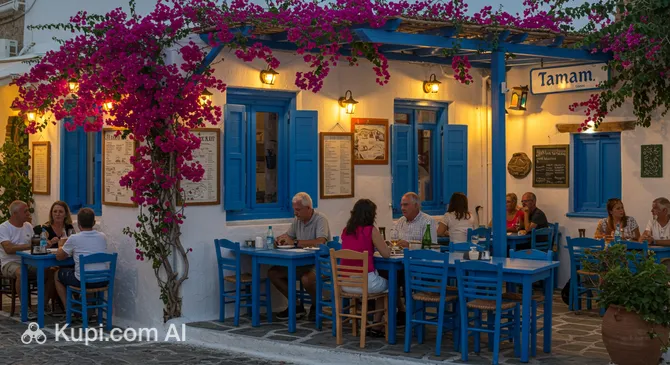
Tamam Restaurant. Illustration.
Source: Kupi.com AI
Traveler photos:
No meal in Rhodes is complete without sampling the local beverages. The island has a long tradition of winemaking, producing excellent varieties from the Athiri and Mandilaria grapes. For a sophisticated tasting experience, you might visit the 10GR Boutique Hotel & Wine Bar, which specializes in Greek wines. If you prefer something stronger, try souma, a potent local spirit similar to raki, distilled from grape pomace and often offered as a gesture of hospitality after a meal.
The food culture ranges from casual street food to upscale dining. For a quick and authentic bite, the historic New Market (Nea Agora) is a bustling spot where you can find traditional grill houses serving souvlaki and gyros amidst striking architecture. Conversely, for a seated dinner in a charming atmosphere, places like Tamam Restaurant offer a fusion of Greek and Oriental tastes, while Il Borgo provides a scenic setting to enjoy classic Mediterranean dishes within the old town.
Travel Tips
Planning a trip to this historic city in Greece is exciting, but a few insider tips can transform a good vacation into a truly seamless experience. To help you navigate the medieval streets and sunny coastlines with ease, here is a practical guide covering everything from packing essentials to local customs.
Clothing and Gear: Summers are hot and sunny, so bring breathable fabrics, sunglasses, and a hat. However, the Meltemi wind can make evenings feel breezy, so a light jacket is useful. Most importantly, pack sturdy, flat walking shoes; the beautiful cobblestone streets of the Old Town are uneven and difficult to navigate in heels. If you plan to visit churches or monasteries, remember to dress modestly by covering your shoulders and knees.
Transportation: Within the Medieval City, walking is the only way to get around as cars are largely restricted. For trips to nearby beaches or the airport, the local bus network (RODA and KTEL) is reliable and affordable. While taxis are available, renting a car is highly recommended if you wish to explore the wider island at your own pace, though finding parking near the city center can be challenging during peak season.
Finances: The official currency is the Euro (€). While credit and debit cards are widely accepted in hotels, restaurants, and shops, it is smart to carry some cash for small purchases at kiosks, local buses, or smaller tavernas. ATMs are plentiful throughout the city. Tipping is customary but not mandatory; rounding up the bill or leaving 5-10% for good service is a kind gesture.
Health and Safety: Rhodes is generally a very safe destination, but it is always wise to keep an eye on your belongings in crowded tourist spots. Pharmacies are marked with a green cross and are easy to find; they operate on a rotating schedule for night and weekend shifts. For emergencies, dial 112. Although tap water is safe to brush your teeth, the high mineral content can taste salty, so bottled water is preferred for drinking.
Communication: The official language is Greek, but English is widely spoken and understood, especially in the tourism sector. Locals appreciate it when visitors try a few basic words: say "Kalimera" for Good morning and "Efcharisto" for Thank you. Wi-Fi is available in most cafes and hotels, and EU residents can use their home mobile data without roaming fees.
Local Etiquette: Greek culture is warm and hospitable. Dining is considered a social event to be enjoyed slowly, so do not be surprised if service feels relaxed—waiters are simply respecting your time and will not rush you to leave. When greeting people, a handshake is standard, though friends often greet with a kiss on both cheeks.
What to Avoid: Respect the local culture by not wearing beachwear (bikinis or shirtless) in the city center, shops, or restaurants; save that for the beach. Also, avoid climbing on ancient walls or monuments unless there are signs explicitly permitting it, as preserving the historical heritage is taken seriously.
Siesta Time: Keep in mind the concept of quiet hours or "mesimeri." While tourist shops in the Old Town stay open all day, many local businesses, pharmacies, and offices outside the main hub may close between 2:00 PM and 5:00 PM for a midday break, reopening in the evening.
Armed with these practical tips, you are ready to embrace the laid-back rhythm and historic charm of Rhodes. Enjoy every moment of your journey, from the first morning coffee to the stunning sunset over the Aegean Sea.
Entertainment & Nightlife
Entertainment and Nightlife:
Rhodes offers a vibrant nightlife scene that caters to every taste, split primarily between the atmospheric Medieval City and the energetic New Town. As the sun sets, the Old Town transforms into a sophisticated hub of entertainment. The area around Hippocrates Square and Miltiadou Street is lined with stylish bars and rooftop terraces where you can enjoy a drink surrounded by centuries-old history. For those seeking a wilder party atmosphere, the famous Orfanidou Street (often called "Bar Street") in the New Town is the place to be, featuring loud music, neon lights, and clubs that stay open until dawn.
For a refined evening, visitors should explore the city's thriving cocktail culture. The Last Butler is a standout venue, known for its 1920s speakeasy vibe, jazz music, and expertly crafted signature drinks. It is an ideal spot for a relaxed conversation in a unique setting. Another excellent choice within the castle walls is L’Éternel French Bar, which offers a romantic atmosphere and a great selection of wines and cocktails, perfect for soaking up the medieval charm.
The Last Butler. Illustration.
Source: Kupi.com AI
Traveler photos:
If you prefer a more laid-back environment or are a fan of craft brews, Beerokouto is a must-visit. This bar specializes in a wide variety of beers from microbreweries, offering a refreshing alternative to the standard lager found elsewhere. The dress code in Rhodes is generally casual, though "smart casual" is appreciated in the upscale bars of the Old Town. Most nightlife venues open around 9:00 PM, but the real action typically begins after midnight and continues well into the early morning hours.
Navigating the city at night is generally safe, even for solo travelers, though it is always wise to stick to well-lit main streets. Walking is the best way to move between bars in the Old Town, as vehicles are restricted. If you need to travel further or return to your hotel in the New Town, official taxis are dark blue with white roofs and can be found at designated ranks, such as the one at Mandraki Harbour. It is recommended to agree on the fare or ensure the meter is running before starting your journey.
Before the night begins, the city offers plenty of daytime diversions beyond the beaches. History enthusiasts can experience the Throne of Helios, a unique 9D entertainment center that combines cinema with a museum to narrate the history of Rhodes in an immersive way. Families or those looking for an adrenaline rush might enjoy My Escape, an amusement park offering various activities and games to break up the sightseeing routine.
Throne of Helios. Illustration.
Source: Kupi.com AI
Traveler photos:
Parks & Museums
Beyond its fortified walls and sun-drenched beaches, Rhodes offers a surprising wealth of green spaces and cultural institutions that preserve its multifaceted heritage. From ancient pine-covered hills to galleries housed in medieval hospitals, the city provides ample opportunities to connect with nature and history in a quieter setting.
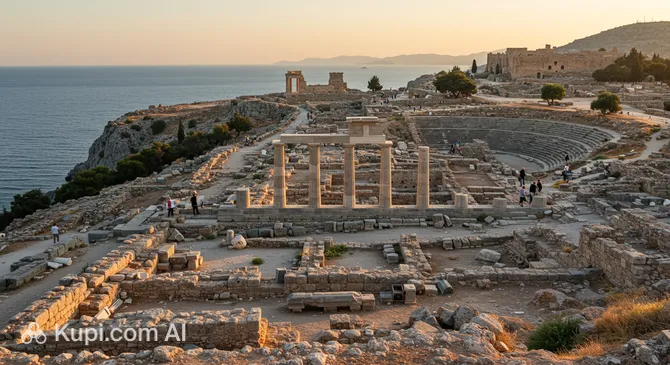
One of the most significant natural and historical areas is Monte Smith Hill. Located just a short distance from the city center, this elevated park offers breathtaking panoramic views of the Aegean Sea and the Turkish coast. It is not just a viewpoint but a historical site, home to the Acropolis of Rhodes. Here, visitors can stroll among olive trees and explore the beautifully preserved Ancient Stadium of Rhodes, where athletes once competed in honor of the sun god Helios. It is a perfect spot for a sunset walk, combining nature with the grandeur of antiquity.
Monte Smith Hill. Illustration.
Source: Kupi.com AI
Traveler photos:
For a lush escape, Rodini Park is a hidden gem often cited as one of the oldest landscaped parks in the world. Situated about three kilometers from the town, this verdant valley is shaded by plane trees and traversed by cool streams. It is famous for its resident peacocks that roam freely, adding a splash of color to the green surroundings. The park provides a cool retreat from the summer heat and features a small zoo and Hellenistic tombs carved into the rock, making it a favorite for both families and nature lovers.
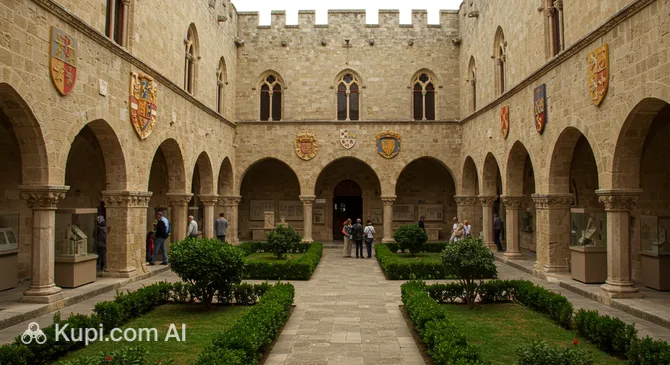
Delving into the city's cultural depth, the Archaeological Museum of Rhodes is an absolute must-visit. Housed in the monumental Hospital of the Knights of Saint John, the building itself is a masterpiece of Gothic architecture. Inside, the collection spans thousands of years, featuring exquisite pottery, jewelry, and sculpture, including the famous marble statue of the "Crouching Aphrodite." The museum’s open-air courtyard, filled with fragrant herbs and mosaics, offers a serene atmosphere to digest the rich history on display.
Archaeological Museum of Rhodes. Illustration.
Source: Kupi.com AI
Traveler photos:
Another poignant cultural site is the Jewish Museum of Rhodes, located near the Square of the Jewish Martyrs in the heart of the Jewish Quarter (La Juderia). This modest but powerful museum documents the long history of the Jewish community on the island. The square itself is a moving tribute, centered around a fountain adorned with seahorses, and serves as a quiet place for reflection amidst the bustling Old Town.
Architectural enthusiasts should also seek out the Saint Nicholas Fortress at the end of the Mandraki harbor mole. Standing guard near the iconic Rhodes Windmills, this fortification has defended the city for centuries. While access to the interior can be limited, the walk along the pier to reach it is refreshing, offering close-up views of the three medieval windmills that once ground grain for the city's merchants.
For a truly atmospheric experience, try walking the Moat of the Medieval City. Now a dry, landscaped promenade, the moat allows you to walk around the perimeter of the massive defensive walls from below. It is a peaceful, park-like route that highlights the sheer scale of the fortifications away from the crowds of the main streets.
Getting Around
Public transport in Rhodes is primarily reliant on a comprehensive bus network, as there is no metro, tram, or trolleybus system on the island. For tourists staying in the city, the bus service is an efficient and affordable way to reach nearby beaches, the airport, and suburban resorts. The system is divided between two main operators: RODA, which serves the city of Rhodes and the suburban areas (west coast), and KTEL, which connects the capital with villages and resorts on the east coast. The central hub for both companies is located near the New Market (Nea Agora) at Mandraki Harbour, making it easy to find your route.
The payment system is straightforward, operating mostly on single-journey paper tickets rather than rechargeable smart cards. Ticket prices vary depending on the distance, typically ranging from €2.00 to €3.00 for standard trips within the city and nearby zones. It is highly recommended to purchase tickets before boarding at designated kiosks, mini-markets, or automatic vending machines located at major stops. While you can buy tickets directly from the driver, this often incurs a surcharge, making the pre-purchased option the most economical choice.
For a smooth experience, always validate your ticket immediately upon entering the bus by inserting it into the machine. Buses generally run from early morning until late at night, with frequency increasing during the peak summer season. However, schedules can be "relaxed," so it is wise to arrive at the bus stop a few minutes early and be prepared for minor delays. In the evenings, services may become less frequent, so check the return times posted at the station if you plan to stay out late.
Taxis are a popular alternative, especially for travelers with luggage or those wishing to avoid crowded buses. Official taxis are dark blue with white roofs and can be found at designated ranks, such as the large one at Mandraki Harbour or outside the airport. While many drivers use meters, there are often fixed rates for popular routes like the airport transfer. Ride-hailing apps are not as dominant here as in other European cities, so hailing a cab on the street or calling a radio taxi service is the standard practice.
Given the historic nature of the city, walking is often the best "transport" method, particularly within the Medieval Old Town where cars are restricted. For exploring the coastline or the New Town, renting a car or a scooter is very common among tourists, giving you the freedom to discover the island at your own pace. However, be aware that parking in the city center can be notoriously difficult during the high season.
A unique feature of the local transport landscape is the Tourist Road Train. This is not a rail vehicle but a rubber-tired train that offers a leisurely loop around the city's key landmarks, including the Acropolis on Monte Smith. Additionally, sea buses or water taxis operate from Mandraki Harbour, offering a scenic and practical way to travel to nearby destinations like Lindos or Faliraki by boat, bypassing road traffic entirely.
Accommodation
Finding the perfect place to stay in Rhodes is effortless, as the city offers a diverse range of accommodation options to suit every traveler's style and budget. The choices span from atmospheric boutique guesthouses tucked away in medieval alleys to sprawling luxury resorts lining the azure coast. Whether you are a backpacker looking for a budget-friendly hostel or a family seeking an all-inclusive hotel with extensive amenities, the island’s capital has something to offer.
The location you choose largely depends on the experience you desire. Staying within the Medieval City is ideal for history enthusiasts who want to wake up surrounded by centuries-old architecture and romantic cobblestone streets. However, these properties are often smaller and may lack pools due to preservation laws. In contrast, the New Town and the coastal strip towards Ialyssos Beach are perfect for those prioritizing beach access, modern conveniences, and larger swimming pools. This area serves as a strategic base, offering proximity to both the sea and the city's vibrant nightlife.
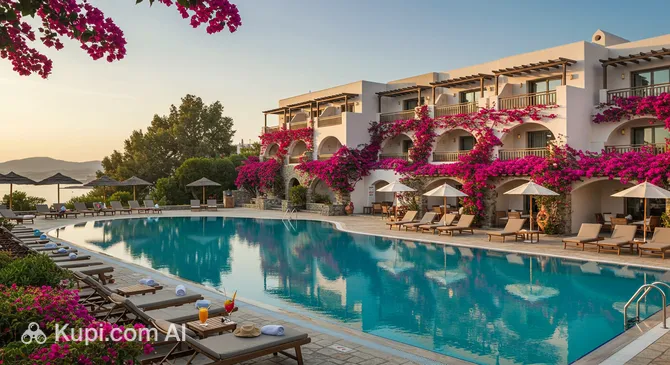
Amus Hotel & Spa. Illustration.
Source: Kupi.com AI
Traveler photos:
For travelers seeking a blend of comfort and luxury, the city boasts several high-end establishments. The Amus Hotel & Spa is a notable option for those looking to relax in a refined setting with top-tier wellness facilities. Alternatively, visitors interested in a grander scale of hospitality might consider the Olympic Palace Resort Hotel & Convention Center, which is well-regarded for its extensive grounds and sea views, making it a favorite for leisure travelers.
Regarding costs, prices fluctuate significantly depending on the season. During the peak summer months of July and August, rates for mid-range and luxury hotels can rise considerably, so it is highly recommended to book well in advance—often several months ahead—to secure the best deals. In the shoulder seasons of spring and autumn, you can often find excellent value for money. Most accommodations can be easily booked via major online platforms, though contacting smaller guesthouses directly can sometimes yield a more personalized offer.
Nearby Cities
For those looking to explore the surroundings, Rhodes serves as an excellent base for day trips to several interesting nearby locations:
One of the most popular excursions is to the picturesque town of Lindos, located approximately 50 kilometers south of the capital. Famous for its hilltop Acropolis, traditional white-washed houses, and narrow winding streets, it offers a stunning combination of ancient history and classic Greek island charm. Visitors can explore the archaeological site, relax on the sandy beaches below, or simply wander through the village's vibrant alleys.
For a change of scenery, the neighboring island of Symi is accessible via a short and scenic ferry ride. Known for its colorful neoclassical architecture that rises amphitheater-style from the harbor, Symi provides a peaceful atmosphere perfect for a day of exploration. Highlights include the Monastery of the Archangel Michael Panormitis and the island's renowned sponge-diving heritage.
The island of Kos is another significant destination in the Dodecanese that attracts travelers with its rich history and sandy coastlines. Home to the ancient Asclepeion and the Plane Tree of Hippocrates, it offers a fascinating mix of archaeological sights and modern leisure facilities. Although it requires a longer boat journey, it remains a captivating option for those wishing to see more of the archipelago.
City
Population
Distance
Ialysos
11 331
6 km
Marmaris
94 247
47 km
Akyaka
10 985
69 km
Ula
25 294
76 km
Fethiye
157 745
85 km
These nearby destinations offer a glimpse into the diverse culture and landscapes of the region.
Shopping & Souvenirs
Shopping:
Shopping in Rhodes is a delightful experience that ranges from browsing high-end boutiques to hunting for traditional handicrafts in centuries-old bazaars. The city offers a unique blend of commercial styles, where modern fashion brands coexist with family-run workshops that have been operating for generations. Whether you are looking for luxury items or authentic local mementos, the island’s capital provides a diverse retail therapy experience.
The most atmospheric place to shop is undoubtedly within the Medieval City of Rhodes. The main thoroughfare, Sokratous Street, and its surrounding cobblestone alleys are lined with hundreds of stores selling everything from fur coats and leather jackets to intricate gold and silver jewelry. This area is particularly famous for its "umbrella" design jewelry and custom-made leather sandals, which are crafted right before your eyes. Walking through this open-air bazaar feels like a step back in time, despite the modern goods on display.
For a more contemporary shopping spree, head to the New Town, specifically the area around Cyprus Square (Platia Kyprou) and Makariou Street. Here, you will find international high-street fashion brands, designer boutiques, and cosmetic stores that resemble the shopping districts of any major European city. This area is less about souvenirs and more about clothing, shoes, and accessories, catering to both locals and visitors looking for the latest trends.
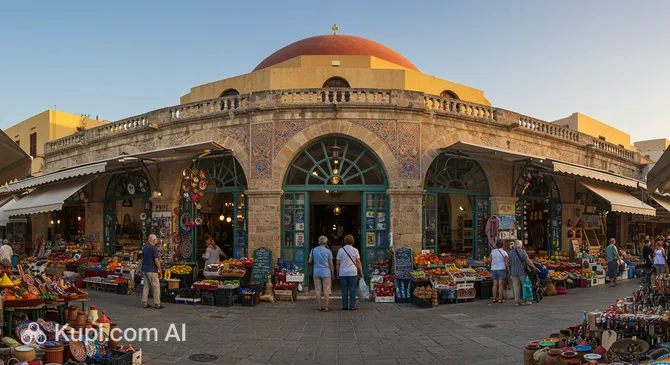
New Market (Nea Agora). Illustration.
Source: Kupi.com AI
Traveler photos:
While Rhodes does not have massive shopping malls in the American sense, the historic New Market (Nea Agora) serves as a magnificent architectural and commercial hub. Located near the Mandraki Harbour, this impressive polygonal building features a large open courtyard filled with cafes, while the outer and inner rings are occupied by stalls. It is an excellent place to find fresh herbs, spices, natural sponges, and traditional Greek food products, all housed within a stunning structure that dates back to the Italian occupation.
When it comes to souvenirs, visitors are spoiled for choice. Rhodes is renowned for its high-quality olive oil and products made from it, such as natural soaps and cosmetics. Local honey, particularly the thyme and pine varieties, is another popular gift, often sold in jars with nuts or honeycomb. Ceramic plates and vases painted with traditional Rhodian deer or floral motifs are also classic keepsakes. Additionally, the island's wine production is excellent, so a bottle of local white or red wine makes for a perfect edible souvenir.
Store opening hours vary significantly depending on the location. In the Medieval City and popular tourist resorts, shops often stay open all day, seven days a week, from around 9:00 AM until late at night (often 10:00 PM or later) during the summer season. In the New Town, shops typically follow standard Greek retail hours: open in the morning, closing for a siesta in the early afternoon (roughly 2:00 PM to 5:00 PM), and reopening in the evening on Tuesdays, Thursdays, and Fridays. Most non-tourist shops are closed on Sundays.
Payment methods are convenient, with major credit and debit cards widely accepted in almost all establishments, including smaller tourist shops. However, carrying some cash is advisable for small purchases at kiosks or markets. For travelers from outside the European Union, tax-free shopping is available at participating stores. Look for the "Tax Free" signage in windows, and ask for a refund form if your purchase exceeds the minimum threshold, which you can then process at the airport upon departure.