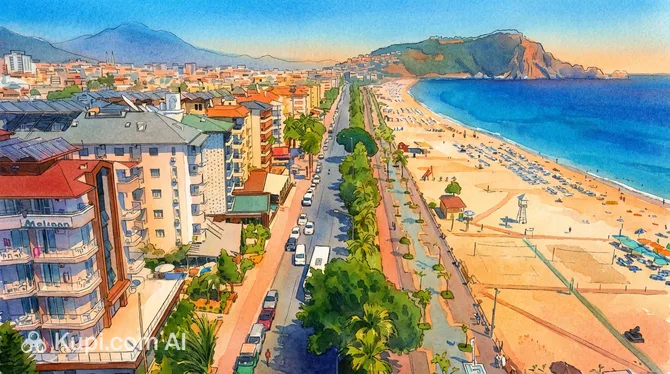
Antalya is a mesmerizing blend of ancient history and modern Mediterranean lifestyle, often regarded as the tourism capital of Turkey. Situated on the country's southwestern coast, flanked by the towering Taurus Mountains and the sparkling sea, this city offers breathtaking scenery and a year-round inviting atmosphere known as the "Turquoise Coast."
With a population of over 2.4 million, it is a bustling metropolis that perfectly balances its role as a major resort hub with authentic local culture. The history of Antalya is deeply woven into its streets, most notably in Kaleiçi, the charming old town district filled with restored Ottoman-era houses and narrow winding alleys.
Antalya. Illustration.
Source: Kupi.com AI
Visitors are drawn to iconic landmarks such as the majestic Hadrian's Gate, a well-preserved Roman triumphal arch, and the spectacular Düden Waterfalls, which cascade directly into the sea. Whether you are looking to relax on the famous Konyaaltı Beach or explore archaeological wonders, Antalya promises an unforgettable experience for every traveler.
Weather Overview
Antalya enjoys a typical Mediterranean climate, characterized by hot, dry summers and mild, rainy winters. The warmest period occurs in July and August, where average temperatures hover around 27°C, often reaching highs of nearly 34°C. During these summer months, precipitation is virtually non-existent, making it the prime season for beach vacations and sunbathing.
In contrast, the winter months bring cooler air and frequent rainfall, particularly in December and January, which see roughly 16 wet days each. January is generally the coldest month, with lows dipping to around 3.4°C. For travelers preferring moderate conditions, spring and autumn offer pleasant temperatures ranging between 13°C and 25°C. To help plan your visit around these seasonal variations, you can consult the detailed guide on the weather in Antalya.
Average monthly temperature
Average monthly precipitation
Interesting Facts
Beyond the main attractions and sun-soaked beaches, Antalya holds many fascinating secrets that peel back the layers of its rich heritage. From ancient legends to prehistoric discoveries, the stories hidden within this region are as captivating as its landscapes.
Heaven on Earth: Legend has it that in the 2nd century BC, King Attalus II of Pergamon ordered his soldiers to find "Heaven on Earth." After a long search, they discovered this breathtaking bay and the king founded the city of Attaleia, which has evolved over millennia into modern-day Antalya.
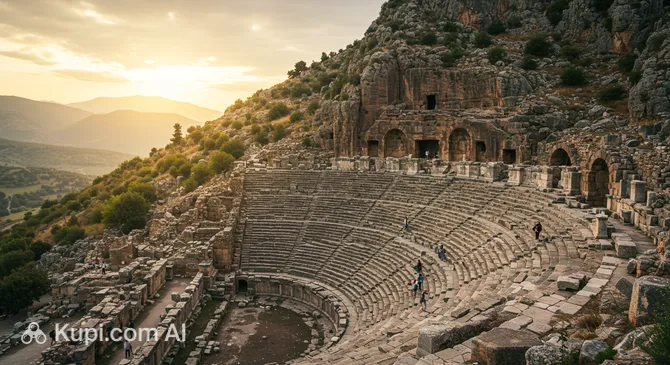
The Unconquered City: High in the mountains lies the ancient city known as the "Eagle's Nest," represented today by the Termessos Ruins. It holds the distinction of being one of the very few places that Alexander the Great failed to conquer, as he deemed its natural defenses too difficult to breach.
Home of Santa Claus: Although often associated with snowy landscapes, the real Saint Nicholas was a warm-climate native of the Antalya province. He was born in Patara and served as the Bishop of Myra, where his reputation for secret gift-giving laid the foundation for the Santa Claus legend.
Prehistoric Life: The region's history extends far beyond antiquity; the Karain Cave, located just north of the city, was continuously inhabited for 25,000 years. It is the largest cave in Turkey to have been occupied by humans, yielding artifacts that date back to the Paleolithic era.
Termessos Ruins. Illustration.
Source: Kupi.com AI
Traveler photos:
How to Get There
Reaching the heart of the Turkish Riviera is quite convenient thanks to its popularity as a major global destination. Whether you are arriving by air or planning a road trip along the coast, there are multiple options to suit your travel style. For a comprehensive overview of routes and transport tips, you can read more about how to get to Antalya.
The most direct and popular way to arrive is via Antalya Airport (AYT), a large international hub located just 7.8 km from the city center. It welcomes millions of visitors annually, offering extensive connections to cities across Europe and beyond. The short distance makes the transfer very quick; a taxi or shuttle ride to the downtown area typically takes about 30 minutes.
If you cannot find a direct flight to the main hub, you might consider Gazipasa Airport (GZP), situated in the city of Alanya. It is approximately 157 km east of Antalya. While it primarily serves the eastern side of the province, it is a viable alternative, with the transfer by road taking roughly 4 hours and 15 minutes. Another option is Dalaman Airport (DLM) in the city of Mugla, about 173 km away. This airport handles significant tourist traffic, though the journey to Antalya will take around 4 hours and 40 minutes by car.
For clarity, here is a summary of the main airports in the region:
Regarding rail travel, it is important to note that Antalya is not currently connected to Turkey's national railway network. There are no train stations in the city or its immediate vicinity. Visitors wishing to travel overland usually rely on the country's extensive and comfortable intercity bus system, which connects the Antalya Bus Terminal (Otogar) to virtually every corner of Turkey.
Main Attractions
Antalya is a treasure trove of historical landmarks and natural wonders, offering visitors a chance to step back in time or immerse themselves in breathtaking scenery. From Roman architecture to cascading waterfalls, the city's main sights cater to history buffs, nature lovers, and families alike.
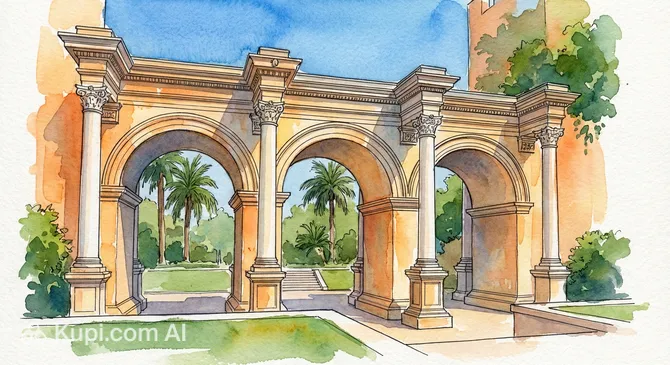
One of the most iconic structures in the city is Hadrian's Gate. Built in 130 AD to honor the Roman Emperor Hadrian's visit, this triumphal arch marks the grand entrance to Kaleiçi, the historic old town. Tourists are fascinated by its three beautifully preserved marble arches and the intricate relief work that has survived for centuries. It serves as a literal gateway between the modern metropolis and the ancient, winding streets within, making it a perfect starting point for exploration.
Hadrian's Gate. Illustration.
Source: Kupi.com AI
Traveler photos:
Nature enthusiasts should not miss the spectacular Düden Waterfalls. This attraction is unique because it consists of two separate locations: a tranquil park at the Upper Falls, ideal for a cool retreat, and the dramatic Lower Falls, where the river plunges 40 meters off a rocky cliff directly into the Mediterranean Sea. The sight of the massive cascade crashing into the waves is a favorite photo opportunity, best viewed from the nearby park or on a boat tour.
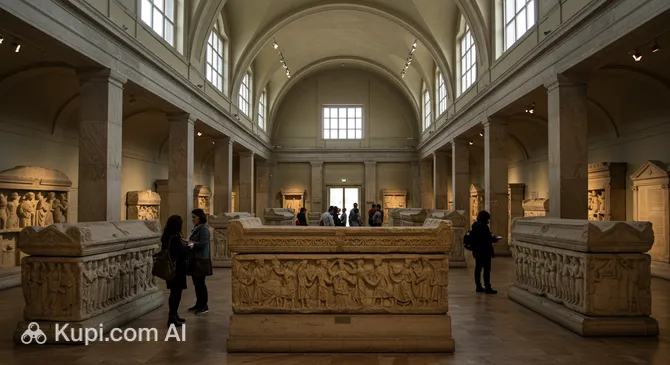
For a deep dive into the region's rich past, the Antalya Archaeological Museum is an essential stop. As one of Turkey's largest museums, it houses an impressive collection of artifacts recovered from nearby excavation sites like Perge and Patara. Visitors are particularly drawn to the Hall of Gods, which features magnificent statues of Greek deities, and the intricately carved sarcophagi that showcase the artistic mastery of the Roman era.
Antalya Archaeological Museum. Illustration.
Source: Kupi.com AI
Traveler photos:
Just a short distance from the city center lies Perge Ancient City, a vast archaeological site that was once the bustling capital of the Pamphylia region. Walking through these ruins offers an immersive experience of antiquity, featuring a massive stadium that could hold 12,000 spectators, well-preserved Roman baths, and a stunning colonnaded street with a central water channel. It is a fantastic place to appreciate the scale and grandeur of ancient urban planning without the intense crowds found at other famous sites.
Families and marine life enthusiasts will enjoy spending time at the Antalya Aquarium. It boasts one of the world's largest tunnel aquariums, stretching 131 meters in length and surrounding visitors with sharks, rays, and colorful tropical fish. Beyond the underwater exhibits, the complex also includes a Snow World and Ice Museum, offering a refreshing and fun break from the summer heat.
Local Cuisine
The local cuisine of Antalya is a vibrant reflection of its Mediterranean location, characterized by the abundant use of fresh vegetables, olive oil, and citrus fruits. While you can find standard Turkish staples like kebabs everywhere, the city boasts unique regional specialties that set it apart from the rest of the country. The food scene here is not just about sustenance; it is a celebration of fresh ingredients and leisurely dining.
One dish that every visitor must try is Antalya Piyazı. Unlike the standard bean salad found elsewhere in Turkey, this local version is famous for its rich, creamy sauce made from tahini (sesame paste), garlic, lemon juice, and vinegar. It is traditionally served as the perfect accompaniment to Şiş Köfte, which are succulent meatballs cooked on skewers over charcoal. For those who enjoy savory dips, Hibeş is another regional favorite, blending tahini with cumin, garlic, and lemon for a spicy and tangy appetizer.
When it comes to sweets, the city offers a distinctive treat known as Yanık Dondurma, or "burnt ice cream." Made primarily from goat's milk, this dessert has a unique smoky flavor derived from the slightly scorched milk during preparation. It might be an acquired taste for some, but it is a beloved local tradition that offers a cooling break from the summer heat.
Ayar Meyhanesi. Illustration.
Source: Kupi.com AI
Traveler photos:
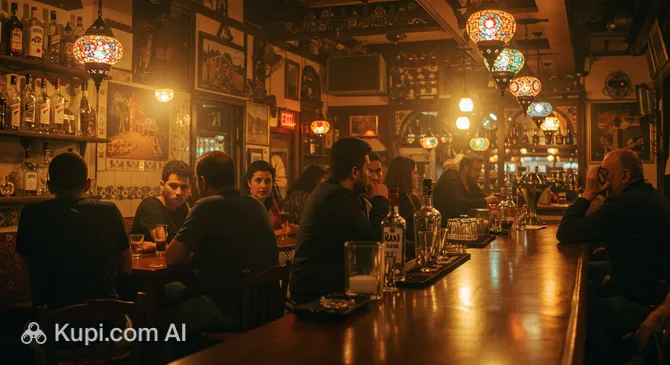
Dining in Antalya is often a social affair, particularly in the traditional taverns known as meyhanes. These venues are the heart of the city's nightlife and culinary culture, where friends gather to share small plates of meze and listen to live music. A popular spot to experience this authentic atmosphere is Ayar Meyhanesi, located in the historic Kaleiçi district. Here, you can enjoy a slow-paced dinner featuring fresh seafood and a variety of cold appetizers.
For beverages, the abundance of citrus groves in the region means you can find freshly squeezed orange and pomegranate juice on almost every street corner. These non-alcoholic drinks are incredibly refreshing and packed with flavor. On the alcoholic side, the national drink Rakı—an anise-flavored spirit often diluted with water and ice—is the standard pairing for fish and meze dinners. If you prefer dining with a view of the Mediterranean, places like Tat Beach Restaurant offer the chance to enjoy local flavors while overlooking the sea.
Travel Tips
Welcome to the sun-drenched shores of the Mediterranean! To ensure your adventure in this captivating city is as smooth and enjoyable as possible, we have compiled a list of essential practical tips to help you navigate local life with confidence.
Clothing and Gear: Summers in Antalya are hot and humid, so pack lightweight, breathable fabrics like cotton or linen. A hat, sunglasses, and high-SPF sunscreen are absolute must-haves. For the cooler winter months, bring layers and a rain jacket. Since the historic Kaleiçi district features uneven cobblestone streets, sturdy and comfortable walking shoes are essential. If you plan to visit mosques, remember that modesty is key: women should bring a scarf to cover their heads, and both men and women should wear clothing that covers their shoulders and knees.
Transportation: The city has an efficient public transport network consisting of trams (Antray) and buses. The tram is particularly useful for getting from the airport to the city center and moving between main attractions. To use public transport, you must purchase an AntalyaKart (a rechargeable travel card) from kiosks or vending machines at stations. Taxis are yellow and plentiful; always ensure the driver switches on the taximeter (taksimetre) when you start your journey. Car rental is a good option if you plan to explore the wider province, but traffic in the city center can be dense.
Finances: The local currency is the Turkish Lira (TRY). While credit and debit cards are widely accepted in hotels, restaurants, and shopping malls, it is crucial to carry some cash for small purchases, public transport top-ups, and bargaining in local bazaars. ATMs are available throughout the city. Tipping is customary; leaving 5-10% of the bill in restaurants is appreciated, and rounding up the fare for taxi drivers is common practice.
Health and Safety: Antalya is generally a safe destination for tourists. Pharmacies, known as Eczane, are easy to spot by their "E" sign; they are well-stocked, and pharmacists often speak some English. While tap water is chlorinated and generally clean, it is highly recommended to drink bottled water to avoid any stomach upsets due to mineral differences. Always stay hydrated, especially during the peak summer heat.
Communication: Turkish is the official language. English is widely spoken in tourist areas, hotels, and restaurants, but proficiency may drop in rural areas or local neighborhoods. Learning a few basic phrases like "Merhaba" (Hello) and "Teşekkürler" (Thank you) goes a long way in building rapport. You can easily buy a prepaid SIM card from major providers like Turkcell or Vodafone at the airport or city shops to stay connected. Free Wi-Fi is often available in cafes and hotels.
Local Etiquette: Turkish hospitality is legendary. If a shopkeeper offers you a glass of tea (çay), it is a gesture of friendship, and accepting it is polite even if you don't buy anything. When greeting, a handshake is standard. If you are invited into a Turkish home, remember to remove your shoes at the door. In public, maintain a polite demeanor; loud or rowdy behavior is generally frowned upon.
What to Avoid: Avoid taking photographs of local residents, especially women, without asking for permission first, as this is considered rude. Also, refrain from public displays of affection, which can be seen as inappropriate in more conservative areas. When shopping in bazaars, bargaining is expected, but always do so with a smile and good humor rather than aggression.
Museum Pass Advantage: If you plan to visit multiple historical sites such as Perge, Phaselis, or the Archaeological Museum, consider purchasing the "Museum Pass Mediterranean." It offers significant savings compared to buying individual tickets and often allows you to skip the ticket lines, giving you more time to explore the ancient wonders of Turkey.
Armed with these practical insights, you are ready to immerse yourself in the rich culture and stunning landscapes of Antalya. We hope these tips help you create a hassle-free and unforgettable travel experience on the Turquoise Coast!
Entertainment & Nightlife
Entertainment and Nightlife:
As the sun sets over the Mediterranean, Antalya transforms from a laid-back beach destination into a vibrant hub of evening entertainment. The city's nightlife is as diverse as its history, offering everything from thumping dance clubs and chic lounges to quiet garden bars hidden within ancient walls. Whether you are looking to party until dawn or enjoy a sophisticated cocktail under the stars, the city caters to every mood.
The heart of the action beats in Kaleiçi, the historic Old Town. Here, the narrow cobblestone streets come alive with the sounds of live music, ranging from traditional Turkish fasıl to rock and jazz. The atmosphere is unique, as many venues are housed in restored Ottoman-era mansions with enchanting courtyards. It is the perfect district for bar-hopping, where you can easily walk from a lively pub to a serene wine house.
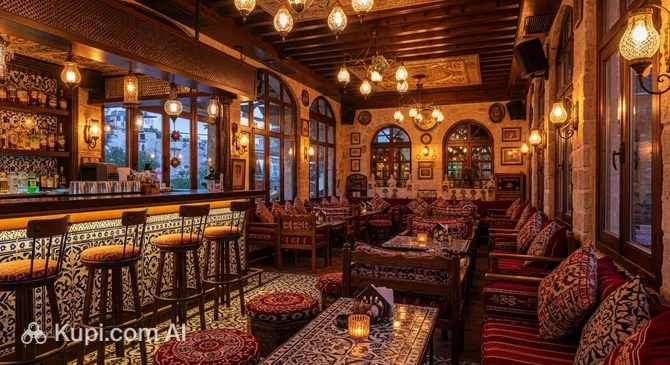
For a distinctively relaxed yet stylish experience in this district, you might visit Casa Sur Antalya. This venue is known for its lush botanical garden atmosphere, making it an ideal spot to unwind with a signature drink away from the bustle of the main streets. The crowd in Kaleiçi is a mix of locals, backpackers, and tourists, creating a friendly and inclusive vibe where the dress code is generally smart-casual.
Casa Sur Antalya. Illustration.
Source: Kupi.com AI
Traveler photos:
If you prefer a more modern and upscale setting, the Lara district and the area around Eski Lara Road offer a different flavor. Here, the venues are often larger and more glamorous, attracting a trendy crowd. You can find places like Diamonds Shisha Lounge Bar, which offers a comfortable environment to enjoy premium hookahs and music. For those seeking a lively night out with food and entertainment combined, Felicita Restaurant Bar & Lounge is another popular choice that bridges the gap between a restaurant and a nightspot.
Regarding practicalities, nightlife in Antalya typically kicks off around 10:00 PM, with clubs staying open until the early hours of the morning, often 3:00 AM or 4:00 AM. Prices can vary significantly; venues in Kaleiçi are generally more affordable, while exclusive beach clubs in Lara may charge higher entrance fees and drink prices. To get around safely at night, it is best to use the yellow taxis, which are plentiful and reliable. The city is generally safe for night walks, especially in busy areas like the Old Town and the main coastal promenades, but it is always wise to stay in well-lit zones.
While the nights are electric, Antalya also offers plenty of excitement during the day. Families and thrill-seekers can head to Aktur Park, a classic amusement park featuring a large Ferris wheel and various rides. For a more artistic experience, Sandland (Antalya Sand Sculpture Museum) on Lara Beach showcases incredible, large-scale sand sculptures created by artists from around the world, which are beautifully illuminated if you visit just after sunset.
Parks & Museums
Antalya is not only a city of sun and sea but also a destination rich in green sanctuaries and cultural repositories. Beyond the bustling beaches and ancient ruins, the city offers tranquil parks and specialized museums that provide a deeper understanding of its local heritage and natural beauty.
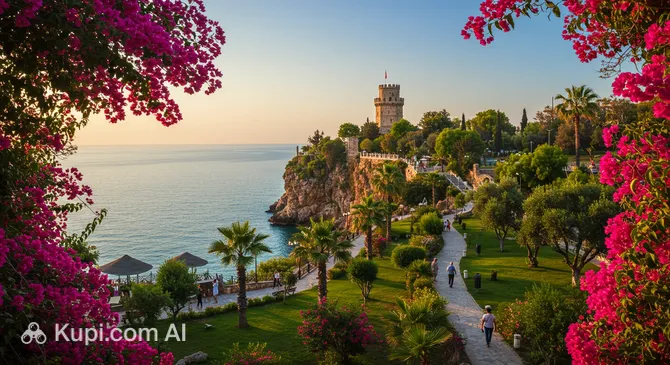
For a relaxing escape right in the city center, Karaalioglu Park is the perfect destination. Located just south of the Old Town, this sprawling garden sits atop the cliffs, offering panoramic views of the Gulf of Antalya and the distant mountains. It is a favorite spot for locals to take evening strolls among exotic flowers and palm trees. Inside the park, you will find the historic Hidirlik Tower, a Roman-era stone structure that has stood watch over the harbor for nearly two millennia. The combination of lush greenery and ancient architecture makes it an excellent spot for photography and sunset watching.
Karaalioglu Park. Illustration.
Source: Kupi.com AI
Traveler photos:
Nature lovers seeking a more rugged experience should explore Güllük Mountain Termessos National Park. Situated about 34 km northwest of the city, this protected area is a haven for flora and fauna, including rare wild goats and deer. While it is famous for housing the ancient city of Termessos, the park itself is a botanical treasure, filled with dense pine forests and diverse plant species. It offers challenging trekking paths and picnic areas, making it an ideal day trip for those who want to combine hiking with historical exploration.
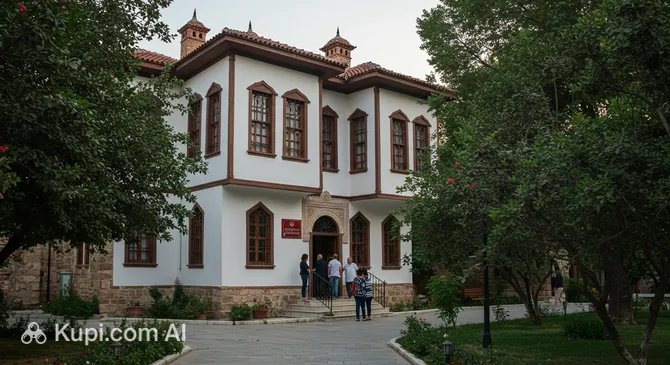
When it comes to museums, the city offers intimate venues that reflect its modern history and lifestyle. The Ataturk House Museum is a charming two-story stone mansion dedicated to the founder of the Turkish Republic, Mustafa Kemal Atatürk. He stayed here during his visits to the city in the 1930s. Today, the house displays personal belongings, photographs, and period furniture, offering visitors a glimpse into the early republican era and the leader's connection to the region.
Ataturk House Museum. Illustration.
Source: Kupi.com AI
Traveler photos:
For a nostalgic journey through industrial history, the Antalya Car Museum is a hidden gem. Located in the Kepez district, this museum showcases a beautifully restored collection of classic cars and vintage vehicles. It is not just for petrolheads; the exhibits often evoke a sense of nostalgia and provide a look at the technological progression that has shaped modern transportation in Turkey.
Families traveling with children might enjoy a visit to the Antalya Zoo. Set within a large forest area at the end of the tram line, it is one of the largest zoos in Turkey. The natural setting allows animals plenty of space, and the shaded paths make it a comfortable place to walk even on warmer days. It provides a nice contrast to the coastal activities and is a great educational stop for younger travelers.
If you are looking for a quiet spot off the beaten path, consider visiting Doyran Pond. Located west of the city center, this serene lake is surrounded by pine trees and offers a peaceful atmosphere away from the tourist crowds. It is a popular spot for camping and picnicking among locals, offering a glimpse into the authentic weekend habits of Antalya's residents.
Getting Around
Navigating Antalya is relatively straightforward thanks to a well-developed public transport network that connects the city center, the airport, and major tourist attractions. The system is primarily composed of buses, a light rail system known as Antray, and a historic tram line. There is no underground metro, but the surface-level trams and extensive bus routes provide ample coverage for most visitors' needs.
The Antray (Light Rail) is particularly useful for travelers, as it connects Antalya Airport directly to the city center and the main bus terminal (Otogar). It is modern, air-conditioned, and reliable. In contrast, the Nostalgic Tram runs a scenic route along the coast from the Archaeological Museum to the old Zerdalilik district. While slower and using vintage carriages, it offers a charming way to see the sights, passing mainly through the central areas near Kaleiçi and Hadrian's Gate.
For destinations not reached by the tram, municipal buses and privately operated public buses are the backbone of local transit. You will also see Dolmuş, which are smaller minibuses or large vans. While traditional dolmuşes used to accept cash and stop anywhere, the system in Antalya has become more regulated. Most public transport vehicles now operate on a card-based payment system and stop only at designated bus stops.
The primary method of payment is the AntalyaKart. Tourists can purchase a disposable limited-use card or a refillable plastic card from vending machines located at tram stops and major bus hubs. These machines typically accept Turkish Lira banknotes. Alternatively, the system is quite tourist-friendly as it accepts contactless credit and debit cards (Visa or Mastercard) directly on the validators inside the buses and at tram turnstiles. This eliminates the need to buy a specific transit card if you have a contactless bank card, though the fare might be slightly higher than using a registered AntalyaKart.
Operating hours generally run from around 06:00 AM to midnight, though frequencies drop significantly later in the evening. For planning your journey, the official "Antalyakart" mobile app is a helpful tool for checking routes, bus stops, and arrival times. When boarding a bus, you enter through the front door and tap your card or phone on the reader; you exit through the middle or back doors.
If you prefer more direct transport, yellow taxis are abundant and can be hailed on the street or found at designated ranks. A unique feature in Antalya is the presence of taxi call buttons attached to trees or poles on street corners; pressing one usually summons a cab within minutes. All taxis are required by law to run a taximeter, so ensure the driver switches it on at the start of your ride. For shorter distances along the promenade, the Antbis city bike rental system and various electric scooter sharing apps offer a fun and breezy alternative.
A special mention goes to the Tünektepe Cable Car (Teleferik), which serves as both a transport mode and a major attraction. While not part of the standard commuting network, it whisks passengers from the Sarısu station near Konyaaltı Beach up to the summit of Tünektepe Hill. The ride offers spectacular panoramic views of the coastline and the city, making it a memorable experience beyond a simple commute.
Accommodation
Antalya offers an incredibly diverse range of accommodation options, catering to every type of traveler, from backpackers seeking budget-friendly hostels to luxury seekers looking for world-class service. The city is famous for its "all-inclusive" concept, particularly along the coast, but it also boasts a charming selection of smaller, independent hotels that provide a more intimate experience of Turkish culture.
For those who want to be in the heart of history, the Kaleiçi (Old Town) district is the most atmospheric place to stay. Here, many Ottoman-era mansions have been converted into stylish boutique hotels and pensions. Staying within the ancient walls puts you within walking distance of major sights like Hadrian's Gate and the marina, surrounded by lively cafes and bars. It is the perfect choice for travelers who prioritize character and central location over sprawling pools.
If your primary goal is sun, sea, and sand, the Lara district to the east is known as the "Las Vegas of Turkey" due to its concentration of themed, high-end luxury resorts. This area is ideal for families and couples who want extensive facilities, private beaches, and entertainment all in one place. Similarly, the Konyaaltı area to the west offers a mix of modern hotels and apartment rentals right across from the famous pebble beach, providing a more urban resort feel with easy access to the city center.
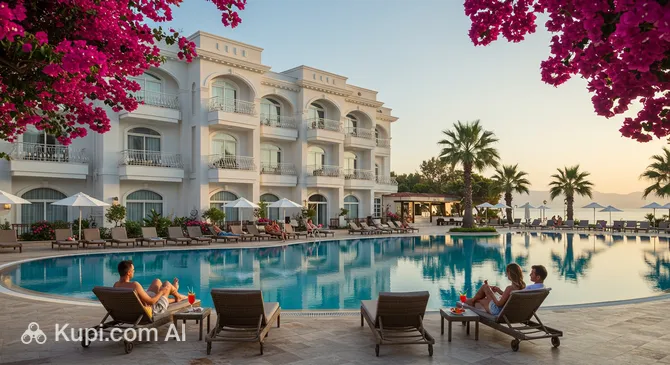
Travelers looking for the quintessential Turkish Riviera resort experience often choose properties that offer comprehensive amenities. For instance, the Lara De Luxe Hotel & Resort is a well-known example in the area, providing guests with extensive pool landscapes and direct beach access. Another popular option in this category is the Lara Resort, which caters to visitors seeking relaxation and comfort by the Mediterranean.
Lara De Luxe Hotel & Resort. Illustration.
Source: Kupi.com AI
Traveler photos:
Booking Tip: Antalya is an extremely popular summer destination, drawing millions of visitors from around the globe. If you plan to visit during the peak season (July and August), it is highly recommended to book your accommodation several months in advance to secure the best rates and availability. During the shoulder seasons of spring and autumn, you can often find excellent deals even with shorter notice.
The price range in the city is vast. You can find simple guesthouses for a very modest budget, while the ultra-luxury resorts in Lara command premium prices, especially for suites with sea views. Booking is typically done through major online travel platforms, which allow you to compare the extensive amenities offered by the larger hotels. However, for smaller boutique hotels in Kaleiçi, contacting the property directly can sometimes yield a more personalized room selection.
Nearby Cities
For those looking to explore the surroundings, Antalya serves as an excellent base for day trips to several interesting nearby locations:
One of the most popular choices is Manavgat, located to the east along the coast. It is famous for the picturesque Manavgat Waterfall, where the river widens and cascades over rocks, creating a refreshing spot for a picnic. The town is also a great starting point for river boat tours and is very close to the ancient ruins of Side, allowing visitors to combine nature and history in a single trip.
For a change of scenery, travelers can head inland to Isparta, known as the "City of Roses." This destination is renowned for its vast rose gardens and lavender fields, which paint the landscape in vibrant colors during the harvest seasons. Beyond its floral heritage, the city offers a quieter atmosphere and access to the stunning lakes of the Turkish Lake District.
Just a short drive from Antalya lies Belek, a modern resort town celebrated for its world-class golf courses and pine forests. It is also home to "The Land of Legends," a massive theme park and entertainment complex that is perfect for families. Whether you are looking for sporting activities or adrenaline-filled rides, Belek provides a fun and upscale escape.
City
Population
Distance
Belek
73 260
31 km
Serik
124 335
35 km
Kemer
43 226
35 km
Side
11 000
62 km
Bucak
64 943
63 km
These nearby destinations offer a glimpse into the diverse culture and landscapes of the region.
Shopping & Souvenirs
Shopping in Antalya is a delightful experience that bridges the gap between the traditional and the modern. The city offers a diverse retail landscape, ranging from vibrant, historic bazaars filled with the scent of spices to ultra-modern shopping complexes housing international luxury brands. Whether you are hunting for authentic Turkish handicrafts, high-quality leather goods, or the latest fashion trends, the city provides ample opportunities to find exactly what you are looking for.
For a shopping experience steeped in history, the winding streets of Kaleiçi (Old Town) are the place to be. As you wander through the narrow alleys near the ancient city walls, you will find countless boutique shops selling handmade jewelry, antique carpets, and colorful ceramics. Another key shopping artery is Işıklar Avenue, a lively pedestrian-friendly street lined with palm trees, modern clothing stores, cafes, and bookstores, making it perfect for a leisurely evening stroll combined with retail therapy.
If you prefer the comfort and variety of large shopping centers, the city boasts several impressive malls. TerraCity in the Lara district is one of the most popular destinations, featuring a wide selection of global fashion brands, electronics, and a large food court. It is a favorite among tourists for its upscale atmosphere and extensive range of stores. Another excellent option is ÖzdilekPark Antalya Mall, located closer to the city center, which offers a mix of shopping, cinema, and entertainment facilities suitable for families.
TerraCity. Illustration.
Source: Kupi.com AI
Traveler photos:
To truly immerse yourself in the local culture, a visit to a traditional market or bazaar is essential. The Antalya Bazaar (often referred to as the Grand Bazaar) near the clock tower is a bustling hub where bargaining is part of the fun. Here, you can find fresh produce, local cheeses, and an array of textiles. Additionally, weekly open-air markets set up in various neighborhoods on specific days (such as the Saturday market in Lara) offer a more authentic glimpse into daily life, selling everything from fresh fruit to inexpensive clothing.
When it comes to souvenirs, travelers are spoiled for choice. Turkish Delight (lokum) and boxes of baklava are classic edible gifts that are always appreciated. For something more lasting, look for the famous "Evil Eye" (Nazar Boncuğu) amulets, intricately painted ceramic bowls, or high-quality cotton towels (peshtemal). The region is also renowned for its leather industry, so you can often find excellent deals on jackets, bags, and belts.
Most shops in malls and busy streets are open from 10:00 AM to 10:00 PM, seven days a week. In tourist-heavy areas like Kaleiçi, many smaller boutiques stay open late into the night, especially during the summer season. Major credit cards (Visa and Mastercard) are widely accepted in malls, restaurants, and most shops. However, if you plan to shop in traditional bazaars or smaller markets, carrying Turkish Lira in cash is highly recommended, as it makes bargaining easier and is often the only way to pay.
Tourists visiting Turkey are often eligible for tax-free shopping on substantial purchases. Look for the "Tax Free" logo in store windows, particularly in larger malls and branded shops. If you make a qualifying purchase, ask the staff for the necessary paperwork, which you can then present at the customs desk at the airport to receive a Value Added Tax (VAT) refund before leaving the country.