Support

Antigua Guatemala

About

Antigua Guatemala is the true heart of colonial Guatemala, a charming city nestled in a picturesque mountain valley surrounded by majestic volcanoes. Located in the south of the country, just 25 kilometers from the modern capital, Antigua offers a completely different atmosphere—unhurried, peaceful, and permeated with the aromas of freshly brewed coffee and the vibrant colors of local markets. With a population of about 59,000 people, it is a city of immense historical significance.

Until the devastating earthquake of 1773, Antigua served as the nation's capital. Today, it is rightfully considered the country's main tourist center and is recognized as a UNESCO World Heritage site. Its compact, cobblestone historical center is perfect for walking. Every corner breathes history: bright facades of colonial buildings, blooming courtyards, and the ruins of ancient churches and monasteries create a unique atmosphere.
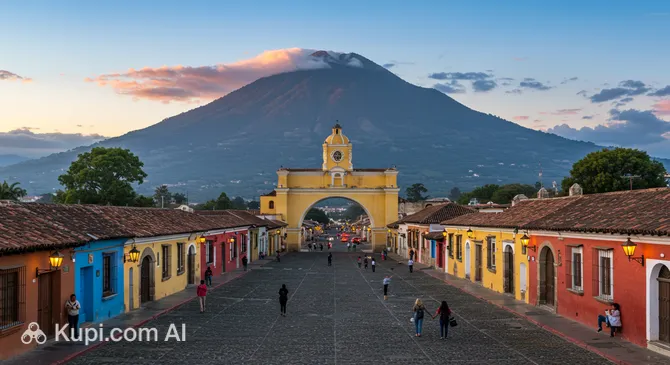
Antigua Guatemala. Illustration.
Source: Kupi.com AI

Among the key features attracting travelers are the famous Santa Catalina Arch, numerous active and ruined churches such as La Merced or San José Cathedral, and breathtaking views of the Agua, Fuego, and Acatenango volcanoes, which provide a majestic backdrop to the city. Many travelers come here to study Spanish, enjoy the local cuisine, and immerse themselves in the unique culture.

Antigua Guatemala is a place where the past and present intertwine harmoniously, offering every guest an unforgettable experience. If you are looking for a city with a magical atmosphere, unique architecture, and stunning natural landscapes, Antigua undoubtedly deserves a visit.

You can find more interesting facts on the Antigua Guatemala history page.
Weather Overview

Antigua Guatemala enjoys a pleasant, moderately warm climate throughout the year, though dry and rainy seasons are clearly defined. The average annual temperature fluctuates only slightly, remaining comfortable for visiting. The dry season typically lasts from November to April, when rainfall is minimal (0–2 mm per month) and days are sunny with temperatures ranging from 18°C to 21°C on average. Nights can be cool, with minimum temperatures around 12–15°C.

From May to October, the rainy season arrives. During this period, rainfall increases significantly, peaking in June (11 mm) and September (8 mm), with many rainy days (up to 28 per month). Daytime temperatures during the rainy season remain warm, averaging around 19–21°C, with maximums up to 24–26°C. Overall, expect warm days and cooler evenings, with a dry period from November to April and a rainy season from May to October. You can learn more about the weather on the Antigua Guatemala climate page.

Average monthly temperature

Average monthly precipitation

Interesting Facts

In addition to its famous cobblestone streets and colonial architecture, Antigua Guatemala hides many surprising stories and little-known details. Here are just a few of them:

Santa Catalina Arch. Illustration.
Source: Kupi.com AI

Traveler photos:

  • The famous Santa Catalina Arch was not built just for beauty. According to legend, it served as a secret passage for the nuns of the convent, allowing them to move between buildings without breaking their vow of seclusion or appearing in public.

  • Following the devastating earthquake of 1773, the capital was moved, and Antigua Guatemala was temporarily abandoned. This period of neglect actually helped preserve many colonial buildings and ruins, such as the impressive Capuchin Convent, in their original or picturesquely ruined state, turning the city into a true open-air museum.

  • The city is surrounded by three volcanoes: Agua, Acatenango, and Fuego. Fuego Volcano ("Fire") is one of the most active in Central America. It is common to see it emitting plumes of ash and even lava flows, which look especially spectacular at night—a true natural fireworks display!

  • During Holy Week (Semana Santa), recognized as one of the most impressive celebrations in the world, the streets of Antigua Guatemala are covered with incredibly beautiful and complex carpets called "alfombras." These ephemeral works of art are created from colored sawdust, pine needles, flowers, and even fruits just hours before religious processions pass over them.

How to Get There

When planning a trip to this colonial city, it is important to think about your route in advance. Since there is no airport in the city itself, the main flow of tourists arrives via the country's capital. You can find more details about all the ways to get to the city on a dedicated page, and below we will look at the most popular options.

The main gateway for travelers is La Aurora International Airport (IATA: GUA). It is located not in Antigua Guatemala, but in the neighboring Guatemala City, about 22 km from your destination's center. This is the country's largest transport hub with high passenger traffic. A taxi or transfer usually takes about 50–60 minutes; however, travel time can increase due to heavy traffic in the capital.

As an alternative, some tourists choose El Salvador International Airport (IATA: SAL), located in San Salvador. This is a major international hub located about 219 km from Antigua Guatemala. The journey from here will take significantly longer—about 6 hours by car or bus, including a border crossing—but this option can be convenient when looking for better airfares or complex connections.

There is also a regional option—the Quetzaltenango airport (IATA: AAZ) in the city of Quetzaltenango, located 90 km away. However, it handles a small flow of passengers and is more suitable for domestic travel. A taxi ride from there takes approximately 2.5 hours.

For convenience, here is summary information on the main airports:

AirportPassenger trafficDistance
La Aurora International Airport4.7 mln22 km
Quetzaltenango9 02290 km
Tapachula International Airport553 744178 km
Ilopango15 000198 km
El Salvador International Airport4.5 mln219 km

Upon arrival at La Aurora Airport, the most convenient way to reach Antigua is to book a tourist shuttle (collective minibus) or a private taxi. Shuttles run regularly and deliver passengers right to their hotel doors. Ride-sharing apps are also available, which can often be more cost-effective and safer.

Main Attractions

Antigua Guatemala, the former capital of Guatemala, is famous for its beautifully preserved colonial Baroque architecture, cobblestone streets, and impressive ruins of churches and monasteries. This UNESCO World Heritage city is surrounded by majestic volcanoes and offers tourists a unique immersion into history and culture.

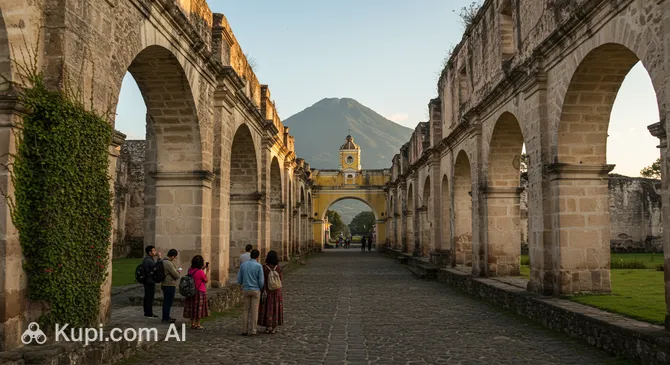
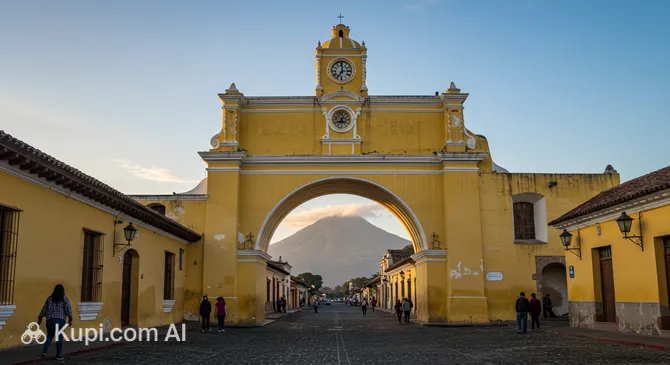
One of the city's most recognizable landmarks is the Santa Catalina Arch. This yellow clock arch, built in the 17th century, originally connected a convent to the opposite side of the street, allowing nuns to cross without going out into the street. Today, it is a favorite spot for photos, especially with the Agua Volcano in the background. Walking under the arch is a must for every guest in the city.

Santa Catalina Arch. Illustration.
Source: Kupi.com AI

Traveler photos:

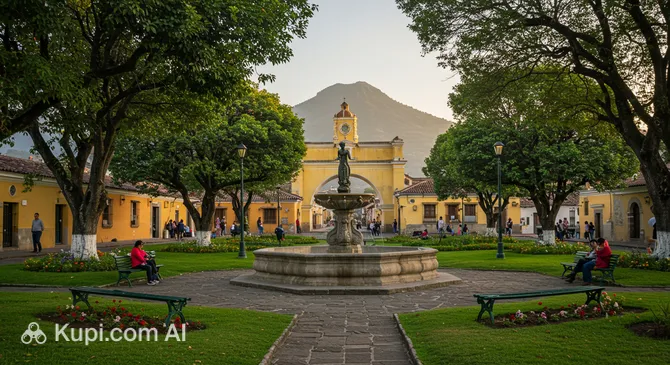
The heart of Antigua is Antigua Guatemala Central Park (Parque Central). It is a lively place where locals and tourists gather to relax by the Fountain of the Sirens, enjoy street food, or simply watch city life. The park is surrounded by important buildings, including the Cathedral, the Palace of the Captains General, and the City Hall.

Central Park of Antigua Guatemala. Illustration.
Source: Kupi.com AI

Traveler photos:

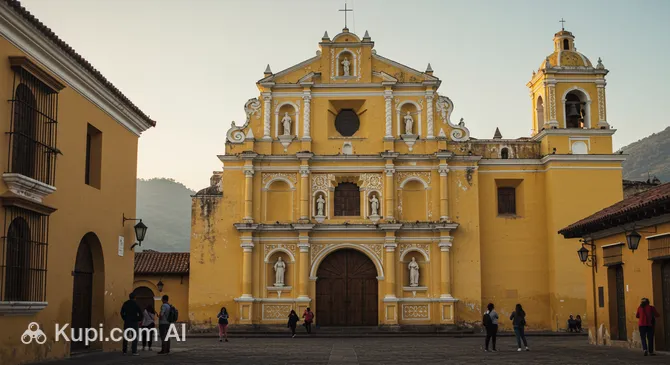
Near Central Park stands the La Merced Church. Its ultra-Baroque facade is decorated with intricate stucco and is considered one of the most beautiful in Antigua. Inside the church, you can see ancient altars and works of art. The fountain in the monastery courtyard, which was once the largest in Central America, is particularly impressive.

Church of La Merced. Illustration.
Source: Kupi.com AI

Traveler photos:

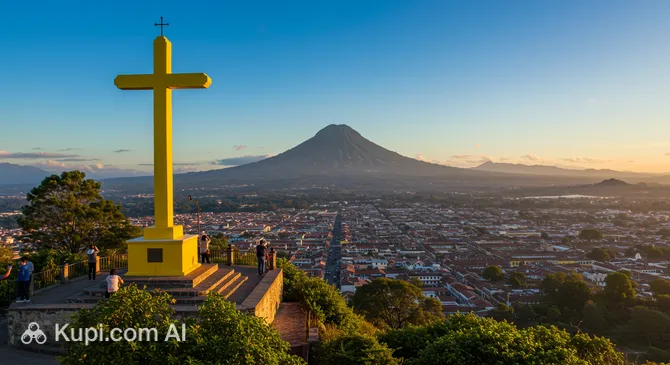
For those who want to see the city from a bird's-eye view, a visit to Cerro de la Cruz (Hill of the Cross) is essential. The climb up the hill takes about 20–30 minutes and is rewarded with a panoramic view of Antigua, spread out at the foot of the Agua, Fuego, and Acatenango volcanoes. This is an ideal spot for photography and quiet contemplation.

Cerro de la Cruz. Illustration.
Source: Kupi.com AI

Traveler photos:

Among the many ruins of monasteries, the Capuchin Convent (Convento de las Capuchinas) stands out. Founded in the 18th century, it is notable for its unique round tower with nuns' cells and well-preserved courtyards. Walking through its ruins allows you to imagine the life of the nuns of that time and feel the atmosphere of a bygone era.

Capuchins Convent. Illustration.
Source: Kupi.com AI

Traveler photos:

Local Cuisine

The gastronomy of Antigua Guatemala is a true immersion into a world of flavors, where tradition and a passion for culinary arts are felt in every dish. Local cuisine carefully preserves ancient recipes passed down through generations, offering guests authentic Guatemalan dishes.

Be sure to try pepián—a thick, aromatic meat stew (usually chicken, beef, or pork) with vegetables and many spices, including toasted pumpkin and sesame seeds, which is considered the region's signature dish. Equally interesting is kak'ik—a spicy turkey soup with chili and other spices that will warm you up and surprise you with its rich flavor. It is also worth tasting tamales—corn dough with various fillings (meat, cheese, vegetables) wrapped in banana or corn leaves and steamed, and chiles rellenos—stuffed sweet or spicy peppers full of flavor and aroma.

Antigua Guatemala is world-famous for its coffee—it produces some of the best Arabica varieties. A cup of freshly brewed coffee in one of the city's many cozy coffee shops, such as Café Café Guatemala, is a ritual not to be missed. In addition to coffee, refresh yourself with natural fruit juices known as "licuados," or try traditional drinks like "atole"—a thick corn-based drink that can be either sweet or savory. For those looking for something stronger, local beer or rum may be offered.

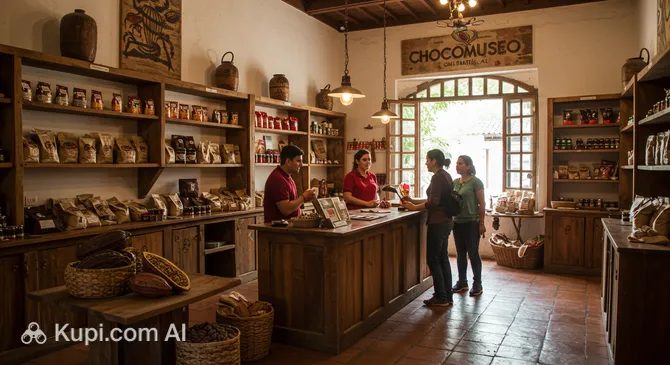
Antigua's street food and markets are a true kaleidoscope of flavors. Here you can snack on hot tortillas with cheese, enjoy the freshest tropical fruits, or try unusual local treats. One such delicacy is rellenitos—fried balls of sweet mashed plantain filled with black beans seasoned with sugar and cinnamon, sometimes with added chocolate. A visit to the farmers' market offers not only gastronomic discoveries but also a chance to interact with hospitable locals. For chocolate lovers, the ChocoMuseo is an interesting place to learn more about this product and, of course, taste it.

ChocoMuseo. Illustration.
Source: Kupi.com AI

Traveler photos:

The food culture in Antigua Guatemala is diverse: from bustling street stalls and markets to cozy family restaurants and elegant establishments offering both traditional and international cuisine. Locals often prefer "comedores"—small eateries serving home-cooked food at affordable prices, where you can try a set lunch (almuerzo corriente). Tourists will find many options for every taste and budget, including fine dining restaurants like Casa Escobar Antigua. Immersing yourself in the gastronomic world of Antigua is an integral part of the journey that will leave bright and delicious memories.

Travel Tips

Welcome to Antigua Guatemala, a jewel of colonial architecture and living culture! To make your journey through this enchanting city as comfortable and memorable as possible, we have prepared some practical tips. They will help you better navigate and enjoy every moment of your stay.

  1. Clothing and Essentials: Antigua Guatemala enjoys a pleasant, temperate climate, often called "eternal spring." Days are usually warm, while evenings can be cool.
    • Bring light, layered clothing: t-shirts, long-sleeved shirts, and a light sweater or fleece for the evenings.
    Comfortable walking shoes are extremely important, as the city streets are paved with cobblestones.
    • During the rainy season (roughly May to October), don't forget a light raincoat or umbrella.
    • Sunscreen, a hat, and sunglasses are essential due to the high-altitude location.
    • Electrical outlets are types A and B (as in the US), with 120V voltage. If you have different plugs, you will need an adapter.
    • When visiting active churches and religious sites, it is customary to cover your shoulders and knees.

  2. City Transport: Antigua Guatemala is a compact city, and the best way to explore it is on foot.
    • For longer distances or if you are tired, you can use tuk-tuks (motor rickshaws). Be sure to agree on the price before the ride.
    • Taxis are also available; it is also standard practice to agree on the cost in advance.
    • Public transport in the form of "chicken buses" (camionetas) is a colorful experience, mainly used for trips to neighboring villages and towns. They can be crowded, but they are the cheapest way to travel.
    • Renting a car to get around the city itself is usually impractical due to narrow streets, parking difficulties, and the fact that all main attractions are within walking distance.

  3. Finances: The local currency is the Guatemalan Quetzal (GTQ).
    • You can exchange currency at banks or exchange offices (casas de cambio). The rate at the airport may be less favorable.
    • Credit and debit cards (Visa, Mastercard) are accepted in many hotels, restaurants, and large shops. However, always carry some cash for small purchases, markets, and paying for tuk-tuks.
    • ATMs (cajeros automáticos) are quite common, especially in the center. Try to use those inside banks or in well-lit areas. Check your bank's potential fees for withdrawing cash abroad.
    • A rough daily budget can vary from $30 to $70 USD per person (excluding accommodation), depending on your preferences.
    • Tipping: In restaurants, it is customary to leave about 10% of the bill if a service charge is not included. Small tips are also appreciated for other services.

  4. Health and Safety:
    • Pharmacies (farmacias) are easy to find in the city; some may operate 24 hours or have an on-call service.
    • For serious medical cases, it is recommended to visit private clinics in Guatemala or have good travel insurance that covers medical expenses.
    • Antigua Guatemala is considered a relatively safe city for tourists, especially in central, well-lit areas. However, as with everywhere, take basic precautions: watch your belongings, especially in crowded places (markets, buses), do not wear conspicuously expensive jewelry, and do not leave valuables unattended.
    • Avoid walking alone on poorly lit and remote streets after dark.
    Drink only bottled water.

  5. Communication: The main language in Guatemala is Spanish.
    • In the tourist areas of Antigua, hotels, and restaurants, many staff members speak English. However, knowing a few basic phrases in Spanish will be very useful and appreciated by locals.
    • Useful phrases: "Hola" (Hello), "Buenos días/tardes/noches" (Good morning/afternoon/evening), "Por favor" (Please), "Gracias" (Thank you), "¿Cuánto cuesta?" (How much does it cost?), "No entiendo" (I don't understand).
    • A local SIM card (e.g., from operators Tigo or Claro) can be purchased at the airport or in the city.
    • Wi-Fi is widely available in most hotels, hostels, cafes, and restaurants.\p>

  6. Local Etiquette: Guatemalans are generally friendly and polite.
    • It is customary to greet people by saying "Buenos días," "Buenas tardes," or "Buenas noches" depending on the time of day.
    • When photographing locals, especially members of indigenous Mayan groups, always ask for permission. This is a sign of respect.
    • Haggling is common in markets, but do it politely and with a smile.
    • Be patient; the pace of life here may be slower than what you are used to.

  7. What to Avoid:
    Do not drink tap water and be careful with ice in drinks outside of established tourist spots.
    • Try not to openly display expensive gadgets or large amounts of money to avoid attracting unnecessary attention.
    • Avoid participating in political discussions if you are unsure of the context and the mood of your interlocutor.

  8. Additional Tip: Antigua Guatemala is famous for its volcanoes. If you love active recreation, consider climbing one of them, such as Pacaya Volcano (a relatively easy climb) or Acatenango (more challenging, with an overnight stay, but offering stunning views of the erupting Fuego Volcano). Be sure to use the services of certified guides. Additionally, the city is known for its many Spanish language schools—this is a great opportunity to combine travel with learning.

We hope these tips help you feel more confident and get the most enjoyment out of your visit to the unique Antigua Guatemala. Enjoy its beauty, history, and hospitality!

Entertainment & Nightlife

Antigua Guatemala, with its colonial charm and cobblestone streets, comes alive in a special way after dark. The city offers a variety of options for evening and night leisure, from cozy bars with live music to lively nightclubs where you can dance until dawn.

The main concentration of nightlife in Antigua is centered around Central Park (Parque Central) and its surrounding streets, especially on Calle del Arco (5th Avenue North) and in the 7th Avenue North area. Here you will find many establishments for every taste. The atmosphere in most places is quite relaxed and friendly, attracting both tourists and locals. The dress code is generally casual, though some more fashionable venues may suggest a dressier style.

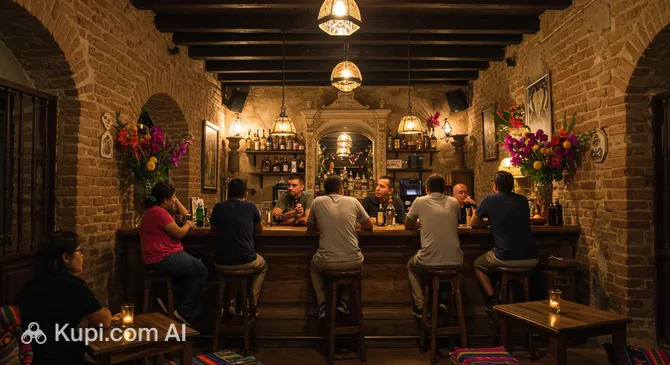
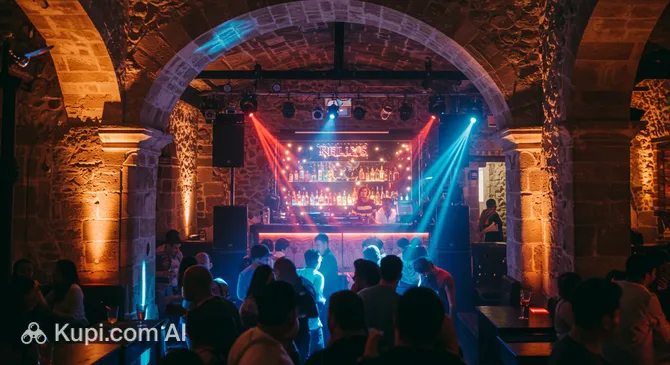
Popular spots include: * Bars with Character: For those seeking an authentic atmosphere and good drinks, it's worth checking out Fridas Restaurant, known for its vibrant decor and tequila, or the cozy Por Qué No? Café, which offers creative cocktails and an informal setting. Many bars offer live music—ranging from Latin rhythms to rock and jazz. * Nightclubs: If you are in the mood for dancing, Reilly's Antigua is one of the popular nightclubs where you can have fun to modern hits. Clubs usually start filling up closer to midnight and stay open until the early morning, especially on weekends. * Restaurants with Evening Programs: Some restaurants offer not just dinner but also entertainment, including music or themed nights. Café Café Guatemala or Casa Escobar Antigua can be excellent choices for a late dinner in a pleasant atmosphere.

Fridas Restaurant. Illustration.
Source: Kupi.com AI

Traveler photos:

Practical Tips: * Time: Bars usually get busy after 8:00–9:00 PM, and clubs after 11:00 PM, especially on Fridays and Saturdays. * Prices: Antigua offers options for different budgets. On average, a cocktail in a bar can cost between 30–60 quetzals, and club entry may have a fee (50–100 quetzals), especially if a DJ or band is performing. * Night Transport: You can move around the city center on foot at night, but if your accommodation is further away, it is better to use a taxi or tuk-tuk. Always agree on the price in advance or make sure the taxi is metered. Ask your hotel or restaurant staff to call a reliable taxi for you.

Reilly's Antigua. Illustration.
Source: Kupi.com AI

Traveler photos:

Safety: Antigua is considered relatively safe for tourists, but standard precautions should be taken at night. Try to stick to well-lit and busy streets, especially if you are alone. Avoid displaying valuables. The central areas around the Park and Calle del Arco are usually the safest for night walks.

While Antigua's nightlife attracts many, the city also offers plenty to do during the day. You can visit numerous historical sites such as the Santa Catalina Arch or La Merced Church. For cultural enrichment, check out museums like Finca La Azotea, dedicated to coffee, or Casa del Jade. A stroll through Antigua Guatemala Central Park is also enjoyable at any time of day.

Parks & Museums

Antigua Guatemala, the former capital of Guatemala, charms not only with its colonial architecture but also with its cozy green spaces and museums that hold the rich history and culture of this amazing city. Here, everyone will find something for themselves: from peaceful walks in parks to fascinating dives into the past.

The heart of the city is undoubtedly Antigua Guatemala Central Park (Parque Central). It is not just a green area, but a true center of social life, surrounded by majestic colonial-era buildings, including the San José Cathedral. Here you can relax by the fountain, watch locals and tourists, and enjoy the atmosphere of the old city. The park is the starting point for exploring Antigua and the venue for many city events.

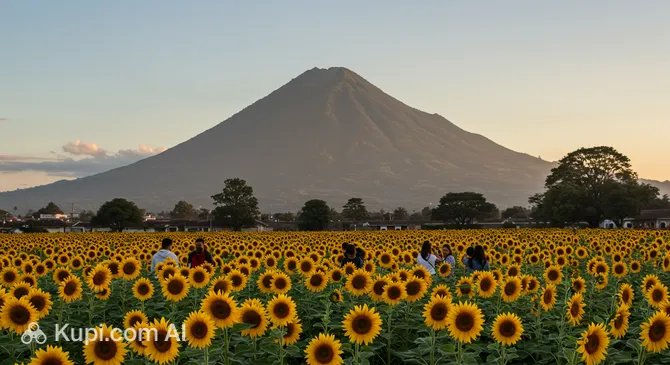
For those seeking panoramic views and a bit of physical activity, Cerro de la Cruz (Hill of the Cross) is a must-visit. The climb up the hill is rewarded with a spectacular view of the city spread out against the backdrop of the Agua, Fuego, and Acatenango volcanoes. This is an ideal spot for photography and quiet contemplation. Another interesting natural location, especially for lovers of vibrant photos, is the Antigua Sunflower Field, which is a delightful sight during the blooming season.

Antigua Sunflower Fields. Illustration.
Source: Kupi.com AI

Traveler photos:

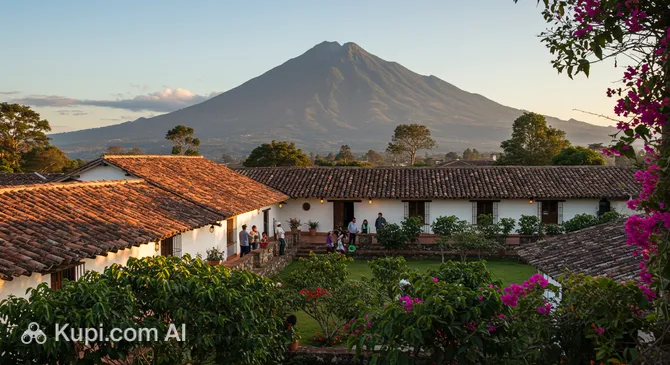
Antigua Guatemala's cultural heritage is vividly represented in its many museums. One of the most interesting is Finca La Azotea. This is not just a museum, but an entire coffee plantation where you can learn everything about the process of growing and producing Guatemalan coffee, from bean to cup. There are also small museums here dedicated to Mayan music and local traditions.

Finca La Azotea. Illustration.
Source: Kupi.com AI

Traveler photos:

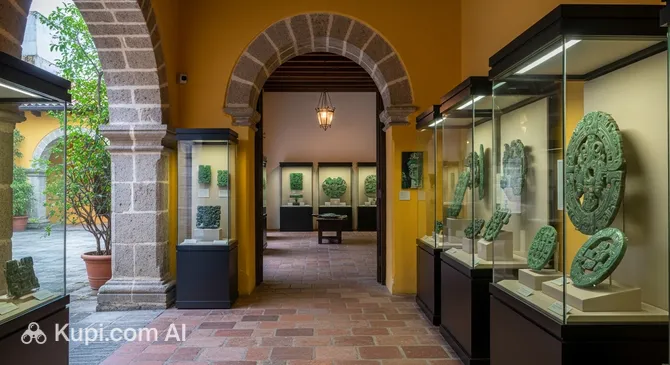
Another iconic site is Casa del Jade (House of Jade). Here, visitors can learn about the history of this stone, sacred to the Mayan civilization, see impressive jade products, and even purchase unique souvenirs. The museum offers fascinating tours explaining the significance of jade in the culture of ancient peoples.

Jade House. Illustration.
Source: Kupi.com AI

Traveler photos:

For those with a sweet tooth and curious tourists, the ChocoMuseo will be a real discovery. Here you can not only learn the history of chocolate starting from the Mayan era but also participate in workshops to make your own chocolate products. It is an interactive and delicious immersion into the world of cacao.

In addition to major museums, it is worth paying attention to the numerous ruins of former monasteries and churches in Antigua Guatemala, such as the Capuchin Convent or the Santa Clara Convent. Many of them are open to the public and are impressive architectural monuments preserved in the spirit of the past. For a more authentic experience, look into the courtyards of ancient buildings, where cozy cafes or artisan workshops often hide, offering a unique look at the modern life of the ancient city.

Getting Around

Getting around Antigua Guatemala is quite easy, as the historical city center is compact and well-suited for walking. However, for longer trips or simply for convenience, there are several types of transport to help you explore the city and its surroundings.

The main form of public transport in Antigua Guatemala and throughout the country are the colorful buses known as "chicken buses" or "camionetas." These are former American school buses, brightly painted and often decorated. They run along specific routes, connecting Antigua Guatemala with surrounding villages and other cities. Within the city itself, their use is less common, but they can be useful for reaching some outskirts. The fare is paid in cash to the conductor or driver on the bus; the cost is usually very low. There is often no fixed schedule or marked stops—the bus stops on demand (you need to wave your hand).

For short trips within Antigua Guatemala, three-wheeled motorized rickshaws, or tuk-tuks, are very popular. They buzz all over the city and are a convenient way to quickly get to your destination, especially if you are tired or don't want to walk. The cost of a tuk-tuk ride is negotiable, so it is recommended to agree on the price with the driver before starting the trip. Tuk-tuks usually operate from early morning until late evening.

As for practical tips, when using "chicken buses," be prepared for them to be crowded, especially during peak hours. Always confirm with the driver or conductor if the bus is going in your desired direction. Tickets are not sold in advance—payment is made on the spot. Public transport generally starts running early in the morning and ends at dusk, although some routes may operate later.

As an alternative to public transport in Antigua Guatemala, you can always use a taxi. They are more expensive than chicken buses or tuk-tuks but offer more comfort. As with tuk-tuks, it is better to agree on the price of a taxi ride in advance. Bicycle rentals are also available, but because of the cobblestones on the streets and the hilly terrain nearby, it may not be the most comfortable option for everyone. And, of course, don't forget that the best way to experience the charm of Antigua Guatemala is through unhurried walks along its ancient streets.

Accommodation

Antigua Guatemala offers a wide range of accommodation options to suit the needs and budget of any traveler. Here you can find everything from cozy budget hostels and guest houses to charming colonial-style boutique hotels and luxury resorts.

Most tourists prefer to stay in the historical city center. This is not surprising, as the main attractions, such as the Santa Catalina Arch and Central Park, as well as numerous restaurants, cafes, and shops, are concentrated here. Staying in the center makes it easy to explore the city on foot.

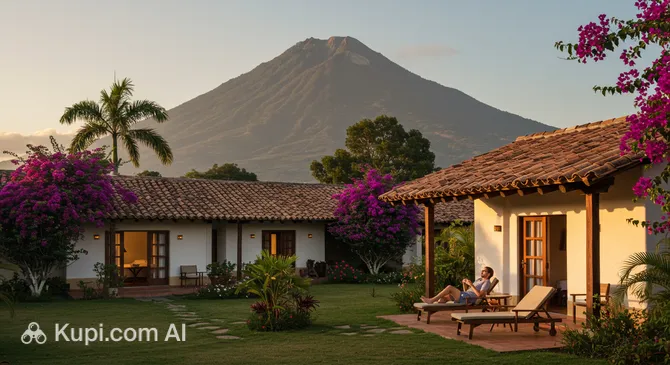
Earth Lodge. Illustration.
Source: Kupi.com AI

Traveler photos:

Popular choices include colorful guest houses (posadas) offering an authentic experience, mid-range hotels with a good range of services, and more exclusive options. For example, those seeking unique experiences might enjoy places like Earth Lodge or Filadelfia Coffee Resort & Tours, which offer not only accommodation but also additional activities.

Regarding prices, Antigua Guatemala has housing for any budget, from very affordable options to rooms in luxury hotels. It is recommended to book your stay in advance, especially if your trip coincides with the high tourist season (usually November to April) or during major festivals like Semana Santa (Holy Week). Popular online platforms or direct contact with hotels are convenient for booking.

Nearby Cities

For those looking to explore the surrounding area, Antigua Guatemala serves as an excellent starting point for day trips to several interesting nearby locations.

Among the closest cities, Chimaltenango attracts travelers with its authentic atmosphere and the chance to experience the daily life of Guatemalan highlanders, as well as visit bustling local markets. A trip to Amatitlán offers views of the picturesque lake of the same name and a chance to escape the city bustle while enjoying natural landscapes and perhaps taking a boat ride. Nearby is Sumpango, especially famous for its colorful traditions during All Saints' Day, when giant kites are launched into the sky; however, even on regular days, you can experience the unique local culture here.

CityPopulationDistance
Jocotenango23 4923 km
San Antonio Aguas Calientes12 7165 km
Magdalena Milpas Altas12 7666 km
Pastores19 6616 km
Santa Lucia Milpas Altas17 4227 km

These nearby destinations provide insight into the diverse culture and landscapes of the region.

Shopping & Souvenirs

Antigua Guatemala is a true paradise for lovers of authentic shopping. The city is famous for its colorful markets, artisan stalls, and shops where you can find unique handmade products, textiles, ceramics, jade and silver items, as well as the famous Guatemalan coffee. Shopping here is not just about buying things; it's an immersion into local culture and traditions.

Main shopping spots are concentrated in the historical city center. Stroll through the streets around Antigua Guatemala Central Park (Parque Central), where you will find many shops with souvenirs, clothing, and jewelry. One of the most popular shopping streets is 5th Avenue North, also known as Calle del Arco, which runs under the famous Santa Catalina Arch. Many boutiques, galleries, and shops with high-quality goods are located here.

In Antigua Guatemala, you won't find large modern shopping malls in the traditional sense. The city retains its colonial charm, and shopping here is mainly represented by small independent shops, boutiques, and markets. However, you may come across small shopping galleries or "pasajes," where several small stalls are gathered under one roof.

Markets are the heart of shopping in Antigua. Be sure to visit the Mercado de Artesanías (Artisans Market), usually located near the bus terminal. It is a great place to buy textiles, ceramics, woodwork, and other craft souvenirs. Also worth checking out is the Mercado Municipal (Municipal Market), where locals buy fresh food, spices, and household items. Here you can feel the authentic flavor of the city and find interesting edible souvenirs.

There are many unique things to bring back from Antigua Guatemala. Look for handmade textiles: traditional "huipil" blouses, scarves, tablecloths, and bags with bright patterns. Guatemala is famous for jade, and in Antigua, there are many shops offering jewelry and figurines made of this stone; one of the well-known places is Casa del Jade.

Jade House. Illustration.
Source: Kupi.com AI

Traveler photos:

Of course, don't forget about Guatemalan coffee—one of the best in the world. You can buy it in specialized shops or even at coffee plantations such as Finca La Azotea or Filadelfia Coffee Resort & Tours. Woodwork, ceramics, and local chocolate are also popular and can be found, for example, at the ChocoMuseo.

ChocoMuseo. Illustration.
Source: Kupi.com AI

Traveler photos:

Most shops in Antigua Guatemala are open from approximately 9:00–10:00 AM to 6:00–7:00 PM; some may close for a lunch break (siesta). Markets usually open earlier, especially the food stalls, and may close in the afternoon. In tourist shops and large establishments, credit cards (Visa, MasterCard) are accepted, but cash—Guatemalan Quetzals (GTQ)—is preferred in markets and small shops. ATMs are quite common in the city center.

The Value Added Tax (VAT) refund system for tourists in Guatemala is generally not widespread and is not standard practice for most purchases.

Reached the end of the page?

That means the route is fully explored