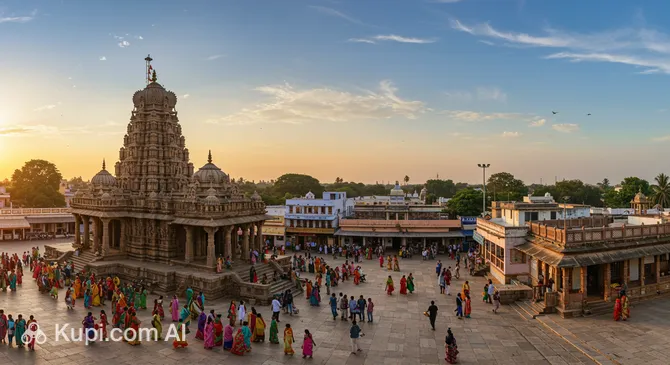
Amravati is the pulsating heart of the Vidarbha region in the state of Maharashtra, India. The city harmoniously combines the features of an important administrative center with the charm of a cozy province, where ancient traditions intertwine with the rhythm of modern life. As the ninth-largest city in the state, Amravati attracts travelers not so much with metropolitan glitz, but with its sincerity and its role as the main gateway to the natural treasures of the central part of the country.
Located at the intersection of strategic routes, the city stretches across a picturesque plain. Amravati. Illustration.
Source: Kupi.com AI
Its history and cultural heritage date back to the late 18th century, and you can learn more about Amravati's past by strolling through its old quarters, where the influence of the Nizam and Bhonsle dynasties is still felt today. Currently, about 550,000 people live here, creating the atmosphere of a busy but not overcrowded regional hub.
For tourists, Amravati is primarily interesting as a starting point for the unique Melghat Tiger Reserve and the cool Chikhaldara hills. Within the city itself, it is worth paying attention to the majestic temples and colorful markets, which allow you to experience the true spirit of Maharashtra. We invite you to get to know this hospitable city, which is sure to surprise you with its calm dignity and openness.
Weather Overview
The climate in Amravati is distinctly tropical, typical of central India. The year here is clearly divided into three seasons: a swelteringly hot summer, a humid monsoon period, and a surprisingly pleasant, mild winter. When planning your trip, consider that the weather in Amravati can significantly affect the comfort of your walks.
Summer (March to June) tests the endurance of tourists: temperatures often rise to 40–45°C, and the air becomes dry and dusty. The rainy season arrives in June and lasts until September, bringing long-awaited coolness, but also heavy downpours that can peak in July. Expect a hot summer with rare thunderstorms and heavy rainfall in the second half of the year, followed by a dry and sunny winter.
The most favorable time for a visit is considered the period from October to February. During these months, a comfortable temperature in the range of 15–30°C is established, the sky remains clear, and humidity drops. This is the ideal time for sightseeing and trips to nearby nature reserves when the nature of the Vidarbha region looks most attractive.
Average monthly temperature
Average monthly precipitation
Interesting Facts
Amravati is a city that knows how to surprise with its hidden details and historical metamorphoses. Here are a few facts that will help you look at it differently:
Ancient Roots: The city received its modern development in 1722 when Chhatrapati Shahu Maharaj granted it to Ranoji Bhonsle, after which a large-scale reconstruction of the settlement began.
River Crossroads: Amravati is fortunately located between the Wardha and Bhima rivers, which historically made it a vital logistics and trade hub for the region.
Second in Vidarbha: It is the second most important and largest city in the region after Nagpur, playing a key role in the economy and education of central India.
Gateway to Wildlife: Very close to the city is Melghat—one of the first tiger reserves in the country, established under Project Tiger.
Aviation Prospects: By 2025, the city plans to open its own modern airport, which will make it even more accessible to international tourists.
How to Get There
Reaching Amravati is quite simple thanks to its location on important transport arteries of the state of Maharashtra. The city is connected to the country's largest metropolises by an extensive network of roads and railways. Before planning your trip, we recommend studying the detailed section on how to get to Amravati to choose the most comfortable option.
Currently, the nearest major air hub is the international airport in Nagpur, located approximately 150 kilometers away. From there, you can reach the city by taxi or bus in 3–4 hours. However, it is worth noting that the launch of Amravati's own airport is expected in the near future, which will significantly simplify logistics for travelers.
Railway communication is the most popular and reliable way to travel. Amravati is located on the important Mumbai–Kolkata line. Direct trains from Mumbai cover the distance of 663 kilometers in about 10–12 hours. Express trains from Pune and other significant cities in the region also run regularly.
Station
Passenger traffic
Distance
Nagpur Junction railway station
8
141 km
Hazur Sahib Nanded railway station
7
201 km
Jalgaon railway station
6
228 km
Rani Kamalapati railway station
10
256 km
Gondia railway station
6
260 km
Main Attractions
While Amravati is often perceived as a business center, the city carefully preserves spiritual shrines that attract pilgrims from all over the state. One of the most significant attractions is the Shri Ekvira Devi Temple. This ancient holy site, dedicated to the Goddess Ekvira, is considered the energy center of the city. A visit to the temple allows you not only to witness traditional Hindu rituals but also to enjoy an atmosphere of deep peace.
Another important place for spiritual seeking is the Gadge Maharaj Temple, named after the revered saint and social reformer. The temple is noted for its exceptional cleanliness and order, reflecting the teachings of Gadge Maharaj himself on the importance of hygiene and service to people. People come here to honor the memory of the great humanist and find inner balance.
For those looking for vibrant colors and a festive atmosphere, the ISKCON Amravati Temple is open to visitors. Like all centers of this movement, it impresses with its well-maintained grounds, beautiful deities, and hospitality. The temple often becomes a venue for festivals and lectures, offering guests of the city a chance to get acquainted with the philosophy of Vaishnavism in an aesthetically flawless setting.
Local Cuisine
The cuisine of Amravati is a true feast for lovers of spicy and rich flavors. It represents a unique mix of Maharashtrian traditions with a noticeable influence from the culinary style of Telangana state. The basis of local gastronomy is the Vidarbha style, characterized by the use of aromatic spices and legumes.
Be sure to try classic street snacks such as vada pav (an Indian burger with a spicy potato patty) and misal pav—a spicy sprout curry served with a soft bun. If you are looking for a full meal, order a thali—a platter with a variety of dishes including dal, vegetable curry (sabji), rice, and flatbreads like puri or roti. Fans of South Indian flavors will enjoy The Mysore Kitchen, which serves excellent dosas and idlis.
The city's modern gastro scene is also evolving: stylish places are opening here, such as Hallmark Cafe & Eatery, where you can take a break from the bustle over a cup of coffee or a light dessert. As a refreshing drink, locals prefer masala chai or freshly squeezed sugarcane juice, which is sold on every corner. Remember that vegetarian traditions prevail in Amravati, so the selection of vegetable dishes here is simply enormous.
Travel Tips
To make your trip to Amravati as comfortable as possible and leave only pleasant memories, we have prepared a list of practical tips from experienced travelers.
Clothing and Seasonality: Take light clothing made of natural fabrics (cotton, linen) with you, as it can be very hot in the city. When visiting temples, such as the Shri Ekvira Devi Temple, be sure to cover your shoulders and knees.
Getting Around the City: Install the Ola or Uber apps to order a taxi—this will save you from having to negotiate with rickshaws. Remember the traffic jams during morning (8:00–10:00) and evening (17:00–20:00) hours.
Finance and Payment: Always keep cash rupees with you for markets and small expenses. Cards are accepted in large shopping centers and hotels, but international cards may not work in all ATMs.
Health: Drink only bottled water and avoid ice in drinks on the street. It is recommended to have hand sanitizer and a basic first-aid kit with you.
Language Barrier: The main language here is Marathi; Hindi is also common. Hotel staff and young people understand English, but knowing a few phrases in Hindi will help you connect with locals more quickly.
Local Etiquette: Always remove your shoes when entering a home or temple. It is best to greet people with the traditional namaste gesture (palms joined at the chest).
What to Avoid: Do not visit industrial zones on the outskirts unnecessarily—there is a high level of dust and almost no tourist infrastructure. Women are recommended to avoid walking alone in remote areas after sunset.
Amravati is a hospitable city, and if you follow these simple rules, it will reveal its best side to you. Enjoy your trip!
Entertainment & Nightlife
Evening life in Amravati is quite calm and measured, which is typical for provincial centers in Maharashtra. The main attraction for residents and guests of the city after sunset is the cozy cafes and restaurants. For example, you can spend a pleasant evening in the fresh air by visiting The Oak Restaurant and Bar with Terrace, which offers a good selection of food and drinks in a comfortable setting.
Movie buffs should check out modern multiplexes like PVR, located in shopping malls. Cinema plays a huge role in the lives of the citizens, so watching the latest Bollywood premiere in the company of emotional local viewers is an unforgettable cultural adventure in itself.
If your trip coincides with major festivals such as Ganesh Chaturthi, the city will be transformed beyond recognition: the streets will be filled with music, lights, and bright processions. At other times, travelers usually head to neighboring Nagpur for more active nightlife and clubs, while Amravati remains an ideal place for leisurely walks and evening gatherings near the market squares.
Parks & Museums
The parks and public spaces of Amravati reflect its status as an important regional center, although there are few large forest areas within the city limits. One of the most famous historical sites is the Amba Gate (Amba Gate)—part of the city's ancient fortifications. A walk near them allows you to touch the past and appreciate the scale of the old architecture.
For quiet relaxation and walks, residents choose municipal gardens and squares, as well as visit significant memorial complexes. The Dr. Babasaheb Ambedkar Memorial is an important cultural and educational site dedicated to the great reformer. The area around the memorial is usually well-maintained and serves as a place for quiet reflection.
Although there are no large art galleries in Amravati itself, the city compensates for this with its proximity to natural attractions. For example, the Chikhaldara hills, located nearby, are often called the "green lungs" of the region, and that is where city dwellers go on weekends to enjoy gardens and panoramic views that are sometimes lacking in the dense urban landscape.
Getting Around
The transport system in Amravati is quite simple and functional, although it may seem chaotic to a newcomer. The backbone of city communication is municipal buses, which connect the station, key markets, and residential quarters. The frequency of movement is usually 15–20 minutes, and the fare is extremely low, making them an affordable option for moving along fixed routes.
The most flexible and popular way to get around is by auto-rickshaws. They are literally everywhere. It is better to agree on the price of the trip in advance or make sure that the driver turns on the meter (which rarely happens in the province). For more comfortable trips, taxi-hailing services Ola and Uber operate in the city; however, during peak hours, due to traffic jams on central streets, the waiting time may increase.
Walking in Amravati is convenient only for short distances in the central part of the city due to intense traffic and dust. Keep in mind that traffic on the NH-6 national highway passing through the city is very heavy, especially due to the abundance of heavy vehicles. Bicycles are not very popular here due to the hot climate, so tourists more often choose air-conditioned taxis for getting around.
Accommodation
Accommodation options in Amravati are mainly geared towards business travelers and transit tourists. The bulk of hotels are concentrated in the central part of the city, especially in the area of the railway station and along National Highway NH-6. These are the most convenient locations for those who want quick access to transport and essential city services.
The price range here is very affordable: most properties are budget hotels and mid-range guesthouses (2–3 stars). Room rates usually vary from 1,000 to 3,000 rupees per night. Despite the absence of luxury five-star resorts, many establishments offer a decent level of service, air-conditioned rooms, and internet access.
If you plan to visit the city during major holidays or festivals, we strongly recommend booking accommodation in advance through popular online services. For longer stays, you can consider renting apartments in residential areas, which will allow you to immerse yourself deeper into local life.
Nearby Cities
Amravati serves as an excellent base for exploring the surroundings, where both natural beauty and colorful small towns are hidden. An extensive network of bus routes makes it easy to plan day trips to neighboring attractions in the Vidarbha region.
Just 46 kilometers away is the cozy town of Murtizapur, known for its temples and calm pace of life. It is also worth paying attention to the town of Morshi, which attracts travelers with its proximity to picturesque dams and reservoirs. If you want more active shopping and entertainment, you can head to Nagpur—a major metropolis located a couple of hours away.
City
Population
Distance
Murtajapur
40 295
46 km
Morshi
37 333
51 km
Anjangaon Surji
56 380
54 km
Pulgaon
33 925
64 km
Darwa
10 177
69 km
Don't miss the opportunity to also visit Anjangaon Surji or Pulgaon to see the real Indian province without any filters. Exploring the surrounding hills and nature reserves will give you plenty of impressions and allow you to take a break from city noise surrounded by pristine nature.
Shopping & Souvenirs
Shopping in Amravati is an exciting combination of traditional Indian markets and modern shopping venues. If you are looking for branded clothing or want to spend time in a comfortable setting, head to Tapadia City Centre. This is one of the city's main malls, where electronics, cosmetics, and clothing stores are gathered under one roof. Another popular place for buying fashionable items is the multi-brand store Trends.
For authentic goods, it's better to go to the central markets located near the station and along the main streets. Here, Amravati reveals itself in all its glory: the stalls are piled with bright Maharashtrian sarees, high-quality fabrics, and aromatic spices. Don't forget to pay attention to local utensils and cotton products, for which this region is famous.
Shops are usually open from 10:00 to 21:00, and it is customary to bargain at the markets—it's part of the local culture of communication. Shopping centers accept cards, but for strolling through markets and buying souvenirs, be sure to stock up on cash rupees. The best souvenirs from Amravati are local sweets and Vidarbha folk crafts.