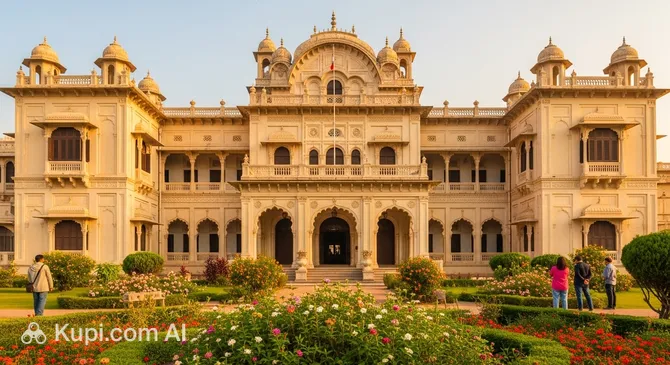
Bettiah is a city with deep historical roots located in the northern part of the state of Bihar, India. Serving as the administrative headquarters of the West Champaran district, it is a vibrant and energetic commercial hub where tradition is closely interwoven with the daily bustle of trade. The city is situated on fertile plains near the Nepal border, which leaves a distinct mark on its atmosphere and cultural diversity.
With a population of over 130,000, Bettiah does not strive to be a glossy tourist center; instead, it offers travelers an immersion into authentic provincial life. The city is known for its production of brassware and high-quality leather goods, which can be found in the lively local markets. Surrounded by agricultural land, it feels like an island of urbanization amidst the vast fields of the Gangetic Plain.
Bettiah. Illustration.
Source: Kupi.com AI
If you choose to explore the history of the city, you will discover the legacy of the powerful Bettiah Raj estate, founded back in the 16th century. This heritage is still felt in the architecture of the old quarters and local legends. We invite you to visit Bettiah to see India without embellishment, enjoy the authenticity of its bazaars, and touch the ancient traditions of this region.
Weather Overview
The climate of Bettiah is classified as subtropical, typical of the northern plains of India. The city experiences three distinct seasons: a hot summer, the monsoon season, and a mild winter. Summer begins in April and lasts until June, when temperatures can rise to 40–45°C, making daytime walks quite tiring due to high dust and heat.
From July to September, monsoons dominate the city, bringing heavy rainfall and long-awaited coolness, though humidity increases significantly during this period. Winter, lasting from November to February, is considered the best time for a visit. During this time, the weather in Bettiah becomes very comfortable: daytime temperatures range between 20–25°C, while nights bring a pleasant chill (down to 10°C).
Expect an extremely hot summer with occasional thunderstorms and a humid rainy season that can cause seasonal river flooding in the vicinity. The driest and clearest month is usually December, making it ideal for exploring historical ruins and strolling through local bazaars without the risk of being caught in a downpour or suffering from overheating.
Average monthly temperature
Average monthly precipitation
Interesting Facts
The name of the city Bettiah is derived from the word "Baint," meaning cane stalks, which once grew in abundance in this marshy area.
Bettiah Raj was one of the most influential estates in India; the title of Maharaja was officially granted to the family by Emperor Shah Jahan in 1628.
The city is closely linked to the history of Indian independence: it was in the Champaran district that Mahatma Gandhi began his famous Satyagraha (non-violent protest) in 1917.
The famous Indian poet and writer Gopal Singh Nepali was born in Bettiah; his name is a point of pride for all residents of Bihar.
The city municipality is one of the oldest in the region, having received its official status as far back as 1869.
How to Get There
Transport accessibility to Bettiah is typical for cities in northern Bihar. The city is an important hub on the NH-727 highway, connecting it with major centers of the state and neighboring Nepal. When planning a trip, keep in mind that roads in this region are often congested, so travel times can increase significantly during peak hours.
The nearest airports are located at a considerable distance. The main aviation hub is the airport in Patna (about 225 km away), from where Bettiah can be reached by taxi or bus in 5–6 hours. Another option is Gorakhpur Airport (about 150 km away), located in the neighboring state of Uttar Pradesh. Detailed information on routes and transfer options can be found in the how to get there section.
Rail travel is the most convenient way to visit the city. Bettiah Railway Station receives daily trains from Patna, Motihari, and other key cities. Traveling by train allows you to avoid traffic jams and enjoy views of rural India, though it is recommended to book tickets for popular routes in advance.
Station
Passenger traffic
Distance
Gorakhpur Junction railway station
12
113 km
Nautanwa railway station
2
129 km
Janakpur railway station
4
141 km
Patna Junction railway station
11
147 km
Darbhanga railway station
8
156 km
Main Attractions
While Bettiah is not a classic tourist destination with dozens of museums, it hides several gems for those who appreciate history. The main point of interest is the Bettiah Raj Palace. This was the former headquarters of one of Bihar’s largest estates, with a history dating back to the 17th century. Although time has not spared many of the buildings, the ruins of the palace complex still allow visitors to imagine the former grandeur of the local Rajahs.
For those willing to drive a bit further north, Lauriya Nandangarh will be a true discovery. This site is famous for one of the surviving Ashoka Pillars and mysterious burial mounds, which are considered among the few undeniably Vedic monuments in India. A trip there makes for an excellent addition to a walk through the city itself.
In the heart of the city, life bustles in the central markets. These are more than just trading platforms; they are a real attraction for those seeking authenticity. Here, you can observe metal and leather artisans whose crafts have been passed down through generations. A stroll through the narrow streets of the bazaar will allow you to feel the true rhythm of life in West Champaran.
Local Cuisine
The gastronomy of Bettiah is a true feast of Bihari flavors. The local diet is based on rice, lentils (dal), and wheat flatbreads like chapati. Be sure to try litti chokha—charcoal-roasted wheat flour balls stuffed with gram flour (sattu), served with a spicy mash of roasted eggplant and tomatoes. This dish is the region's signature and is sold on almost every corner.
Street food in the city is an art form in itself. In the markets and near the station, you will find vendors selling samosas and pakoras, as well as sattu sharbat—a refreshing and nutritious drink made from roasted gram flour with spices. The food culture here is simple and democratic: most establishments are small dhabas or snack bars where you can always find freshly prepared food at very low prices.
For those with a sweet tooth, Bettiah offers traditional Bihari sweets such as khaja and annarsa. Most city eateries serve vegetarian dishes, following local traditions, though meat delicacies can be found in specialized markets. End your meal with a glass of cool lassi or aromatic masala chai to fully immerse yourself in the local atmosphere.
Travel Tips
A trip to Bettiah is a step off the beaten tourist path, and the following tips will help make your journey comfortable and safe.
Clothing and Essentials: Choose lightweight cotton clothing, as it is very hot here in the summer. During the winter months (December-January), evenings can be cool, so bring a light jacket. When visiting temples or the palace, adhere to a modest dress code.
Transport: Cycle rickshaws are best for moving around the city—they are cheap and maneuverable. For longer trips, use taxis via apps or rent a car with a driver.
Finances: The main currency is the Indian Rupee. Always carry cash in small denominations, as cards are only accepted in very large stores or hotels. There are ATMs in the city center, but they do not always work reliably with foreign cards.
Health and Safety: Drink only bottled water and avoid ice in street drinks. Basic medicines can be found in pharmacies in the city center. Avoid walking in unlit outskirts late at night.
Communication: The main languages are Hindi and Bhojpuri. English is understood only in hotels and administrative offices. It is recommended to learn a few basic phrases or use a translator app.
Local Etiquette: The traditional greeting "Namaste" is always met with a smile. Try not to take photos of people without their permission, especially in religious places.
What to Avoid: Do not show excessive attention to local customs in a negative way and try not to engage in heated arguments on the streets.
Extra Tip: Always check the current train schedule before heading to the station, as delays in Bihar are common.
Following these simple rules will help you fully enjoy Bihar's hospitality and make your visit to Bettiah a memorable event.
Entertainment & Nightlife
The entertainment scene in Bettiah has a distinct provincial and traditional character. You won't find noisy nightclubs or modern bars with neon signs here. Life after sunset is concentrated around the central squares and markets, where tea stalls and small open-air eateries stay open late. This is the perfect time to observe the evening life of the locals over a cup of strong masala chai.
The evening atmosphere in Bettiah comes alive during seasonal festivals and fairs, known as Puja. During these periods, the streets are decorated, religious ceremonies are held, and community gatherings turn the city into a single festive venue. For young people, the main centers of attraction remain the modern retail outlets in the city center, where they meet friends and discuss the latest news.
Daytime leisure for residents often involves visiting cinemas showing the latest Bollywood releases or family trips to nearby natural areas. If you are looking for more active recreation, consider a trip to the Valmiki Tiger Reserve, located about 60 kilometers from the city, where you can enjoy wildlife and fresh air away from the urban noise.
Parks & Museums
Park infrastructure in Bettiah is limited, which is typical for many densely populated cities on the Gangetic Plain. The city is tightly built up, and the main open spaces are concentrated around the former Raj estates and government offices. Small green zones can be found near the Bettiah Raj Palace, where surviving elements of garden design offer a respite from the hustle and bustle of the noisy bazaars.
There are no museums in the traditional sense within the city itself; however, the historical core of Bettiah can be considered an open-air museum. The old college buildings and 19th-century municipal structures reflect the architectural preferences of the colonial era and the period of the local Rajahs' rule. These sites will interest fans of architecture and history who wish to trace the region's development over the centuries.
If you miss nature and open space, locals recommend heading outside the city limits. The surrounding agricultural fields are a picturesque sight during the flowering season. For a full nature getaway, the best choice is a trip to the Valmiki Reserve, where forests and river landscapes compensate for the lack of parks in the city itself.
Getting Around
The public transport system in Bettiah is perfectly adapted to narrow streets and heavy traffic. The main means of transportation for both tourists and locals are auto-rickshaws and cycle-rickshaws. This is the fastest and most affordable way to get from one part of the city to another, especially in market areas where car traffic is heavily restricted. It is advisable to agree on the fare with the driver in advance, as meters are rarely used here.
Buses are actively used for trips to neighboring towns and villages. Bettiah bus station serves many routes, though a fixed schedule often does not exist—vehicles depart as they fill up. Small shared vans also circulate within the city, connecting the center with the outskirts. Be prepared for public transport to be overcrowded during peak hours.
An alternative to public transport is calling a taxi through mobile apps like Ola or Uber, which are gradually starting to operate in the region, although their availability may be limited to the city center. Renting a car with a driver is an excellent option for those planning to visit distant attractions, such as the Ashoka Pillar. Overall, the city's transport network requires some flexibility and patience from the tourist, but it fulfills its purpose.
Accommodation
The accommodation market in Bettiah is primarily geared towards business travelers and transit visitors, so budget guesthouses and small lodges predominate. There are no luxury five-star hotels in the city, but you can find decent middle-class options offering basic amenities like air conditioning and internet access.
The most convenient area to stay is the city center, located near administrative buildings and the main markets. Here, you will be within walking distance of major retail outlets and the railway station. Choosing a hotel near the station is an excellent strategy for those planning a short visit or using the city as a base to explore nearby architectural monuments.
When booking, it is worth considering that during major festivals or the wedding season, rooms in the city's best hotels can sell out very quickly. We recommend booking accommodation in advance through Indian services or directly. Prices for stays in Bettiah remain some of the most affordable in the state of Bihar, making the city attractive for budget travelers.
Nearby Cities
Thanks to its location in northern Bihar, Bettiah can serve as a starting point for exploring neighboring settlements and natural beauty. The region around the city is rich in agricultural land and small towns, each with its own unique flavor.
Nearby settlements include Banu Chhapra and Karghia Purab. These places allow you to see the traditional way of life in provincial Bihar. It is also interesting to look into Barwat Pasrain or Dhumnagar, which are located just a few kilometers away and are easily reachable by auto-rickshaw. Another convenient destination for a quick trip is Tola Hadda.
City
Population
Distance
Banu Chhapra
10,821
1 km
Kargahia Purab
9,922
2 km
Barwat Pasrain
12,970
3 km
Dhumnagar
15,788
5 km
Tola Khadda
12,522
6 km
For a longer day trip, you can choose the city of Motihari, located about 40 kilometers away, or head to Valmikinagar, home to the famous Tiger Reserve. Exploring the surroundings of Bettiah will give you a unique opportunity to see authentic rural life in India and enjoy the tranquility of the plains landscape.
Shopping & Souvenirs
Shopping in Bettiah is primarily an immersion into the world of traditional crafts and farm products. The city has long been famous for its metalworkers, so the best purchases here are brass and bronze items. In the central bazaars, you can find unique metal cookware and decorative items that make excellent souvenirs.
Another point of regional pride is leather goods. Local markets offer a wide range of handmade leather footwear and accessories. Also, look out for locally produced fabrics and clothing. While there are no large Western-style shopping malls in the city, a stroll through the central shopping streets will give you a much richer experience from interacting with local traders and the chance to bargain.
For gastronomic souvenirs, head to the food markets near the station. Here, you will find famous Bihari sweets and various spices. Shops in Bettiah usually operate from morning until late evening, with a short break during the hottest part of the day. Payment in most outlets is made in cash, although larger shops in the city center are beginning to accept digital payments.
Reached the bottom of the page?
Looks like you know this route inside out
Popular routes
Where travelers fly most — pick a route and check prices