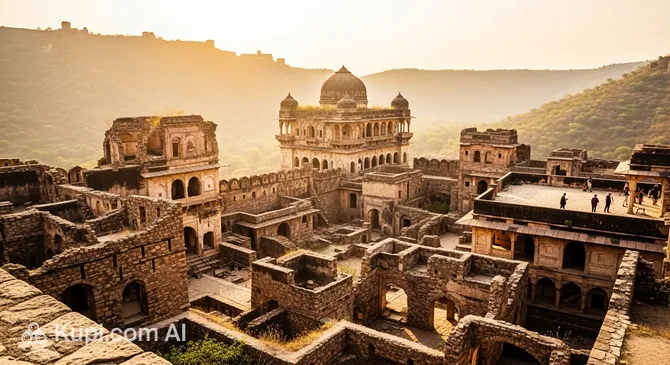
Bhangar is an atmospheric administrative district in the state of West Bengal, located southeast of the Kolkata metropolis. Situated in India, this region represents a harmonious blend of suburban bustle and the tranquility of rural landscapes. With a population of about 632,000 people, it serves as an important residential and transit hub where life flows at a traditional Bengali pace.
Bhangar. Illustration.
Source: Kupi.com AI
The geographical position of Bhangar in the Ganges Delta defines its character: flat territories here are intersected by a network of rivers and canals, while residential areas alternate with vast agricultural lands. Despite the lack of typical urban glitz, Bhangar attracts visitors with its authenticity and the opportunity to see the daily life of real West Bengal without any tourist filters.
For those interested in the region's past, the history of development of this administrative block is inextricably linked to the expansion of Kolkata. Visiting Bhangar is an invitation to immerse yourself in the provincial Indian way of life, stroll through local markets, and experience the hospitality of the local residents, whether they are working the land or commuting daily to the big city for work.
Weather Overview
The climate of Bhangar is typical of the tropical areas of West Bengal and is characterized by three distinct seasons. From March to May, a hot and dry summer prevails, with temperatures reaching up to +40°C. During this period, it is especially important to carry sunscreen and drink plenty of water. You can find out more about what the weather in Bhangar will be like during different months of the year.
From June to October, the district is under the influence of the monsoons. Expect heavy rains and high humidity; at this time of year, Bhangar's rural landscapes turn emerald green, but road travel can be difficult due to local flooding. The most pleasant time to visit is considered to be winter (from November to February), when the weather is mild and dry with temperatures ranging from +15°C to +25°C.
Given the proximity to Kolkata and dense construction, haze or smog may be present in the air during the dry months. If your trip is planned for spring or early summer, prepare for high humidity, which makes the heat more intense, and try to plan your activities for the morning or evening hours.
Average monthly temperature
Average monthly precipitation
Interesting Facts
Geographical Confusion: Many travelers mistakenly search for the famous "ghost town" of Bhangarh here; however, that is located in Rajasthan, while Bengali Bhangar is a lively and densely populated suburban area.
Delta Zone: The region is situated in the lowlands of the Ganges Delta, making it very vulnerable to flooding during the monsoon season, with local life fully adapting to the whims of nature.
Administrative Division: Bhangar is divided into two community development blocks (Bhangar I and Bhangar II), which together form a massive agglomeration of many small villages and towns.
Agrarian Belt: Despite its proximity to the metropolis, Bhangar remains an important supplier of agricultural products for Kolkata's markets, maintaining significant areas of fertile land.
How to Get There
Transport accessibility to Bhangar is closely linked to its proximity to the state capital. The easiest way to get here is from Kolkata, using the developed road network, including the NH-12 highway. A trip by taxi or private car from the center of the metropolis will take between 1 and 1.5 hours, depending on traffic density, which can be quite chaotic in these parts. More detailed information can be found in the section on how to get to Bhangar.
For those who prefer air travel, the nearest gateway is Netaji Subhash Chandra Bose International Airport (IATA: CCU), located approximately 40–50 kilometers away. From the airport, it is most convenient to reach Bhangar by taxi (Ola or Uber services operate reliably); however, you should allow extra time for potential traffic jams in the suburban area.
Rail service is provided by the Kolkata Suburban Railway lines. There are no major railway stations in the district itself, but small nearby stations connect Bhangar to Sealdah Station in Kolkata. A train ride can be faster than a bus, especially during peak hours, taking between 45 and 90 minutes.
Main Attractions
Although Bhangar is not a traditional tourist center with world-famous monuments, its main value lies in its colorful daily life and local hubs of social activity. One of the busiest spots is the Ghatakpukur Chowmatha Crossing. This is the pulsing heart of the district, where roads meet, and the interests of local traders and occasional travelers intersect, creating a unique and noisy oriental atmosphere.
Of particular interest to travelers are the local "haats"—weekly rural markets in villages like Tardaha Kapasati. Here, you can witness traditional trade and purchase the freshest produce straight from the fields. The district's architecture consists mainly of functional residential buildings and small mosques or temples that serve as spiritual centers for the local communities.
Nature lovers will enjoy walks along the banks of the local canals and rivers that pierce the region. These waterways not only sustain the local farms but also provide picturesque backdrops for peaceful sunset strolls, allowing you to escape the noise and dust of the main roads.
Local Cuisine
The cuisine of Bhangar is a classic embodiment of Bengali culinary traditions, where rice and freshwater fish play the leading roles. Be sure to try fish curry made from rui or katla, which are caught in local waters. Dishes here are generously seasoned with mustard oil and spices, giving them a characteristically pungent and rich flavor.
Among local establishments, the 1 Bite Restaurant and Banquet Hall stands out, where you can sample a traditional menu in a more comfortable setting. However, for the true taste of Bhangar, head to the street stalls that prepare the famous kati rolls (flatbreads with filling) and puchka—crispy balls with a spicy potato filling and tangy water.
Don't forget to end your meal with traditional Bengali sweets. Mishti doi (sweet fermented yogurt) and rosogolla are the region's hallmarks, prepared here according to age-old recipes. The most popular drink remains "cha"—strong tea with milk and sugar, served in small clay cups on every corner.
Travel Tips
A visit to Bhangar will provide a unique experience of immersion in the rural life of West Bengal, but it requires some preparation. Here are a few tips to help make your trip comfortable and safe:
Clothing and Essentials: Choose clothing made of light, natural fabrics (cotton, linen) to better handle the heat and humidity. When visiting temples or residential villages, try to follow a modest dress code, covering your shoulders and knees. Don't forget comfortable shoes that can handle dust.
Transport: Use auto-rickshaws for trips within the district, but always confirm the price beforehand. For connections to Kolkata, taxis from apps like Ola or Uber are best, but order them in advance as pickup times can be long.
Finances: It is critically important to have cash Indian rupees with you in Bhangar. ATMs are rare and do not always accept international cards, and cashless payments are virtually non-existent in local shops and rickshaws.
Health: Drink only bottled water and avoid ice in drinks. During the monsoon season, be sure to use repellents, as proximity to water bodies increases mosquito activity.
Communication: The primary language is Bengali. English is mostly understood at a basic level, so learning a few phrases in the local language or having an offline translator on your phone will be very helpful.
Etiquette: Always remove your shoes when entering a private home or a temple. It is customary to greet people with the traditional namaste gesture (hands folded at the chest).
What to Avoid: Do not plan walks along remote rural paths alone after dark due to poor lighting. Also, avoid discussing sensitive social topics with strangers.
Extra Tip: Try to visit a local "haat" (market)—it is the best place to observe the region's culture and buy fresh fruit.
Be open to interaction and respect local customs, and Bhangar will reveal its most hospitable side to you. Have a pleasant trip!
Entertainment & Nightlife
Nightlife in the conventional sense—with bright neon signs, clubs, and bars—is virtually non-existent in Bhangar. Life here slows down after sunset, and locals prefer to spend their evenings with family or at small gatherings near tea stalls. It is a place for those seeking seclusion and quiet after the daytime hustle of Kolkata.
The main evening attraction in the area is the 1 Bite Restaurant and Banquet Hall, where celebrations and family dinners are held. Residents also often gather in open spaces, such as the Ghatakpukur Chowmatha Crossing, to exchange news over a cup of traditional tea.
For more active entertainment—such as cinemas, large shopping malls, and concert venues—residents and guests of Bhangar usually head to neighboring Kolkata. However, during major festivals like Durga Puja, the streets of the district are transformed: temporary pavilions are erected, music plays, and the festive mood lasts late into the night.
Parks & Museums
Since Bhangar is primarily a residential and agricultural district, there are no world-class classical museums or galleries here. The cultural life of the region is concentrated in community centers and religious sites. Locals carefully preserve their traditions, which are manifested not in museum exhibits, but in live interaction at venues like the Ghatakpukur Chowmatha Crossing.
Natural landscapes serve as the parks here: riverbanks, canals, and mangroves create the natural "green lungs" of the district. While there are few developed park zones with paths and benches, the vast fields and proximity to water offer opportunities for walking away from the hustle and bustle. The grounds of facilities like the 1 Bite Restaurant and Banquet Hall are often used for family celebrations and outdoor recreation.
For a more extensive cultural program and landscaped gardens, tourists should head to Kolkata, home to the Eco Park and the Maidan. Nonetheless, Bhangar offers a rare chance to see the nature of West Bengal in its pristine, unrefined state, which has its own special charm for eco-tourism enthusiasts.
Getting Around
The transport system in Bhangar is oriented toward the daily needs of hundreds of thousands of residents, making it simple and functional. The main forms of public transport here are state and private buses that connect the block's main towns with Kolkata's transport hubs. Buses run regularly, but keep in mind that they can be very crowded during peak hours, and travel time increases due to congestion on narrow roads.
For traveling short distances within the district, auto-rickshaws and motor-rickshaws (totos) are the ideal options. This is the most popular and affordable way to get from one village to another or to reach the market. It is best to agree on the fare in advance, as meters are a rarity here. Many locals also prefer using motorcycles and bicycles, allowing them to maneuver more easily through heavy traffic.
For trips to Kolkata, many choose suburban trains. Although there are few stations within Bhangar itself, nearby platforms allow you to reach the center of the metropolis faster than by road. Train tickets cost very little and can be purchased at station ticket offices. A top tip for tourists: try to avoid traveling on weekdays from 7 to 10 AM and from 5 to 8 PM, when the transport load reaches its peak.
Accommodation
The hospitality market in Bhangar is primarily focused on local residents and business travelers, so you won't find luxury hotels here. Most accommodation options consist of budget guesthouses and small lodges located in larger towns like Narayanpur. The cost of living here is very affordable, typically ranging from 500 to 1,500 Indian rupees per night.
For those who value a high level of comfort and service, the best solution is to stay at one of the hotels in Kolkata (especially in the Salt Lake or Rajarhat areas) and visit Bhangar on day trips. If you need to stay specifically in this area, look for short-term apartment rentals or guest houses.
Within Bhangar itself, you might consider relaxing or hosting events at venues like the 1 Bite Restaurant and Banquet Hall, which occasionally offers leisure services. It is recommended to book accommodation in advance if your trip coincides with major regional festivals, when demand for any available space increases sharply.
Nearby Cities
Bhangar serves as an excellent starting point for exploring the surroundings, allowing travelers to experience the diversity of life in the state of West Bengal. Proximity to major transport arteries opens the way to both quiet agrarian settlements and bustling regional trade centers.
Within a short drive is Champahati, known for its local markets and traditional crafts. Also worth visiting is Hasbalanda—a small settlement where you can see typical rural architecture and enjoy a peaceful pace of life. For those seeking a larger scale, Kolkata is always accessible with its colonial heritage and endless cultural opportunities.
City
Population
Distance
Khasbalanda
9 046
13 km
Malancha
16 918
16 km
Champahati
12 111
17 km
Petua
9 596
20 km
Chaital
11 927
20 km
Exploring nearby towns and villages will help you better understand the complex mosaic of Bengali culture. Each of these destinations offers its own unique perspective on the traditions and modernity of the region, making your journey around Bhangar rich and multifaceted.
Shopping & Souvenirs
Shopping in Bhangar is primarily about visiting local "haats" or weekly markets. In the villages of Narayanpur and Tardaha Kapasati, life bustles around stalls filled with fresh vegetables, fruits, and aromatic spices. There are no huge shopping malls here, but it is at these markets that you can feel the true spirit of the region and purchase high-quality local products.
Special attention should be paid to textiles: West Bengal is famous for its saris, and you can find handmade cotton products at the Bhangar markets. Terracotta and bamboo souvenirs made by local artisans are also popular. If you are looking for a specific place to shop and relax, you can check the area around the 1 Bite Restaurant and Banquet Hall, where small shops selling essential goods are often concentrated.
The main trading hub of the district is rightfully considered the Ghatakpukur Chowmatha Crossing, where many small shops selling clothes, shoes, and consumer electronics are concentrated. Remember that most of these places only accept cash in rupees, and the ability to haggle politely will help you get a better price. Shops usually operate from morning until late evening with a short break during the hottest part of the day.