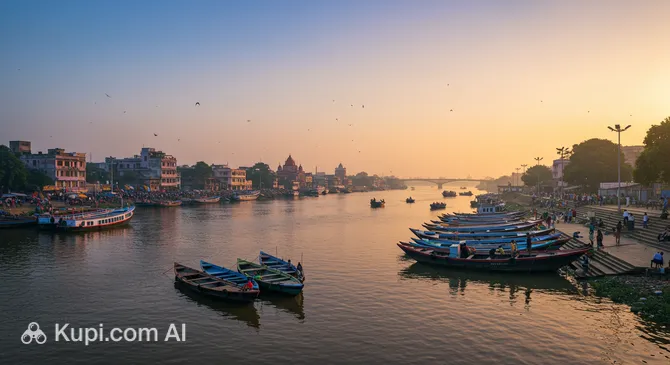
Kamarhati is a vibrant industrial center located in the state of West Bengal on the left bank of the majestic Hooghly River. As part of the Kolkata Metropolitan Area, the city pulses with the rhythm of a large metropolis while maintaining the character of a working-class suburb. Home to more than 330,000 people, the atmosphere is steeped in industrial aesthetics and the everyday life of India.
Kamarhati. Illustration.
Source: Kupi.com AI
Geographically, the city stretches along the river, bordering Baranagar to the south and Panihati to the north. The history of Kamarhati is inextricably linked to the era of British rule: it was once home to the country bungalows and shady gardens of Kolkata's wealthy residents. Later, the region transformed into a powerful industrial hub specializing in the production of jute, cotton, rubber, and ceramics.
While the city is primarily industrially oriented, it attracts travelers with its authenticity. Here, you can see how real, non-touristy Bengal lives, visit local stadiums, or stroll along the banks of the Hooghly. We invite you to explore this hardworking region, where a rich heritage and the hospitality of local residents are hidden behind factory facades.
Weather Overview
The climate in Kamarhati is a pronounced tropical savanna type, typical of the Ganges Delta. The most comfortable time to visit the city is between November and February, when the weather is mild and dry. During this period, the average air temperature is around 19–24°C, which is ideal for walking and exploring local architecture.
With the arrival of March, the heat begins to rise rapidly, peaking in May when the thermometer can reach 35–38°C with high humidity. From June to September, the monsoon dominates the region. During this period, heavy rains hit the city, especially intense in July and August, when rainfall exceeds 300 mm per month. A detailed weather forecast for Kamarhati will help you better prepare for your trip and choose the right gear.
It is worth considering that the high concentration of industrial enterprises in the Hooghly district affects the atmosphere. On windless winter days, smog can accumulate over the city, and during the rainy season, the humidity is particularly palpable. Travelers are advised to bring light cotton clothing for summer and an umbrella or raincoat if the visit is planned for the second half of the year.
Average monthly temperature
Average monthly precipitation
Interesting Facts
Kamarhati officially became a separate municipality in 1899, after separating from Baranagar.
During British rule, this area was a favorite vacation spot for wealthy Bengali "babus," who built luxurious bungalows and gardens along the riverbank.
The city is an important part of the Kolkata Metropolitan Area, which has a population of over 14 million people.
The city's industrial profile is highly diverse, ranging from giant jute mills to the production of cement, ceramics, and paints.
The demographic portrait of Kamarhati is surprisingly balanced: according to the census, the ratio of men to women in the city is almost equal (52% to 48%).
How to Get There
Kamarhati enjoys excellent transport links with the region's largest metropolis, Kolkata. Due to its proximity to the heart of the metropolitan area, tourists can choose the most convenient mode of travel, whether by rail or road. Detailed information on routes and schedules can be found on the page describing how to get to the city.
The main aviation hub for the region is Netaji Subhash Chandra Bose International Airport (IATA: CCU), located approximately 20–25 kilometers from Kamarhati. From the airport, the most convenient way to reach your destination is by taxi (using Uber or Ola apps) or specialized buses. The trip can take anywhere from one to two hours depending on traffic density, which is common for Bengali roads.
Rail travel is the fastest way to get around. While the city does not have its own massive station, it is surrounded by Indian Railways stations in neighboring districts. Trains from central Kolkata run regularly, and travel time is between 30 to 60 minutes. This makes it easy to plan day trips, even during peak hours.
Station
Passenger traffic
Distance
Howrah railway station
21
12 km
Jashore Junction railway station
5
100 km
Durgapur railway station
7
140 km
Rajshahi Railway Station
3
189 km
Dhanbad Junction railway station
8
233 km
Main Attractions
Since Kamarhati is primarily an industrial and residential area, classic tourist routes can be hard to find; however, the city holds several hidden gems. The pride of the local community is the Rani Rasmani’s Nabaratna temple complex. Built in the traditional Bengali "Navaratna" style (meaning nine spires), these shrines are dedicated to the goddess Kali, as well as Krishna and Shiva, representing a magnificent example of local architecture.
For sports fans and public events, the Kamarhati Municipality Stadium is a major point of interest. Football matches and cricket tournaments are regularly held at this municipal stadium, allowing you to feel the excitement and passion of Indian fans. It is an excellent place to observe the daily lives of citizens in an informal setting.
A walk along the city's western border, washed by the waters of the Hooghly River, allows you to appreciate the scale of local industry. Historic jute and cotton factories, which largely defined the city's appearance, still operate here. Although the embankments are more utilitarian in nature, the views of the river and passing ferries create a unique atmosphere of industrial Bengal.
Local Cuisine
The culinary face of Kamarhati is inextricably linked to the rich traditions of Bengali cuisine. This is a land where rice and fish are considered the foundation of any meal. Be sure to try maacher jhol—a fragrant fish curry in a spicy sauce, prepared here with great skill. You will also find various types of dal (lentil soup) and fresh vegetable dishes on the menus of local eateries.
A visit to West Bengal is incomplete without tasting its famous sweets. Local confectionery shops offer the legendary rasgulla (cottage cheese balls in syrup) and delicate sandesh. These desserts are a source of pride for locals and make an excellent accompaniment to a cup of strong tea.
The food culture here is simple and democratic: most residents dine in small "dak-bungalows" or tea stalls (cha), where tea is served in clay cups. Street food is represented by various snacks, such as phuchka (crispy filled balls) or jhal-muri (spicy puffed rice). The gastronomic scene in Kamarhati offers the honest taste of everyday India without unnecessary frills.
Travel Tips
A trip to Kamarhati allows you to see India without the filters, but to make your journey comfortable, use our practical tips.
Clothing and Dress Code: Choose clothes made of natural fabrics (cotton, linen) to better endure the humid heat. When visiting the Rani Rasmani’s Nabaratna temples, be sure to cover your shoulders and knees; shoes must be removed before entering the shrines.
Transport: Suburban trains are best for moving between cities, while auto-rickshaws are ideal for local travel. It is recommended to install the Uber or Ola taxi apps for trips to Kolkata to know the cost in advance.
Finances: Cash is king in Kamarhati. Always carry a supply of Indian Rupees in small denominations for paying rickshaws and making purchases at markets. ATMs are available in central areas, but international cards do not work everywhere.
Health: Drink only bottled water and avoid ice in street drinks. Industrial zones can be dusty, so people with respiratory sensitivities should carry a protective mask.
Communication: The primary language is Bengali, but many understand Hindi. Basic English is common among youth and office staff. Learn a few phrases like "Namaskar" (a greeting).
Local Etiquette: Show respect for local traditions and ask permission before taking photos of people or religious ceremonies. A greeting with folded palms is always received positively.
What to Avoid: Try not to walk alone in poorly lit industrial areas near the Hooghly River late at night. Avoid eating raw street food if your stomach is not accustomed to it.
Air and Environment: Keep in mind that due to the abundance of factories, air quality may be lower than in rural areas. The best time for walks is early morning.
Enjoy your introduction to this unique industrial region and unforgettable impressions of the real West Bengal!
Entertainment & Nightlife
The entertainment scene in Kamarhati is primarily geared toward locals and has a quiet, family-oriented character. You won't find noisy nightclubs or bars with neon signs here—for active nightlife, residents usually head to neighboring Kolkata, located just 18 kilometers to the south. Evenings in the city itself are typically spent with family or in slow conversation at small tea stalls.
The main venue for leisure and daytime entertainment is the Kamarhati Municipality Stadium. During sporting events or festive fairs, a significant portion of the population gathers here, turning the space into the epicenter of the district's cultural life.
For those seeking cultural enrichment, theaters and cinemas are available in the adjacent areas of the metropolitan region. Travelers are advised to plan evening walks in the central municipal zones where lighting and safety are well-maintained, while for a full evening out, it is better to take a taxi to restaurants in the center of the metropolis.
Parks & Museums
Green spaces and cultural institutions in Kamarhati reflect its industrial character. Due to extremely dense urban development, there are few classic landscaped parks. The main areas for walking and outdoor activities are the grounds around the municipal stadium, as well as small squares at the city's educational and medical institutions.
The bank of the Hooghly River is the district's main natural asset. Despite the fact that the embankment is occupied by industrial facilities in many places, open sections of the shore remains a popular leisure spot where you can watch river traffic and feel the cool breeze. However, to visit full-fledged botanical gardens or forest parks, residents and visitors often travel to neighboring Baranagar or Kolkata.
As for museums, Kamarhati is not a major museum center. The role of history keepers is fulfilled by ancient temples and the buildings of former factories themselves, which are living monuments to the industrial era. For a deep dive into the region's history and art, travelers are recommended to visit the famous Indian Museum or the Victoria Memorial in the center of the metropolis.
Getting Around
The transport system in Kamarhati is typical of Kolkata's densely populated suburbs and is designed to quickly transport thousands of workers to their places of service. The backbone of the city's fleet consists of buses—both state-run and private. They connect the city with the main districts of the metropolis, but be prepared for the fact that transport can be very crowded during peak hours.
For short trips within the city, auto-rickshaws and motor-rickshaws are indispensable. This is the most flexible form of transport, capable of maneuvering through narrow alleys. It is advisable to agree on the price of the trip in advance or ensure the trip follows a set route. Additionally, bicycles are popular in the city and remain the most eco-friendly way to get around.
The railway is a crucial part of the transport network. Suburban trains provide reliable connections to central Kolkata and the northern districts of the state. Tickets can be purchased at station counters, and their cost is extremely low. Tourists are advised to avoid traveling during peak hours (morning and evening) for a more comfortable and safer journey.
Accommodation
The choice of accommodation directly in Kamarhati is quite specific. As the city is a major industrial hub, the majority of the housing stock consists of long-term rental apartments and PG (paying guest) houses catering to professionals and migrants. There are few classic tourist hotels, though they are known for their affordable prices.
For those seeking a more standard level of service, it is recommended to look at municipal zones or adjacent areas to the south. Private mini-hotels and guesthouses can be found there. When booking, keep in mind that demand for housing rises sharply during major religious festivals, so it is best to plan your stay in advance.
Most tourists prefer to stay in central Kolkata, which offers a wide range of accommodation—from budget hostels to five-star hotels from international chains. Given the good transport accessibility, a trip to Kamarhati from the center of the metropolis is hassle-free, allowing you to combine a comfortable stay with exploring the industrial outskirts.
Nearby Cities
Thanks to its ideal location within a massive metropolitan area, Kamarhati serves as an excellent starting point for exploring neighboring cities and districts along the Hooghly River. Just a few kilometers to the north is Khardaha, which attracts pilgrims and history buffs with its ancient temples and quiet atmosphere.
Only a few minutes away by ferry across the river lies the city of Uttarpara, known for its educational traditions and beautiful embankments. It is also worth visiting Panihati—this city is famous for its religious festivals and close cultural ties to the history of the Bengali Renaissance. Exploring these places provides a better understanding of the multifaceted character of West Bengal.
Traveling to nearby cities is convenient via local suburban trains or auto-rickshaws, turning every trip into a small adventure. The proximity to Kolkata also opens up unlimited opportunities to visit the museums, parks, and palaces of the state capital, making your itinerary rich and diverse.
Shopping & Souvenirs
Shopping in Kamarhati is a fascinating dive into the world of local markets and shops. There are no massive, glittering shopping malls here, but locally produced goods are available in abundance. The city is famous for its jute and cotton products. In small shops near the factories, you can purchase high-quality fabrics, jute bags, and home interior items at very attractive prices.
The central municipal markets are the heart of commercial life. Here, you can find everything from fresh tropical fruits to local ceramics and metalware. The market bustle, the bright colors of spices, and the opportunity to haggle create that unique atmosphere of an oriental bazaar that many travelers seek in India.
Shops generally operate from 10 AM until late evening, though many small stores close for a midday break. Payment at most outlets is in cash (Indian Rupees), although larger stores are beginning to accept bank cards. For world-class souvenirs and branded items, it is better to head to the shopping complexes of Kolkata, leaving Kamarhati to surprise you with its authentic simplicity.