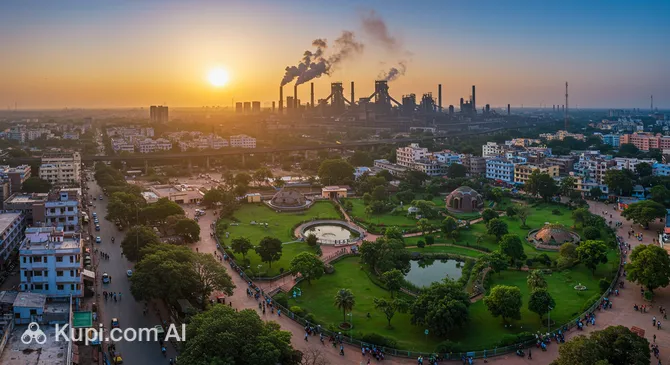
Bhilai is a dynamic industrial center located in the state of Chhattisgarh, in the heart of India. Known far beyond the region as the "Steel City," it owes its fame and development to a massive metallurgical plant established in the mid-20th century with the support of Soviet specialists. Today, it is the state's second-largest city, with a population of over 625,000, representing a unique cultural melting pot often referred to as "Mini-India" for its ethnic diversity.
Bhilai. Illustration.
Source: Kupi.com AI
Geographically, the city stretches along the banks of the Shivnath River, occupying a strategic position on the route between Mumbai and Kolkata. Although Bhilai is primarily perceived as an industrial giant, it possesses a distinct urban aesthetic. The entire history of Bhilai's development is inextricably linked to industrialization, which is reflected in the clear planning of its residential sectors and the abundance of educational institutions that make it an important academic hub in the central part of the country.
For the traveler, Bhilai is interesting primarily as a symbol of industrial progress and social harmony. Here, you can see the harmonious coexistence of factory chimneys and green parks, such as the famous Maitri Bagh garden, which has become a symbol of friendship between nations. Visiting this city is an opportunity to peek behind the scenes of a modern country's industrial power and feel the rhythm of life of the people creating its future.
Weather Overview
The climate in Bhilai is distinctly tropical, typical of the plains of Central India. Throughout the year, the city goes through three main seasons: hot summer, humid monsoon, and a mild, pleasant winter. You can check the current forecast and details on the weather in Bhilai page.
Summer begins here in March and lasts until June, when temperatures can rise to an impressive +40°C... +45°C. From July to October, the city is under the sway of monsoons, which bring heavy rainfall and high humidity. Winter—from November to February—is considered the ideal time to visit: this period features clear weather with comfortable daytime temperatures ranging from +20°C... +28°C and cool nights (around +14°C).
It is worth considering that the city's industrial status has an impact: during dry, windless periods, haze or smog may be observed in the air. The proximity of the Shivnath River slightly tempers the heat, but overall, travelers are recommended to plan their visit for the winter months to avoid the exhausting heat and heavy rains that can make moving around the city difficult.
Average monthly temperature
Average monthly precipitation
Interesting Facts
Steel City: Bhilai earned its nickname thanks to the Bhilai Steel Plant (BSP), which has been repeatedly recognized as India's best steel plant and is the primary supplier of rails for Indian Railways.
Symbol of Friendship: The Maitri Bagh ("Friendship Garden") was built as a sign of cooperation between India and the USSR; its main pride is a musical fountain, considered one of the largest in Asia.
Mini-India: Because workers from all corners of the country flocked to build the plant in the 1950s, a unique multicultural environment formed in Bhilai, where festivals from all regions of India are celebrated.
Educational Hub: Bhilai is known not just for steel but for knowledge—it is home to the prestigious IIT Bhilai and numerous engineering colleges, making it a "talent forge" for the entire country.
White Tigers: The local zoo within Maitri Bagh is one of the few places in the state of Chhattisgarh where you can see majestic white tigers.
How to Get There
The transport accessibility of Bhilai is largely determined by its status as a key industrial hub in Central India. The city is conveniently located at the intersection of major transport arteries, making it easy to plan a route. You can learn more about travel details by exploring the how to get to Bhilai section.
The city does not have its own airport, so the main air gateway for tourists is the Swami Vivekananda Airport in neighboring Raipur. It is located approximately 32-35 kilometers from Bhilai. The journey by taxi or bus takes about an hour, provided there are no traffic jams on National Highway 6 (NH6). The airport handles regular flights from Delhi, Mumbai, Kolkata, and other major cities across the country.
Railways are the most popular and budget-friendly way to reach the city. Bhilai is situated on the main Howrah–Mumbai line. The key transport hub is Durg station, located just a few kilometers away, as well as the Bhilai Nagar station itself. Trains run regularly here, connecting the region with almost every state in India.
Station
Passenger traffic
Distance
Raipur Junction railway station
5
30 km
Gondia railway station
6
124 km
Bilaspur Junction railway station
7
128 km
Bhawanipatna railway station
2
234 km
Nagpur Junction railway station
8
235 km
Main Attractions
Despite its status as an industrial giant, Bhilai offers guests several iconic sites reflecting the city's spiritual and social life. One of the most striking architectural gems is the Jagannath Temple. This majestic temple complex attracts not only worshippers but also art lovers with its detailed carvings and an atmosphere of peace that contrasts sharply with the noise of the factory workshops.
Another important religious landmark is the Jama Masjid—the city's main mosque, which serves as a vital spiritual center for the local community. Its architecture and scale emphasize the multicultural character of Bhilai, where representatives of diverse faiths coexist side by side. For those looking for modern urban symbols and memorable photos, a must-visit point on the itinerary is the I Love Bhilai art installation, located in a popular recreation spot for locals.
The famous Maitri Bagh (Friendship Garden) also deserves attention. This unique site, created by the steel plant, combines a zoo where you can see rare white tigers, a picturesque lake, and the largest musical fountain in Asia. The garden symbolizes the close ties between India and the USSR and remains a favorite place for walks and family leisure on weekends.
Local Cuisine
The gastronomic map of Bhilai is a wonderful reflection of its "Mini-India" status. Here, you can taste dishes from practically any state, but the foundation remains Chhattisgarhi cuisine with its emphasis on rice and legumes. Be sure to try traditional dal-chawal (lentils with rice) and various sabzis. Due to the strong influence of neighboring regions, vada-pav snacks and aromatic South Indian dosas are popular on the city's streets.
The city's modern gastronomic scene is represented by cozy coffee shops and tea houses. For instance, quality coffee lovers will appreciate Nothing Before Coffee, where you can take a break from the city bustle. For those who want to immerse themselves in an authentic Indian "tea time" atmosphere with a modern twist, Nukkad – The Chaitastic Teafé is an excellent choice.
Food culture in Bhilai is closely tied to street markets and food courts in shopping centers. Main restaurants are concentrated in the center and near the steel plant's residential sectors. Note that vegetarian cuisine is highly developed in the city, rooted in local traditions. As for drinks, a fresh lassi or traditional ginger tea, which locals drink at any time of day, is the best way to escape the heat.
Travel Tips
A trip to Bhilai is an opportunity to see India from an unusual, industrial side. To ensure your journey is comfortable and safe, we have prepared a few practical tips.
Clothing and Essentials: Choose light clothing made of natural fabrics, as it is almost always hot in the city. When visiting temples like the Jagannath Temple, remember to cover your shoulders and knees. For walks in industrial zones, comfortable closed-toe shoes are necessary.
Transport: The best way to move between sectors is by auto-rickshaws or booking a taxi via the Ola and Uber apps. Keep in mind that during peak hours (7:00–10:00 and 17:00–20:00), serious traffic jams are possible.
Finances: The official currency is the Indian Rupee. Large shopping malls and hotels accept cards, but always keep cash on hand for markets and small expenses. ATMs are easy to find in the central sectors.
Health and Safety: Drink only bottled water and avoid ice in street drinks. Due to the proximity of the plant, air quality can be low, so people with allergies or asthma should carry necessary medications.
Communication: The main languages are Hindi and Chhattisgarhi. In hotels and educational institutions, many people speak English, but knowing a few phrases in Hindi will help you win over the locals.
Local Etiquette: Bhilai is a city of working families with traditional values. Be polite, always remove your shoes before entering a home or temple, and ask permission before photographing local residents.
What to Avoid: It is not recommended to walk alone in the outskirts or industrial zones after dark. Also, avoid discussing political topics or criticizing local customs in public places.
Additional Tip: If you wish to take a tour of the steel plant, this must be arranged in advance through the enterprise's official channels, as access for outsiders is restricted.
Following these simple rules will help you enjoy the hospitality of the "Steel City" and make your trip truly unforgettable!
Entertainment & Nightlife
Nightlife in Bhilai is calm and measured, which is typical for an industrial city that lives by factory shifts. Nevertheless, there are decent places for evening relaxation. A traditional center of social life is the Bhilai Club, where members of the local elite and professionals gather in a cozy atmosphere. If you are looking for a classic bar format with good cuisine, it is worth checking out the Chariot Bar and Restaurant, which is popular with both locals and business travelers.
An important cultural and business hub is the Pragati Bhavan (BSP Officers' Association building). Ceremonial events and meetings are often held here, and the building itself serves as an architectural reminder of the importance of the steel plant in the region's life. Much of the evening activity for residents is centered around modern cinemas, such as the PVR chain in shopping malls, which screen the latest Bollywood releases.
For those who prefer a more laid-back atmosphere, evening strolls in the Maitri Bagh area are an ideal option, where you can admire the musical fountain show. Generally, for noisier parties and large-scale nightclubs, locals often head to neighboring Raipur; however, pleasant spots for dinner with soft music can also be found within Bhilai's central sectors.
Parks & Museums
The main attraction for nature and walking enthusiasts in the city is Maitri Bagh. This expansive park complex, whose name translates to "Friendship Garden," was founded to honor the cooperation between India and the Soviet Union. It houses the state's oldest zoo, where you can see the rare white tiger, as well as picturesque lakes with boating opportunities. In the evening, the park is transformed by a musical fountain show, considered one of the largest in the country.
For those interested in history and culture, an important point on the map is Gada Chowk (Dr. Rajendra Prasad Chowk). This iconic spot is not a museum in the classic sense but serves as a vital historical landmark of the city around which social life is centered. There are few museums in Bhilai itself; however, small exhibits dedicated to the history of the steel giant and the region's industrial development can be found in the administrative areas of the Bhilai Steel Plant.
The city is also famous for its green sectors—small parks and squares integrated into the residential layout. Despite Bhilai's industrial character, greening efforts allow locals and tourists to find pockets of tranquility amidst the industrial landscape. Most of these recreation zones are equipped with playgrounds and walking paths, making them ideal for a short break during the day.
Getting Around
The public transport system in Bhilai is mainly represented by buses, auto-rickshaws, and taxis. The city bus network connects Bhilai with neighboring Durg and Raipur, making travel between cities in the agglomeration quite convenient. However, it should be noted that during peak hours—when shifts change at the steel plant (morning and evening)—transport can be very crowded.
The most popular and fastest way to travel short distances is by auto-rickshaw. It is advisable to agree on the fare in advance or ensure the driver uses the meter (though this is rare in provincial towns). For more comfortable trips, tourists often use the Ola or Uber mobile apps, which work reliably in Bhilai and allow you to order a taxi at a fixed price.
One of the city's features is its clear sector-based layout, which facilitates navigation; however, due to the large distances between zones, walking can be tiring. Bicycles and motorcycles are favored by locals, but tourists should be cautious due to heavy traffic on main roads like the NH6 highway. Bus tickets are usually purchased directly from the conductor, while payment in taxis and rickshaws is made in cash.
Accommodation
Accommodation options in Bhilai are primarily geared toward business travelers and professionals visiting the steel plant, so mid-range hotels and long-stay apartments predominate. Most comfortable lodging options are concentrated in the central areas, such as the Township and sectors 1 through 10.
Among the popular hotels, establishments in the shopping and administrative districts stand out, where the service level meets international standards. Prices for a standard room in a decent hotel usually range from 1,500 to 4,000 Indian Rupees per night. For those planning a budget trip, numerous guesthouses (PGs) and small private hotels are available, particularly in the Durg area.
If you plan to visit the city during major industrial exhibitions or national holidays, it is recommended to book your room in advance. Most hotels are available through popular international and Indian booking systems. When choosing a place to stay, it is wise to prioritize proximity to major transport links, such as the NH6 highway, to minimize travel time to attractions or business centers.
Nearby Cities
Bhilai serves as an excellent starting point for exploring the central part of Chhattisgarh, offering travelers the chance to see both metropolises and authentic provincial towns. Just a few kilometers to the west lies Durg—the region's oldest city, which has effectively merged with Bhilai into a single urban agglomeration. It is worth visiting the colorful local markets and ancient Hindu temples here.
Only 30 kilometers away is Raipur, the state capital. This is a modern metropolis with developed infrastructure, large shopping malls, and museums. A train journey to Raipur takes less than an hour, making it an ideal destination for shopping or cultural leisure during the day. For those wishing to experience the region's quieter life, a trip to Dhamtari, known for its scenic surroundings and reservoirs, is perfect.
Industrial and natural sites in the direction of Dalli Rajhara or a trip to Mahasamund may also be of interest. Exploring the surroundings of Bhilai will allow you to better understand the contrasts of modern India, where high-tech production coexists with the traditional lifestyle of small settlements.
Shopping & Souvenirs
Shopping in Bhilai is a blend of traditional Indian bazaars and modern shopping centers. While the city is not a major crafts center, you can find high-quality everyday goods and textiles here. The main shopping district is considered the central part of the city and the adjacent Sadar Bazaar in neighboring Durg, where life hums from morning until late evening.
For lovers of familiar comfort, modern complexes like Magneto Mall (located closer to Raipur) or local shopping rows in sectors 5 and 10 are suitable. These feature popular Indian and international clothing and electronics brands. If you are looking for unusual souvenirs, look for items made of steel—the city's symbol—as well as traditional Chhattisgarhi wood and metal crafts (Dokra art), which can be found in specialized shops.
The city's markets are excellent places to buy fresh spices, tea, or traditional clothing such as sarees with local patterns. Shops usually operate from 10:00 to 21:00, though small stalls may close for a break during the hottest part of the day. Large centers accept bank cards, but for visits to local markets and traveling by rickshaw, it is essential to carry cash in Rupees.