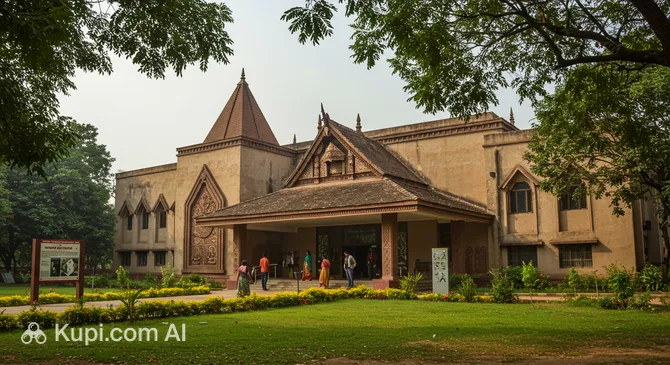
Have you ever wondered where you can see the authentic soul of Eastern India? The Odisha State Tribal Museum is a unique cultural center located in the city of Bhubaneswar. It houses a rich heritage, allowing tourists to connect with the history and traditions of the state's numerous ethnic groups.
Odisha State Tribal Museum. Illustration.
Source: Kupi.com AI
Traveler photos:
Located in the heart of India, this museum is rightfully considered one of the country's premier ethnographic repositories. Its halls showcase rare artifacts, folk crafts, and archaeological finds that harmonize with the cultural landscape of Bhubaneswar, known as the "Temple City."
A visit to the museum is an excellent opportunity to immerse yourself in the atmosphere of ancient Odisha, learn about local customs, and understand how the historical past influences the modern lifestyle of this fascinating land.
Contacts
To check for current information on special exhibitions or to book a guided tour, you can use the official contact details below. This will help you better plan your visit and avoid queues.
In the museum's halls, a wonderful world of traditional art will open up before you. Be sure to pay attention to the collections of jewelry and folk costumes—their details and ornaments tell stories of the social status and beliefs of the people of Odisha. Here, you can see how unique weaving and metalworking techniques have been preserved through the centuries.
History buffs should focus on the *archaeological finds* related to the Kalinga War period and the reign of the famous Emperor Ashoka. These exhibits are of immense importance for understanding the history of all India. The halls dedicated to traditional architecture and the art of temple construction, for which the region is so famous, are also of great interest.
Don't miss the chance to see stone and wood carving work up close. The museum allows you not only to observe but to feel the connection between eras through everyday household items, religious symbols, and craft masterpieces created by artisans of different periods.
Getting There
The museum is located at CRPF Colony in the Gopabandhu Nagar area. Since Bhubaneswar is the main transport hub of the state of Odisha, getting there is quite easy. The city is served by an international airport that receives flights from all major regions of the country.
To travel directly to the museum from the city center, it is most convenient to use taxis or traditional auto-rickshaws. Public transport is also available, but a rickshaw ride will allow you to reach your destination faster while enjoying the atmosphere of the Indian streets.
If you prefer modern services, mobile ride-hailing apps are active in Bhubaneswar. When planning your route, use the museum's coordinates so that the driver can drop you off precisely at the main entrance.
Nearest city: Bhubaneswar
History & Facts
The lands where the museum stands today hold the memory of great ancient events. In the 3rd century BCE, this territory was part of the powerful Kalinga Empire. A pivotal moment in the region's history was the legendary Kalinga War in 261 BCE, after which Emperor Ashoka, shaken by the horrors of battle, embraced Buddhism and proclaimed a policy of peace.
From the 7th century CE, Bhubaneswar developed as a major center of Hindu worship. During this time, hundreds of magnificent sandstone temples were built around the sacred Bindusagar Lake. The museum exhibition clearly demonstrates this centuries-long evolution of architecture and religious art, tracing the region's journey from ancient empires to the present day.
While the museum itself is dedicated to age-old traditions, modern Bhubaneswar was established as the administrative capital in 1948. Thus, the institution serves as a bridge between a rich historical past and the contemporary cultural life of eastern India.
Time Needed
To thoughtfully explore the exhibition and learn about the lifestyle of the region's peoples, the average visitor will need about 2 to 3 hours. This is the optimal time to walk through all the thematic halls and appreciate the craftsmanship of local artisans.
If you are an ethnography enthusiast or have a professional interest in archaeology, plan to spend half a day here. The extensive collection of artifacts and artworks invites a long and detailed examination that should not be rushed.
Working Hours
The museum operates on a stable schedule, making it easy for tourists to include it in their sightseeing plans. The complex doors are open to visitors daily from 10:00 AM to 5:30 PM.
Given that the schedule is the same for every day of the week, including weekends, you can choose any convenient time for your visit. However, it is recommended to arrive early to have enough time to explore all the halls before closing.
10:00 – 17:30
Nearby
Exploring the area around the museum is a great way to complement your trip. Nearby, you'll find several spots where you can enjoy modern entertainment or simply spend time in the fresh air.