Support

Bilaspur

About the Airport

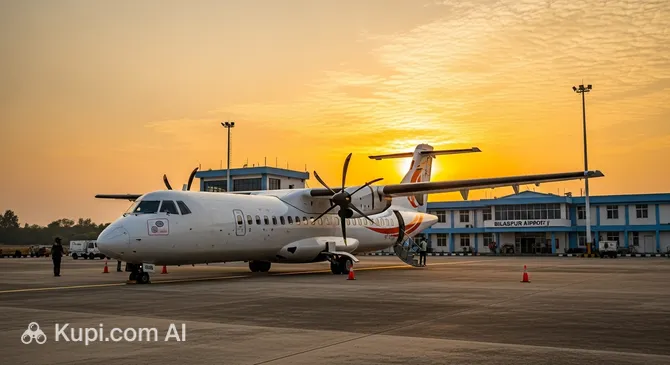
Bilaspur. Source: Kupi.com Binoculars

Bilaspur Airport (Bilasa Devi Kevat Airport) is not just a transport hub, but the true pride of the state of Chhattisgarh, opening the air gateway to its "Rice Bowl". The airport bears the name of a legendary historical figure, Bilasa Devi Kevat, which gives it a unique cultural flair and a deep connection to local traditions. Originally built as a Royal Air Force base in 1942, today this airport is experiencing a rebirth, actively developing and connecting the region with key metropolises of India.

IATA CodePAB
ICAO Code VEBU
City Bilaspur
Distance to Centre 10 km
Status Domestic
Annual Passengers Approx. 30,000
ScheduleOnline board

Bilaspur Airport possesses a number of interesting features and advantages for travellers:

Rich Historical Heritage
The airport's runway preserves the memory of the Second World War, when a Royal Air Force (RAF) base was located here. Today, this historical infrastructure is being modernised for the needs of civil aviation, creating a unique atmosphere of continuity between generations.

Strategic Location
The airport is located in the settlement of Chakarbhata, just 10 km from the city centre, making transfers quick and convenient. It serves as an ideal starting point for tourists heading to the Achanakmar Wildlife Sanctuary or the ancient temples of Ratanpur.

Developing Route Network
Despite its compact size, the airport is actively increasing connections with major cities. The main carrier, Alliance Air, operates flights on modern ATR-72 aircraft, connecting Bilaspur with Delhi, Jabalpur, Prayagraj (Allahabad), and Bhopal, which significantly simplifies logistics for business trips and tourism.

Cosiness and Comfort
Thanks to its status as a regional airport, passengers are spared the hustle and queues typical of major hubs. Check-in and security procedures take place here calmly and efficiently, and the staff is distinguished by special hospitality.

Contact Information

  • Official Website: Current information about the airport is available on the portal of the managing company, Airports Authority of India (www.aai.aero).
  • Helpdesk Phone: +91 7752 291 575.
  • Airport Address: Bilasa Devi Kevat Airport, P.O. Chakarbhata, Bilaspur, Chhattisgarh, 495220, India.
  • Social Media: News and announcements are published on the official accounts of the Airports Authority of India (AAI).
  • Lost Luggage Information: Responsibility for luggage lies with the airlines. In case of lost items, you must immediately contact a representative of your carrier (major flights are operated by Alliance Air) in the arrival hall.
  • Passenger Support Service: Since the terminal is intimate, there may not be a separate information desk; for assistance, it is recommended to approach any uniformed staff member or airline representatives at the check-in counter.

How to Get to the Airport

Getting to Bilaspur Airport (Bilasa Devi Kevat Airport) is quite simple, as it is located just 10 km south of the city centre, in the Chakarbhata area. Thanks to the compactness of the city and the absence of heavy traffic characteristic of metropolises, the journey usually does not take much time. Below are the main ways to reach the terminal.

Taxi and Transfer
The most comfortable and reliable way to get to the airport is by taxi. Popular aggregators (such as Ola) operate in Bilaspur, as well as local taxi services. A trip from the city centre or the railway station will take approximately 20–30 minutes depending on road conditions.

For those who prefer maximum comfort, many hotels in Bilaspur offer a transfer service. It is recommended to book a car in advance through the hotel receptionist so that the driver meets you at the appointed time. The estimated cost of a taxi ride can range from 300 to 500 Indian Rupees, but it is better to clarify the price before boarding.

Auto-rickshaws (Tuk-tuks)
For a more budget-friendly trip or if you are travelling light, you can use the services of auto-rickshaws. This is the most common mode of transport in the city. A ride in an auto-rickshaw will cost less than a taxi, however, the level of comfort will be lower, especially in hot weather. Be sure to agree on the price before starting the trip if the vehicle does not have a meter installed.

Public Transport
There are currently no specialised shuttles or metro lines connecting the city to the airport. However, regular city and intercity buses heading towards Raipur pass through the Chakarbhata area. The stop is located on the main road, from where you will have to walk to the terminal or take a local tuk-tuk. This option is suitable only for experienced travellers without large luggage, as buses can be overcrowded.

If you are arriving in the region by train, the main entry point is the Bilaspur Junction railway station — one of the largest railway hubs in India. From the station to the airport, it is best to travel by taxi or auto-rickshaw.

Personal Car and Parking
The airport is located near the NH-130 highway, making the trip by car quick and straightforward. The terminal area has a zone for picking up and dropping off passengers, as well as parking for private cars. Since passenger traffic here is moderate, problems with the availability of free spaces usually do not arise.

Recommendations for Tourists:

  • Allow about 40–50 minutes for the road to have a time buffer in case of unforeseen delays on the way.
  • Have small cash (Rupees) with you to pay for auto-rickshaws or taxis, as drivers cannot always give change from large notes.
  • If you use taxi-hailing apps, keep in mind that the car arrival time may be slightly longer than in major capitals.

Terminals and Map

Bilaspur Airport (PAB) is distinguished by exceptional compactness and simplicity of layout, which is characteristic of regional air harbours in India. There are no confusing labyrinths of corridors or the need to use intra-airport transport here. All infrastructure is concentrated in one place, making navigation intuitive even for those flying for the first time.

Number of Terminals and Their Purpose
At the moment, the airport has one passenger terminal. It serves exclusively domestic flights connecting Bilaspur with neighbouring major cities and the capital. The terminal building was recently modernised to meet modern safety and comfort standards, yet it retains an intimate atmosphere. ATR-72 type aircraft are serviced here, which determines the small size of the waiting halls.

Map and Airport Zones
The terminal layout is linear and extremely logical. The space is conditionally divided into two key zones located on the same level:

  • Departure Zone: Located immediately after the building entrance. Here you will find airline check-in counters (mainly Alliance Air), baggage screening points, and the security control zone. After completing formalities, passengers enter a small waiting hall (Security Hold Area) before the boarding gate.
  • Arrival Zone: Located in the same building but has a separate exit. The baggage claim hall is equipped with a belt conveyor. Since usually only one flight is handled at a time, confusion with luggage practically never occurs here.

Transfers Between Terminals
Since the airport consists of a single terminal, there is no need for complex transfers or shuttles. All movements are carried out on foot. The distance from the terminal entrance to the furthest point (boarding gate) can be covered in literally 3–5 minutes at a leisurely pace.

Features and Amenities
The terminal is equipped with a basic set of amenities. The waiting area has seating for passengers, washrooms, and small kiosks with drinks and snacks. It is important to note that there are no Duty Free shops or extensive entertainment zones here, so shopping is best planned in the city. For passengers with reduced mobility, ramps and wheelchairs (upon request to the airline) are provided.

Processing Time
The main advantage of Bilaspur Airport is speed.

  • Check-in and Baggage Drop: Queues are rare here. Usually, the process takes from 5 to 15 minutes.
  • Security Check: The aviation security service works efficiently; screening passes quickly due to low passenger traffic.

Nevertheless, airlines recommend arriving at the airport 1.5 hours before departure to calmly go through all procedures, considering that check-in counters close strictly according to schedule (usually 45 minutes before the flight).

Navigation Recommendations
Upon entering the terminal, keep your ticket (printed or on a smartphone) and identification ready — they will be checked by security staff at the doors. Since there are few flight information screens here, simply follow the signs: "Departure" — to the left or straight, "Arrival" — a separate sector. If you have questions, airport staff are within direct line of sight and always ready to help.

Airport History

The history of Bilaspur Airport (PAB) is a fascinating journey from a strategic military facility of the Second World War era to a key civil hub connecting the state of Chhattisgarh with the rest of India. Over the decades of its existence, it has changed several roles before opening its doors to tourists.

Military Beginning (1942)
The airport was founded in 1942 by the Royal Air Force (RAF) of Great Britain. At the height of the Second World War, this airfield, then known as "Chakarbhata", served as an important rear base and training ground. Its runway was used to support Allied operations, and the old infrastructure of that time partially formed the basis of the modern airport.

Period of Quiet and Special Purpose
After India gained independence, the facility came under state control. For a long time, it was not used for regular passenger transport. For decades, the airfield served for:

  • Flights of government officials and VIPs;
  • Civil aviation pilot training;
  • Defence needs and the Indian Army (part of the territory still belongs to the Ministry of Defence);
  • Private charter flights.

Battle for the Sky and a "New Era"
Residents of the region demanded the opening of regular air services for years, as the nearest major airport was in Raipur, several hours' drive away. A turning point was the inclusion of Bilaspur in the government scheme UDAN ("Ude Desh ka Aam Naagrik"), aimed at developing regional aviation. In 2018, the airport received a license for commercial flights in the 2C category.

Opening and Modernisation (2021)
A historic day for the city was 1 March 2021, when the airport was officially opened for regular passenger flights. The first Alliance Air flight, arriving from Delhi via Jabalpur, was greeted with a traditional water salute. For this event, a large-scale reconstruction was carried out:

  • Strengthening and extension of the runway;
  • Upgrading the airport category from 2C to 3C, which allowed receiving ATR-72 type turboprop aircraft;
  • Renovation of the terminal and security systems.

Name of a Legend
An important historical event was the renaming of the airport. Originally named after the locality (Chakarbhata), it received the name Bilasa Devi Kevat. This is a tribute to the legendary fisherwoman and warrior of the 17th century, after whom, according to legend, the city of Bilaspur itself was named. This gesture emphasised the cultural significance of the air harbour for local residents.

Achievements and Records
Despite its status as a regional airport, Bilaspur demonstrates impressive development rates. One of the main technical achievements was the implementation of the Night Landing Facility system in 2022–2023. This allowed the removal of restrictions on flying only during daylight hours and significantly increased the reliability of air connections in the winter period and during poor visibility.

Interesting Facts:

  • The airport runway has seen the evolution of aviation: from piston military aircraft of the 1940s to modern economical ATR liners.
  • Although the airport is civilian, it retains strategic importance, and periodically military aviation training flights can be seen here.
  • Before the opening of regular flights, local aviation enthusiasts used the airfield for paragliding and aeromodelling.

Services and Facilities

Since Bilaspur Airport (PAB) is a regional hub with moderate passenger traffic, the range of services here is concise. The terminal is designed to ensure basic comfort and quick throughput, so travellers should not expect luxury boutiques or entertainment complexes. Nevertheless, everything necessary for a short wait for a flight is available here.

Restaurants, Cafes, and Shops
The catering zone is represented by small kiosks and snack bars. There are no full-service restaurants or chain cafes in the terminal.

  • Dining: Passengers can purchase hot tea, coffee, soft drinks, bottled water, as well as light snacks (biscuits, chips, chocolate) and traditional Indian snacks (for example, samosas).
  • Shops: Duty Free zones are absent, as the airport serves only domestic flights. Retail is limited to small points with press and souvenir trinkets. It is recommended to take care of buying gifts in advance in the city.

Waiting Halls and VIP Lounges
Currently, there are no commercial business lounges available via airline loyalty cards or programmes like Priority Pass at the airport.

  • General Waiting Hall: The sterile zone after security is equipped with standard seating. Thanks to the small number of flights, it is usually quiet here and there are always free seats.
  • VIP Service: There is a separate hall for official delegations and government officials, however, it is closed to ordinary passengers.

Communication and Electronics
Basic technological conveniences are provided for modern travellers:

  • Wi-Fi: Free wireless internet is usually available within the terminal (provided by Airports Authority of India). To connect, an Indian mobile phone number is often required to receive an SMS with an access code.
  • Charging Stations: Stands with sockets and USB ports are installed in the waiting hall for charging mobile devices and laptops before departure.

Financial and Medical Services

  • Banks and ATMs: An ATM is usually installed in the public zone of the airport or directly at the entrance for withdrawing cash Rupees. There are no currency exchange points, so international tourists are recommended to exchange money in advance in major cities or banks in Bilaspur.
  • Medical Assistance: A First Aid Room functions in the terminal for emergency situations. If you feel unwell, you should immediately contact airport staff.

Services for Special Categories of Passengers
Despite its compactness, the airport observes accessibility standards:

  • Passengers with Children: A Child Care Room is provided in the terminal, where you can feed or change a baby in privacy.
  • Passengers with Disabilities: The terminal entrance is equipped with ramps. Airlines provide wheelchairs and assistance with boarding/disembarking (the "wheelchair assistance" service must be ordered when booking the ticket or at least 48 hours before departure). Restrooms are also adapted for citizens with reduced mobility.

Hotels and Accommodation
There are no hotels or capsule hotels on the territory of the airport itself. The nearest accommodation options are located in the Chakarbhata area or in the centre of Bilaspur (about 10–12 km):

  • The Aananda Imperial and Courtyard by Marriott Bilaspur are popular high-level hotels in the city offering comfortable transfers to the airport.
  • In the immediate vicinity of the airport (within a radius of 2–3 km), you can find small budget-level guest houses, but most tourists prefer to stay in the city centre.

Business Services
Specialised conference rooms or business centres with office equipment are not provided in the terminal building. For holding business meetings or working with documents, it is better to use the infrastructure of city hotels.

Where to Eat

The gastronomic infrastructure of Bilaspur Airport (PAB) fully corresponds to its status as a small regional air harbour. One should not look for haute cuisine restaurants, fast-food giants, or atmospheric bars here. The catering system is organised extremely simply and functionally to provide passengers with a basic set of products for a short flight wait.

Cafes and Food Points in the Terminal
In the airport's single terminal, there are no full-fledged restaurants with à la carte service. Dining is represented by compact sales points:

  • Departure Zone (Airside): The main buffet (snack bar) is located in the "sterile zone" (Security Hold Area), where passengers enter after passing security. This is a small counter where you can buy hot and cold drinks, as well as light snacks.
  • General Zone (Landside): In the check-in area or near the terminal entrance, a small kiosk with drinks sometimes functions, however, the main service is concentrated specifically inside the sterile waiting zone.

Menu and Local Features
The assortment at the airport is limited but allows you to satisfy slight hunger. The emphasis is on ready-to-eat products and popular Indian snacks:

  • Drinks: Be sure to try hot freshly brewed Masala Chai (tea with milk and spices) — this is the most popular drink in the region. Instant coffee, bottled water, juices, and carbonated drinks are also available.
  • Snacks: The assortment often includes fresh samosas (pastries with potatoes and spices) or kachori. These are perhaps the only "hot" food options.
  • Packaged Products: A wide selection of biscuits, chips, chocolate, nuts, and traditional Indian snacks (namkeen) in factory packaging.

Dietary Nutrition (Vegetarian, Halal, Gluten-Free)
India is a country with strong vegetarian traditions, and Bilaspur Airport is no exception.

  • For Vegetarians: 90–100% of the snack bar assortment is suitable for vegetarians. Samosas and most snacks do not contain meat. Look for a green dot in a square on the packaging — this is the official sign of a vegetarian product in India.
  • For Vegans: Finding specialised vegan dishes is difficult. It is recommended to choose packaged nuts, simple chips, or clarify the composition of tea (usually it is brewed with cow's milk, so it is better to take black coffee or water).
  • Halal and Meat: Meat dishes are extremely rare in the menu or non-existent.
  • Gluten-Free: There is no special "Gluten Free" marking on fresh pastries. For people with gluten intolerance, it is safest to choose fruits (if available) or packaged products with a clear composition.

Alcohol
It is important to know that there are no bars at Bilaspur Airport, and alcoholic beverages are not sold in any of the terminal zones. Consuming alcohol brought with you in public places is strictly prohibited.

Prices and Opening Hours
The pricing policy at the airport is very democratic and only slightly exceeds city prices, which favourably distinguishes it from major hubs like Delhi or Mumbai.

  • Average Bill: A cup of tea and a samosa will cost approximately 50–100 Indian Rupees. A light snack with a drink and snacks will cost within 150–250 Rupees.
  • Opening Hours: Food points open 1.5–2 hours before the first departure and close shortly after the departure of the last flight. At night, when there are no flights, kiosks do not operate.

Recommendations for Tourists
Given the limited choice, for a full lunch it is strongly recommended to eat in the city before leaving for the airport. There are many good restaurants with Chhattisgarh cuisine in Bilaspur. The airport is best viewed exclusively as a place for a quick snack (tea/coffee + snack) before boarding the plane.

Travel Tips

Travelling through a regional airport like Bilaspur (PAB) has its own specifics, different from the experience in major international hubs. To ensure your trip goes smoothly and without unnecessary stress, we have prepared a number of practical tips considering the features of the local terminal and the aircraft serviced.

Optimal Arrival Time
Although the airport is small and procedures here are faster than in metropolises, it is not worth risking. It is recommended to arrive at the airport 1.5–2 hours before the departure time indicated on the ticket.

  • Check-in counters usually close strictly 45 minutes before departure.
  • Entering the terminal may take some time due to ticket and document checks by security at the doors.

Check-in and Security
Procedures at Indian airports have strict standards.

  • Documents: Upon entering the terminal building, you will be asked to present your ticket (printed or on a smartphone screen) and original identification (passport for foreign citizens). Without this, you will not be allowed into the terminal.
  • Security Check: Queues for screening are usually small. Remember that in India, there are often separate queues for men and women for personal screening.
  • Baggage Tags: On some flights, you may still be asked to attach tags to hand luggage for a security stamp, although this rule is gradually being phased out. It is better to have a couple of tags in reserve (usually lying on the check-in counter).

Seat Selection on the Plane
Flights from Bilaspur are operated primarily on ATR-72 turboprop aircraft. This leaves an imprint on flight comfort:

  • Noise: If you are sensitive to noise, try not to choose seats in the front of the cabin (rows 1 to 8), as they are closer to the propellers. It is usually quieter in the tail of the plane.
  • Views: The flight takes place at a lower altitude than jet liners, so a window seat will provide you with beautiful panoramic views of the Chhattisgarh landscapes.
  • Legroom: Legroom is limited in aircraft of this type, so tall passengers should consider purchasing seats at emergency exits if the airline provides such an option.

Hand Luggage: Important Nuances
The main advice for ATR-72 passengers is to travel light.

  • Shelf Size: Overhead bins in the cabin are very small. A standard "cabin size" suitcase (55x40x20 cm) will not fit there. Hard suitcases on wheels will most likely be taken from you when boarding the plane and placed in the luggage compartment ("Gate Check" procedure), and returned immediately at the stairs upon arrival.
  • Soft Bags: Backpacks or soft sports bags are easier to place under the seat in front or on the shelf.
  • Electronics: Power banks (external batteries) and lithium batteries must be strictly in hand luggage. They are prohibited in checked baggage and will be confiscated. Lighters are prohibited in both hand luggage and checked baggage.

Tips for Transit Passengers
Bilaspur Airport is a final destination, not a transit hub.

  • If you have a further flight planned from Delhi or another major city, allow at least 3–4 hours for the connection. Regional flights can be delayed due to weather conditions, and transfer between terminals in a large transfer airport will take time.
  • Try to issue a single ticket to the final destination so that in case of a delay of the first flight, the airline takes responsibility for your transfer.

Saving Time and Money

  • Dining: Prices at the airport are higher than in the city, and the choice is small. It is better to have a substantial meal in the city before leaving.
  • Transport: To avoid overpaying for a taxi, use aggregator apps (Ola) or agree on the price with the driver in advance if you take a car on the street.
  • Water: An empty reusable bottle can be carried through security and filled with water from drinking fountains in the waiting hall for free.

What to Do in Case of Flight Delay
Since the terminal infrastructure is limited, long waiting can be tiring.

  • Entertainment: Download movies, books, or music to your devices in advance. Wi-Fi may work intermittently, and there are no bookshops here.
  • Charging: Keep your charger in your hand luggage. There are sockets in the waiting hall, but their number is limited.
  • Communication with Staff: In case of cancellation or long delay, immediately contact airline representatives in the terminal. In a small airport, it is easier to resolve the issue of rebooking or refund personally than via a hotline.

Customs Rules
Since the airport serves only domestic flights, there is no customs control here. However, remember that strict flight safety rules (BCAS) apply in India. Liquids in hand luggage must be in containers of no more than 100 ml, packed in a transparent bag.

Reached the end of the page?

That means the route is fully explored